 Sudden Valley
 Exterior Work for Edgemoor Homes, Done by People Who Know the Water
Edgemoor sits close enough to the water that homeowners here deal with a different set of exterior problems than folks a few miles inland. Salt-laden air off the bay, wind-driven rain that comes at the house sideways instead of straight down, and a moss season that seems to stretch longer every year — all of it works on a home's siding, roofline, windows, and trim year-round. We've built our approach around those specific conditions, not a generic "Pacific Northwest" checklist copied from a different climate zone.
Sudden Valley Siding works throughout Whatcom County, and Edgemoor is part of our regular service area. We're not dispatching a crew from out of the region who has to guess at local conditions — we know what salt air does to fasteners, what driving rain does to poorly lapped siding, and what a shaded, damp lot does to a roof over a few seasons.
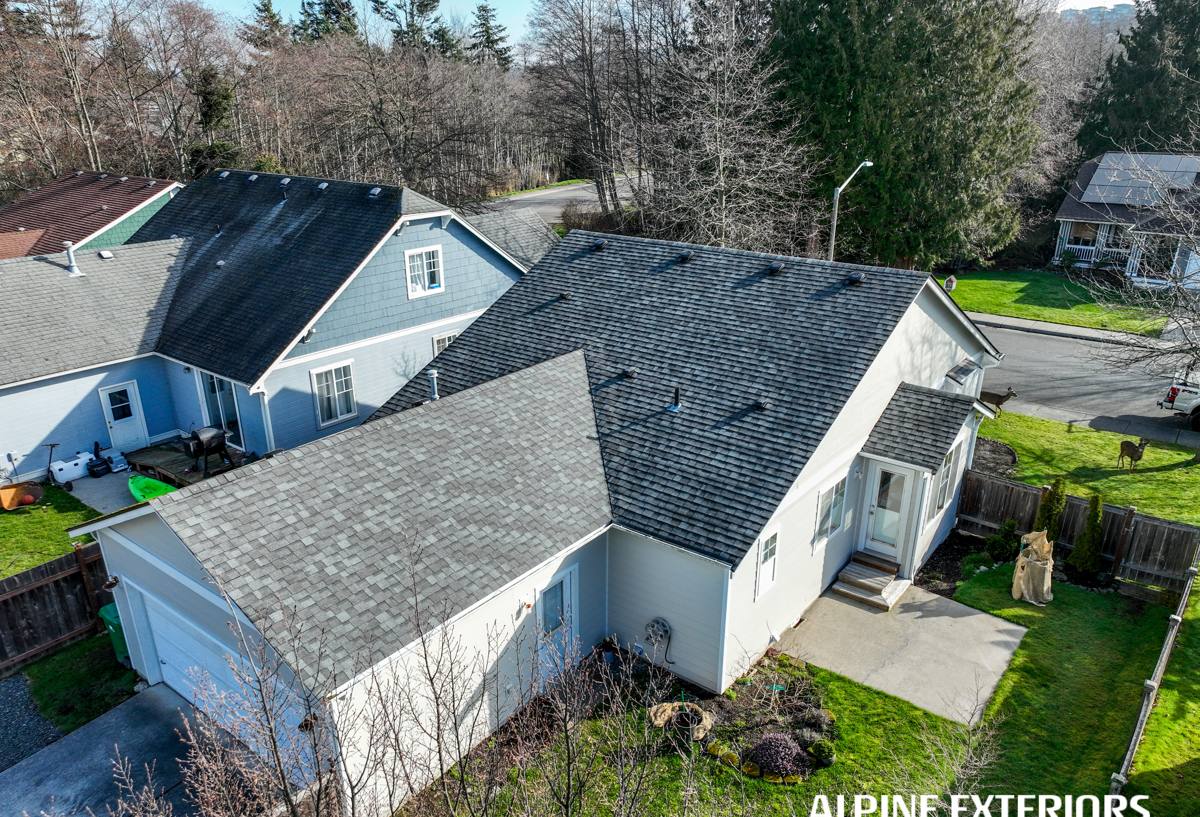
What the Edgemoor Climate Actually Does to a House
It helps to be specific about the mechanisms, because "wet climate" undersells what's actually happening to a home's exterior here.
Salt Air
Airborne salt is corrosive to exposed metal — fasteners, flashing, gutter hardware, and any hidden staples or nails that weren't properly protected during the original install. Over years, that corrosion can telegraph through as rust streaking, loosened trim, or fastener failure that lets water behind the siding. Salt exposure also accelerates the breakdown of lower-grade paint finishes, which is one of the reasons factory-applied, baked-on finishes hold up so much better here than field-applied paint.
Driving Rain
Wind off the water doesn't just add rain volume — it changes the angle. Rain that comes in at a slant finds every gap in a lap siding installation, every under-caulked window flange, and every place where flashing was skipped to save time. A siding system can be rated for a wet climate on paper and still fail locally if the lap spacing, flashing details, and butt joints weren't installed to spec for wind-driven exposure.
Moss and Shade
Tree cover and marine humidity together mean moss and algae get a long growing season on roofs, north-facing siding, and shaded decking. Moss doesn't just look bad — it holds moisture against the surface underneath it, which is exactly the condition that rots wood trim, degrades lower-quality siding substrates, and shortens the life of a roof by holding water under shingles and along valleys.
Siding: Why We Only Install James Hardie Fiber Cement
We made a decision a while back to standardize on James Hardie fiber cement siding and stop installing other materials — no vinyl, no LP SmartSide, no Cemplank or Allura, no primed spruce or cedar. That's not a marketing position, it's a practical one built around exactly the conditions Edgemoor homes face.
Fiber cement is non-combustible, which matters in a region where wildfire smoke and ember exposure have become a real seasonal concern even west of the mountains. It doesn't expand and contract with moisture the way wood-based products do, which matters when a house is absorbing salt-laden humidity most of the year. And James Hardie's ColorPlus factory finish is baked on under controlled conditions, which holds color and resists the fading and chalking that field-applied paint struggles with in salt air.
We're not going to tell you other products are junk — engineered wood siding and vinyl both have legitimate use cases, and plenty of installers do good work with them. Our issue is with what happens to those products specifically in a marine, high-moisture, moss-prone environment over a 15-20 year horizon: higher maintenance burden, more moisture sensitivity at seams and edges, and warranty structures that often don't hold up as well against coastal conditions. For Edgemoor's climate, we think Hardie is the more defensible long-term choice, and we'd rather turn down a vinyl job than install something we don't believe will perform here.
James Hardie Product Lines We Use
- HardiePlank lap siding — the standard horizontal lap look, available in several profiles and available in HZ10 formulation engineered for wetter climate zones
- HardiePanel vertical siding — for board-and-batten style sections or accent walls
- HardieShingle — for homes wanting a shingle-style look without the moisture and moss issues that come with real cedar shingles
- HardieTrim — fiber cement trim boards to match, so the whole exterior envelope is consistent material, not a wood-trim weak point on an otherwise fiber cement house
Roofing for a Shaded, Damp Lot
A lot of Edgemoor properties have mature tree cover, which is part of the appeal of the area but also means roofs get less sun exposure to dry out between rain events. That's the exact condition that lets moss establish and spread. Our roofing work focuses on getting the underlying details right — proper underlayment, correctly lapped flashing at valleys and penetrations, and ventilation that lets the roof deck dry rather than stay damp underneath the shingles. We also talk with homeowners honestly about moss: prevention (zinc or copper strips, periodic gentle cleaning) is far cheaper than replacing a roof that's been holding moisture under moss mats for several seasons.
Windows: Sealing Against Wind-Driven Rain
Window failures in this area are rarely about the glass — they're about the flashing and sealant details around the frame. A window that's properly flashed with the flange integrated into the water-resistive barrier, and correctly sequenced with the siding, will shed wind-driven rain even in a real storm. A window installed with caulk as the only line of defense will eventually leak, especially on walls that catch weather off the water. When we replace windows, we treat the flashing and integration with the siding system as the actual scope of the job, not an afterthought to swapping glass.
Decks: Built for Wet Weather, Not Just Summer
Decks in a marine climate spend most of the year wet, not dry. That changes what matters in materials and construction: proper board spacing and airflow underneath, ledger flashing that actually keeps water out of the house structure, and fastener hardware rated for the corrosion salt air causes. We build and repair decks with those specifics in mind rather than treating it as a generic carpentry job.
What a Job Actually Looks Like
- On-site walkthrough — we look at existing siding, trim, roof condition, and any moisture or moss issues before quoting anything
- Honest scope discussion — what needs full replacement versus what can be repaired or maintained
- Written estimate with material and labor broken out, no vague allowances
- Scheduling around weather windows — installing fiber cement or doing roof work in the middle of a driving rain event is bad practice regardless of the product
- Installation to manufacturer spec — correct fastener pattern, lap spacing, flashing, and caulking details, not shortcuts that show up as problems in year three
- Final walkthrough with the homeowner before we consider the job done
Comparing Siding Options for a Marine Climate
| Factor | James Hardie Fiber Cement | Vinyl | Engineered Wood (LP SmartSide, etc.) |
|---|---|---|---|
| Moisture behavior in salt/humid air | Stable, non-organic substrate | Stable material, but seams and J-channels can trap moisture | Wood-based core is moisture-sensitive if the finish is compromised |
| Fire resistance | Non-combustible | Combustible, can melt/deform | Combustible |
| Finish durability in salt air | Factory-baked ColorPlus finish | Color molded in, but can chalk/fade over time | Field or factory paint, needs recoating over time |
| Typical maintenance | Occasional wash, repaint only if desired decades out | Low, but cracking/warping possible in temperature swings | Regular caulk and paint upkeep to protect the substrate |
| Warranty structure | Long, transferable, backed by manufacturer | Varies widely by product tier | Varies, often more limited against moisture damage |
Signs an Edgemoor Home Needs Exterior Attention
- Moss buildup on the north or shaded sides of the roof or siding
- Soft or discolored trim boards, especially around windows and at ground contact points
- Visible rust streaking near fasteners, gutters, or flashing
- Paint that's chalking, peeling, or fading unevenly, particularly on walls facing the water
- Caulk that's cracked or pulled away from window and door frames
- Deck boards that stay damp long after rain has stopped, or fasteners showing corrosion
Why a Local Crew Matters Here
Whatcom County's marine climate isn't uniform even within a few miles — a shaded, tree-covered lot near the water behaves differently than an open, sun-exposed lot inland. A crew that works this area regularly recognizes those differences on the walkthrough instead of applying a one-size-fits-all install. We also carry the manufacturer training and standing to back Hardie's installation requirements, which matters if a warranty claim ever comes up down the road — installs that don't meet spec can affect warranty coverage, so doing it right the first time isn't just about performance, it protects the paperwork too.
If you're dealing with moss, aging siding, a roof that's holding water longer than it should, or windows that let weather in during a storm, we're happy to take a look. Reach out for a free, no-pressure estimate — we'll walk the property, tell you honestly what we see, and give you a straight answer on what it would take to fix it.