 Sudden Valley
 Fairhaven's Exterior Challenge: Water, Salt, and Shade
Fairhaven sits close to the water, and that proximity shapes everything about how a home's exterior ages here. Salt-laden air off Bellingham Bay works differently on building materials than dry inland air does. It carries moisture into every seam, joint, and fastener point, and over years it accelerates corrosion on anything not built to handle it. Add in Whatcom County's long, wet winters and the tree cover common in Fairhaven's older residential streets, and you get a climate that's genuinely tougher on siding, trim, and roofing than most homeowners realize until problems show up.
We've worked on homes throughout this part of Whatcom County long enough to know the pattern: it's rarely one dramatic failure. It's slow, cumulative damage from moisture that never quite dries out between rain events, from moss and algae holding dampness against a wall or roof surface, and from materials that were never engineered for a marine-influenced climate in the first place. Understanding that pattern is the starting point for any exterior work we do in this neighborhood.
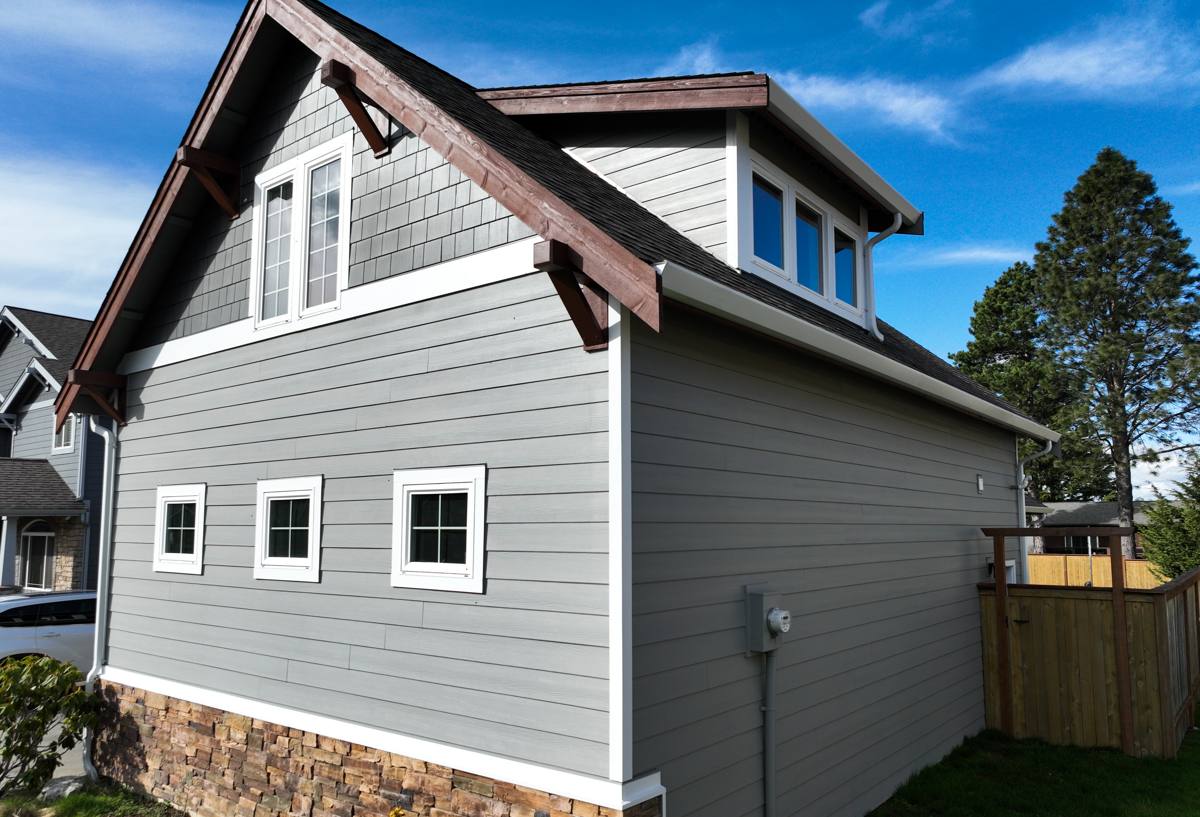
What Salt Air Actually Does to a Home
Salt air isn't just "extra humidity." Airborne salt is hygroscopic, meaning it pulls moisture out of the atmosphere and holds it against surfaces longer than plain rainwater would. On a home close to the bay, that means:
- Metal fasteners, flashing, and hardware corrode faster unless they're rated for coastal exposure
- Paint and factory finishes break down sooner, especially on the weather-facing sides of the house
- Wood-based siding products absorb and release moisture more often, which stresses joints and finishes
- Caulking and sealant joints fail earlier, opening small gaps that let water behind the siding
None of this means a home near Fairhaven is doomed to constant repairs. It means the materials and installation details matter more here than they would forty miles inland. A siding system that performs fine in a dry climate can struggle in a coastal one, and the failures often don't show up for several years — which is exactly why so many homeowners are surprised when they finally do.
Driving Rain and Wind-Driven Moisture
Whatcom County storms often come with real wind behind the rain, and wind-driven rain behaves differently than a straight-down shower. It gets pushed sideways into laps, seams, and trim joints that were never designed to shed water at an angle. Over time, that's where you see the telltale signs of trouble: soft trim, peeling paint concentrated on one exposure of the house, or dark staining at butt joints. Correct flashing details and proper siding overlap are what stand between that kind of weather and a dry wall cavity.
Moss Season: Longer Here Than Most Homeowners Expect
"Moss season" in this part of Washington isn't really a season — it's most of the year. Shaded, moisture-retentive surfaces stay damp for extended stretches, and moss, algae, and lichen take hold wherever sunlight and airflow are limited. On roofs, moss lifts shingles and holds water against the roof deck. On siding, algae growth (especially the greenish-black streaking you'll see on north-facing walls) traps moisture against the surface and accelerates finish breakdown.
The fix isn't just periodic cleaning, though that helps. It's choosing exterior materials that don't feed organic growth the way some products do, and making sure the installation allows for drainage and airflow behind the siding rather than trapping moisture against it.
Our Full Exterior Scope for Fairhaven Homes
We handle the whole exterior envelope, not just siding, because these systems interact. A roof leak can damage siding from the top down. Failing windows can let moisture into wall cavities that then rot siding from the inside out. Treating the exterior as one connected system is how problems actually get solved instead of just patched.
Siding
We install James Hardie fiber cement siding exclusively — more on why below. For Fairhaven's climate specifically, that means a non-combustible, moisture-resistant material with a factory-applied finish designed to hold up to sun, salt, and rain cycling without the recoating schedule wood or engineered wood products need.
Roofing
Roof work in this area has to account for moss growth, moisture retention under tree cover, and wind exposure near the water. We look at ventilation, underlayment, and flashing details as closely as the roofing material itself, since a lot of roof failures in this climate start with a moisture or airflow problem rather than a bad shingle.
Windows
Window replacement in a coastal, wet climate is as much about the flashing and sealing detail as the window unit itself. A quality window installed with poor flashing will still leak. We pay close attention to how each window ties into the surrounding siding and weather barrier.
Decks
Decks in Fairhaven face the same moss and moisture pressure as siding and roofing, plus direct foot traffic and standing water risk. Proper drainage, board spacing, and material choice all matter more here than in a drier climate.
Why We Standardized on James Hardie
We used to install a broader range of siding products. We don't anymore, and the reason comes directly from what we've seen happen to exterior materials in Whatcom County's marine-influenced climate over time.
James Hardie fiber cement is engineered specifically to handle moisture cycling, resist the freeze-thaw and wet-dry swings common in the Pacific Northwest, and hold its factory finish far longer than wood-based or vinyl alternatives typically do in this environment. It's non-combustible, which matters for insurance and safety considerations. And Hardie backs it with a strong transferable warranty that reflects genuine confidence in how the product performs over decades, not just years.
We're not going to tell you every other siding product is bad — most have legitimate uses in the right climate and price point. But for a coastal Whatcom County home dealing with salt air, driving rain, and near-constant moss pressure, we've found fiber cement gives homeowners the best combination of durability, low maintenance, and long-term value. That's why it's the only siding system we put our name behind.
How Hardie Compares on the Factors That Matter Here
| Factor | James Hardie Fiber Cement | Typical Wood-Based Siding | Vinyl Siding |
|---|---|---|---|
| Moisture resistance | Engineered for wet climates | Absorbs moisture, prone to swelling/rot | Doesn't absorb water, but seams can trap it |
| Finish longevity | Factory ColorPlus finish, long fade resistance | Needs repainting/staining on a shorter cycle | Color molded in, but can fade and become brittle |
| Fire resistance | Non-combustible | Combustible | Can melt/deform under heat exposure |
| Moss/algae resistance | Dense material, less organic growth support | More susceptible in shaded, damp areas | Can support surface growth in persistent moisture |
| Warranty | Strong, transferable | Varies widely by product | Varies widely by product |
Why a Local, Vetted Crew Matters
Manufacturer engineering only matters if installation matches it. Fiber cement siding installed with the wrong fastener pattern, insufficient clearance from grade, or poor flashing integration can still fail — not because the product is wrong, but because the installation didn't account for local conditions. A crew that works Whatcom County's coastal neighborhoods regularly knows where water tends to collect, which exposures take the worst weather, and how to detail joints so they actually shed wind-driven rain instead of channeling it inward.
When you're vetting any exterior contractor for a Fairhaven-area home, a few questions tell you a lot:
- Are they certified or factory-trained on the specific siding product they're recommending?
- Do they explain flashing and drainage details, or just talk about the siding panel itself?
- Can they speak specifically to how the local climate affects material choice and installation?
- Do they offer a written, transferable warranty — and do they explain what voids it?
- Are they licensed and insured to work in Washington State?
What to Expect From a Project
Every exterior project starts with an honest look at what's actually happening on your home — not just the visible siding or roof surface, but what's likely going on underneath it given the age of the materials and the exposure of each wall. From there we talk through material options, realistic timelines, and what the work will involve day to day. Whatcom County weather means scheduling has to account for dry-work windows, and we plan around that rather than rushing a job into a wet stretch.
Signs It's Worth Getting an Exterior Evaluated
- Soft or spongy spots when you press on siding or trim
- Persistent moss or algae staining that returns quickly after cleaning
- Peeling paint or finish loss concentrated on one side of the house
- Visible gaps, cracking, or separation at siding joints and corners
- Water stains on interior walls near windows or the roofline
- Rising energy bills that might point to a failing building envelope
If you're in Fairhaven or elsewhere around Whatcom County and want a straight answer about what your siding, roof, windows, or deck actually need, we're glad to take a look. Reach out for a free, no-pressure estimate using the form below.