 Sudden Valley
 Bellingham's Exterior Problem: Moisture That Never Really Leaves
Homes around Bellingham and the Sudden Valley area sit in one of the wetter, greyer corners of Washington, and the exterior of a house here works harder than it does almost anywhere else in the state. Whatcom County gets a long, steady wet season, not just heavy rain events but months of low-grade dampness — fog off the bay, drizzle that sits in the air, and short winter days that don't give siding much chance to dry out between storms. Add in proximity to salt water and you get a second problem on top of the moisture: airborne salt that accelerates corrosion on fasteners, trim, and anything with exposed metal.
The combination shows up on houses in predictable ways. North-facing walls and anything shaded by trees or a neighboring roofline stay damp longest, and that's where you'll usually see moss and algae take hold first. Once organic growth gets a foothold on a siding surface, it holds even more moisture against the wall, which is exactly the wrong direction for a material that isn't built to handle sustained wet contact. Over years, that cycle is what separates siding that ages gracefully from siding that starts failing at the seams, the butt joints, and anywhere caulking has shrunk or pulled away.
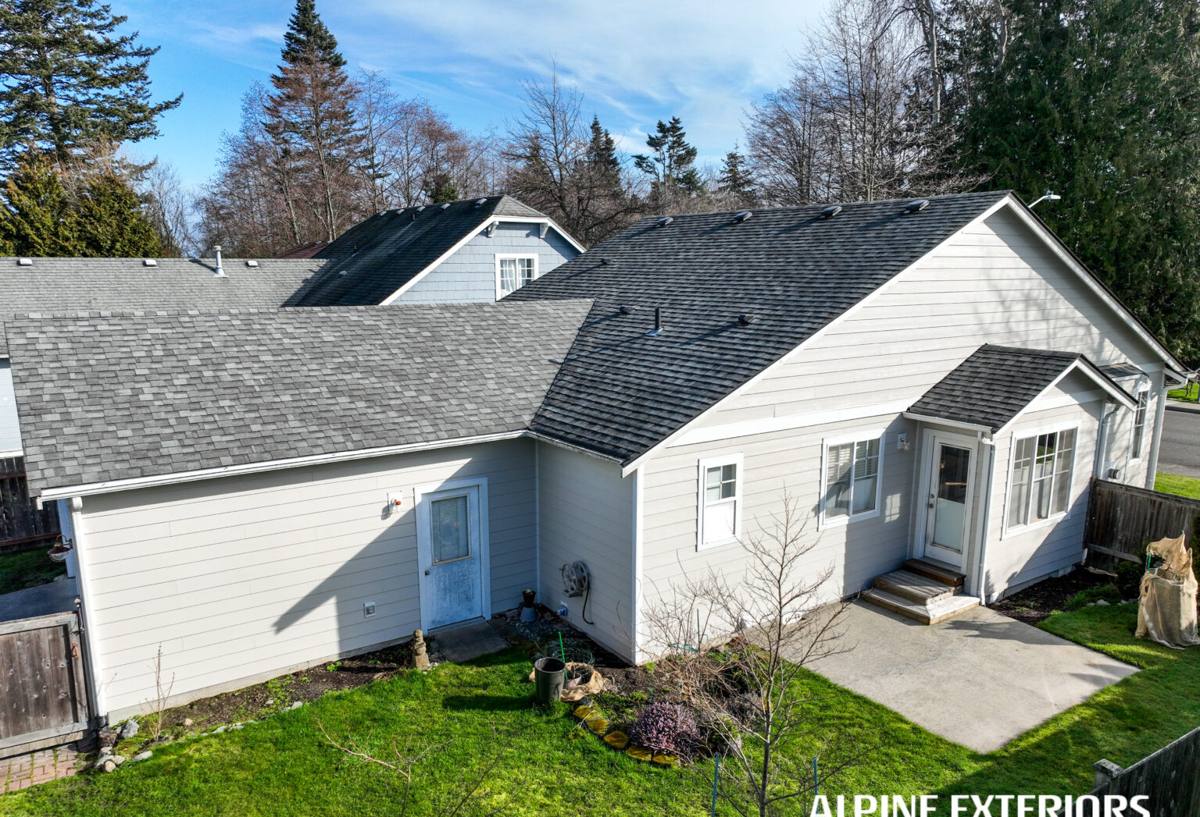
What a Long Moss Season Actually Does to a House
Moss on a roof gets attention because it's visible from the street, but moss and algae on siding cause a slower, quieter kind of damage. Green growth on a wall traps moisture against the surface long after the rest of the house has dried, softens caulk joints, and on wood-based products can start feeding rot before anyone notices a problem. Pressure washing to knock moss off can help cosmetically, but it can also drive water into seams and behind panels if it's done aggressively or too often, which is a common way homeowners unintentionally shorten the life of their own siding.
This is one of the reasons we pay close attention to how siding is detailed at the ground line, around window and door trim, and at inside corners — the spots where standing moisture and organic growth tend to concentrate first in this climate. Good flashing, proper caulking, and enough clearance between siding and grade or decking matter more here than they would in a drier climate, because the margin for error is smaller.
Why We Standardized on James Hardie Fiber Cement
We install James Hardie fiber cement siding exclusively — we don't offer vinyl, LP SmartSide, Cemplank, Allura, or primed wood species like spruce or cedar. That's a deliberate choice, not a limitation of what we're capable of installing. Vinyl expands and contracts with temperature swings and can crack in cold snaps; it also traps moisture behind it if house wrap and flashing aren't done correctly, which is a bigger risk in a climate this wet. Wood-based products, including engineered wood like LP SmartSide, are more vulnerable to the moisture-and-organic-growth cycle described above — they can perform well for years with diligent upkeep, but they demand more of it, and a missed repaint or a failed caulk joint has more consequences here than it would somewhere drier.
Fiber cement is non-combustible, holds paint and factory finish far longer than wood, and doesn't feed the kind of rot that moss and prolonged dampness can start in organic materials. It isn't maintenance-free, but the maintenance it needs is lighter and less time-sensitive, which matters on a coastline where the wet season runs long.
James Hardie Product Lines We Use Locally
James Hardie makes region-specific formulations, and for Whatcom County we specify their HZ5 climate line, engineered for regions with significant moisture exposure and freeze-thaw cycling. We pair that with ColorPlus factory-applied finish where the homeowner wants it — a baked-on finish that resists fading and chipping better than field-applied paint, which also means fewer repaint cycles over the life of the siding. Depending on the home's style, that might mean HardiePlank lap siding for a traditional look, HardiePanel for a more modern vertical profile, or HardieShingle for a Cape Cod or craftsman aesthetic.
Beyond Siding: Roofing, Windows, and Decks
Siding doesn't work in isolation — a house is one connected envelope, and the roof, windows, and any deck or exterior structure all interact with the same moisture and salt-air exposure that drives our siding decisions. We handle roofing, window replacement, and deck construction and repair as well, which matters in a climate like this because a roof leak, a failed window seal, or a deck ledger board rotting into a wall can all show up later as a siding problem if they're not addressed together. Having one crew look at the whole exterior avoids the common situation where a siding contractor patches around a roofing or window issue instead of fixing the actual source of water intrusion.
What a Siding Project Looks Like for a Bellingham-Area Home
Every project starts with a walk-around assessment of the existing siding, trim, flashing, and any visible moisture or moss damage, followed by a look at the house wrap and sheathing condition once old siding comes off — that's often where the real story is, since problems behind the siding aren't visible until it's removed. From there:
- Remove existing siding and inspect sheathing for rot, soft spots, or prior water damage
- Repair or replace damaged sheathing and correct any flashing or house-wrap issues found underneath
- Install new house wrap and flashing details at windows, doors, and penetrations
- Install James Hardie siding in the profile and finish selected for the home
- Detail trim, corners, and caulking with attention to the ground-line and moisture-prone areas specific to this region
- Final walkthrough with the homeowner
Full siding replacements on an average single-family home typically run a few weeks depending on size, weather windows, and whether sheathing repair is needed — and in a climate that doesn't offer long dry stretches, scheduling around weather is part of doing the job right rather than rushing panels up between storms.
Cost Factors for a Siding Project Here
Every home is different, but the same handful of factors drive most of the variation in siding project cost in this area:
| Factor | Why It Matters in This Climate |
|---|---|
| Sheathing condition underneath old siding | Long-term moisture exposure and moss growth increase the odds of hidden rot that needs repair before new siding goes on |
| Home size and wall complexity | More corners, gables, and trim details mean more flashing and cutting, which affects both material and labor |
| Siding profile chosen | Lap, panel, and shingle profiles have different material and installation labor requirements |
| Factory finish vs. field paint | ColorPlus finish costs more upfront but reduces repainting frequency over the siding's life |
| Tear-off vs. overlay | Overlaying old siding is rarely appropriate here since it traps moisture against the wall — full tear-off is usually the right call |
| Access and site conditions | Sloped lots, mature landscaping, and limited equipment access common around Sudden Valley can add labor time |
Signs Your Siding Needs Attention
Homeowners in this area should watch for a specific set of warning signs, since the local climate accelerates certain failure modes more than others:
- Moss or algae staining that keeps coming back within months of cleaning
- Soft or spongy spots when you press on siding, especially near the ground line
- Cracked, bubbling, or peeling paint that reappears quickly after repainting
- Gaps opening up at seams, corners, or where siding meets window and door trim
- Visible warping, buckling, or panels pulling away from the wall
- Rust staining around fasteners or trim, a sign of salt-air corrosion
- Musty odors or discoloration on interior walls that back up to exterior siding
Why a Local Crew Matters
A crew that works around Bellingham and Whatcom County regularly sees how this specific combination of salt air, sustained rain, and moss growth ages different products and details differently than it would in a drier or more inland climate. That shows up in small decisions — how much clearance to leave at the ground line, where to add extra flashing, which corners of a house need the most attention on a north-facing or shaded wall — that a crew unfamiliar with this coastline might not weigh the same way. It also means being available for warranty follow-up and maintenance questions without a long drive, which matters more here than in places where siding problems develop slowly and predictably.
Get a Free, No-Pressure Estimate
If your home's siding is showing moss, moisture damage, or just age, we're happy to take a look and walk you through what we're seeing and what your options are — no pressure, no obligation. Reach out using the form below to schedule a free estimate for siding, roofing, window, or deck work in the Bellingham and Sudden Valley area.