 Sudden Valley
 What LP SmartSide Actually Is
LP SmartSide is an engineered wood siding product — strand board or fiberboard made from wood strands bonded with resin, then coated with a wax-based moisture barrier and a factory finish. It's not the same as the old primed hardboard siding that gave engineered wood a bad name in the 1990s. LP has genuinely improved the formulation, the resin treatment, and the finish system over the years, and in the right climate, installed by a crew that follows every step of the spec, it performs reasonably well.
We want to be upfront about that, because homeowners in Sudden Valley sometimes ask us to bid a job with LP SmartSide already specified, or they've gotten a quote from another contractor and want to know why we don't offer it. The honest answer isn't that the product is junk. It's that we've made a professional decision about what we're willing to put our name behind here, on this side of Lake Whatcom, and LP SmartSide doesn't clear that bar for us.
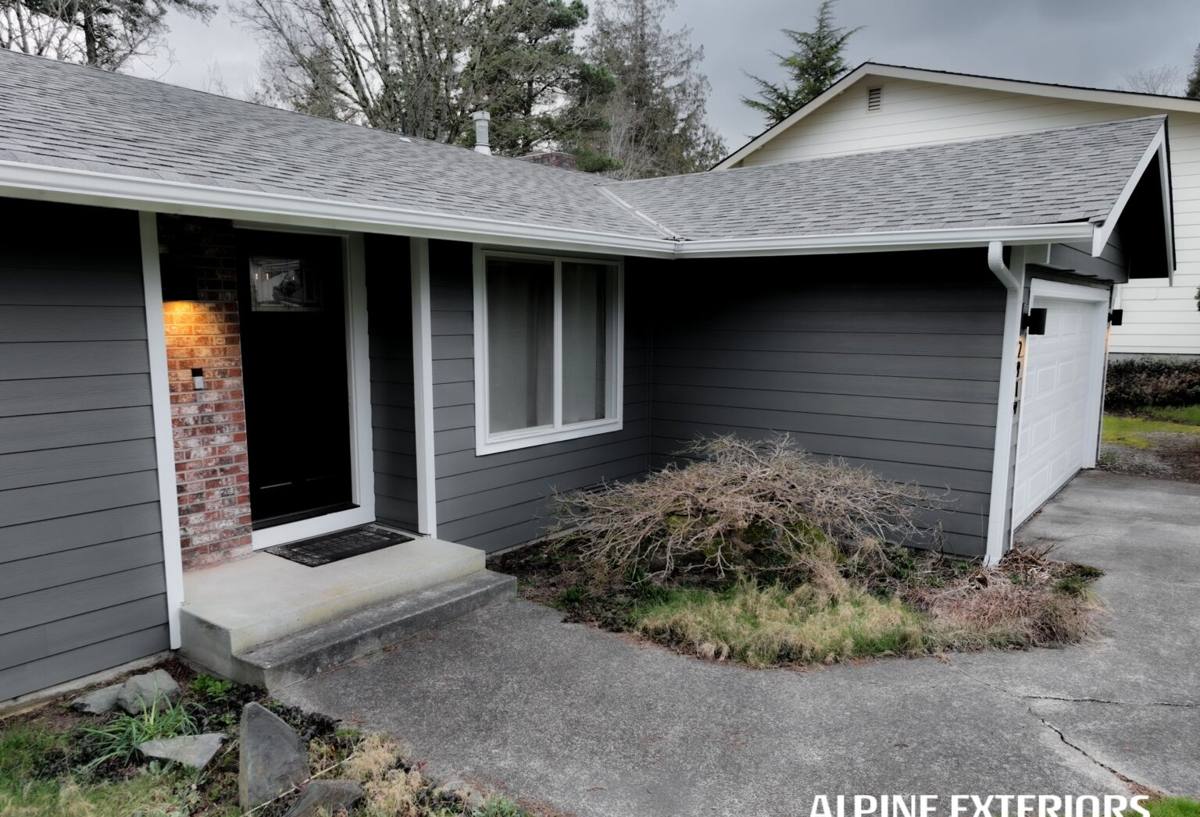
Why We Bring This Up Before You Ask
Every siding material is a bet on how it will behave over 20, 30, or 40 years of actual weather, not a showroom sample. We install exclusively James Hardie fiber cement siding, and we think homeowners deserve to know why — not as a sales pitch against a competitor's product, but as a straightforward explanation of the trade-offs we weighed and the standard we've held ourselves to since we started using only one siding system.
This isn't about brand loyalty. It's about what happens at the core of the material when Whatcom County weather gets to it year after year.
The Core Issue: Wood at the Core, No Matter How It's Engineered
Wood Still Behaves Like Wood
Strip away the resin treatment and the factory coating, and LP SmartSide's core is still wood fiber. Wood swells and contracts with moisture. It's organic material, which means if water gets past the finish and into the substrate — through a cut edge, a nail hole, a butt joint, or a spot where caulking has failed — it can start to absorb moisture, swell, and eventually soften or delaminate. LP's engineering slows this down significantly compared to old hardboard, but it doesn't change the underlying chemistry of what the product is made from.
Fiber Cement Doesn't Have This Problem
James Hardie siding is cement, sand, and cellulose fiber, cured under pressure. There's no organic wood core to swell, rot, or feed fungal growth. Water that reaches the surface doesn't get absorbed into a wood matrix — it sheds or evaporates. That single difference in raw material is the biggest reason we made the switch to an exclusively fiber cement lineup.
Why Sudden Valley's Climate Narrows the Margin for Error
Sudden Valley sits on Lake Whatcom, and the microclimate here isn't identical to Bellingham eight miles away. Homes close to the water deal with persistent moisture in the air, morning fog off the lake, and long stretches of the year where siding simply doesn't get a chance to fully dry out between rain events.
Salt Air and Driving Rain
Whatcom County's proximity to Puget Sound and Bellingham Bay means salt-laden air moves through the region, and it settles on exterior surfaces along with everyday moisture. Combine that with the driving, wind-blown rain we get off the water during fall and winter storms, and any siding product with exposed or compromised edges is taking on more moisture stress here than the same product would in a drier inland climate. Engineered wood siding depends heavily on an intact factory finish and properly sealed cut edges to keep that moisture out — and a decade or two of driving rain will find any gap in that seal.
The Long Moss Season
Anyone who's scraped moss off a roof, a deck, or a north-facing wall in Sudden Valley knows how long our moss season runs — often eight or nine months out of the year on shaded, less sun-exposed elevations. Moss and algae hold moisture directly against the siding surface for extended periods. On fiber cement, that's a cosmetic maintenance issue you can pressure-wash away. On an engineered wood substrate, sustained surface moisture next to a wood core is exactly the condition that stresses the product's weak points over time.
Installation Sensitivity: Where Most Problems Actually Start
In our experience, the majority of siding failures — on any brand — trace back to installation, not the product itself. But some products are far less forgiving of installation mistakes than others, and LP SmartSide is on the sensitive end of that spectrum.
| Installation Factor | LP SmartSide | James Hardie Fiber Cement |
|---|---|---|
| Cut edge treatment | Every field cut must be sealed with manufacturer-approved sealant or it becomes a moisture entry point | Cut edges are not moisture-sensitive; no sealing required for water intrusion protection |
| Fastener placement | Nail placement and depth are critical; overdriven or misplaced fasteners can compromise the seal | Forgiving of standard fastening practices; no core-swelling risk from a fastener miss |
| Clearance from grade/decks | Requires strict clearance to avoid prolonged ground or splash moisture contact | Recommended clearances protect finish and trim, but the panel itself isn't at rot risk |
| Caulking and maintenance | Ongoing caulk maintenance at joints is essential to long-term performance | Joints matter for a clean look, but panel integrity doesn't depend on caulk staying perfect |
| Tolerance for a rushed crew | Low — mistakes compound over years | High — material is inherently more forgiving |
We've torn off enough old siding on remodels around Whatcom County to have seen firsthand how unforgiving these details are. A crew that's a little too fast, a little too willing to skip a sealed edge, can turn a well-engineered product into a callback five or ten years down the road — often long after that crew has moved on to other jobs.
Warranty Structure: Read the Fine Print
LP SmartSide's warranty coverage is real, but like most engineered wood products, it typically includes specific maintenance obligations — sealing cut edges, maintaining caulk joints, keeping the product clear of standing moisture — as a condition of staying covered. If those maintenance steps lapse, coverage can be affected. That puts an ongoing burden on the homeowner that doesn't go away once the siding is up.
James Hardie's warranty on its ColorPlus factory-finished products is structured differently, with strong coverage on both the substrate and the finish, and it's transferable if you sell the home — which matters in a market like Sudden Valley where lake-adjacent properties turn over and buyers ask pointed questions about exterior condition.
What We See When We Tear Off Old Siding
On remodel and re-side jobs, we get a direct look at how different products have held up. A few patterns show up consistently on aging engineered wood siding in this climate:
- Swelling or "puffing" at butt joints and panel edges where moisture worked past the seal over time
- Soft or delaminating spots at the bottom edge, closest to grade or deck splash-back
- Finish degradation on north- and west-facing walls that stay damp longest
- Moss and algae buildup trapping moisture against the surface in shaded areas
- Caulk failure at joints that hadn't been maintained on the manufacturer's recommended schedule
None of this means every LP SmartSide installation fails. Plenty hold up fine, especially on well-maintained, sun-exposed walls with a conscientious homeowner keeping up with caulk and touch-ups. But it's a maintenance-dependent bet, and we'd rather install something that doesn't ask homeowners to carry that ongoing risk.
Why We Standardized on James Hardie Instead
We made a decision a while back to install one siding system, done right, rather than offer several products and let price shop the decision. James Hardie fiber cement gives us:
A Non-Combustible, Moisture-Stable Core
No organic material to swell, rot, or feed moss and mildew growth at the surface level the way an engineered wood substrate can.
Climate-Engineered Product Lines
Hardie manufactures HZ5 product formulated for regions with freeze-thaw cycles and damp, marine-influenced climates like ours — engineered specifically for the moisture and temperature swings the Pacific Northwest sees, including up here around Lake Whatcom.
A Factory Finish Built for the Long Haul
ColorPlus finish is baked on in a controlled factory environment rather than field-applied, which gives more consistent, longer-lasting color and weather resistance than a job-site-applied coating.
A Warranty We're Comfortable Standing Behind
Strong, transferable coverage that doesn't hinge on a homeowner keeping up with a detailed maintenance checklist to stay valid.
Cost Considerations, Honestly
We won't pretend fiber cement is the cheapest option on the market — it typically costs more upfront than engineered wood siding, both in material and installation labor, since it's heavier and requires different tools and technique. Here's how the trade-offs generally break down:
| Factor | LP SmartSide | James Hardie Fiber Cement |
|---|---|---|
| Upfront material cost | Generally lower | Generally higher |
| Installation labor | Lighter material, faster to handle | Heavier, more labor-intensive install |
| Ongoing maintenance | Cut-edge sealing, caulk upkeep, moisture vigilance | Periodic cleaning and repainting on standard fiber cement; ColorPlus needs minimal upkeep |
| Fire resistance | Combustible wood-based product | Non-combustible |
| Expected service life with proper care | Long, but maintenance-dependent | Long, less dependent on ongoing owner maintenance |
When you factor in the maintenance time and the risk of moisture-related repairs down the road, the total cost of ownership gap narrows considerably — which is a big part of why we think Hardie is the better long-term value for most homes in this area, even with a higher install cost today.
Our Bottom Line
LP SmartSide isn't a bad product, and we're not here to tell you it is. It's a wood-based siding that requires disciplined installation and ongoing maintenance to perform well, and in a climate like Sudden Valley's — with salt air off the Sound, driving winter rain, and a moss season that stretches most of the year — we simply don't think it's the product that gives our customers the least worry over the decades ahead. James Hardie fiber cement is. That's why it's the only siding we install.
If you're weighing siding options for a home in Sudden Valley or elsewhere in Whatcom County, we're happy to walk your property, look at your exposure and drainage, and give you a straight answer on what we'd recommend and why. Reach out for a free, no-pressure estimate — there's no obligation, and we'll tell you what we'd actually put on our own house.