 Sudden Valley
 Siding in Cordata: A Climate That Doesn't Let Up
Cordata sits in the north end of Whatcom County, close enough to Bellingham Bay to catch salt-laden air off the Sound and far enough inland to sit under the same low, gray weather system that parks over this part of Washington for months at a time. Homes here don't get hit by any one dramatic event. They get worn down slowly — by driving rain that comes in sideways off Puget Sound storms, by salt air that accelerates corrosion on fasteners and trim, and by a moss and algae season that can run from October through May in a shady, damp yard.
That combination is hard on exterior materials that aren't built for it. Wood siding stays wet longer than it should because it rarely gets a full day of direct sun to dry out. Vinyl expands and contracts with our swings between damp cold and summer heat, and it can crack in a hard freeze. Cheaper composite products that aren't engineered for sustained moisture exposure can swell at the edges and seams. We see the results of all of this regularly on Cordata homes: soft trim boards, peeling paint, moss creeping up from the north-facing wall, and siding that looks tired well before it should.
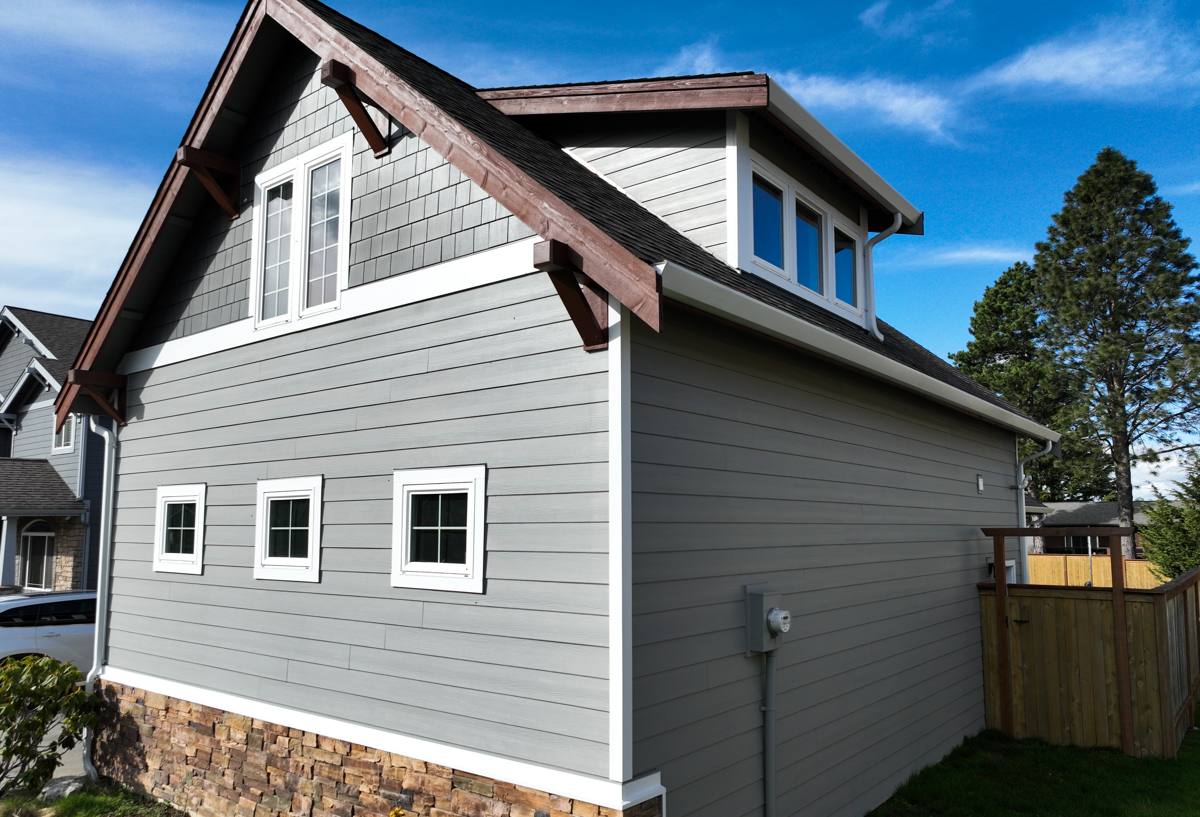
What We See Most Often on Cordata Homes
Every neighborhood has its own pattern of wear, and Cordata's is fairly consistent:
- Moss and algae staining on north- and west-facing walls that don't get much sun, especially under eaves and near landscaping
- Rot at butt joints and corner trim where old wood or composite siding wasn't properly caulked or flashed
- Paint failure on painted wood or fiber cement that's had to be recoated every 5–7 years just to keep up with the moisture cycle
- Caulk breakdown at seams and window trim, letting water track behind the siding instead of shedding off it
- Corroded fasteners on older installations, a slower but real issue given the salt content in coastal Whatcom County air
None of this means Cordata is an unusually hard place to keep a house — it just means the materials and the installation details matter more here than they would in a drier climate. That's the whole reason we've built our business around one siding system instead of offering five.
Why We Install Only James Hardie Fiber Cement
We get asked fairly often why we don't offer vinyl, LP SmartSide, cedar, or other fiber cement brands. The honest answer is that we looked at how each of those materials actually performs over 15, 20, and 30 years in a marine climate like ours, and we standardized on James Hardie because it holds up the best against the specific problems Cordata homes face.
Vinyl Siding
Vinyl is inexpensive and low-maintenance in mild, dry climates, and it has a place in the market. But it's a thin plastic product that expands and contracts significantly with temperature swings, and in a cold snap it can crack or shatter on impact. It also doesn't take paint, so if a homeowner wants to change their home's color down the road, the only option is replacement. In a region with real winter cold events and long-term UV and moisture exposure, we don't think it's the strongest long-term investment for a house.
LP SmartSide and Other Engineered Wood
LP SmartSide is a legitimate, engineered wood product with real strengths, including impact resistance and workability. Its core is still wood-based, though, which means its long-term performance depends heavily on every seam, cut edge, and fastener being sealed correctly and staying sealed. In a climate with our rainfall totals and moss season, any gap in that maintenance creates an opening for moisture to get into the substrate. We'd rather not put a product on a home where a missed caulk touch-up five years down the road can lead to swelling at the edges.
Cedar and Primed Spruce
Real wood siding has a look a lot of homeowners love, and we understand the appeal. But solid wood is the most maintenance-intensive option in a wet climate — it needs regular refinishing, it's the most attractive material to moisture and rot, and it's combustible. Keeping cedar looking good in Whatcom County is a real, recurring commitment.
Other Fiber Cement Brands (Cemplank, Allura)
These are genuine fiber cement competitors to Hardie, and the category as a whole performs well in wet climates. Our decision to standardize on James Hardie specifically comes down to their ColorPlus factory finish (a baked-on finish that resists fading and chipping better than field-applied paint), their HZ5 product line engineered for climates with more moisture exposure, and a warranty and installer-network structure we trust to back the product for decades, not years.
What James Hardie Gets Right for This Climate
Fiber cement is a mix of cement, sand, and cellulose fibers, and it simply doesn't behave like wood or vinyl in wet weather. It doesn't rot, it's not attractive to pests, and it's non-combustible — a meaningful advantage during Washington's increasingly active wildfire seasons, even on the west side of the state. James Hardie's ColorPlus finish is baked on in a controlled factory environment rather than applied on-site, which means better adhesion and color consistency than field-painted siding, and it's backed by a 15-year finish warranty on top of Hardie's product warranty. For moss and algae specifically, a hard, dense fiber cement surface doesn't hold moisture the way porous wood does, which slows the rate at which organic growth can take hold — though nothing stops moss entirely on a shaded, damp wall, which is a landscaping and sun-exposure issue as much as a siding one.
How We Approach a Siding Job in Cordata
Every project starts with an honest look at what's actually happening behind the existing siding, not just what's visible on the surface.
- Assessment — We check for soft spots, trapped moisture, and flashing issues around windows, doors, and rooflines before quoting anything.
- Water management first — Correct house-wrap, flashing, and drainage plane details go in before a single piece of Hardie board goes up. This is the step that determines whether siding lasts 10 years or 40.
- Installation to Hardie spec — proper fastener spacing, clearances at grade and roofline, and correctly caulked or open joints per the manufacturer's instructions for our climate zone.
- Trim and detail work — corners, window trim, and transitions are where most siding failures start, so we treat them as first-class parts of the job, not an afterthought.
- Final walkthrough — we go over the finished work with the homeowner before calling the job done.
Beyond Siding: Roofing, Windows, and Decks
Siding doesn't work in isolation — it's one piece of a home's exterior envelope. We also handle roofing, window replacement, and deck construction, largely because the same weather that wears down siding in Cordata wears down everything else on the outside of a house at the same time. A roof with failing flashing will send water down behind good siding no matter how well it's installed. Old, leaky windows undercut the whole point of a fresh, tight exterior. And a deck built without the right ledger flashing and moisture-resistant materials fails fast in a climate this wet. Handling all four trades under one crew means fewer contractors pointing fingers at each other and a home exterior that's been thought through as a whole system.
What Siding Replacement Typically Costs
Every home is different, but these are the main factors that move the price on a Cordata siding project:
| Factor | Why It Matters |
|---|---|
| Home size and wall complexity | More square footage, corners, and dormers mean more material and labor time |
| Tear-off vs. overlay | Removing old siding down to the sheathing costs more up front but lets us fix hidden moisture damage and water-management issues |
| Hardie product line | HZ5 panels, lap siding, and shingle-style products vary in material cost and installation time |
| Trim and accent work | Board-and-batten sections, window trim upgrades, and accent colors add labor |
| Existing damage | Rot repair, sheathing replacement, or re-flashing found once old siding comes off |
| Access and site conditions | Steep lots, mature landscaping, or limited staging area can affect labor time |
We won't quote a firm number without seeing the house, but we'll walk through these factors with you plainly during an estimate so there are no surprises once work starts.
Choosing a Contractor for Exterior Work in Cordata
Whatcom County has plenty of contractors who'll put siding on a house. Fewer of them specialize in doing it correctly in a marine climate. Before hiring anyone for siding, roofing, window, or deck work, it's worth checking:
- Washington state contractor license and active bonding/insurance
- Manufacturer-specific training or certification for the siding product being installed
- Whether the quote separates material, labor, and any repair contingencies clearly
- Whether they inspect and address water-management details (house wrap, flashing) or just cover over what's there
- A warranty that covers both the product and the labor, in writing
- Local references or a local physical presence, not just a regional sales office
A crew that works Whatcom County regularly knows the difference between a house on a shaded, damp lot and one that gets full afternoon sun, and adjusts the installation details accordingly. That local knowledge is worth more than it sounds like on paper.
Maintaining Hardie Siding in Cordata's Climate
James Hardie siding is low-maintenance, not zero-maintenance. A yearly rinse with a garden hose (not a pressure washer aimed directly at seams) keeps moss and pollen from building up. Keeping gutters clear and downspouts directed away from the foundation prevents splash-back staining at the base of the wall. Trimming back shrubs and trees so siding gets some airflow and sun exposure goes a long way toward slowing moss growth on shaded sides of the house. And a quick annual look at caulking around windows and trim catches small gaps before they become moisture problems.
If your Cordata home's siding is showing moss staining, soft trim, peeling paint, or you're just planning ahead for a full exterior refresh, we're happy to take a look and talk through honest options — no pressure, no obligation. Reach out for a free estimate using the form below.