 Sudden Valley
 Why Color Choice Matters More Here Than People Think
Picking a siding color feels like the fun part of a project — swatches, mood boards, maybe a look at what the neighbors did. But in Sudden Valley, color isn't just a style decision. The finish you choose has to survive damp air off Lake Whatcom, driving rain that comes sideways off the Pacific storm track, and a moss and algae season that can run eight or nine months out of the year in the shaded, tree-lined lots common around here. A color that looks great in a showroom can chalk, fade unevenly, or show streaking within a few years if the underlying finish isn't built for this climate.
This is the core reason we install James Hardie fiber cement exclusively and don't offer LP SmartSide, vinyl, cedar, or other fiber cement brands. Hardie's ColorPlus finish system was engineered specifically to solve the fading and maintenance problems that plague field-painted and factory-primed siding in wet, low-sun climates like ours. Below is what actually goes into that system, how the color lines work, and what to think about before you commit to a shade.
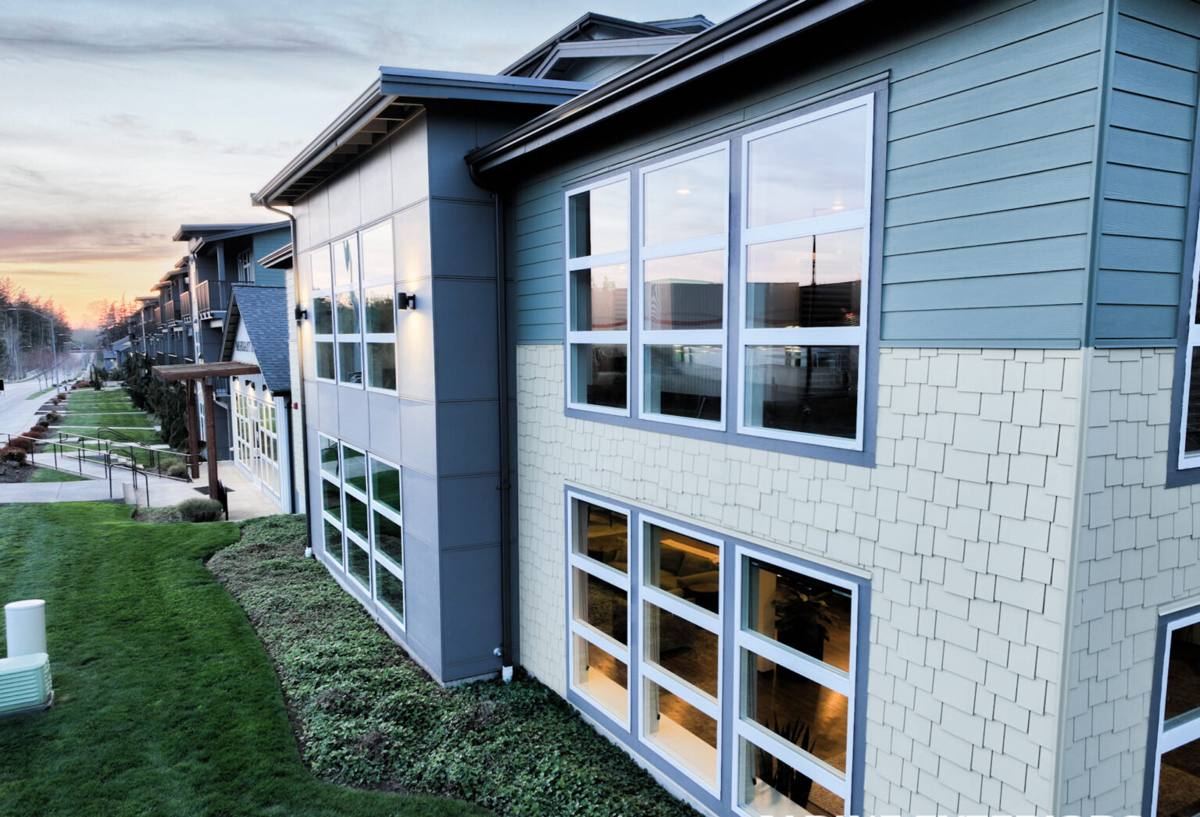
What ColorPlus Technology Actually Is
ColorPlus isn't paint sprayed on at the job site. It's a factory-applied, multi-coat finish baked onto the fiber cement board under controlled conditions before it ever reaches Whatcom County. The process typically involves:
- A primer coat applied to the raw fiber cement substrate
- Two or more coats of 100% acrylic exterior finish, cured in a factory environment rather than air-dried outdoors
- A finish layer that resists UV breakdown and moisture intrusion at the surface, rather than relying on a topcoat applied after installation
The practical difference shows up over time. Field-applied paint on wood, LP SmartSide, or primed fiber cement has to bond and cure outdoors, at whatever humidity and temperature happen to exist that week — which in Sudden Valley often means damp, cool conditions that aren't ideal for a paint job. A factory-cured finish doesn't have that variable. It goes on right, every time, before the material ever sees Whatcom County weather.
Why This Matters in a Moss and Moisture Climate
Persistent moisture is what breaks down inferior finishes. Paint that hasn't fully cured, or that was applied over primer in the field, is more prone to letting moisture behind the finish layer — which leads to peeling, blistering, and the kind of streaky, uneven fading you'll see on older homes around the lake where the north- and west-facing walls look years older than the rest of the house. ColorPlus is formulated to resist that moisture intrusion at the surface, which is a big part of why the color stays consistent wall to wall, year after year.
HZ5 vs. HZ10: The Engineering Behind the Color
Most homeowners never hear about this, but James Hardie doesn't make one universal siding product — the boards themselves are engineered differently by climate zone. Whatcom County falls into Hardie's HZ10 zone, which covers the wetter parts of the Pacific Northwest. HZ10 boards are formulated with moisture management properties suited to sustained rain and humidity, as opposed to the HZ5 formulation used in drier, hotter regions.
Why does this matter for color? Because the ColorPlus finish and the substrate are engineered together as a system. A finish that performs well on an HZ5 board in Arizona isn't necessarily tuned for how an HZ10 board absorbs and releases moisture in a Sudden Valley winter. When we install Hardie products locally, we're using the HZ10 formulation with a ColorPlus finish matched to it — not a generic national product.
The Color Palette: What's Actually Available
James Hardie's ColorPlus palette runs a broad range, generally organized into a few practical groups:
- Neutrals and whites — Arctic White, Cobble Stone, Navajo Beige, and similar tones that stay classic and resell well
- Grays — from light Gray Slate tones to deeper charcoals, currently some of the most requested colors in the region
- Blues and greens — deeper coastal tones like Boothbay Blue or Countrylane Red-adjacent greens that suit the wooded, lakeside character of Sudden Valley lots
- Dark and bold tones — near-black and deep charcoal options that have become popular on modern builds, though they carry some climate trade-offs worth discussing below
Beyond the standard ColorPlus palette, Hardie also offers a Statement Collection with additional premium tones, and primed boards for homeowners who want to choose their own field-applied color — though we'll be direct that going the primed route gives up the factory-cure advantage that makes ColorPlus worth choosing in the first place.
ColorPlus vs. Field-Applied Finish
| Factor | ColorPlus (Factory Finish) | Primed Board + Field Paint |
|---|---|---|
| Cure environment | Controlled factory conditions | Outdoor conditions at time of install |
| Coats applied | Primer + 2 finish coats minimum | Varies by painter, often 1-2 coats |
| Warranty on finish | Separate finish warranty from Hardie | Warranty from paint manufacturer/painter only |
| Typical repaint interval | Often 15+ years before touch-up needed | Commonly 5-8 years in this climate |
| Color consistency wall-to-wall | High — factory batch controlled | Depends on application conditions and painter skill |
Field-applied color still has a place — some homeowners have a very specific custom color in mind that isn't in the ColorPlus lineup. That's a legitimate reason to go that route. But it should be a deliberate choice made with eyes open about the maintenance trade-off, not a default.
How Color Choice Interacts With Local Conditions
Dark Colors and Sun-Facing Walls
Deep charcoal and black tones look sharp, and Hardie's ColorPlus finish is engineered to handle heat better than older dark-siding products. Still, on south- and west-facing walls that get direct afternoon sun, dark siding runs hotter than light siding, which is worth considering for any wall backed by living space that already runs warm in summer.
Light Colors and Moss-Prone Walls
North-facing walls, walls shaded by mature trees, and anything close to the tree line around Sudden Valley are going to be exposed to more sustained dampness and shade — prime conditions for moss and algae growth regardless of siding brand or color. Lighter colors make that growth visually obvious sooner; darker or mid-tone colors can mask early growth longer, which sometimes means it goes unaddressed. Neither is a defect in the siding — it's a maintenance planning issue worth thinking through by wall orientation, not just by the color you like in the sample chip.
Trim and Accent Contrast
A lot of homes in this area use a body color paired with a contrasting trim, fascia, or shutter color. Hardie's trim boards and accent products are available in coordinating ColorPlus finishes, which keeps the whole system consistent rather than mixing a factory-finished body with field-painted trim that will fade on a different timeline.
The Warranty Behind the Finish
James Hardie backs ColorPlus with a separate finish warranty from the product's substrate warranty — commonly structured as a long-term, non-prorated coverage on the finish itself, in addition to Hardie's substrate warranty on the board. Both are transferable to a subsequent owner within the stated terms, which is a real selling-point detail for anyone who might sell within the coverage period. The specifics of coverage terms should always be confirmed against Hardie's current published warranty documentation for the exact product line installed, since terms can vary by product.
Choosing a Color: A Practical Checklist
- Look at large-format samples outdoors, in Sudden Valley's actual overcast light — not under indoor showroom lighting
- Check the sample against your roof color, stone or brick accents, and any features that won't be changing
- Consider each wall's sun and shade exposure separately, not just the overall house
- Ask what maintenance (soft washing frequency, gutter overflow staining risk) looks like for that specific tone
- Confirm whether trim, fascia, and soffit products are available in a coordinating ColorPlus finish
- Get the warranty terms for that specific color/product line in writing before you commit
Maintenance That Protects Your Color Investment
ColorPlus is low-maintenance, not no-maintenance. A soft wash on a reasonable schedule — more often on shaded, north-facing walls — keeps organic growth from taking hold and keeps the color looking like the day it was installed. Keeping gutters clear prevents overflow streaking down the face of the siding, which is one of the most common cosmetic complaints we see on homes near the lake with mature tree cover. None of this involves scraping or repainting; it's simple upkeep that protects a finish that's already doing the hard work.
If you're planning a siding project in Sudden Valley and want to see ColorPlus samples against your home's actual roofline and lot conditions, we're happy to bring the palette to you for a free, no-pressure estimate — no obligation, just a straight look at what will hold up here.