 Sudden Valley
 Siding Built for Sunnyland's Waterfront Climate
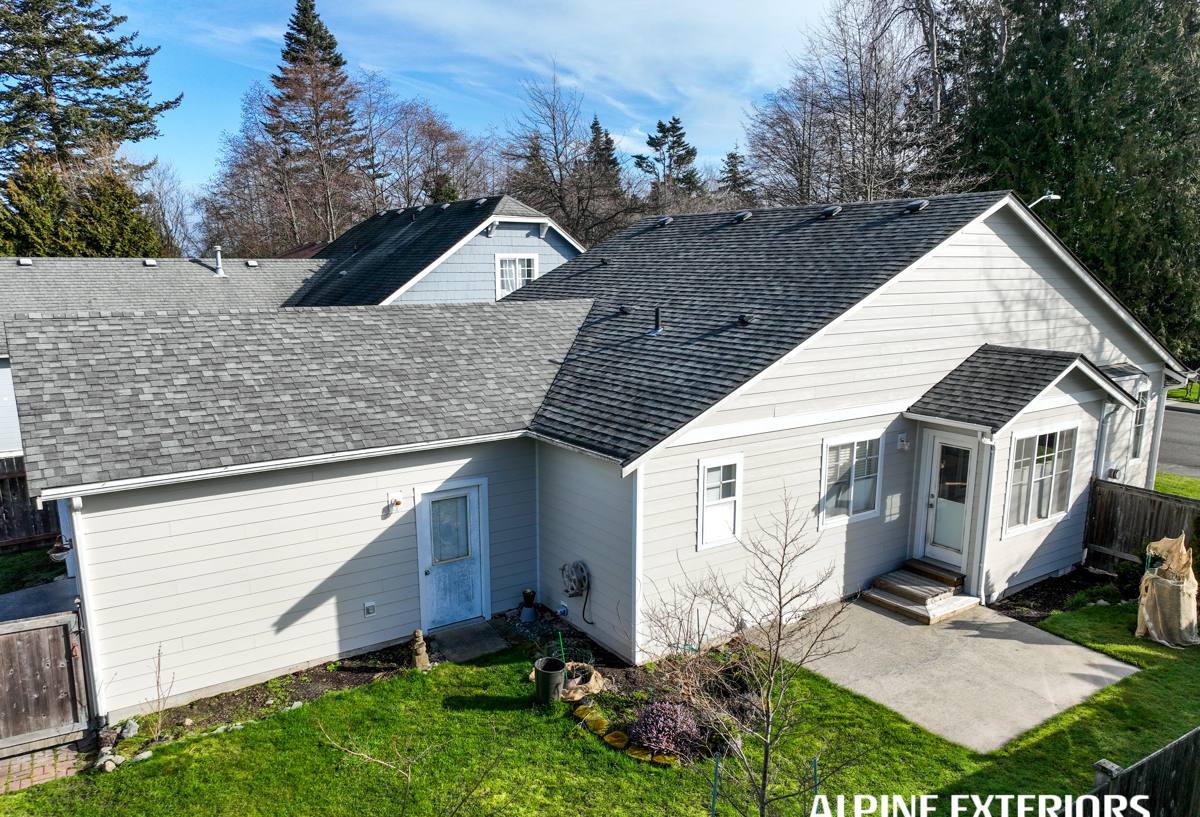
Sunnyland sits close enough to the water and the wooded slopes around Sudden Valley that its homes take a specific kind of beating year-round. It's not one dramatic weather event that wears down exterior siding here — it's the steady combination of moist air off the water, driving rain that comes in sideways during winter storms, and long stretches of shade and dampness that let moss and algae get a foothold on north-facing walls. Whatcom County's marine climate means humidity rarely lets up for long, and that's exactly the environment where the wrong siding material shows its weaknesses.
We're a local siding, roofing, window, and deck contractor, and when it comes to siding we install one product line: James Hardie fiber cement. That's not a marketing gimmick — it's a standard we hold because we've seen what this climate does to lesser materials over ten, fifteen, twenty years, and we'd rather stand behind one system we trust completely than offer a menu of products with different failure points.
What Sunnyland Homes Are Up Against
Salt Air and Moisture
Homes closer to the water deal with airborne salt and near-constant humidity. Over time, that combination accelerates corrosion on fasteners and trim, and it keeps wood-based siding products damp longer than they're designed to tolerate. Moisture that gets trapped behind or inside siding material is the root cause of most premature siding failures we see in this region.
Driving Rain
Storms coming off the water don't just fall straight down — wind pushes rain horizontally into wall assemblies, testing every seam, joint, and piece of flashing on a house. Siding that isn't engineered for wind-driven rain, or that isn't installed with correct flashing and drainage details, will eventually let water find its way behind the cladding.
Moss and Algae Season
Shaded lots and tree cover around Sudden Valley mean some exterior walls barely see direct sun for months at a time. That's an ideal environment for moss, mildew, and algae to establish themselves on siding surfaces, especially anything with a porous or absorbent surface. Left unaddressed, that growth holds moisture against the wall even longer, compounding the problem.
Why We Only Install James Hardie Fiber Cement
We get asked why we don't offer vinyl, LP SmartSide, primed wood, or the other fiber cement brands on the market. The honest answer is that we looked at how each of those products performs over a couple decades in a marine climate like this one, and we made a call about what we're willing to put our name on.
- Non-combustible: James Hardie fiber cement is made from cement, sand, and cellulose fiber — it doesn't burn, which matters for wildfire-adjacent regions and simply for peace of mind.
- Engineered for moisture: Hardie's HZ5 product line is specifically formulated for Pacific Northwest-style climates — freeze-thaw cycles, high humidity, and sustained rain exposure.
- Factory-applied ColorPlus finish: The finish is baked on in a controlled factory environment rather than sprayed on-site, which gives it far more consistent coverage and resistance to fading, chipping, and moisture intrusion than field-applied paint.
- Dimensionally stable: Fiber cement doesn't swell, warp, or rot the way wood-based products can when they take on repeated moisture exposure.
- Strong transferable warranty: Hardie backs its siding with a long product warranty that can transfer to a new owner, which matters for resale in a market where buyers are increasingly asking about exterior condition.
We're not saying every other product on the market is unusable everywhere. We're saying that for a house sitting in Whatcom County's marine air, we've decided the trade-offs of cheaper or wood-based alternatives aren't worth it, and Hardie's track record in exactly this kind of climate is why we standardized on it.
How a Siding Project Works, Start to Finish
1. Inspection and Assessment
We start by walking the exterior and checking for the usual culprits: soft spots, moisture staining, gaps at trim and window flashing, and any areas where the existing siding has already let water behind it. This tells us whether we're looking at a full replacement or targeted repair.
2. Moisture and Sheathing Check
Before new siding goes up, we check what's underneath. If sheathing has taken on water damage from years of a failing exterior, that gets addressed first — covering it up with new siding without fixing what's underneath just delays the same problem.
3. Weather Barrier and Flashing
Correct installation is at least as important as the material itself. That means a properly lapped weather-resistive barrier, correct flashing at every window, door, and roofline intersection, and attention to the details that keep wind-driven rain from finding a way in.
4. Installation to Manufacturer Spec
James Hardie publishes specific installation guidelines — fastener spacing, clearances, caulking practices — and following them to the letter is what keeps the product warranty valid and the siding performing as designed for decades.
5. Final Walkthrough
We go over the finished work with the homeowner, point out anything worth knowing for long-term care, and make sure everything meets the standard we'd want on our own house.
Comparing Siding Options for a Marine Climate
| Material | Moisture Resistance | Maintenance | Typical Lifespan | Our Position |
|---|---|---|---|---|
| Vinyl | Can warp/crack in temperature swings; seams are vulnerable | Low, but limited repair options when damaged | 15-25 years | Not installed by us |
| Primed wood/spruce | Absorbs moisture, prone to rot without diligent upkeep | High — regular repainting and sealing | 10-20 years with upkeep | Not installed by us |
| LP SmartSide | Engineered wood strand; performs well when sealed cuts/edges are maintained | Moderate — edge sealing is critical | 20-30 years | Not installed by us |
| James Hardie fiber cement | Engineered for high-moisture climates; dimensionally stable | Low — occasional cleaning, factory finish resists fading | 30-50+ years with correct install | What we install |
Beyond Siding: Roofing, Windows, and Decks
Siding doesn't work in isolation — it's one piece of the building envelope. A roof that's shedding water improperly, windows with failing flashing, or a deck ledger board that's trapping moisture against the house can all undermine even a well-installed siding job. Because we handle roofing, windows, and decks as well as siding, we can look at a Sunnyland home's whole exterior and flag issues that a siding-only crew might miss, or that a homeowner wouldn't think to connect to a specific problem area on the wall.
This matters most around windows and rooflines, where multiple systems intersect and where the majority of water intrusion problems actually originate — not in the field of the siding itself, but at the transitions.
Signs Your Sunnyland Home May Need Siding Attention
- Visible moss, algae, or persistent green/black staining on north- or shade-facing walls
- Peeling, bubbling, or chalking paint on wood-based siding
- Soft or spongy spots when you press on the siding surface
- Gaps or separation at seams, corners, or trim boards
- Warping, cupping, or visible panel movement
- Rising energy bills that could point to a compromised exterior envelope
- Interior signs like musty smells or staining near exterior walls
Why a Local Crew Matters
Siding installation isn't one-size-fits-all, even within a small region. A crew that works throughout Whatcom County and understands how Sudden Valley's mix of waterfront exposure, tree cover, and elevation changes affects individual homes is going to catch details that an out-of-town or general-market contractor might not think to check. We know which orientations in this area tend to hold moisture longest, which is part of why we're particular about flashing details and why we won't cut corners on a weather barrier just to save a day of labor.
Being local also means we're not disappearing after the job is done. If a question comes up two years down the road, we're still in the area and still reachable — that accountability is part of what you're paying for with any contractor, and it's worth asking about directly when you're comparing quotes.
What to Ask Before Hiring a Siding Contractor
- Are they licensed and insured in Washington State?
- Do they carry manufacturer certification for the siding product they're installing?
- Will they put the warranty terms — both material and labor — in writing?
- Do they inspect and address sheathing/moisture issues before installing new siding, or just cover what's there?
- Can they explain their flashing and weather-barrier approach in plain language?
- Do they have a physical local presence, not just a lead-generation website?
If you're noticing moss buildup, staining, or general wear on your home's exterior, we're happy to take a look and walk you through what we're seeing — no pressure, no obligation. Reach out for a free estimate using the form below.