 Sudden Valley
 Exterior Conditions in Columbia and the Wider Sudden Valley Area
Homes in the Columbia area of Sudden Valley sit inside one of the wetter, greener corners of Whatcom County. Tree cover is heavy, humidity lingers long after a storm passes, and the combination of driving rain, salt-laden coastal air moving inland, and a moss season that can stretch across most of the year puts steady, cumulative pressure on exterior surfaces. None of this is dramatic on any single day. It's the years of repeated wetting and drying, shaded north and east walls that never fully dry out, and organic growth working into seams and fastener lines that eventually show up as soft trim, peeling paint, or siding that's lost its shape.
We bring that same understanding to every job in this area, not because Columbia is unusual, but because it's a clear example of what this climate does to a house over time. A siding, roofing, window, or deck system that isn't specified for this kind of exposure tends to show its weaknesses here faster than it would somewhere drier.
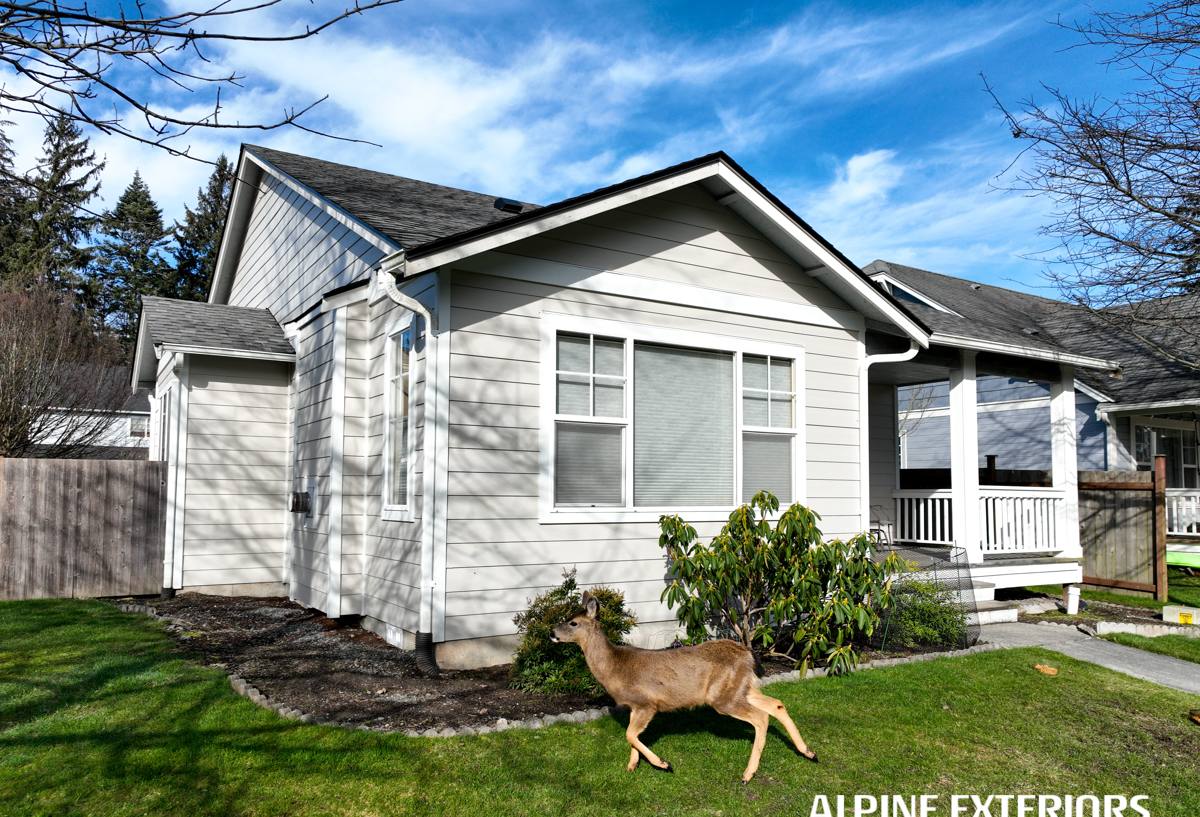
Why Exteriors Wear Differently Here Than in Drier Climates
In a low-humidity region, a lot of exterior products can get away with mediocre moisture management because there simply isn't much moisture to manage. That's not the case in Whatcom County. Around Sudden Valley, several factors compound:
- Extended damp periods that keep siding and trim near saturation point for days at a time
- Shade from tree canopy that slows drying on north- and east-facing walls
- Moss and algae growth that holds moisture against the surface long after rain has stopped
- Wind-driven rain that pushes water into laps, seams, and fastener penetrations rather than letting it simply run off
Materials that rely on a paint film or factory coating to keep water out — rather than a substrate that tolerates repeated wetting — are the ones that show telltale signs first: swelling at butt joints, soft spots at the bottom courses, and paint that blisters or peels well ahead of its expected repaint cycle.
What We Install: James Hardie Fiber Cement, and Nothing Else
We install James Hardie fiber cement siding exclusively. We don't offer vinyl, LP SmartSide, Cemplank, Allura, primed spruce, or cedar as alternatives, and that's a deliberate standard, not a lack of options. Each of those products has legitimate strengths, but each also carries a trade-off — moisture sensitivity, maintenance burden, impact resistance, or long-term appearance — that we've decided not to build our reputation on in a climate this wet.
Fiber cement is engineered from cement, sand, and cellulose fibers. It doesn't absorb water the way wood-based products can, it won't feed rot, and it holds paint and factory finish far longer than most alternatives in a marine climate. Hardie's ColorPlus factory finish is baked on and UV-cured before it ever reaches the jobsite, which matters here specifically because repainting a home surrounded by trees and damp weather is neither cheap nor something homeowners want to repeat every few years.
How the Main Options Compare in This Climate
| Material | Moisture Behavior | Maintenance in Wet Climates | Typical Repaint Interval |
|---|---|---|---|
| James Hardie fiber cement | Does not rot, resists moisture-driven swelling | Low — occasional wash, factory finish holds up | 15+ years with ColorPlus finish |
| LP SmartSide (engineered wood) | Treated wood strand, vulnerable if seals or caulking fail | Moderate — seams and cut edges need vigilance | 7-10 years typical |
| Vinyl | Doesn't rot but traps moisture behind it if installed loose | Low, but can crack, fade, and warp in sun/cold swings | Color is molded in, but fading is common |
| Cedar / primed spruce | Natural wood, absorbs and releases moisture constantly | High — regular sealing/painting required | 3-7 years |
This isn't a claim that the other products are defective. It's a straightforward look at how each one behaves once it's actually living through a Whatcom County winter and a long, shaded moss season, which is the environment every Columbia-area home is dealing with.
Roofing, Windows, and Decks Under the Same Standard
Siding is only one part of a home's shell, and in this climate the weak point is often wherever two systems meet — where roofline meets wall, where a window is flashed into siding, where a deck ledger attaches to the house. We handle roofing, windows, and decks alongside siding so those transitions are built and flashed as one system instead of being patched together by separate trades on separate schedules.
For roofing, that means attention to underlayment, ice-and-water protection at valleys and eaves, and ventilation that lets a roof deck dry out between storms. For windows, it means correct flashing integration with whatever siding surrounds them, since a poorly flashed window is one of the most common hidden moisture paths into a wall assembly. For decks, it means materials and fastening that hold up to standing water and shade, since a deck under heavy tree cover dries far slower than one in full sun.
Why a Local Crew Matters in an Area Like This
Sudden Valley has its own character — private roads in places, tree cover that affects access and staging, and homeowners association guidelines that can apply to exterior work depending on the property. A crew that works this area regularly already knows what to expect: how to plan around limited driveway or turnaround space, what Whatcom County permitting looks like for exterior projects, and how a house that's been shaded by mature trees for decades tends to differ from one in an open, sunny lot even a few miles away.
That local familiarity isn't a marketing point — it changes the estimate. A crew unfamiliar with the area might not account for the extra drying time needed before certain work can start, or might underestimate how much moss and organic buildup has to be dealt with before old siding comes off. We plan for that from the first visit.
Our Process for a Columbia-Area Project
Inspection First
Before any estimate is finalized, we look at the existing siding, trim, and any visible moisture damage — soft spots, staining, or areas where past repairs suggest a recurring leak path. This is especially important on shaded walls where damage isn't always obvious from the ground.
Moisture and Substrate Check
Wet climates hide problems behind the siding, not just on it. Where we suspect trapped moisture, we check the sheathing and framing underneath before continuing, since installing new siding over a compromised wall just delays a bigger repair.
Installation to Manufacturer Spec
James Hardie's warranty and long-term performance depend on installation matching their specifications — correct fastening, clearances, flashing details, and caulking at the right joints. We follow those specs as the baseline, not an upsell.
Final Walk-Through
Before we consider a job finished, we walk the exterior with the homeowner, checking trim lines, paint, and any transitions to roofing, windows, or decks that were part of the scope.
A Practical Maintenance Checklist for This Climate
Even durable materials benefit from basic upkeep in an environment like Columbia's. A short annual routine catches small issues before they become expensive ones:
- Rinse siding and trim once a year to remove moss and algae buildup, especially on shaded walls
- Keep gutters clear so overflow isn't running down siding or pooling near the foundation
- Trim back branches and foliage that keep a wall surface damp or block airflow
- Check caulking around windows, doors, and trim joints annually and re-seal where it's cracked or missing
- Walk the roofline after major storms for lifted shingles or debris buildup in valleys
- Inspect deck ledger boards and fasteners yearly, since this is a common hidden moisture point
What Affects Cost on a Project Like This
Every home is different, but a few factors consistently drive cost up or down on siding, roofing, window, and deck projects in this area:
| Cost Factor | Why It Matters Here |
|---|---|
| Existing moisture damage | Rot found behind old siding or trim adds repair scope before new material goes on |
| Tree cover and access | Heavy canopy can slow drying between steps and complicate staging and equipment access |
| Trim and detail complexity | Homes with more corners, windows, and rooflines require more flashing and cutting |
| Scope of removal | Full tear-off versus partial replacement changes labor and disposal costs |
| Combined project scope | Bundling siding with roofing, windows, or a deck can reduce overlapping setup costs |
Getting Started
If you're weighing a siding, roofing, window, or deck project on a home in the Columbia area of Sudden Valley, we're glad to come take a look and walk you through what we're seeing, no pressure and no obligation. Use the form below to request a free estimate.