 Sudden Valley
 Exterior Work Built for the Acme Climate
Acme sits in the wooded, water-rich part of Whatcom County, tucked into the foothills where the South Fork Nooksack valley starts climbing toward Mount Baker. It's a different exterior environment than a wide-open coastal lot, but the underlying problem is the same one that shows up across this whole region: homes here stay wet, and they stay wet for a long time. Tree cover slows drying. Valley humidity lingers. Marine moisture off the Sound pushes inland and settles into low, forested pockets like this one. Add driving rain off the Pacific weather systems and a moss season that can run eight months or more, and you have a climate that is genuinely hard on exterior building materials — harder than most manufacturers' spec sheets assume.
We do siding, roofing, windows, and decks for homes throughout this area, and Acme jobs tend to share a family resemblance: shaded north and east walls that never fully dry out, gutters and trim that collect organic debris faster than open-lot homes, and siding that was often installed without much thought given to what a shaded, damp lot actually does to a wall system over twenty years.
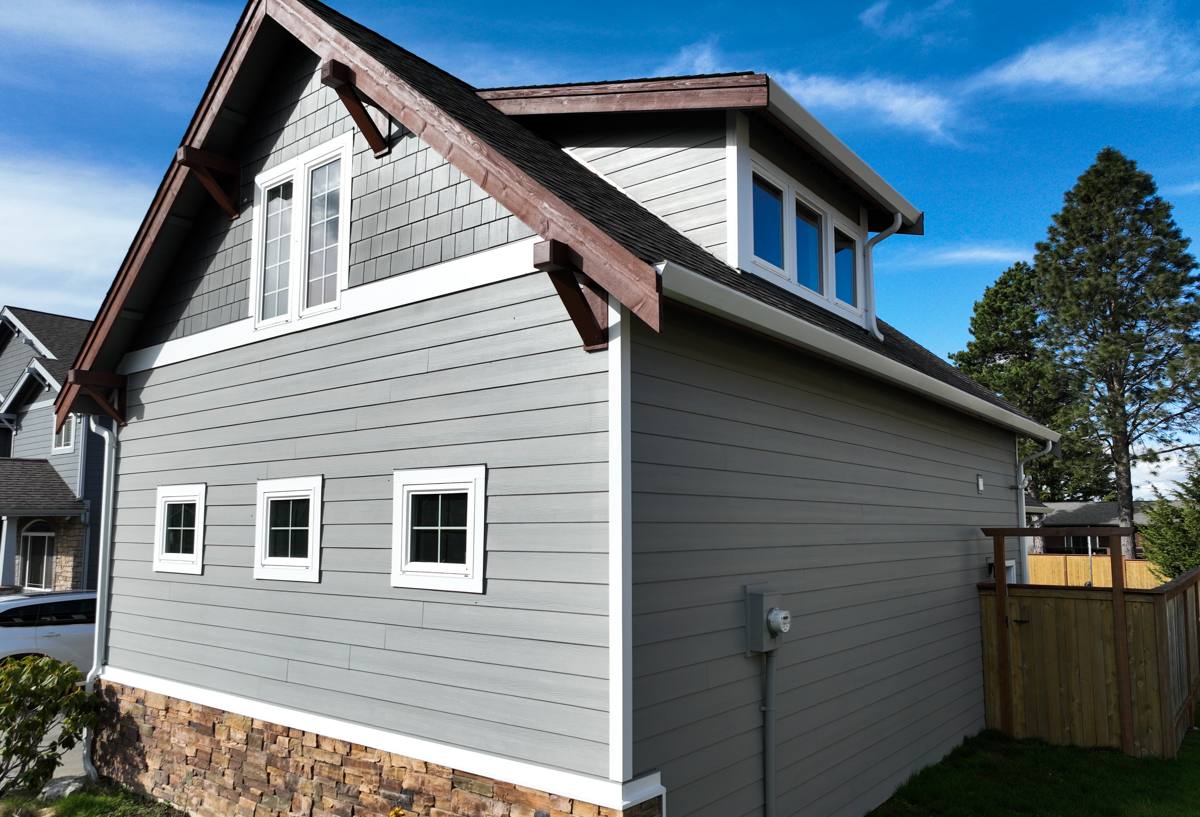
What Damp, Wooded Sites Do to Siding Over Time
Moss and Organic Growth
Moss doesn't just grow on roofs. On shaded siding — especially anything with horizontal laps, deep butt joints, or wood-based material — it takes hold in the seams and holds moisture directly against the substrate. On wood, engineered wood, and some composite products, that constant moisture contact is exactly the condition that leads to swelling, softening, and eventual rot at the edges and joints, whether or not the surface paint still looks intact.
Driving Rain and Wind-Driven Moisture
Whatcom County storms frequently come with sideways rain, and homes in valley and foothill locations like Acme can catch wind funneling that pushes water hard against walls rather than letting it run straight down. Siding systems, flashing details, and house wrap all have to be installed with that reality in mind — not just against straight-down rain, which is a much easier condition to manage.
Slow Drying Cycles
An open, sunny lot dries out between storms. A tree-shaded lot in a valley often doesn't — the siding can stay damp for days after a rain event ends elsewhere in the county. Materials that tolerate occasional moisture exposure fine on a sunny site can fail early on a shaded one, simply because they never get the drying window they were designed around.
Why We Install James Hardie Fiber Cement — and Nothing Else
We made a deliberate decision to install only James Hardie fiber cement siding, and we don't install vinyl, LP SmartSide, Cemplank, Allura, primed spruce, or cedar. That's not a marketing position — it's a standard we hold ourselves to because we've seen how each of those alternatives performs, or fails to perform, in exactly the kind of damp, shaded conditions common around Acme.
Fiber cement is not organic. It has no wood fiber content for moisture to soften or for fungus to feed on, which matters enormously in a moss-prone, slow-drying environment. It won't warp, delaminate, or swell at the joints the way wood-based sidings can when they stay wet for extended periods. James Hardie's HZ5 product line is engineered specifically for the kind of wet, freeze-prone Pacific Northwest climate zones that include Whatcom County, and the factory-applied ColorPlus finish is baked on under controlled conditions rather than field-painted, which gives it far better resistance to the mildew staining and color fade that damp, shaded walls are especially prone to.
None of this means other materials are junk — vinyl is inexpensive and low-maintenance in the right setting, engineered wood siding has real appearance advantages, and cedar has genuine curb appeal. But each comes with a trade-off we're not willing to install on homes we stand behind: vinyl can warp and doesn't stop moisture intrusion at the wall assembly; engineered wood and cedar require diligent painting, caulking, and moisture management that a shaded, damp lot makes harder to keep up with; and thinner fiber cement alternatives to Hardie don't carry the same track record or factory finish warranty. On a site like Acme, where the climate is actively working against the material, we'd rather install the one product line that's built to shrug that off.
Full Exterior Scope: Siding, Roofing, Windows, Decks
Siding is our specialty, but exterior problems in this climate rarely show up in just one place. A roof that's shedding moss onto siding below, window flashing that's letting water track down into a wall cavity, or a deck that's trapping moisture against the house band board — these all interact. We handle all four so the whole envelope gets treated as one system instead of four separate contractors working around each other.
- Siding: James Hardie plank, shingle, and panel systems, installed with correct flashing, clearances, and fastening for this climate.
- Roofing: Replacement and repair with attention to moss-resistant details and proper ventilation, which directly affects how long siding stays dry.
- Windows: Replacement with correct flashing integration into the siding plane — a common failure point on older homes.
- Decks: Built and repaired with drainage and ledger-board moisture management in mind, since deck attachment points are a frequent source of hidden wall rot.
Why a Local Crew Matters Here
A crew that mostly works subdivisions on open, sunny lots doesn't necessarily know how to read a shaded, forested property. Where to expect the worst moss buildup, which walls will need the most aggressive drainage detailing, how far up a wall splashback from wet ground cover can travel — that's site-specific knowledge that comes from working this exact kind of terrain repeatedly, not from a general contractor playbook. We're a Whatcom County crew, and jobs in areas like Acme are part of our regular territory, not an occasional trip out.
Local also means accountability. If something needs a warranty callback in year three or year eight, we're still the same company, still in the same county, still reachable — not a franchise that changed hands or a crew that was only ever passing through on a regional contract.
What Drives Cost on a Project Like This
Every home is different, but a few factors consistently move the price on siding, roofing, window, and deck projects in wooded, damp locations like Acme.
| Factor | Why It Matters |
|---|---|
| Extent of hidden moisture damage | Shaded walls with long-term moss contact sometimes reveal soft sheathing once old siding comes off, which adds repair scope before new material goes on. |
| Home access and tree cover | Wooded lots can complicate scaffolding, material staging, and debris removal, especially with limited driveway or yard clearance. |
| Number of stories and roof pitch | Steeper roofs and taller walls affect both roofing and siding labor and safety equipment needs. |
| Existing siding material | Removing wood, vinyl, or damaged fiber cement requires different disposal and prep work than a straightforward re-side. |
| Trim and detail complexity | Homes with more corners, dormers, and window openings need more flashing and cut work, which adds labor time. |
| Scope bundling | Combining siding with roofing, window, or deck work in one project can reduce total mobilization and staging costs versus separate projects. |
Signs Your Home May Need Attention
Homeowners in shaded, damp areas often don't realize how much moisture damage has accumulated because the visible surface can still look reasonable from the ground. A few things worth checking, or having us check, before a small problem becomes a structural one:
- Thick moss buildup at siding seams or butt joints, not just on the roof
- Soft or spongy spots when you press on siding near ground level or under windows
- Dark streaking or mildew staining that reappears soon after cleaning
- Paint that's bubbling, peeling, or chalking on shaded walls faster than sunny ones
- Gaps or separation at trim boards, window flashing, or deck ledger connections
- Persistent musty smell in a room along an exterior wall
What to Expect From an Estimate
We walk the property, look specifically at how moisture and shade patterns are affecting each side of the house, and check the usual trouble spots — window flashing, deck attachment points, roof-to-wall transitions — before talking about siding alone. You'll get a straightforward assessment of what's actually happening on your walls, not just a quote for square footage. If roofing, window, or deck issues are contributing to the problem, we'll say so, even if that's not the work you called about.
If you're in Acme or elsewhere in the surrounding Whatcom County area and want a clear-eyed look at what your home's exterior is dealing with, we'll come take a look. The estimate is free, there's no pressure, and you'll walk away with a real understanding of your options — fill out the form below to get started.