 Sudden Valley
 Exterior Contractors Who Know Happy Valley
Happy Valley homes sit in one of the more demanding exterior environments in Whatcom County. Between salt-laden air moving in off the water, wind-driven rain that finds every gap in a wall system, and a moss season that can stretch from fall through spring, the siding, roofing, and trim on a house here work harder than they would almost anywhere inland. We've built our business around exterior products and installation methods that are matched to that reality, not generic construction pulled from a catalog built for a drier climate.
Our crews live and work in this region. We're not flying in a sales team, quoting a job, and handing it off to whoever's available that week. When we talk about how a wall assembly needs to shed water in Happy Valley, we're talking from years of pulling old siding off houses in this exact climate and seeing firsthand what held up and what didn't.
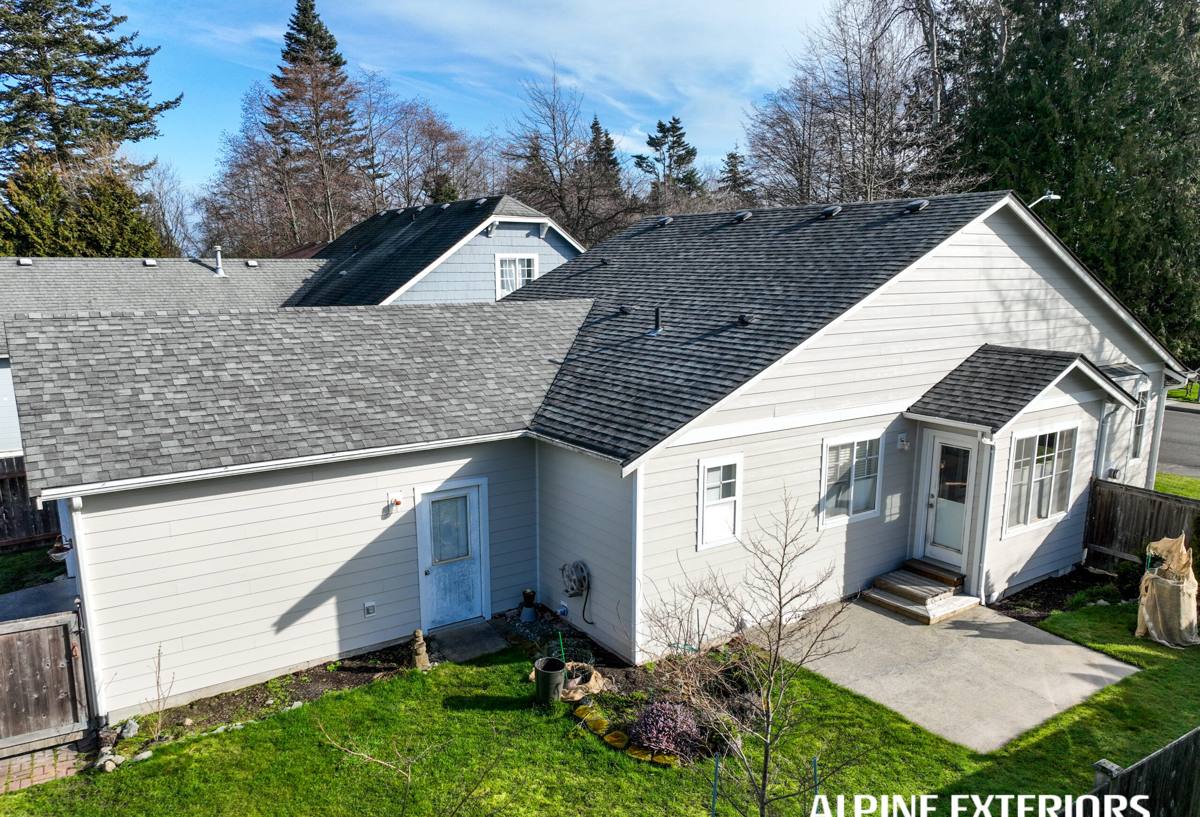
What the Local Climate Does to a House
Salt Air and Metal Fatigue
Homes closer to the water deal with airborne salt that accelerates corrosion on fasteners, flashing, and any exposed metal trim. Over years, this can undermine even well-built siding systems if the wrong materials or hardware were used to begin with. It's one of the reasons fastener selection and flashing detail matter as much as the siding product itself.
Driving Rain
Whatcom County doesn't just get rain — it gets rain pushed sideways by wind off the water, which means water finds horizontal seams, window trim, and butt joints that would stay dry in a calmer climate. Siding here needs a real drainage plane behind it, not just a product that looks good when it's installed.
Moss and Sustained Moisture
Long, wet winters and shaded lots mean moss and algae get a real foothold on north-facing walls, roof valleys, and anywhere airflow is limited. Moss holds moisture against a surface for months at a time, which is a slow but steady threat to any material that isn't dimensionally stable or that absorbs water into its core.
Why We Only Install James Hardie Fiber Cement Siding
We made a decision a while back to stop installing anything except James Hardie fiber cement siding, and we don't waver on it for Happy Valley homes. Hardie board is non-combustible, engineered to resist moisture absorption into the substrate, and available in the HZ5 product line, which is formulated specifically for the wetter, cooler climate zones the Pacific Northwest falls into. That's not a marketing detail — it changes how the board performs after fifteen or twenty years of exposure to exactly the conditions described above.
The factory-applied ColorPlus finish also matters more here than it would in a dry climate. A finish baked on in a controlled factory environment holds up to UV and moisture cycling far better than a field-applied paint job, which means fewer repaint cycles and less chance of moisture getting behind a coating that's starting to fail at the seams.
What We Don't Install, and Why
We don't install vinyl siding, LP SmartSide, Cemplank, Allura, or primed wood siding like spruce or cedar. Each of those products has a place in the market and each has genuine strengths — vinyl is inexpensive and low-maintenance in the right climate, engineered wood has a warmer look, cedar has real curb appeal for the right buyer. But every one of them asks a homeowner to accept a trade-off we don't think makes sense in this specific climate: vinyl can warp and doesn't hold up structurally to wind-driven rain intrusion the way fiber cement does; wood-based products are more sensitive to sustained moisture and require more disciplined maintenance to avoid rot; and warranty structures on some of these alternatives are thinner or more conditional than what Hardie backs its product with. We'd rather install one product line correctly than offer five and hope the cheaper ones hold up.
Comparing Siding Options for a Wet, Salt-Exposed Climate
| Factor | James Hardie Fiber Cement | Vinyl | Wood / Engineered Wood |
|---|---|---|---|
| Moisture absorption | Very low; resists swelling and rot | Doesn't absorb, but seams and gaps let water behind panels | Absorbs moisture at cut ends and damaged coating; rot risk |
| Salt air / corrosion resistance | Non-metallic, stable; fastener choice matters | Panel itself is stable but hardware can corrode | Moisture plus salt accelerates decay if maintenance lapses |
| Moss and algae resistance | Dense, non-porous surface resists growth better | Can host growth in seams and laps | More porous surface, more prone to sustained growth |
| Finish longevity | Factory ColorPlus finish, long warranty | Color molded in, can fade/chalk over time | Field-applied paint/stain needs recoating on a schedule |
| Fire resistance | Non-combustible | Combustible | Combustible |
Siding Installation Done Right for This Climate
The product is only part of the equation. In a climate like Happy Valley's, installation detail is what actually determines whether a wall stays dry for the next thirty years. That means:
- Correct rainscreen or drainage plane behind the siding so incidental moisture can escape instead of sitting against the substrate
- Proper flashing at every window, door, and roof-to-wall intersection, since these are the points where driving rain actually gets in
- Stainless or hot-dip galvanized fasteners rated for coastal exposure, not standard hardware that will corrode faster near salt air
- Correct board clearance from grade, decks, and roof lines to avoid wicking moisture from below
- Caulking and joint treatment done to Hardie's published specifications, not shortcuts that void the warranty
Skipping any one of these doesn't usually show up as a problem in year one or two. It shows up five to ten years later as staining, soft trim, or siding that's holding moisture it was never supposed to hold — and by then it's a much more expensive fix than doing it right the first time.
Roofing, Windows, and Decks in the Same Climate
Siding doesn't work in isolation. A roof that's shedding moss-retained water onto a wall below, windows that aren't flashed to shed wind-driven rain, or a deck ledger that's trapping moisture against the house all undermine even a well-installed siding job. We handle roofing, windows, and decks alongside siding specifically because these systems have to work together on a Happy Valley home — a contractor who only touches one piece of the envelope can miss how water actually moves across the whole structure.
For roofs, that means keeping an eye on moss buildup in valleys and shaded slopes and making sure underlayment and flashing details account for the amount of standing moisture this area sees over a typical winter. For windows, it means flashing integration with the new siding so there's no gap where the two systems meet. For decks, it means ledger flashing and proper drainage so the structure isn't feeding moisture back into the wall it's attached to.
What to Expect When You Work With a Local Crew
Working with a contractor based in this region should mean a few concrete things: someone who can walk your property and point to the specific areas most exposed to wind-driven rain or shaded moss growth, a written scope that names the actual Hardie product line and profile being installed (not just "siding"), and a crew that's installed in this climate enough times to know where the water actually tries to get in on a house like yours.
Questions Worth Asking Any Contractor Before You Sign
- What siding product and specific line are you installing, and why is it suited to this climate?
- Will you be installing a rainscreen or drainage plane behind the siding?
- What fastener type are you using, and is it rated for coastal/salt exposure?
- How is flashing handled at windows, doors, and roof intersections?
- What does the manufacturer's warranty actually cover, and does your installation method keep it intact?
- Can you show me examples of similar work in this same climate zone?
Planning a Siding Project in Happy Valley
Most homeowners come to us because they're seeing early warning signs — soft spots near the bottom of walls, paint that won't hold, persistent moss staining, or siding that's visibly cupping or separating at the seams. Others are planning ahead, replacing aging wood or vinyl before it becomes a structural problem. Either way, a proper assessment starts with looking at the whole envelope: siding, trim, flashing, roof condition, and any moisture already trapped behind the existing material.
Cost on a siding project depends on square footage, the amount of trim and window detail on the house, whether there's existing damage to repair before new siding goes on, and the specific Hardie profile and color chosen. We'll walk through all of that on-site rather than guessing over the phone, since a shaded, moss-prone lot in Happy Valley can call for different detailing than an open, sun-exposed one even a few blocks away.
If you're dealing with siding, roofing, window, or deck issues on a Happy Valley home, or just want an honest read on how your exterior is holding up against the local climate, we're glad to come take a look. The estimate is free, there's no pressure, and you'll get a straight answer about what your house actually needs.