 Sudden Valley
 Windows Built for Acme's Weather, Not Just Its View
Acme sits back against the foothills east of Sudden Valley, and homes out here take a different kind of weather beating than a house closer to Bellingham Bay. You get the same driving rain and long gray stretches as the rest of Whatcom County, but tucked against the hills you also pick up cooler, damper microclimates that hang onto moisture longer after a storm passes. Add in tree cover on a lot of Acme properties and you've got a recipe for windows that stay wet at the sill and jamb far longer than they should. That's the detail that matters most when we're sizing up a window replacement out here: it's not just the glass, it's how the whole unit sheds water and dries out between storms.
We've worked on homes throughout Sudden Valley and the surrounding Acme area long enough to know which window details actually hold up locally and which ones look fine on a spec sheet but fail in year three. This page walks through what a correct window installation looks like for this specific area, not a generic overview.
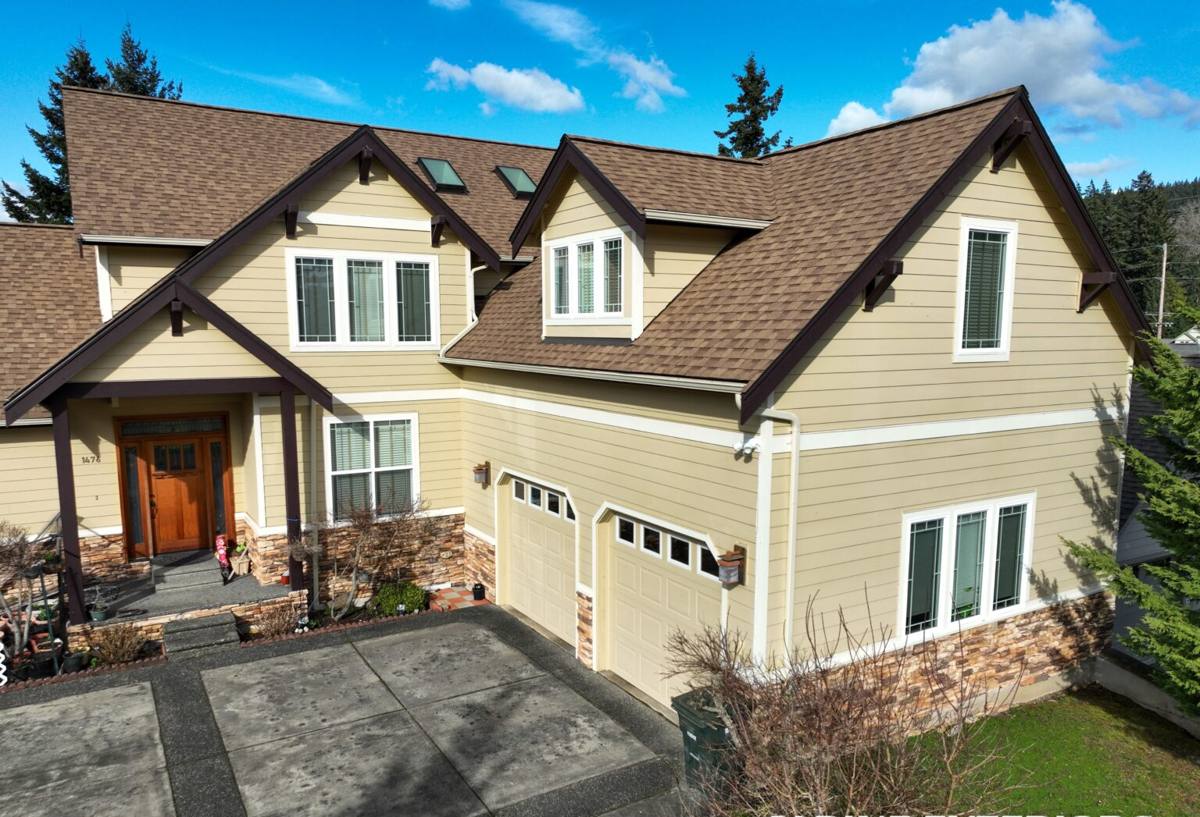
What Whatcom County Weather Does to Windows Over Time
Three things do most of the damage to windows in this part of the county, and they compound each other:
- Driving rain: Wind-driven rain off the surrounding water and terrain pushes moisture sideways into gaps that a calmer climate would never test. A window that's merely "caulked in" rather than properly flashed will eventually let water behind the trim.
- Moss and organic buildup: Whatcom County's long wet season means moss, algae, and lichen get a real foothold on anything that stays damp — window sills, trim boards, and the wood or fiber-cement siding around openings. That buildup holds moisture against the frame and accelerates rot in wood-trimmed openings.
- Salt-laden air: Even set back from the water, this region gets enough marine air moving through to matter for hardware. Cheap window locks, hinges, and screen frames corrode faster here than they would inland, and that's before you factor in condensation cycles from indoor heating against cold glass in winter.
None of this means Acme is a uniquely brutal climate — it's a normal Pacific Northwest climate. But "normal for here" is still demanding enough that a window installed to a national minimum standard, without local judgment on flashing and material choice, will underperform.
Why Older Acme Homes Are Especially Sensitive
A lot of the housing stock around Sudden Valley and Acme dates back to eras when window flashing details were minimal or nonexistent — sometimes just building paper folded around the rough opening, sometimes nothing at all. When we pull the trim off a 30- or 40-year-old window here, it's common to find soft sheathing at the sill from years of slow water intrusion that was never visible from inside. That's not a reason to panic, but it is a reason to have someone actually inspect the opening rather than just measure for a same-size replacement.
What a Correct Window Installation Actually Involves
Swapping a window is easy. Installing one so it performs for the next 20+ years in this climate is a different job. Here's what should happen, in order:
- Remove the old unit and inspect the rough opening. This is the step that gets skipped by crews trying to move fast. We check the sill, jack studs, and header for soft wood, staining, or old water paths before anything new goes in.
- Repair or rebuild the opening if needed. Any compromised framing or sheathing gets addressed now — not covered up. This is also when we correct any old flashing mistakes we find.
- Install a sloped sill pan. Water that gets past the window sash needs somewhere to go besides straight down into your wall. A properly sloped sill pan directs it back outside.
- Flash in the correct sequence. Sill pan first, then the window unit, then side flashing, then head flashing last — always overlapping shingle-style so water moving downward stays on top of each layer, never behind it.
- Set the window level, plumb, and square with proper shimming at the manufacturer's specified points, not just at the corners.
- Insulate the gap correctly. Low-expansion foam or backer rod and sealant around the frame — never packed fiberglass alone, which does nothing to stop air and moisture movement.
- Seal and trim. Exterior sealant at the right joints (and only the right joints — sealing the wrong spot can trap water instead of keeping it out), then trim work that sheds water away from the opening.
- Test operation and clean up. Every sash gets checked for smooth operation and a proper lock seal before we call the job done.
Skip step one or step four and you can have an expensive, energy-efficient window that still leaks — because the window itself was never the weak point to begin with.
Choosing the Right Window for an Acme Property
There's no single "best" window brand or material — the right call depends on sun exposure, tree cover, how exposed the wall is to weather, and your budget. What we focus on with Acme homeowners is matching the frame material and glass package to the actual exposure of each wall, since a north-facing wall under trees and a south-facing wall in the open can have very different needs on the same house.
Frame Material Trade-Offs
| Material | Moisture Behavior | Maintenance | Typical Fit |
|---|---|---|---|
| Vinyl | Won't rot; performs well in wet climates | Low — occasional cleaning | Most Acme homes, good value |
| Fiberglass | Very stable, minimal expansion/contraction | Low | Higher-exposure walls, long-term owners |
| Aluminum-clad wood | Good exterior protection, interior wood look | Moderate — watch interior finish | Homeowners wanting a wood interior |
| Bare wood | Requires consistent upkeep in this climate | High | Historic or matching-style projects only |
We steer most Acme customers away from bare wood exteriors and toward clad or vinyl options for anything exposed to weather, simply because the maintenance burden of bare wood in a climate this wet doesn't make sense for most households — it's a standard we hold to on our own installs, not a knock on wood windows in general.
Glass Packages Worth Considering Here
Double-pane, low-E glass with argon fill is the practical baseline for this climate — it manages both winter heat loss and the condensation that builds up on cold glass during our wetter months. Triple-pane is worth discussing for rooms with unusually large window areas or homes further up in elevation where temperature swings are more pronounced, but it's not automatically the right upgrade for every opening.
Our Process for an Acme Window Project
Because we already work this area regularly, we know what to expect before we even get on site.
1. On-Site Assessment
We look at every opening individually — sun exposure, tree cover, current condition of trim and sheathing — rather than quoting off a phone call. This is also when we flag any openings that need extra framing repair.
2. Straightforward Quote
You get a written quote broken out by window, so you can see what's driving cost on each opening rather than one lump number.
3. Scheduling Around Our Weather
We plan installation days with an eye on the forecast. An open wall cavity during a driving rainstorm is exactly the situation we're trying to prevent for you long-term, so we don't create it during the job itself.
4. Installation and Walkthrough
Each window gets installed to the sequence described above, and we walk the finished openings with you before we consider the job complete.
Signs Your Acme Home Needs Window Replacement Now
- Visible moss, algae, or dark staining on sills or trim around the window
- Soft or spongy wood when you press on the exterior trim near the frame
- Persistent fogging or moisture between panes (failed seal)
- Drafts you can feel even with the window fully latched
- Difficulty opening, closing, or locking the sash
- Visible daylight or gaps around the frame from inside
- A noticeable jump in heating costs without another explanation
Any one of these on its own might not mean full replacement is urgent, but two or more together — especially moss buildup plus soft trim — usually means water has already been getting behind the frame for a while.
Cost Factors for Window Replacement in This Area
| Factor | Why It Matters Here |
|---|---|
| Number and size of openings | Larger or more numerous windows increase both material and labor cost |
| Frame material chosen | Vinyl, fiberglass, and clad-wood carry different price points |
| Condition of existing framing | Rot or water damage found during removal adds repair scope |
| Wall exposure | High-exposure walls may warrant upgraded flashing or glass packages |
| Access and site conditions | Sloped lots or hard-to-reach upper-story windows affect labor time |
We give straightforward, itemized numbers rather than a single vague estimate, because the honest answer is that cost varies a lot based on what we find once the old window comes out — particularly on older Acme homes where hidden framing repair is common.
Why Local Experience Matters More Than It Seems
Window installation isn't exotic work, but doing it right in this specific climate takes judgment that comes from repetition — knowing which walls in Sudden Valley and Acme tend to hold moisture longer, which older framing details need extra attention, and which shortcuts a crew unfamiliar with this area might not even think to avoid. A contractor who mostly works drier inland climates may not flash as aggressively as this area actually requires, simply because they've never had to. That's the gap we aim to close by working here consistently rather than treating it as one job among many spread across very different climates.
If you're weighing window replacement for a home in Acme or elsewhere around Sudden Valley, we're happy to take a look and give you a straight, no-pressure estimate — just fill out the form below.