 Sudden Valley
 Siding in Deming: What Whatcom County Weather Does to a House Over Time
Deming sits in the Nooksack River valley, in the shadow of the foothills that lead up toward Mount Baker. It's a different setting than downtown Bellingham or the shoreline neighborhoods around Lake Whatcom, but the exterior of a house here still takes a beating from the same regional pattern: long wet winters, heavy tree cover on a lot of properties, and short summers that don't give siding much time to fully dry out between rain events. Add in the shade from mature conifers that many Deming lots are built around, and you get surfaces that stay damp longer than they would in an open, sunny yard.
That combination — driving rain, persistent moisture, and shaded exteriors — is exactly what accelerates the failure modes we see most often on older siding: swelling and delamination on wood-based products, moss and algae staining on north-facing walls, and paint that needs recoating well before its rated life is up. None of this is unique to any one house. It's a function of the valley's climate, and it's why the material choice matters more here than it would in a drier part of the country.
Homes We See a Lot Of in This Area
Deming's housing stock is a mix — older farmhouses and cabins on acreage, mid-century homes, and newer construction on wooded lots along the Mount Baker Highway corridor. A lot of that older stock was built or re-sided with cedar, primed wood panels, or early-generation composite products that were never engineered for this level of sustained moisture exposure. When we get called out to look at siding problems in Deming, the pattern is consistent: it's almost always a moisture problem first, and a cosmetic problem second.
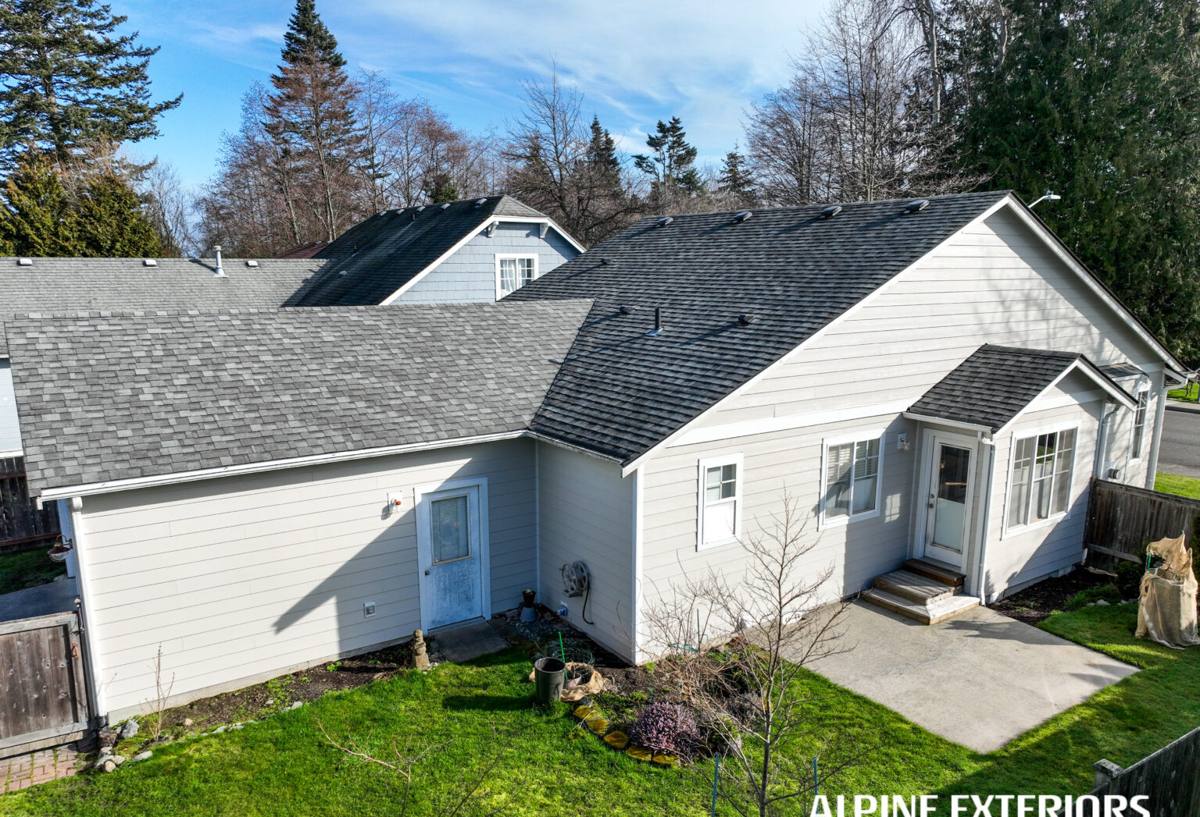
Why We Only Install James Hardie Fiber Cement
We get asked regularly why we don't offer vinyl, LP SmartSide, or other fiber cement brands. It's a fair question, and the honest answer is that we made a standardization decision based on what holds up in this exact climate, not on what's cheapest to install.
- Vinyl siding is affordable and low-maintenance in a dry climate, but it expands and contracts with temperature swings, can warp under sustained moisture and heat cycling, and its seams give algae and moss more places to take hold over time.
- Wood-based composite siding (like LP SmartSide) uses engineered wood strand technology that's genuinely improved over older wood products, but it's still an organic wood substrate at its core — meaning it depends heavily on caulking, flashing, and paint maintenance staying perfect, year after year, in a climate that doesn't give those materials much of a break.
- Primed spruce and raw cedar look great on day one but require the most ongoing maintenance of any option, and in a shaded, moist valley setting like Deming, that maintenance schedule gets demanding fast.
James Hardie fiber cement is cement, sand, and cellulose fiber — there's no organic wood content for moisture to feed on, and it doesn't support mold or moss growth the way wood-based products can. It's also non-combustible, which matters for anyone thinking about wildfire exposure risk in the foothills and forested areas around Deming. We're not saying other products are junk — we're saying that after years of doing exterior work in Whatcom County, we standardized on the one material that consistently performs the way we tell homeowners it will.
The Hardie System, Explained
James Hardie makes several siding profiles, and which one fits a Deming home usually comes down to the architectural style and how much of the house is shaded or exposed to weather.
Common Product Lines
- HardiePlank lap siding — the most common choice, available in several exposure widths and textures (smooth or woodgrain), for a traditional horizontal siding look.
- HardieShingle — a shingle profile for homes that want a cottage or craftsman look without the maintenance burden of real cedar shingles.
- HardiePanel — vertical panel siding, often used for accent gables, shop buildings, or a more modern look.
- HardieTrim — fiber cement trim boards used around windows, corners, and fascia so the whole exterior envelope is consistent, not just the field siding.
ColorPlus Factory Finish
Most of what we install uses Hardie's ColorPlus finish — a factory-applied, baked-on finish that's more UV- and moisture-resistant than field-applied paint, and it comes with its own finish warranty separate from the product warranty. In a valley climate where a lot of the exterior sits in partial shade for much of the day, a finish that doesn't rely on you keeping up with a repainting schedule is a real practical advantage, not just a convenience.
Climate-Engineered HZ Lines
Hardie also makes region-specific "HZ" formulations engineered for different climate zones — wetter, humid regions get a formulation optimized for moisture performance rather than one built for a dry desert climate. We install the HZ product appropriate for the Pacific Northwest, which is part of why the "installed to spec" piece of this matters as much as the product itself.
It's Not Just Siding: Roofing, Windows, and Decks
Siding doesn't work in isolation — it's one piece of a home's exterior envelope, and in Deming's climate the other pieces matter just as much.
- Roofing — a roof that's shedding water properly, with clean flashing and gutters that actually move water away from the walls, takes a lot of pressure off the siding below it. A lot of siding damage we find actually started as a roof or gutter drainage issue.
- Windows — window flashing and trim details are where a huge share of moisture intrusion problems start. When we replace siding, we pay close attention to how it integrates with existing window flashing, and we can address window replacement at the same time if it makes sense.
- Decks — outdoor living space takes the same rain and moss exposure as the siding above it, and ledger board connections where a deck meets the house are a common moisture entry point if they weren't flashed correctly to begin with.
Handling all four trades under one crew means fewer handoffs, fewer "that's not my scope" gaps between contractors, and a better shot at getting the water management right across the whole exterior, not just one wall at a time.
What a Siding Project in Deming Typically Involves
- On-site assessment — we look at the existing siding, the condition of the sheathing and house wrap underneath, roofline and gutter drainage, and any spots where moisture has clearly already gotten in.
- Removal and inspection — once old siding comes off, we can actually see the wall assembly. This is often when hidden rot or past water damage gets found — better to catch it now than to cover it back up.
- Repair of the substrate — any damaged sheathing gets replaced before new siding goes on. Housewrap and flashing get installed or corrected as needed.
- Hardie installation to manufacturer spec — correct fastening, proper clearances at the ground and roofline, correctly lapped and caulked joints. This is the step where a lot of "Hardie failures" you might have heard about actually trace back to installation shortcuts, not the product itself.
- Trim, flashing, and final detailing — the parts most people never notice, but that determine whether water gets managed correctly for the next 30-plus years.
Cost Factors to Expect
Every home is different, but these are the main variables that move a Deming siding project's price up or down:
| Factor | Why It Matters |
|---|---|
| Substrate condition | Rot or water damage found under old siding adds repair scope before new siding can go on |
| Home size and complexity | Gables, dormers, and cut-up wall lines take more labor and material than simple rectangular walls |
| Siding profile chosen | Lap, shingle, and panel products vary in material and install time |
| Access and site conditions | Wooded or sloped lots common around Deming can affect scaffolding, staging, and equipment access |
| Scope beyond siding | Bundling trim, roofing, window, or deck work changes overall project cost and timeline |
We give straightforward, itemized estimates so you know what you're paying for and why — not a single lump number with no explanation behind it.
Why a Local Crew Matters in a Place Like Deming
A lot of siding problems in this valley aren't really "bad siding" problems — they're bad decisions made by someone who didn't understand how water moves through a wall assembly in a wet, shaded, forested climate. A crew that works this specific region regularly knows to check things a general contractor from a drier climate might not think twice about: where moss tends to accumulate first, which wall orientations stay damp longest, how tree cover on a lot changes drying time after a storm. That local knowledge shows up in the details — flashing choices, ventilation, fastener spacing — long before it ever shows up as a problem you can see.
It also matters for accountability. A local crew is still around next year if something needs a look, and still stands behind the warranty they gave you.
Simple Maintenance Once Hardie Is Installed
Fiber cement isn't maintenance-free, but the maintenance burden is dramatically lower than wood-based siding:
- Rinse the exterior annually to clear pollen, dust, and early moss or algae growth before it takes hold
- Keep gutters clean so water isn't overflowing directly onto siding runs
- Trim back tree branches and shrubs that keep siding shaded and damp longer than necessary
- Recaulk trim joints if you ever notice gaps opening up
- Have any impact damage (a ladder bump, a thrown rock from mowing) patched or replaced promptly rather than left open to moisture
If you're dealing with siding in Deming that's showing its age — moss staining, soft spots, paint that won't hold — we're happy to come take a look and give you a straightforward, no-pressure estimate on what it would take to do it right with James Hardie fiber cement.