 Sudden Valley
 Alger's Roofs Work Harder Than Most
Alger sits close enough to the water and to Lake Whatcom's timbered slopes that roofs here take a combination of punishment you don't see everywhere in Whatcom County. There's salt-laden air drifting in off the Sound, driving rain that comes in sideways during winter fronts, and a shaded, damp growing season that runs long enough for moss and algae to get comfortable on a roof and stay there. None of that is unusual for this part of Washington, but it does mean a shingle roof that would do fine in a drier inland town needs to be built and maintained a little differently out here.
We work on homes in and around Alger and the broader Sudden Valley area regularly, so we're not guessing at what holds up. This page walks through what a correctly built asphalt shingle roof looks like for this specific stretch of Whatcom County, what our process involves, and how to think about repair versus replacement when your roof starts showing its age.
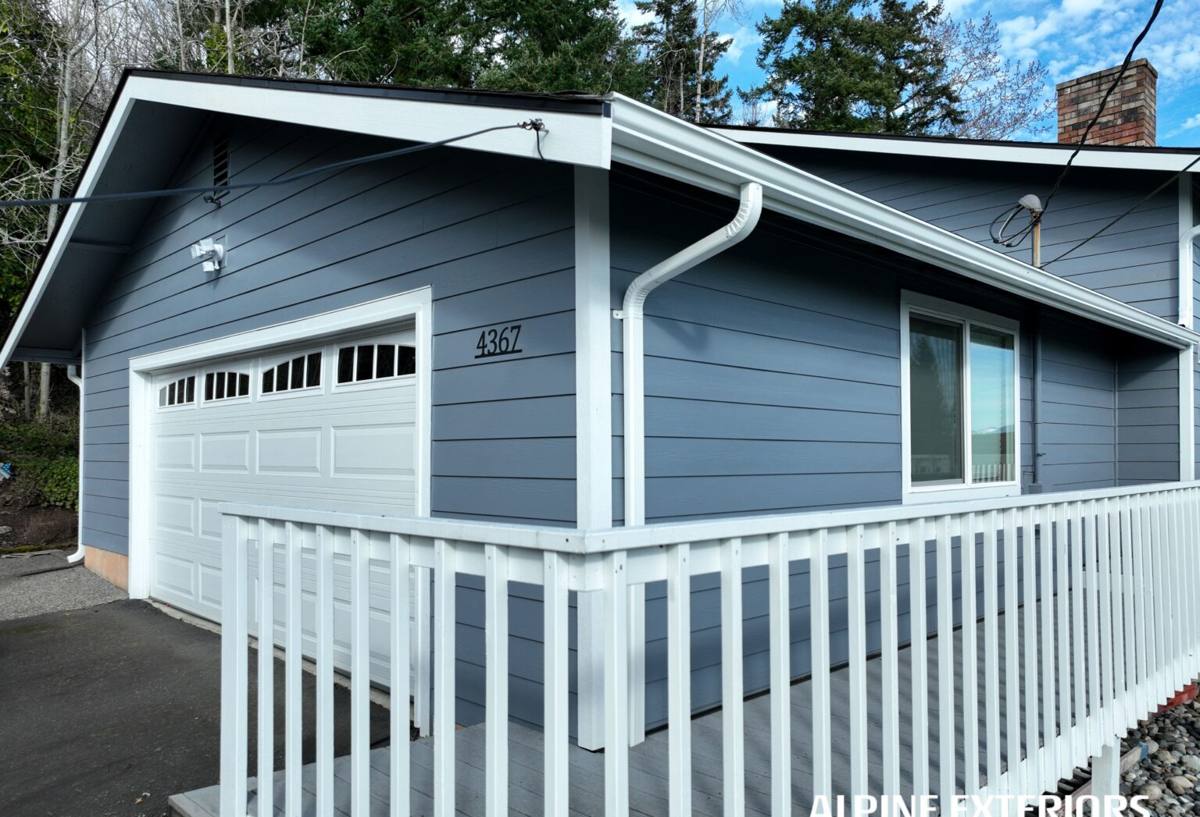
What the Local Climate Actually Does to a Roof
It helps to separate out the specific stresses at play, because each one attacks a roof differently:
- Salt air accelerates corrosion on exposed metal — nail heads, flashing, vent stacks, and gutter hardware are usually the first things to show it.
- Driving rain pushes water sideways and upward under normal wind conditions, which means flashing and underlayment details matter more here than in calmer inland climates.
- Shade and moisture together create the long moss and algae season. Tree cover is common around Sudden Valley, and shaded roof sections that stay damp for days at a time are exactly where moss takes hold first.
- Temperature swings between wet winters and warmer, drier summers cause shingles to expand and contract, which is part of why proper fastening and quality materials matter more over a 20-30 year roof life than they might in a more stable climate.
None of this means asphalt shingles are the wrong choice for Alger — they're not. It means the installation details that get skipped on a rush job are exactly the details that determine whether a roof lasts 15 years or 30 in this environment.
What a Correctly Built Shingle Roof Includes Here
Underlayment and Water Barrier
Given how much wind-driven rain this area sees, we don't treat underlayment as an afterthought. A synthetic underlayment with proper overlap, plus self-adhered ice-and-water barrier at eaves, valleys, and around penetrations, gives the roof a real second line of defense if wind ever pushes water up under the shingle tabs. Valleys in particular deserve attention — they collect the most water volume during a heavy Pacific front and are a common point of failure when underlayment was installed thin or with short overlaps.
Ventilation
A roof that can't breathe traps moisture in the attic, which shows up later as premature shingle aging from the underside, condensation staining, or worse. Balanced intake and exhaust ventilation matters everywhere, but in a consistently damp climate like this one, it's one of the details that separates a roof that ages evenly from one that fails early from the inside out.
Flashing Details
Step flashing at wall intersections, proper counter-flashing, and correctly sealed penetrations (vents, chimneys, skylights) are where most leaks actually originate — not the shingle field itself. With salt air accelerating corrosion on lower-grade metal, we use flashing material rated to hold up, and we tie it into the underlayment correctly rather than relying on caulk to do a flashing detail's job.
Moss and Algae: Managing the Long Wet Season
Moss doesn't just look bad — left alone, it holds moisture against the shingle surface, lifts tabs, and shortens the life of the roof underneath it. Shaded, north-facing sections and areas near overhanging trees are where it shows up first around Alger. There are a few ways to manage this, and they come with real trade-offs worth understanding before you decide:
| Approach | What It Does | Trade-Off |
|---|---|---|
| Algae-resistant (AR) shingles | Copper-infused granules resist algae growth over the shingle's life | Slightly higher material cost; doesn't eliminate moss on shaded sections |
| Zinc or copper strips at the ridge | Metal runoff inhibits moss/algae growth as rain washes down the slope | Most effective on upper sections; less protection lower on long slopes |
| Periodic soft washing | Removes existing growth without damaging granules | Requires the right technique — pressure washing can strip granules and void warranties |
| Tree trimming for sun/airflow | Reduces the shade and standing moisture that let moss establish | Only addresses part of the problem if the roof faces north |
For most Alger homes, the practical answer is a combination: algae-resistant shingles as the baseline, ridge treatment on shaded roofs, and a light annual check rather than waiting until moss is thick enough to lift shingles.
Our Process, Start to Finish
- On-site inspection. We look at the existing roof, decking condition, ventilation, and flashing details before quoting anything — not just a drive-by estimate.
- Honest scope discussion. If a repair genuinely makes sense over a full replacement, we'll say so. We're not incentivized to sell a bigger job than the roof needs.
- Tear-off and deck inspection. Old material comes off down to the deck, and we check for soft spots or water damage that wouldn't be visible from above.
- Underlayment and water barrier installation. Ice-and-water barrier at vulnerable points, synthetic underlayment across the field, correctly lapped.
- Flashing and ventilation work. New flashing at walls, valleys, and penetrations; ventilation checked and corrected if the existing setup was undersized.
- Shingle installation. Installed to manufacturer nailing and exposure specs — not just "close enough," since fastening pattern is a big part of wind resistance.
- Cleanup and final walkthrough. Site cleared, magnetic sweep for stray nails, and a walkthrough so you know what was done and why.
Repair or Replace? A Practical Checklist
Not every roofing problem in Alger means a full replacement. Here's what we actually look at when deciding:
- Are shingles missing or cracked in isolated spots, or is granule loss widespread across the roof?
- Is the roof deck still solid, or is there soft, spongy decking indicating long-term water intrusion?
- How old is the current roof relative to its expected lifespan for the material used?
- Is moss/algae growth surface-level, or has it been established long enough to lift tabs and trap moisture underneath?
- Are leaks isolated to one flashing detail, or showing up in multiple unrelated areas?
- Has the attic shown signs of moisture or ventilation problems that a patch repair won't fix?
If most answers point to isolated, recent issues on a roof with useful life left, a repair is often the right call. If the deck is compromised, the roof is near the end of its expected life, or damage is spread across multiple systems (flashing, ventilation, and shingle field all at once), replacement is usually the more honest recommendation.
What Affects Cost
Every roof is different, but these are the factors that most commonly move the price on an Alger asphalt shingle project:
| Factor | Why It Matters |
|---|---|
| Roof size and pitch | Steeper roofs take longer and require more safety setup, increasing labor |
| Number of layers to remove | Tear-off of multiple existing layers adds labor and disposal cost |
| Deck condition | Rotten or damaged decking sections need replacement before new shingles go on |
| Shingle grade selected | Standard 3-tab, architectural, and algae-resistant lines each carry different material costs |
| Flashing and ventilation scope | Extensive flashing replacement or ventilation upgrades add to the base roofing cost |
| Roof complexity | Valleys, dormers, skylights, and multiple penetrations all add time and detail work |
We won't quote a number without seeing the roof, but we're happy to walk through these factors on-site so you understand what's driving your specific estimate.
Why Local Experience in Alger Actually Matters
A roofing crew that's worked in and around Sudden Valley knows which roof orientations get hit hardest by wind-driven rain, which tree-shaded sections tend to hold moss longest, and how salt air affects metal components differently than it would fifty miles inland. That's not marketing — it's the difference between a generic installation and one built for the conditions the roof will actually face for the next two or three decades. We also know the practical side of working here: seasonal weather windows, typical permitting expectations in Whatcom County, and how to sequence a tear-off so your home isn't exposed longer than necessary during a wet stretch.
Keeping Your Roof Healthy After Installation
A correctly installed roof still benefits from basic upkeep, especially in a climate like this one:
- Clear gutters and downspouts before the fall rains start, so water isn't backing up under the eaves.
- Do a visual check after major windstorms for lifted or missing shingles.
- Keep overhanging branches trimmed back to reduce shade, debris buildup, and physical abrasion on the roof surface.
- Address small leaks or flashing issues early — they're inexpensive to fix while isolated and expensive once they've caused deck damage.
- Have the roof looked at every few years, even without an obvious problem, especially on shaded sections prone to moss.
If you're in Alger or elsewhere around Sudden Valley and want an honest look at what your roof actually needs, we're glad to come take a look. The estimate is free, there's no pressure, and you'll get a straight answer whether that means a repair, a full replacement, or nothing at all right now.