 Sudden Valley
 Roofing Built for Yew Street's Climate, Not a Catalog Photo
Yew Street sits in the kind of Pacific Northwest microclimate that punishes a roof quietly, over years, rather than all at once. Homes here deal with salt-tinged air moving in off the water, driving rain that comes in sideways during winter storms, and a moss season that can run eight months or longer if a roof isn't shedding water and drying out the way it should. An asphalt shingle roof that's correctly specified and correctly installed handles all of that without drama. One that isn't — even from a reputable manufacturer — will show granule loss, moss colonization, and soft spots well before its rated life is up.
We install and repair asphalt shingle roofs throughout Sudden Valley, and Yew Street specifically has enough tree cover and shaded rooflines that moss and moisture retention are the dominant concerns, more so than wind in most years. That changes some of the decisions we make on a job here compared to a roof out in open sun.
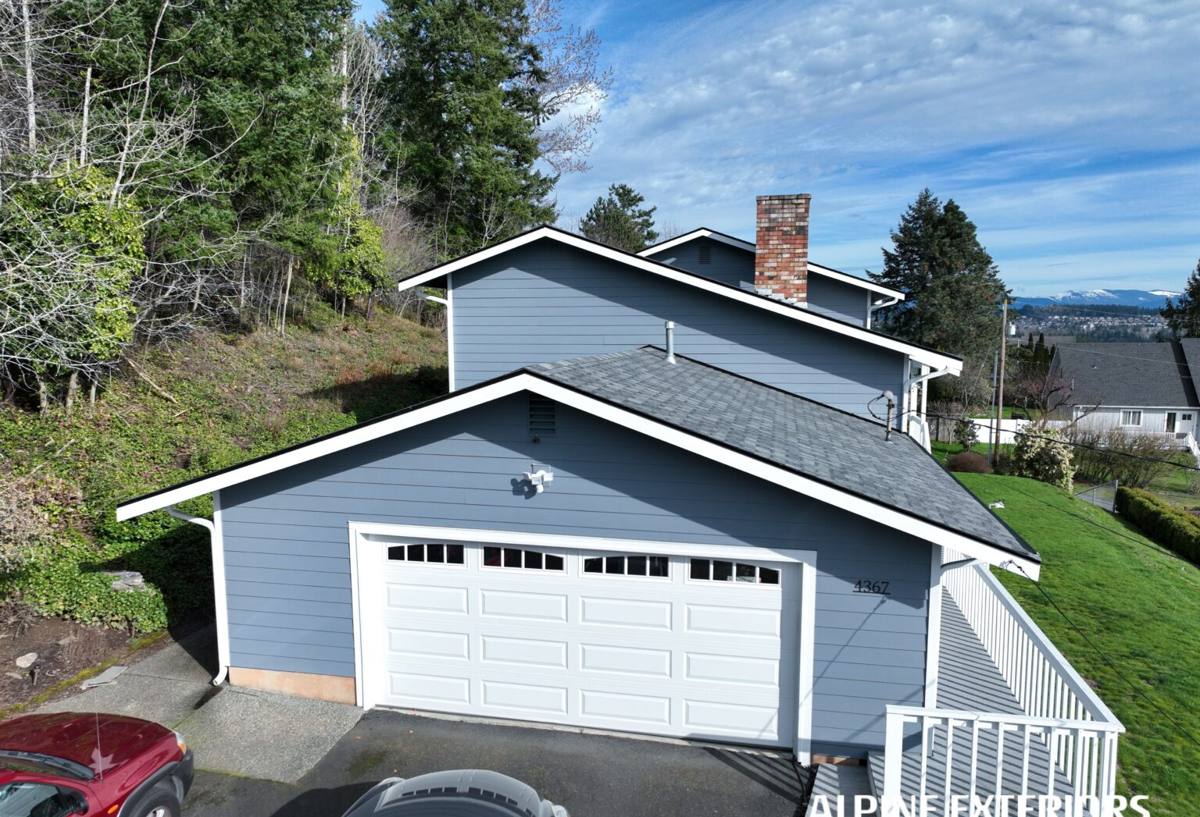
What Yew Street Homes Actually Need From a Shingle Roof
Moss Resistance Starts Below the Shingle, Not On Top of It
Moss doesn't grow because a roof is old — it grows because a roof stays damp. Shaded north-facing slopes, valleys that collect debris, and roofs surrounded by mature trees hold moisture longer after every rain, and Whatcom County gives moss plenty of rain to work with. The fix isn't just picking a shingle with algae-resistant granules (though we do use those); it's making sure the roof deck can dry out, the valleys move water fast, and debris doesn't have anywhere to sit and rot.
Wind and Driving Rain
Storms off the water push rain sideways, not straight down. That means water finds its way under shingles at edges, ridges, and anywhere the nailing pattern or sealant strip is weak. A shingle roof that looks fine from the ground can still be letting wind-driven rain past the first layer of defense if the underlayment and flashing details weren't done right the first time.
Salt Air and Material Fatigue
Salt-laden air accelerates corrosion on exposed metal — flashing, nail heads, vent boots, gutter hardware. On a roof, that shows up first as rust streaking and pinhole leaks around fasteners years before the shingles themselves are worn out. We account for this by using corrosion-resistant fasteners and flashing metals rather than the cheapest option on the truck.
What a Correct Asphalt Shingle Job Involves
A shingle roof is a system, not a single product. Every layer matters, and skipping or shortcutting any one of them is where most "we replaced our roof five years ago and it's already leaking" stories come from.
Deck Inspection and Repair
Before anything goes down, the plywood or OSB decking underneath gets checked for soft spots, delamination, and water staining. On homes with a moss or moisture history, we often find sections that need to be replaced, not just covered over. Roofing over a compromised deck is how a roof fails from the inside out.
Underlayment
This is the roof's real waterproof layer — the shingles are the wear surface, but the underlayment is what actually keeps water out if wind or ice drives it past the shingles. In our climate, synthetic underlayment with self-adhering membrane at eaves, valleys, and around penetrations is standard practice, not an upgrade.
Flashing
Chimneys, skylights, sidewalls, and roof-to-wall transitions are where the majority of leaks originate — almost never in the open field of shingles. Flashing needs to be formed correctly, layered with the underlayment in the right order (so water always flows over the top of the piece below it), and fastened with corrosion-resistant hardware given the salt air.
Ventilation
An underventilated attic traps moisture, which condenses on the underside of the deck and shortens the life of the roof from below — separate from anything happening with rain outside. Balanced intake and exhaust ventilation also helps the roof surface dry out faster after rain, which matters directly for moss prevention.
Comparing Shingle Options for This Area
Not every asphalt shingle product performs the same way once moss, moisture, and salt air are part of the equation. Here's how the common tiers stack up for a Yew Street roof specifically.
| Shingle Type | Moss/Algae Resistance | Wind Rating | Typical Lifespan Here | Best For |
|---|---|---|---|---|
| 3-Tab (standard) | Low unless treated | Lower | 12–18 years | Budget-driven projects, low-slope simple roofs |
| Architectural/Laminate | Good with algae-resistant granules | Higher | 20–30 years | Most Yew Street homes — best balance of durability and cost |
| Premium/Designer | Good with algae-resistant granules | Highest | 25–30+ years | Steep, highly visible rooflines; heavier shade/moss exposure |
For most homes in this neighborhood, we point people toward architectural shingles with algae-resistant granules. The upgrade cost over 3-tab is modest, and the added mass and better granule coverage genuinely hold up longer in shaded, damp conditions — this isn't a marketing distinction, it's a material one.
Our Process on a Yew Street Roof
- On-site inspection — we look at the roof, the attic ventilation, and the areas most exposed to shade and moisture before writing any estimate.
- Written scope and pricing — what's being replaced, what materials, and why, in plain language.
- Tear-off and deck check — old roofing removed, deck inspected and repaired as needed.
- Underlayment and flashing — installed to current best practice, not just code minimum.
- Shingle installation — correct nailing pattern and exposure per manufacturer spec, which is also what keeps the warranty valid.
- Final walkthrough and cleanup — magnetic sweep for nails, debris hauled off, gutters checked for roofing debris.
Warranties and What They Actually Cover
Manufacturer warranties on asphalt shingles usually cover material defects, and separately, many manufacturers offer enhanced warranties when the full roofing system — underlayment, starter strip, ridge cap, and shingles — is from the same product line and installed by a certified installer. Workmanship warranties are separate again, and cover installation errors specifically. When we quote a job, we tell you plainly what's covered by the manufacturer and what's covered by our own workmanship guarantee, so there's no confusion later about who's responsible for what.
Signs a Yew Street Roof Needs Attention
Because moss and moisture problems build slowly, most homeowners don't notice until there's a stain on a ceiling. Worth checking for, ideally from the ground or with binoculars rather than climbing up yourself:
- Dark streaking or green/black patches, especially on shaded, north-facing slopes
- Granules collecting in gutters or at the base of downspouts
- Shingles that look curled, cupped, or lifted at the edges
- Moss visibly bridging shingle tabs, holding moisture against the surface
- Rust staining around vent boots, flashing, or exposed fasteners
- Sagging or uneven rooflines, which can indicate deck damage underneath
- Daylight visible through the attic roof deck, or damp insulation
Any one of these on its own isn't necessarily an emergency, but they're worth a professional look rather than waiting for an interior leak to confirm the problem.
Moss Removal: What We Will and Won't Do
Pressure washing a shingle roof to remove moss is common advice and, in our professional experience, a common way to strip granules and shorten the life of the roof. Granule loss isn't cosmetic — those granules are what protects the asphalt layer from UV and weather. Our standard is gentle, low-pressure cleaning methods and, where appropriate, zinc or copper strips near the ridge that let rainwater carry moss-inhibiting minerals down the roof slope over time. It's slower than a pressure wash, but it doesn't trade a clean-looking roof today for a shorter roof life overall.
Why Local Experience on Yew Street Matters
A roofing crew that already works this specific area knows which rooflines here tend to hold shade and moisture longest, what the typical attic ventilation setups look like in homes of this vintage around Sudden Valley, and how Whatcom County permitting and inspection typically goes for a reroof. That's not a sales pitch — it's the difference between a crew guessing at conditions and a crew that's seen the same moss patterns and flashing failures on the street before. It also means we're not learning on your roof; we're applying what's already worked on similar homes nearby.
Cost Factors on a Shingle Roof Replacement
Pricing on any reroof depends on a handful of concrete factors rather than a flat per-square rate, and we'll walk through all of these during an on-site estimate:
| Factor | Why It Matters |
|---|---|
| Roof size and number of slopes | More surface area and more valleys/hips mean more material and labor |
| Roof pitch and access | Steeper or harder-to-access roofs take longer and require more safety setup |
| Deck condition | Rot or soft decking found during tear-off adds material and labor to repair |
| Shingle tier chosen | 3-tab, architectural, and premium products carry different material costs |
| Ventilation upgrades | Adding or correcting intake/exhaust venting affects both cost and long-term roof health |
| Layers of existing roofing | Tear-off of multiple old layers takes more labor and disposal than a single layer |
We don't quote a job without seeing the roof — anyone offering a firm price over the phone for a reroof is guessing, and that guess tends to grow once the tear-off starts.
If you're noticing moss, granule loss, or just aren't sure how much life is left in your roof, we're happy to come take a look. Estimates are free and there's no pressure to move forward — fill out the form below and we'll get a time on the calendar.