 Sudden Valley
 Building Decks for Columbia's Sudden Valley Conditions
Homes in the Columbia area of Sudden Valley sit in one of the more demanding outdoor-living climates in Whatcom County. You've got a long wet season, heavy moss growth on anything shaded or north-facing, humid air off the lake, and stretches of driving rain that push moisture sideways into places a deck in a drier climate would never have to deal with. A deck built here isn't just a platform to put furniture on — it's a structure that has to shed water fast, resist rot in framing you can't see, and keep its footing on ground that stays damp for months at a stretch. We build and repair decks specifically with these conditions in mind, not a generic spec pulled from a catalog.
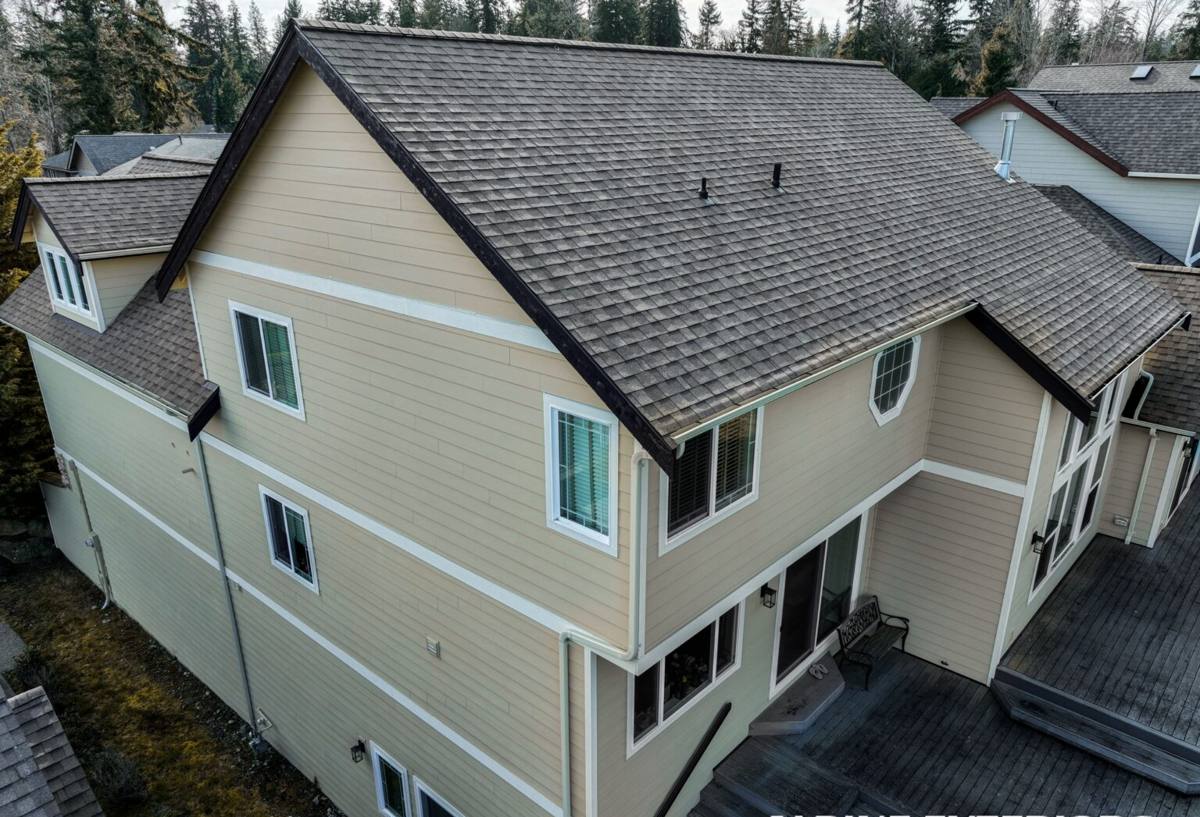
What Local Homes Actually Need From a Deck
A deck that holds up in Columbia has to do three things well: drain, breathe, and stay structurally dry where it counts. That sounds simple, but it's where a lot of decks in this area fail early — usually within five to ten years instead of lasting two or three decades.
Drainage first, always
Flat or poorly sloped decking traps water on the surface, which is exactly what feeds moss and algae growth during the long gray stretch of fall through spring. We build in proper board spacing and a slight pitch away from the house so water actually leaves the deck instead of sitting on it.
Ledger and framing protection
The ledger board — where the deck attaches to the house — is the single most common failure point we see on older decks in this region. Driving rain gets pushed against the house wall and, without proper flashing, works its way behind the ledger and into the rim joist. That's a slow, hidden rot process that can go unnoticed for years until the deck starts to feel spongy or a railing post loosens.
Footings that don't shift
Saturated ground during the wet months can heave and settle unevenly, especially on sloped lots, which are common throughout Sudden Valley. Footings need to be set below frost depth and sized for the actual soil conditions on the lot, not just poured to a minimum code number.
Decking Material Comparison
Material choice matters more here than in a drier climate, because moisture exposure is longer and more constant. Here's how the common options actually perform under Whatcom County conditions:
| Material | Moisture Behavior | Moss/Algae Resistance | Maintenance |
|---|---|---|---|
| Pressure-treated lumber | Absorbs and releases moisture readily; prone to cupping if not sealed | Low — needs regular cleaning and treatment | Annual cleaning, re-sealing every 1-2 years |
| Cedar | Naturally moisture-resistant but softens over time without upkeep | Moderate | Periodic sealing, occasional board replacement |
| Composite decking | Doesn't absorb water into the board itself; surface film can hold moisture longer | Higher, but still grows moss in shaded, poorly drained spots | Occasional wash-down, no sealing |
| PVC/capped decking | Fully moisture-sealed board | Highest, though surface film still needs cleaning in shade | Lowest — wash-down only |
There's no single "correct" material for every home — a lot depends on budget, how much shade the deck sits in, and how much upkeep you actually want to do. We'll walk through the honest trade-offs for your specific lot rather than pushing whatever has the best margin.
Our Deck Building Process
We keep the process straightforward and give you visibility at each stage, since a deck build affects your yard and access to your home for the duration.
- Site assessment: We look at slope, drainage patterns, sun/shade exposure, and how water currently moves across the lot before we design anything.
- Design and material selection: Layout, size, railing style, and decking material are decided together, with real cost and maintenance trade-offs laid out plainly.
- Permitting: Whatcom County requires permits for most new deck construction and significant rebuilds. We handle the paperwork and inspections so you don't have to chase it down.
- Footings and framing: Footings are set to proper depth, framing is built with corrosion-resistant hardware rated for wet-climate exposure, and the ledger connection is flashed correctly the first time.
- Decking and rail installation: Boards are laid with proper spacing for drainage and airflow underneath, and railings are installed to current code height and spacing requirements.
- Final walkthrough: We go over the finished deck with you, including what maintenance it needs and on what schedule.
Problems We Commonly Find on Existing Decks in This Area
When we're called out to look at an older deck in Sudden Valley, the issues tend to repeat themselves. Recognizing them early saves a full rebuild later.
- Ledger rot: Soft or discolored wood where the deck meets the house, often from missing or failed flashing.
- Moss buildup on decking and stairs: Beyond looking bad, moss holds moisture against the board surface and creates a slip hazard on stairs and ramps.
- Loose or wobbly railings: Usually a sign of post rot at the base or undersized fasteners that have corroded.
- Uneven or sinking sections: A footing that's shifted due to saturated soil or was never set to proper depth.
- Cupped or splitting boards: Common on pressure-treated lumber that hasn't been sealed on a regular schedule.
- Gaps and fastener pop: Boards that were installed too tight for the wood movement this climate causes over a wet-dry cycle.
Some of these are simple repairs. Others — especially ledger rot or shifted footings — are structural and worth addressing before they get worse, since they affect the safety of the whole deck, not just the section that looks bad.
Permits, Code, and Structural Basics
Deck permitting and inspection in Whatcom County exists for real reasons here — frost depth for footings, railing height and baluster spacing, and guardrail requirements for elevated decks all matter more when a structure is exposed to constant moisture and seasonal freeze-thaw. We pull permits, schedule inspections, and build to the standards that apply to your specific lot and deck height rather than cutting corners that show up as problems (or liability) down the road. If your existing deck was built without a permit or doesn't meet current guardrail spacing, we'll flag that honestly during an assessment rather than ignore it.
Maintenance That Actually Extends the Life of a Sudden Valley Deck
A well-built deck still needs seasonal attention in this climate. Here's the baseline we recommend to homeowners in the Columbia area:
- Sweep debris and standing leaves off the deck surface regularly through fall — trapped organic matter is what feeds moss growth fastest.
- Wash the deck surface at least once a year, more often on shaded sections, to remove moss and algae before it embeds into the wood grain.
- Check and re-seal wood decking every one to two years; composite and PVC decking don't need sealing but still benefit from an annual wash-down.
- Inspect railings and stair posts each spring for looseness or soft wood at the base.
- Confirm gutters and downspouts near the deck are directing water away, not onto the deck surface or ledger area.
- Clear gaps between boards periodically so water and debris keep moving through instead of pooling.
DIY maintenance vs. calling us
Cleaning and inspection are things most homeowners can handle themselves. Anything involving the ledger connection, footings, structural framing, or railing posts that show rot is worth a professional look — those are the failure points that turn into safety issues rather than cosmetic ones.
Why a Crew That Already Works Columbia and Sudden Valley Matters
A deck built to a generic spec sheet doesn't account for what this specific area does to a structure over time — the moss season, the humidity coming off the lake, the driving rain angle on exposed lots, or the soil behavior on sloped sites common throughout Sudden Valley. We work in this community regularly, which means we're not guessing at flashing details, footing depth, or material choices — we're applying what we've already seen hold up (and what hasn't) on decks like yours, in this exact climate. That local familiarity shows up in fewer callbacks, fewer surprises during inspection, and a deck that's still solid well past the point a poorly built one would need major repair.
If you're planning a new deck or want an honest look at one that's showing its age, we're glad to walk the site with you and lay out real options — no pressure, no upsell. Reach out using the form below for a free estimate.