 Sudden Valley
 Composite Decking Built for How Cordata Actually Weathers
Cordata sits in one of the wetter corners of Whatcom County, and any deck built here has to earn its keep through a long stretch of low gray skies, driving rain, and the kind of persistent damp that turns bare wood green before you've had it two summers. Add in the cooler, moisture-laden air that rolls in off the Salish Sea and settles into low-lying yards, and you've got a climate that is genuinely hard on outdoor structures. Composite decking was built for exactly this problem. It doesn't mean a composite deck is maintenance-free, but it does mean the material itself isn't fighting you the way untreated wood does.
This page is specifically about composite decking work in the Cordata area — what the climate demands, what a correct installation looks like, and what to expect if you hire us to build or replace a deck here.
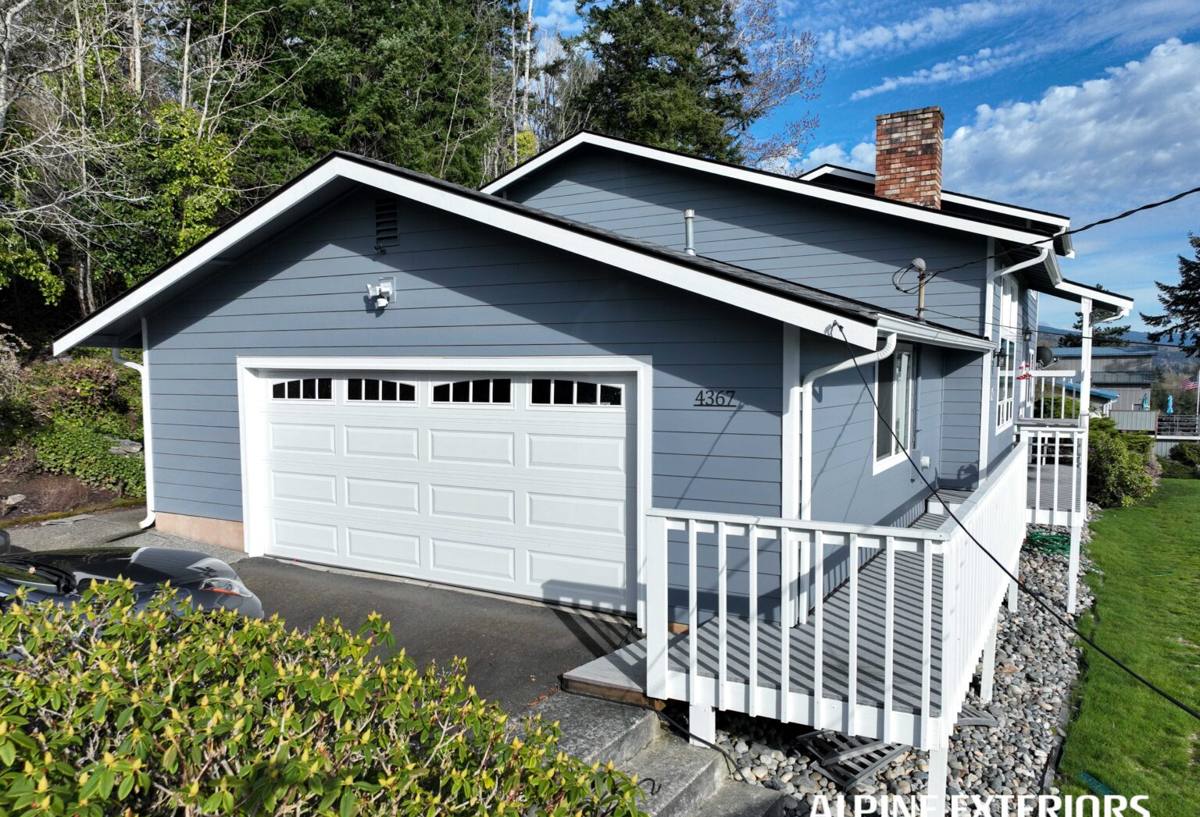
What Cordata's Climate Actually Does to a Deck
Three things drive most of the deck problems we see in this part of Whatcom County:
Driving Rain and Standing Moisture
Rain here doesn't just fall straight down — wind-driven rain gets up under railings, into fastener holes, and behind ledger boards. Any decking material that absorbs water at those entry points will eventually swell, cup, or rot from the inside out, long before the surface looks bad.
Moss and Algae Season
Whatcom County's moss season runs long — often eight or nine months out of the year in shaded, north-facing, or tree-covered yards, which describes a good share of Cordata lots. Moss and algae need moisture and shade to establish, and once they take hold on a deck surface, they hold water against the boards and make the surface slick and slippery.
Salt-Tinged Coastal Air
Cordata isn't waterfront, but Whatcom County's proximity to Bellingham Bay means the air carries a mild salt component that accelerates corrosion on exposed metal fasteners, hardware, and hidden clips over time. It's a slower effect than what a true oceanfront property sees, but it's real, and it's why fastener choice matters as much as board choice.
Composite vs. Wood vs. PVC: How They Actually Hold Up Here
We install composite decking because, for this climate specifically, it strikes the best balance of moisture resistance, low upkeep, and reasonable cost. Here's the honest comparison we give every homeowner who asks:
| Material | Moisture Behavior | Moss/Algae Resistance | Maintenance | Typical Lifespan Here |
|---|---|---|---|---|
| Cedar / pressure-treated wood | Absorbs water; prone to cupping, splitting, checking | Needs regular cleaning and re-sealing to resist growth | Annual staining/sealing recommended | 10-15 years with diligent upkeep |
| Capped composite | Core resists moisture; capped shell sheds water | Textured caps resist staining; still needs periodic washing | Occasional wash, no staining or sealing | 25-30+ years, manufacturer-backed |
| PVC decking | Fully synthetic, essentially waterproof | Very resistant; smooth or low-texture surface | Lowest upkeep of the three | 25-30+ years, often at a higher upfront cost |
We don't install uncapped wood-composite blends anymore. The uncapped versions absorb moisture at cut edges and fastener points, which is a real liability in a climate that stays wet as long as this one does. Capped composite and PVC both solve that problem — the choice between them usually comes down to budget and the look a homeowner wants.
What a Correct Composite Deck Installation Involves
Composite boards are forgiving on the surface, but the structure underneath them is not a place to cut corners — especially with our rainfall totals and freeze-thaw swings in the winter months.
Structure First
Joist spacing has to match the manufacturer's spec for composite specifically, which is often tighter than what a wood deck needs, particularly for boards run at an angle. Ledger board attachment to the house needs proper flashing so water is directed away from the rim joist, not trapped against it. This flashing detail is one of the most common failure points we find when we're asked to look at an existing deck that's rotting from the house side out.
Drainage and Ventilation
Composite decking still needs airflow underneath it. A deck built low to grade, or without gaps for water to drain and air to move, will trap moisture under the boards year-round in this climate — which shortens the life of the substructure even if the composite boards themselves are holding up fine.
Hardware That Matches the Climate
We use stainless or coated fasteners and hidden clip systems rated for coastal-adjacent, high-moisture conditions. Cheaper fastener packages corrode faster in this air, and a corroding fastener under a composite board is a slow, hidden problem — you won't see it until a board starts to loosen.
Board Layout for Moss-Prone Yards
In shaded or tree-covered Cordata lots, we think about layout with moss in mind: board direction relative to water runoff, gap spacing for drainage, and where possible, avoiding dead-flat sections that never get sun exposure to dry naturally.
Our Process, Start to Finish
- On-site assessment — we look at drainage, existing structure (if replacing a deck), grade, shade exposure, and how the deck ties into the house.
- Material and layout walkthrough — we go over board options, color, and layout with you before anything is ordered.
- Written estimate — a clear scope with material, labor, and timeline, no vague allowances.
- Structural work — footings, framing, ledger flashing, and joist layout built to span and spacing specs for the composite system chosen.
- Decking installation — boards, hidden fasteners, railings, and any picture-framing or trim detail.
- Final walkthrough — we cover basic care and answer questions before we consider the job done.
Maintenance Reality: What Composite Still Needs Here
Composite decking is genuinely lower maintenance than wood, but "low maintenance" isn't "no maintenance," especially in a climate this wet. Here's what actually keeps a composite deck performing well through Cordata's moss season:
- Sweep off leaves, needles, and debris regularly — trapped organic matter is what feeds moss and algae growth on any decking surface.
- Wash the deck with soap and water (or a composite-safe cleaner) once or twice a year, more often in heavily shaded yards.
- Keep gutters and downspouts clear so runoff isn't dumping directly onto the deck surface.
- Check railing posts and stair connections annually for movement — hardware is the first thing to show wear, not the boards.
- Avoid pressure-washing at close range or high PSI, which can damage the cap layer on some composite products.
Cost Factors to Expect
| Factor | Why It Moves the Price |
|---|---|
| Deck size and shape | Complex layouts, angles, and multi-level decks require more cutting, framing, and waste |
| Substructure condition | Replacing rotted framing or footings adds cost beyond surface decking |
| Board tier | Entry-level capped composite costs less than premium composite or PVC |
| Railing system | Composite or metal railing systems cost more than basic wood rail |
| Site access | Difficult access or sloped lots add labor time |
We give a firm written number after the on-site walkthrough — we don't work off ballpark phone quotes for decking, because the substructure condition alone can swing the number significantly.
Why It Matters to Hire a Crew That Already Works in Cordata
Building in this specific area means understanding a few things that don't show up in a general decking guide: how the local moss season affects layout decisions, how flashing details need to handle Whatcom County's rain totals, and what soil and drainage conditions on typical Cordata lots do to footings over time. A crew that's already worked jobs in this neighborhood isn't guessing at any of that — they've seen how decks here actually age, both the ones done right and the ones that weren't.
We're also local for the parts that matter after the install: if a warranty question comes up or a board needs attention down the road, you're not chasing down a crew that worked here once and moved on.
Questions Worth Asking Any Decking Contractor Before You Hire
- Do you flash the ledger board connection, and can you explain how?
- What joist spacing do you use for composite, and does it match the manufacturer's spec?
- What fastener and hardware system do you use, and is it rated for coastal-adjacent moisture?
- Is the estimate written, itemized, and firm — not a rough verbal number?
- What does the manufacturer's warranty actually cover, and what does your workmanship warranty cover separately?
If you're planning a new deck or replacing one that's showing its age, we're happy to come take a look and walk the property with you. There's no pressure and no obligation — just a straight assessment of what your home needs and a written estimate you can think over. Fill out the form below to get started.