 Sudden Valley
 Storm Damage Roof Repair in Deming
Deming sits along the Nooksack River corridor east of Bellingham, tucked between timbered hillsides that funnel wind and weather differently than the open lake exposure you get closer to Sudden Valley. Homes out here take a different kind of beating: heavy rain events that stack up fast off the foothills, wind gusts that come down the valley and catch a roof at an angle it wasn't built for, and long stretches of shade and dampness under the tree canopy that keep roofing material wet far longer than homes out in the open. When a storm does damage here, it's rarely a single dramatic event — it's usually one storm exposing weaknesses that months of moisture and moss growth already started.
This page is about one job, done right, in one area: storm damage roof repair for Deming homes. Not a full re-roof pitch, not a generic service list — what an honest, correctly done storm repair actually involves out here, and why it matters that the crew doing it already knows this stretch of Whatcom County.
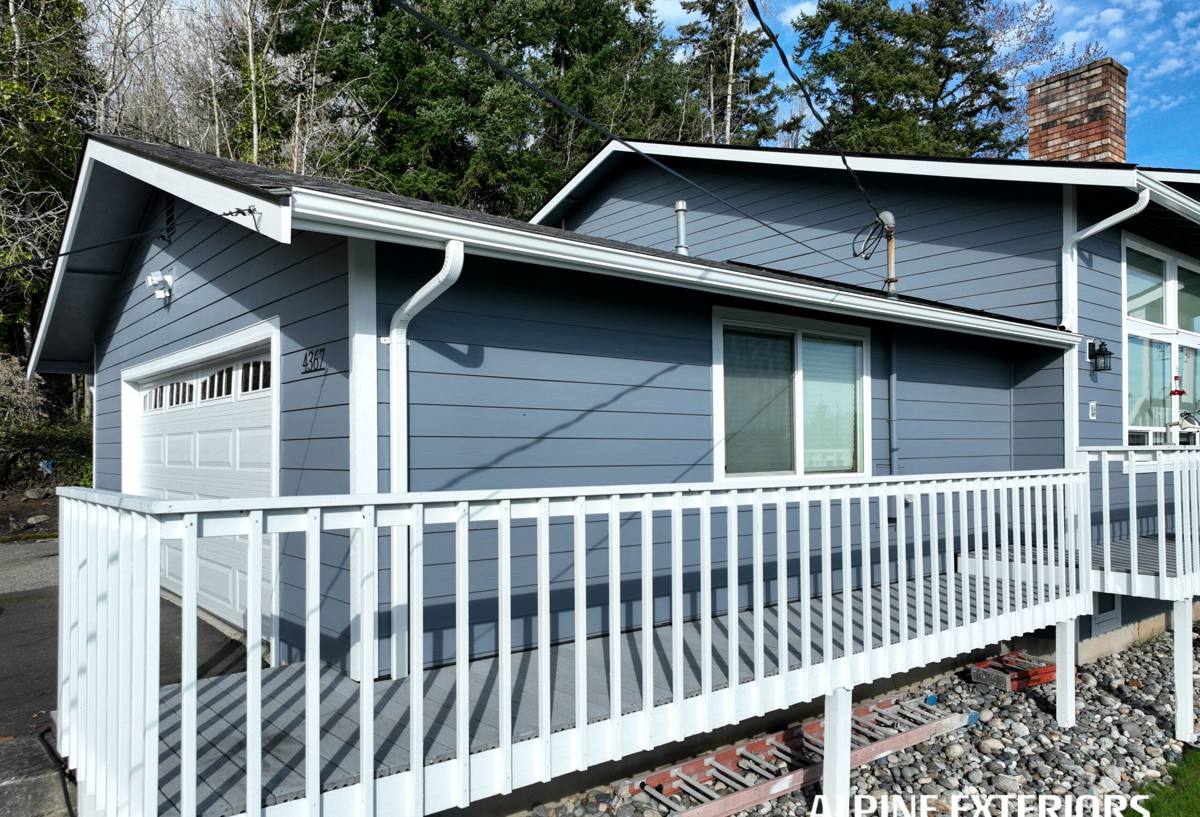
What Whatcom County Storms Actually Do to a Deming Roof
Storm damage on the west side of the Cascades doesn't usually look like the wind-torn shingles you see in disaster photos from other parts of the country. It's quieter and easier to miss, which is exactly what makes it dangerous if it goes unaddressed.
Wind-Driven Rain and Lifted Edges
Driving rain, common with the storm fronts that move through Whatcom County off the Pacific, doesn't just fall — it's pushed sideways under shingle tabs, around flashing, and up under ridge caps. A roof that sheds straight-down rain fine can still leak badly in a wind-driven storm because water is being forced into gaps that were never a problem before. After a hard blow, we're specifically checking for tabs that have been lifted and re-sealed crooked, or nails that have backed out just enough to let wind get a grip.
Moss, Debris, and Trapped Moisture
Deming's tree cover is part of what makes the area a good place to live, and it's also why moss season runs longer here than it does in more open parts of the county. Moss holds moisture against the roof surface long after a storm has passed, which softens shingles, degrades granule adhesion, and creates the damp, organic buildup that eventually works its way under flashing and into valleys. A storm that drops branches or heavy debris onto an already moss-softened roof section does more damage than the same storm would on a clean, well-maintained one.
Valley and Flashing Failure
Roof valleys and flashing points — around chimneys, skylights, dormers, and wall intersections — are where the volume of water concentrates during a heavy rain event. These are also the most common points of storm-triggered leaks, because a small amount of storm impact (a broken branch, a lifted shingle edge upstream) redirects water into a flashing seam that was previously handling runoff fine.
Signs You Have Storm Damage, Even If Nothing Looks Broken
Most homeowners who call us after a storm aren't dealing with an obviously caved-in roof. They're dealing with subtle signs that something changed. Here's what we tell Deming homeowners to watch for after any significant wind or rain event:
- A new water stain on a ceiling or in the attic that wasn't there before the storm
- Granules collecting in gutters or at the base of downspouts after heavy rain
- Shingles that look slightly out of alignment or "fluffed up" compared to the rest of the field
- Fresh moss or debris pushed into a valley or against a flashing edge
- Soft or spongy spots when walking the roof (if it's safe to do so — otherwise leave this to us)
- Daylight visible through the roof deck from inside the attic
- A sudden increase in indoor humidity or musty smell in an upper room or closet
Any one of these on its own might be minor. Two or more together, especially right after a storm, is worth a proper inspection before the next rain event finds the same weak spot.
What a Correct Storm Damage Repair Involves
A storm repair done right isn't just patching the spot that's visibly leaking. It's tracing the actual path water is taking, because on a sloped roof the entry point and the stain point are often several feet apart.
1. Full-Roof Inspection, Not Just the Complaint Area
We walk the whole roof, not just the section near the ceiling stain. Storm damage often has more than one weak point, and if we only fix the obvious one, the homeowner calls us back after the next storm for the second leak we should have caught the first time.
2. Identify the Actual Cause
Lifted shingles, damaged flashing, a compromised valley, or moss-related deck softening all get treated differently. We tell you specifically what failed and why, in plain terms — not just "we found damage."
3. Repair to Match, Not Just to Patch
Where possible we match existing shingle type, color, and exposure so the repair blends in rather than becoming a visible patch. Flashing gets replaced, not caulked over — caulk is a temporary fix, not a repair.
4. Address the Underlying Moisture Problem
If moss or trapped debris contributed to the failure, we clear it and talk through what ongoing maintenance would prevent a repeat, rather than just fixing the symptom and leaving the cause in place.
5. Document What We Found
For anything going through insurance, we document damage with clear notes on cause and extent, which matters when a claim is being reviewed.
Storm Damage vs. Wear-and-Tear: Why the Distinction Matters
Insurance coverage typically depends on whether damage was caused by a specific storm event or is the result of gradual wear and lack of maintenance. This isn't always obvious, and it's part of why an honest inspection matters — we're not going to tell you something is storm damage if it's really moss-related deterioration that's been building for a couple of years, because that call comes back to bite you with the insurer.
| Indicator | Points to Storm Damage | Points to Gradual Wear |
|---|---|---|
| Timing | Appeared right after a specific wind or rain event | Slow onset, noticed over weeks or months |
| Location pattern | Concentrated on the side facing prevailing wind | Spread evenly, often worst in shaded, moss-prone areas |
| Shingle condition | Torn, lifted, or missing in a defined area | Granule loss, curling, brittleness across large sections |
| Roof age | Can happen at any age | More common as the roof approaches end of expected service life |
| Supporting evidence | Storm dates, fallen debris nearby, neighbor reports | History of deferred moss removal or maintenance |
In practice, most storm calls we get in Deming are some mix of both — a roof with some age and moss buildup that a storm finally pushed past the point of holding water out. We'll tell you honestly which part is which.
Our Process for Deming Homeowners
- Call or request an estimate. Tell us what you noticed and when the storm hit — that timeline helps us diagnose faster.
- On-site inspection. We walk the roof and the attic where accessible, and we photograph what we find.
- Plain-language findings. You get a clear explanation of what's damaged, what caused it, and what it will take to fix — no pressure toward a bigger job than what's actually needed.
- Repair scheduled around weather. Storm repairs are weather-dependent by nature; we work with realistic windows rather than promising a date we can't guarantee in a wet-season county.
- Repair completed and verified. We check the fix holds under the next rain, not just that it looks right on a dry day.
Why a Crew That Already Works Deming Matters
Roofing crews based out of the coast or from outside Whatcom County entirely tend to treat every job the same way, regardless of terrain or tree cover. A crew that already works the Deming area knows that a roof under heavy tree canopy needs a different maintenance conversation than one out in the open near the lake, that moss season runs longer here, and that access on some Deming properties means working around long driveways and tree lines that affect how we stage material and equipment. That local familiarity isn't a marketing point — it changes how fast we can diagnose a problem and how realistic our repair timeline is once a storm has already done its damage.
It also means we're not guessing at what "normal" looks like for this area. A roof section with heavier moss growth than you'd expect on a coastal home isn't automatically neglect — it's what happens under tree cover in this part of the county, and it factors into how we evaluate storm damage versus ongoing maintenance needs.
Preventing the Next Storm From Doing the Same Damage
A storm repair that doesn't address the conditions that made the damage possible in the first place is only a temporary fix. For Deming roofs specifically, that usually comes down to a short list:
- Keep gutters and valleys clear of needles and debris, especially going into fall
- Address moss buildup before it thickens into a moisture-holding mat, not after
- Trim back branches that overhang the roofline where storms can knock debris directly onto shingles
- Have flashing checked periodically, not just after visible leaks appear
- Get a post-storm walkthrough after any significant wind event, even if nothing looks obviously wrong
None of this eliminates storm risk — nothing does, in a climate that gets this much driving rain and this long a wet season — but it narrows the gap between "storm passes through, nothing happens" and "storm passes through, now there's a leak."
What This Repair Typically Involves, Cost-Wise
Storm repair costs vary widely based on what actually failed, so we won't quote a number without seeing the roof. What we can tell you is what drives the range:
| Factor | Why It Matters |
|---|---|
| Extent of damage | A few lifted shingles is a small repair; a compromised valley or deck section is larger |
| Roof access | Steep pitch, tree cover, or long driveways affect staging and labor time |
| Material matching | Older or discontinued shingle profiles can be harder to match than current product lines |
| Underlying moisture damage | If water has reached the deck, that's more than a surface repair |
| Insurance involvement | Documentation and adjuster coordination take time but shouldn't change the actual repair quality |
If you're working with an insurance claim, we'll give you a written estimate you can hand to your adjuster and we're glad to explain our findings to them directly if that helps move things along.
Get an Estimate
If a recent storm has you wondering about your roof, or you've noticed a stain, damp spot, or something that just looks different than it used to, it's worth a look before the next rain finds it. We offer free, no-pressure estimates for Deming homeowners — come take a look, tell you honestly what we see, and let you decide from there.