 Sudden Valley
 Why Fairhaven Siding Takes More Punishment Than Most
Fairhaven sits close enough to the water that salt air is part of daily life on a home's exterior, not an occasional visitor. Add Whatcom County's long wet season, driving rain that comes in sideways off the water, and a moss season that can stretch from fall through spring, and you've got a climate that's genuinely hard on siding. It's not dramatic weather — no hurricanes, no hail the size of golf balls — but it's relentless. Moisture sits against the building envelope for months at a time, and salt-laden air accelerates corrosion on anything metal and breaks down finishes that aren't built for it.
We work on homes throughout this part of Whatcom County, and Fairhaven properties consistently show a pattern: siding that looked fine for the first several years starts failing from the bottom up and from the inside out — swollen bottom edges, soft trim, paint that won't hold, moss creeping into every north-facing seam. That pattern is what tells you a lot of siding products were never really engineered for a climate like this one.
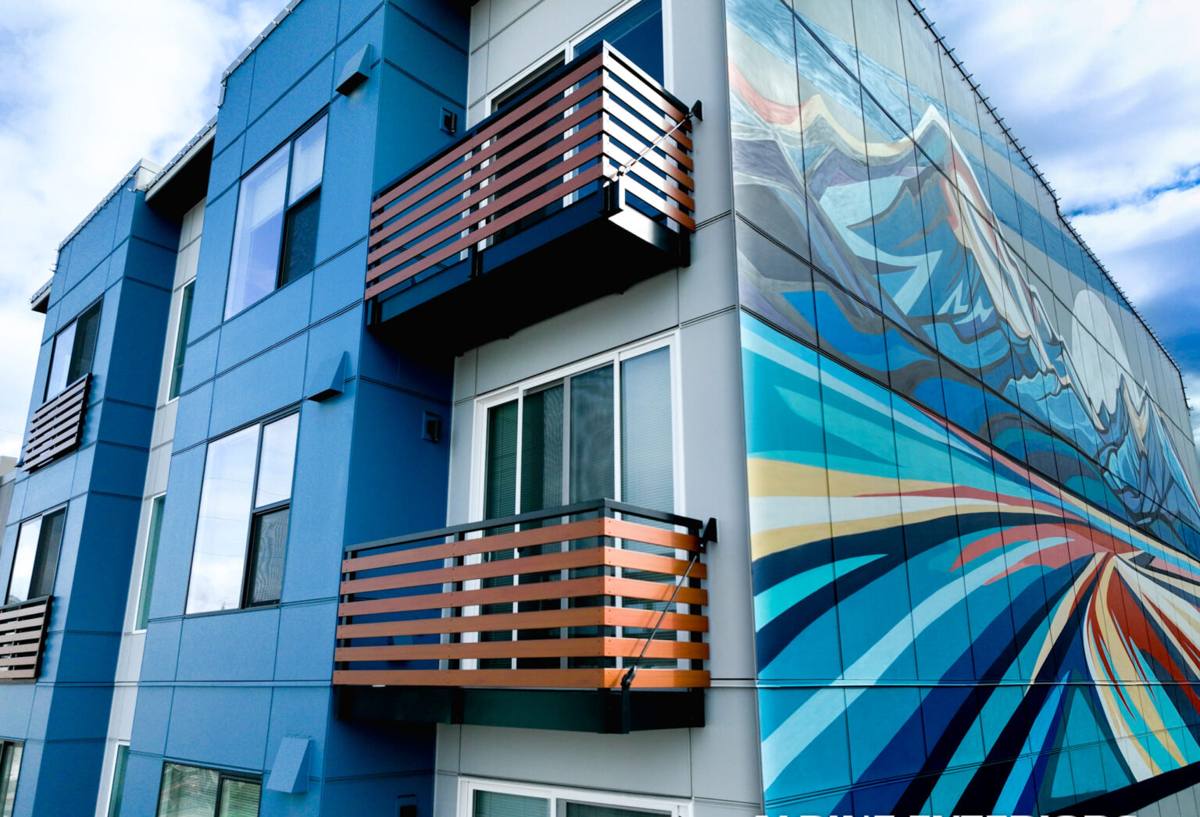
What This Climate Actually Does to Siding Over Time
Salt Air and Metal Fasteners
Salt in the air speeds up corrosion on fasteners, flashing, and trim accessories. Cheap or mismatched hardware corrodes years before the siding itself would otherwise need attention, and once fasteners fail, panels loosen, seams open, and water gets behind the cladding where it does the real damage.
Driving Rain and Wind-Driven Moisture
Rain that comes in at an angle doesn't just wet the surface of a wall — it finds every seam, lap, and penetration and pushes moisture behind the siding if the water-resistive barrier, flashing, and laps aren't installed correctly. Wood-based products swell and soften when this happens repeatedly. Fiber cement doesn't absorb water the way wood or wood-composite products do, which is a big part of why it holds up here.
Moss and Prolonged Dampness
A long moss season means shaded walls, north exposures, and anything near overhanging trees stay damp for extended stretches. Damp organic growth against a wood-based or poorly-finished surface accelerates rot and paint failure. A dense, factory-cured fiber cement panel with a baked-on finish resists that kind of surface breakdown far better than field-painted or composite alternatives.
Why We Install Only James Hardie Fiber Cement
We don't install vinyl, LP SmartSide, primed spruce or cedar, or off-brand fiber cement products like Cemplank or Allura. That's a deliberate standard, not a sales pitch, and it's worth explaining honestly.
- Vinyl is inexpensive and low-maintenance in mild climates, but it becomes brittle in cold snaps, can warp or buckle with heat and UV exposure, and its seams and J-channels give wind-driven rain more places to work its way in over time.
- LP SmartSide is a wood-strand product with a real fire and moisture risk if the factory coating is ever compromised at a cut edge or fastener hole — a bigger concern in a climate where wall assemblies stay damp for months, not days.
- Primed spruce or cedar looks great on day one, but it's a maintenance commitment: repainting on a cycle, caulking joints, and watching for the swelling and cupping that come with repeated wetting and drying in this climate.
- Off-brand fiber cement (Cemplank, Allura, and similar) can be a reasonable product on paper, but we've standardized on one manufacturer, one factory finish system, and one warranty structure so we know exactly what we're installing and what's backing it.
James Hardie fiber cement is non-combustible, dimensionally stable, and available in HZ formulations engineered for specific climate zones — including the wet, moderate Pacific Northwest profile that Fairhaven and the rest of Whatcom County fall into. ColorPlus factory-applied finish is baked on under controlled conditions, which gives it far better resistance to fading, chipping, and moisture intrusion at the surface than a field-applied paint job ever will. It's backed by a strong transferable warranty, which matters to a lot of homeowners who don't plan to be in the same house forever.
What a Correct Fiber Cement Job Actually Involves
Fiber cement performs the way it's supposed to only when it's installed to spec. A rushed or corner-cut install can undermine even the best product on the market, and in a climate this wet, the mistakes show up faster than they would somewhere dry.
The Details That Matter Most Here
- Correct water-resistive barrier and weather-resistant flashing at every window, door, and penetration — this is the layer that actually stops driving rain, not the siding surface itself.
- Proper lap spacing and clearance from grade, decks, and roof lines so water sheds away from the wall instead of pooling against the bottom edge.
- Fasteners rated for the exposure — corrosion-resistant hardware matters more here than in a drier inland climate, given the salt air.
- Correctly sealed and primed cut edges wherever a factory edge is cut in the field, since exposed raw fiber cement is the one place moisture can get a foothold.
- Proper ventilation behind the cladding (rainscreen or drainage plane) so any incidental moisture that does get behind the panel has somewhere to go.
Skip any one of these and you can end up with a product rated for 30-plus years failing at the seams in a fraction of that time — not because the material was wrong, but because the installation was.
Our Process for a Fairhaven Fiber Cement Project
1. Assessment and Exposure Review
We walk the exterior and evaluate exposure by elevation — which walls face prevailing wind and rain, which stay shaded and damp longest, where moss and staining are already showing, and where existing flashing and trim are compromised. This tells us where extra attention is warranted, not just where the siding looks worst.
2. Tear-Off and Substrate Check
Once the old siding is off, we check the sheathing and framing underneath for hidden moisture damage. This is often where a job's real scope gets defined — no amount of good new siding fixes rotten sheathing underneath it.
3. Water Management Layer
We install the water-resistive barrier, flashing, and drainage plane before a single piece of Hardie board goes up. This layer, more than the siding itself, is what keeps driving rain out of the wall assembly long-term.
4. Hardie Installation to Manufacturer Spec
Panels or lap siding go up with correct nailing patterns, lap spacing, and clearances, using corrosion-resistant fasteners suited to a salt-air environment.
5. Trim, Caulking, and Final Detailing
Trim, corners, and penetrations get sealed correctly, and any field-cut edges are primed per manufacturer requirements before the ColorPlus finish takes over as the long-term protective layer.
Why Local Experience with This Climate Matters
A crew that mostly works drier, milder areas can install fiber cement perfectly well on paper and still miss the details that matter specifically here — the flashing detail that keeps driving rain out on a west-facing wall, the clearance that keeps moss from creeping in on a shaded north side, the fastener spec that resists salt-air corrosion over 15 years instead of 5. We work this part of Whatcom County regularly, which means we've seen how homes here actually age, not just how they look on installation day.
That experience shows up in small decisions during the job — where to add extra flashing attention, which elevations need closer inspection before closing up the wall, how much clearance to leave near grade and hardscaping given how wet the ground stays here for months at a stretch.
Fiber Cement Cost Factors for a Fairhaven Home
| Factor | Why It Matters Here |
|---|---|
| Home size and elevation count | More wall area and more complex rooflines mean more flashing and trim detail work, which is where climate resistance is actually built in |
| Existing substrate condition | Damp climates increase the odds of hidden sheathing damage behind old siding, which affects tear-off scope |
| Siding profile (lap, panel, shingle style) | Different profiles have different exposure and fastening requirements; some perform better on high-exposure elevations |
| ColorPlus finish vs. field-painted trim | Factory-applied finish reduces long-term maintenance and repainting cycles compared to field-finished materials |
| Access and site conditions | Waterfront-adjacent lots, slopes, and mature landscaping can affect staging and scaffolding needs |
Signs Fairhaven Homeowners Should Watch For
- Soft or spongy siding near the bottom edge, especially close to grade or hardscaping
- Paint that's peeling or bubbling faster than a normal repaint cycle would suggest
- Persistent moss or dark staining on shaded or north-facing walls that keeps returning after cleaning
- Visible rust streaking from fasteners or trim hardware
- Gaps opening at seams, corners, or trim joints
- Warping, cupping, or bowing panels, particularly on walls that take the most wind-driven rain
Any one of these on its own might just need a repair. Several of them together, especially on an older wood-based or composite install, usually mean the siding system itself is losing the fight with this climate.
A Straightforward Recommendation
We're not going to tell you every siding product is a disaster — vinyl, LP SmartSide, and cedar all have legitimate uses and plenty of homeowners are happy with them in the right setting. But for a Fairhaven home dealing with salt air, driving rain, and a moss season that doesn't quit, James Hardie fiber cement, installed correctly by a crew that treats the water management layer as seriously as the siding itself, is what we'd put on our own house. It's the reason it's the only product we install.
If you'd like a straightforward look at your home's siding and what it would take to do this right, we're happy to walk the exterior with you and give you an honest assessment. Fill out the form below for a free, no-pressure estimate.