 Sudden Valley
 Siding Replacement Built for Fairhaven's Climate
Homes near Fairhaven and the greater Sudden Valley area sit in one of the more demanding exterior environments in Whatcom County. You've got salt-laden air drifting in off the water, long stretches of driving rain pushed sideways by wind, and a moss and mildew season that can run most of the year in shaded, north-facing spots. Siding here isn't just cosmetic — it's the one layer standing between your framing and a climate that never really lets up. When we talk about siding replacement in this neighborhood, we're talking about a system that has to perform in salt exposure, wind-driven moisture, and constant damp shade, not just look good on a dry August afternoon.
That's the lens we bring to every Fairhaven-area project: what does this specific lot, this specific exposure, and this specific siding material actually need to hold up for the next 30-plus years?
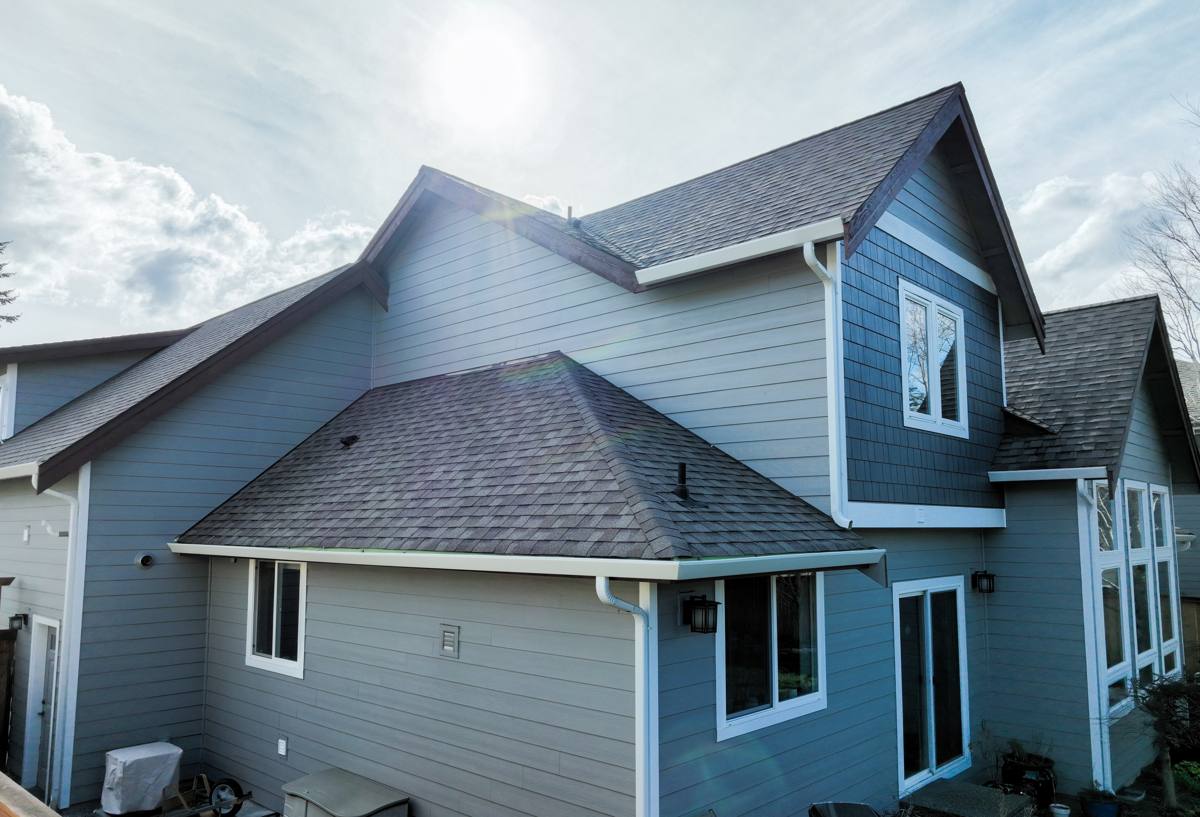
Why Siding Fails Faster in This Part of Whatcom County
Every siding material eventually meets its limit. In coastal and near-water microclimates like this one, three factors accelerate that timeline:
Salt Air
Salt-carrying moisture doesn't just sit on the surface — it works its way into seams, fastener heads, and any spot where a coating has thinned or chalked. Over years, that accelerates corrosion of exposed fasteners and trim hardware, and it breaks down lower-grade paint films faster than inland exposure would.
Driving Rain
Wind-driven rain doesn't fall straight down — it gets pushed sideways into laps, seams, and butt joints. Siding systems that rely on face-sealing (caulk and paint alone, rather than proper drainage and flashing) are the first to show water intrusion here, usually as staining, soft trim, or bubbling paint a few feet up from grade or around window heads.
Moss and Prolonged Dampness
Shaded elevations — north sides, areas under mature trees, spots that stay damp for days after a storm — grow moss and mildew readily. Constant moisture against a porous or absorbent siding face keeps the material wet longer than it should be, which is exactly the condition that leads to swelling, delamination, and rot in wood-based or wood-composite products.
What a Correct Siding Replacement Actually Involves
A siding replacement isn't just pulling off old panels and nailing up new ones. Done right, it's a full building-envelope job. Here's what we do on every Fairhaven-area replacement:
- Full removal of the old siding and inspection of the sheathing underneath for soft spots, rot, or prior water damage
- Repair or replacement of any compromised sheathing before anything new goes up — covering rot instead of fixing it just buries the problem
- Installation of a weather-resistant barrier (house wrap) with correct lapping so water sheds outward, not inward
- Proper flashing at every window, door, and roof-to-wall intersection — this is where the majority of real-world leaks actually start
- Rain-screen or drainage gap detailing where the wall assembly calls for it, so any moisture that does get behind the siding has somewhere to go
- Fastening to manufacturer spec — correct fastener type, spacing, and depth, since salt-air corrosion resistance depends on using the right hardware
- Factory-finished panel installation with correct joint treatment, caulking only where the manufacturer specifies it, not as a substitute for proper flashing
Skip any one of these steps and the new siding will look fine for a season or two before the same problems that killed the old siding start over again underneath it.
Why We Install Only James Hardie Fiber Cement
We standardized on James Hardie fiber cement siding for every home we replace siding on, including in the Fairhaven and Sudden Valley area, and we don't install vinyl, LP SmartSide, primed spruce, cedar, or other fiber cement alternatives like Cemplank or Allura. That's a deliberate call based on how those materials actually perform in this climate, not a sales preference.
Non-Combustible Material
Fiber cement is composed primarily of cement, sand, and cellulose fibers, making it non-combustible — a meaningful difference from wood-based siding and a factor more homeowners in wildfire-adjacent parts of Washington are weighing into their exterior decisions.
Built for Wet Coastal Exposure
James Hardie's HZ5 product line is engineered specifically for the wetter, harsher climate zones of the Pacific Northwest. Fiber cement doesn't absorb and swell the way engineered wood siding can, which matters directly in a moss-season, driving-rain environment where the siding face stays damp for extended periods.
ColorPlus Factory Finish
Rather than field-painted siding, ColorPlus is a baked-on, factory-applied finish that resists fading and holds up to UV and salt exposure significantly better than a job-site paint job, and it comes with its own finish warranty separate from the substrate warranty.
A Warranty Structure Backing All of That Up
James Hardie backs its siding with a substantial transferable limited warranty on the substrate, plus a separate finish warranty on ColorPlus products — coverage that reflects genuine confidence in how the product performs long-term, including in tough coastal climates.
Why We Don't Install Vinyl, LP SmartSide, or Untreated Wood Here
Each of these products has legitimate uses somewhere. In a salt-air, high-moisture, moss-prone environment like the Fairhaven area, here's the honest trade-off analysis behind our standard:
| Material | What it does well | Why it's a poor fit for this climate |
|---|---|---|
| Vinyl siding | Low upfront cost, low maintenance in mild climates | Can warp or become brittle with temperature swings; relies heavily on proper installation to shed wind-driven rain; not non-combustible |
| LP SmartSide (engineered wood) | Workable, budget-friendly, decent appearance | Wood-based core is more moisture-sensitive than fiber cement; sustained dampness from moss-season shade is exactly the condition engineered wood struggles with over time |
| Primed spruce / cedar | Natural look, traditional appeal | Requires ongoing repainting and sealing to stay watertight; salt air and constant damp accelerate the maintenance cycle significantly |
| Other fiber cement brands | Similar base material to Hardie | We standardized on one manufacturer's product line, install specs, and warranty structure so every job we do is consistent and fully backed |
None of these are "bad" products in every context. But for a home taking on salt air, driving rain, and long moss seasons year after year, we've made the call that fiber cement — specifically James Hardie's climate-engineered lines — is the material that holds up with the least maintenance burden and the strongest warranty backing.
Our Process for a Fairhaven-Area Siding Replacement
- On-site assessment — we walk the exterior, check current siding condition, look at sheathing access points, and note exposure factors specific to your lot (shade, wind direction, proximity to water)
- Written estimate — a clear scope covering removal, any sheathing repair allowance, house wrap, flashing detail, Hardie product line and color, and fastening spec
- Scheduling around weather — in a region with this much rain, we plan tear-off and dry-in carefully so your home isn't exposed longer than necessary
- Tear-off and sheathing inspection — old siding comes off, and we address anything the substrate is telling us before covering it back up
- Weather barrier and flashing installation — the unglamorous part that determines whether the job lasts
- Hardie panel or plank installation — to manufacturer fastening and clearance specs
- Final walkthrough — we go over the finished work with you before calling the job done
What to Ask Any Contractor Doing This Work
Whether you hire us or someone else, a siding replacement in this climate is worth vetting carefully. A short checklist:
- Will you inspect and repair sheathing before installing new siding, or just cover what's there?
- What's your flashing detail at windows, doors, and roof lines — can you describe it, not just say "we flash everything"?
- Are you installing to the manufacturer's written fastening and clearance specifications?
- Is the warranty from the manufacturer, the installer, or both — and what voids it?
- Have you worked on homes with similar coastal or shaded-lot exposure before?
A contractor who can answer these specifically, rather than in general reassurances, is one who understands that siding is a system, not a product.
Why Local Experience with This Exposure Matters
A crew that regularly works homes around Sudden Valley and the Fairhaven area already knows what a north-facing wall under tree cover looks like after five wet winters, and what happens when driving rain finds a gap in face-sealed trim. That's not something you can fully substitute with a generic install checklist — it comes from having repaired the failures caused by the wrong material or a shortcut installation on homes just like yours. We bring that exposure-specific judgment to the flashing details, fastener choice, and drainage planning on every job, not just the parts of the install that are easy to see once the siding is up.
Cost Factors Worth Understanding Upfront
Every home is different, and we don't quote pricing without seeing the house, but a few factors consistently move the cost of a siding replacement up or down:
| Factor | How it affects the project |
|---|---|
| Sheathing condition | Rot or water damage found during tear-off adds repair scope beyond the original estimate |
| Home size and wall complexity | More corners, dormers, and trim detail means more labor and material waste |
| Siding profile chosen | Lap, shingle, and panel Hardie products vary in material and install cost |
| Access and site conditions | Tight lots, slopes, or limited staging area can slow the work |
| Trim and accessory scope | Replacing fascia, soffits, or trim alongside siding changes the total project size |
We'll walk through all of this with you during the estimate so there are no surprises once the tear-off starts.
If your Fairhaven or Sudden Valley-area home is due for a siding replacement, we're happy to come take a look and give you a straightforward, no-pressure estimate — just fill out the form below to get started.