 Sudden Valley
 Ferndale sits close enough to the water and open farmland that its roofs take a different kind of beating than roofs twenty miles inland. Salt-laden air off the bay, wind-driven rain that gets pushed sideways under poorly flashed edges, and a moss season that can run eight months out of the year all work against a roof that wasn't built for this specific stretch of Whatcom County. A new roof installed here needs to be sized up for that reality from the first shingle, not treated like a generic replacement job.
This page covers what a correct new roof installation looks like for a Ferndale home — the material and ventilation choices that matter locally, how a proper install sequence protects against wind-driven rain, and what to expect when you work with a crew that already knows this area instead of one passing through.
Why Ferndale's Climate Changes the Job
A roof in Ferndale isn't just shedding rain — it's living in a damp, salty, low-sun environment for a good part of the year. Three conditions drive most of the decisions we make on a new install here:
Salt Air
Homes closer to Bellingham Bay and the coastal flats deal with airborne salt that accelerates corrosion on exposed metal — nails, flashing, vents, and fasteners that aren't rated for it. A roof that looks fine on a spec sheet inland can start showing rust streaks and early fastener failure here within a few years if the metal components weren't chosen with salt exposure in mind.
Driving Rain
Whatcom County storms often come in sideways off the water rather than falling straight down. That matters because a roof can be watertight in a calm rain and still leak in a wind-driven one if the underlayment, flashing laps, and starter courses weren't installed with wind-driven moisture in mind. This is a detail-level issue, not a material issue — it's about how the layers are sequenced and sealed.
Moss Season
Cool, damp, shaded conditions for most of the year make Ferndale prime territory for moss and algae growth on roofing. Moss isn't just cosmetic — it holds moisture against the roofing material, lifts shingle edges, and shortens the life of whatever's underneath it. A new roof should be installed with moss-resistant materials and proper airflow so it isn't fighting an uphill battle from day one.
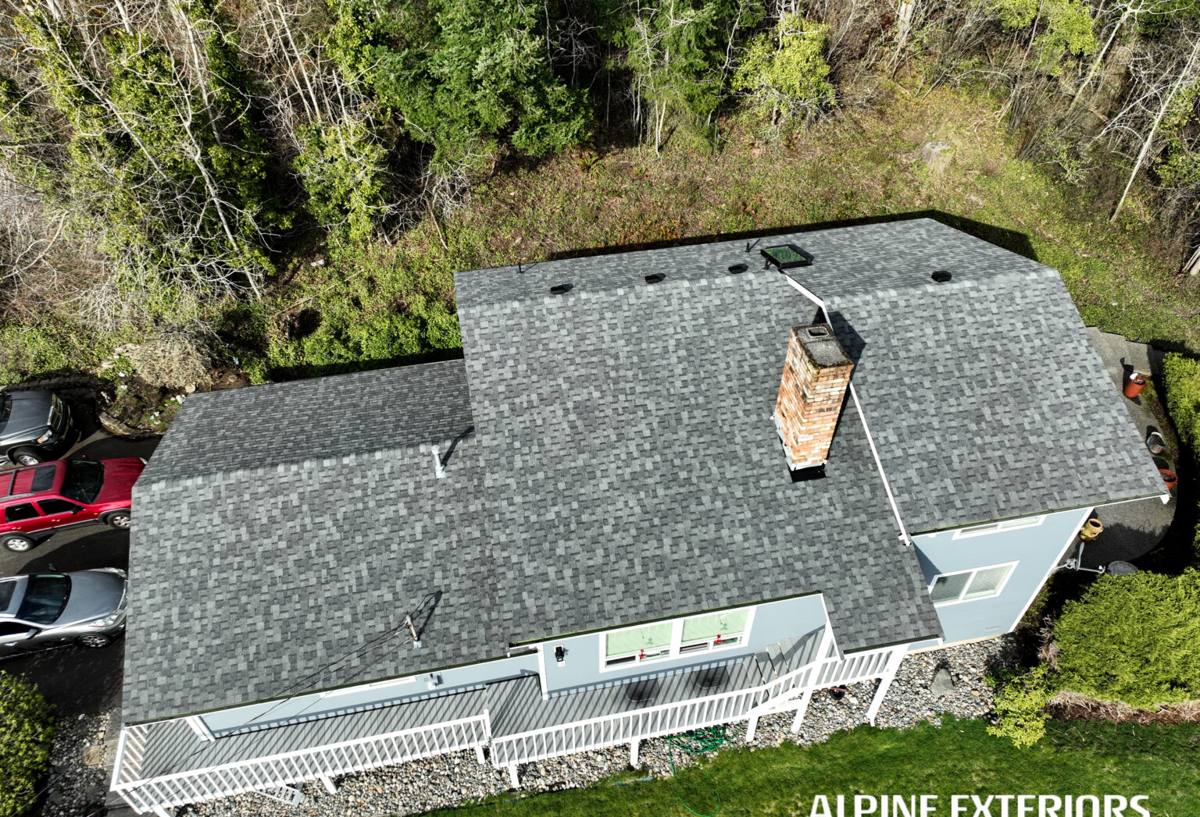
Signs a Ferndale Home Actually Needs a New Roof
Not every roof problem calls for full replacement. Here's how we tell the difference during an inspection:
- Granule loss heavy enough to see bare patches or granules collecting in gutters
- Shingles that are cupping, curling, or cracking rather than lying flat
- Soft or spongy spots when walked, which usually means decking damage underneath
- Persistent moss growth that keeps returning even after cleaning
- Daylight visible through the roof deck from inside the attic
- Water staining on interior ceilings or in the attic near valleys, chimneys, or vents
- A roof at or past its expected service life for its material type
- Multiple past patch repairs in the same area, meaning the underlying problem was never fixed
If a roof is showing two or more of these, replacement usually costs less over time than continuing to patch it.
Material Choices That Hold Up Here
Not every roofing product performs the same in a marine, high-moisture climate. Below is how the common options stack up for a Ferndale install specifically.
| Material | Moss/Moisture Resistance | Salt Air Durability | Typical Lifespan Here |
|---|---|---|---|
| Architectural asphalt shingle (algae-resistant) | Good with copper/zinc strips or granule treatment | Good if fasteners and flashing are corrosion-rated | 25–30 years |
| Standard 3-tab asphalt shingle | Fair — more prone to early moss holding | Fair | 15–20 years |
| Standing seam metal | Excellent — sheds moisture, little moss purchase | Very good with properly coated/fastened panels | 40–50+ years |
| Cedar shake | Poor without diligent maintenance | Fair, but high upkeep in salt/damp air | Varies widely with maintenance |
We're upfront about trade-offs rather than pushing one product for every home. Cedar shake, for example, can look great, but it demands more regular maintenance in a damp climate like this one to keep moss and rot at bay — that's a maintenance-burden conversation we have honestly, not a knock on the material itself. Metal costs more up front but asks the least of you over its life. Algae-resistant architectural shingles are the middle ground most Ferndale homeowners land on: solid moss resistance, manageable cost, and a proven track record in this climate when installed correctly.
What a Correct Installation Actually Involves
The material on top is only part of the story. Most premature roof failures we see in this area trace back to shortcuts in the layers underneath, not the shingle brand.
Tear-Off and Deck Inspection
We remove the old roofing down to the deck rather than layering over it. That's the only way to actually see the plywood or plank decking underneath — soft, delaminated, or rotted sections get replaced before anything new goes down. Roofing over a compromised deck just hides the problem.
Ice-and-Water Barrier at Vulnerable Points
Eaves, valleys, and areas around chimneys and skylights get a self-adhering waterproof membrane before the underlayment goes on. These are the spots where wind-driven rain and ice damming (on the rare cold snaps) find their way in first.
Synthetic Underlayment
We use synthetic underlayment across the full deck rather than older felt products — it holds up better to the extended damp exposure a roof can see during a multi-day install here, and it doesn't degrade the way felt can if weather moves in mid-job.
Corrosion-Rated Flashing and Fasteners
Given the salt air exposure in parts of Ferndale, we spec flashing, drip edge, and fasteners rated for coastal or marine-adjacent conditions rather than standard-grade hardware. It costs a bit more up front and saves you an early flashing replacement later.
Balanced Attic Ventilation
Intake at the eaves and exhaust at the ridge, sized to the attic volume — not just a vent added because it's standard. Proper airflow keeps the underside of the deck dry, which slows moss and rot from the inside out and helps the shingles hit their rated lifespan instead of falling short.
Moss-Resistant Details
Where appropriate, we install zinc or copper strips near the ridge, which release trace metal ions with rainfall that inhibit moss and algae growth down the roof plane over time.
Our Process, Start to Finish
- Inspection and estimate — a full roof and attic assessment, straight answer on repair vs. replace, and a written estimate with no pressure to decide on the spot.
- Material selection — we walk through the options above against your budget, the home's exposure, and how much upkeep you want to take on.
- Permitting — we handle the local permit and any required inspections so it's off your plate.
- Tear-off and deck repair — full removal, deck inspected, any damaged sections replaced.
- Waterproofing and underlayment — ice-and-water barrier at vulnerable points, synthetic underlayment across the deck.
- Flashing, ventilation, and roofing installation — corrosion-rated metal, balanced venting, then the roofing material itself, installed to manufacturer spec so warranty coverage stays intact.
- Cleanup and final walkthrough — magnetic sweep for stray fasteners, debris hauled off, and a walkthrough so you know exactly what was done and what to watch for.
What Drives the Cost of a New Roof
Every roof is different, but the same handful of factors move the price on most Ferndale jobs:
| Factor | Why It Matters |
|---|---|
| Roof size and pitch | More square footage and steeper pitches mean more material and more labor time/safety setup |
| Number of layers to remove | Tearing off multiple existing layers adds disposal and labor cost |
| Deck condition | Rotted or soft decking found during tear-off requires replacement before roofing can go on |
| Material chosen | Asphalt, metal, and cedar carry very different material and installation costs |
| Roof complexity | Valleys, dormers, skylights, and chimneys each add flashing detail work |
| Ventilation upgrades | Adding or correcting attic ventilation is worth doing during a re-roof rather than after |
We give a firm, itemized estimate after the inspection rather than a rough phone quote — a roof over a rotted deck section or a roof missing proper ventilation almost always costs less to fix during the original job than to correct later.
Why a Local Crew Matters for This Job
A roofing crew that regularly works in Ferndale and greater Whatcom County has already seen how salt air, moss, and driving rain age roofs in this specific area — that's not something a crew from outside the region picks up on a single job. It shows up in small decisions: which flashing grade to spec, how much ventilation an attic actually needs given the local humidity, and where moss tends to establish first on a given roof orientation. It also means we're a short drive away if a warranty question or a storm-related concern comes up after the job is done, not a phone number tied to a company based somewhere else.
Warranty and What It Actually Covers
New roof installations typically carry two separate warranties: a manufacturer's warranty on the material itself, and a workmanship warranty from the installing contractor covering the installation. It's worth understanding that a manufacturer's material warranty can be voided by improper installation — which is exactly why installation details like flashing, fastening, and ventilation matter as much as the shingle brand you choose. We'll walk you through what's covered under each before work starts, in plain terms, not fine print you have to chase down later.
If your roof is showing its age or you're planning ahead rather than reacting to a leak, we're happy to come take a look. A free, no-pressure estimate gets you a straight assessment of where your roof actually stands and what a correct replacement would involve for your home — just fill out the form below.