 Sudden Valley
 Siding Installation Built for Geneva's Climate
Geneva sits in the kind of Pacific Northwest microclimate that punishes siding faster than most homeowners realize. Between salt-laden air drifting in off the water, driving rain that comes sideways during winter storms, and a moss season that can stretch six months or more, the cladding on a Geneva home is under near-constant attack. A siding installation done right here isn't just about appearance — it's about choosing a material and a installation method that can actually stand up to what this specific corner of Whatcom County throws at it year after year.
We install James Hardie fiber cement siding exclusively, and we do it because we've seen what happens when the wrong product or a rushed installation meets this climate. This page walks through what a proper siding installation looks like for a Geneva home, what to watch for, and why local experience matters as much as the product itself.
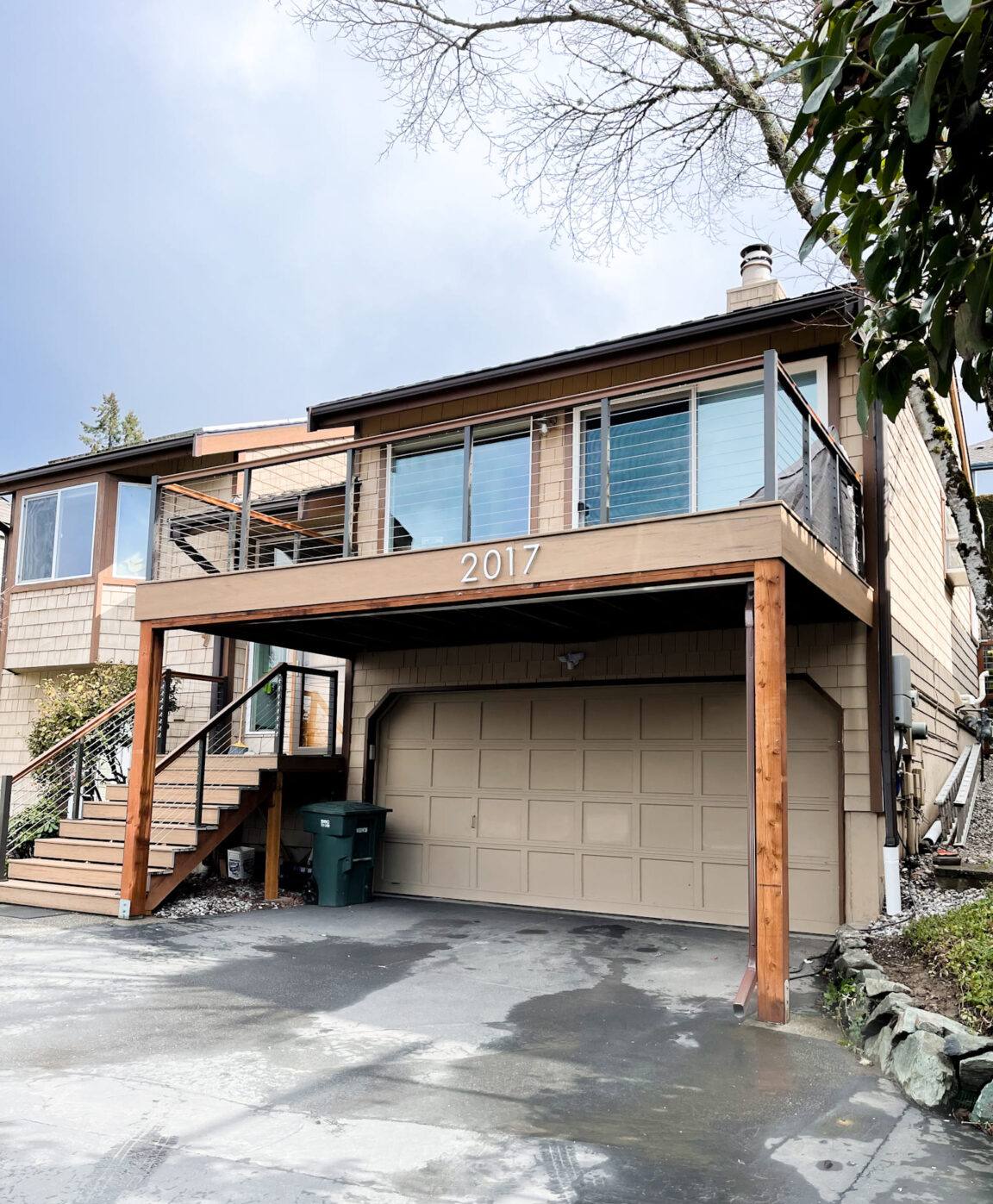
Why Geneva's Climate Is Harder on Siding Than It Looks
Salt Air and Slow Corrosion
Airborne salt doesn't just affect homes right on the waterfront. It travels, settles into porous or poorly sealed materials, and accelerates the breakdown of fasteners, trim, and any siding product that isn't dimensionally stable. Over years, that slow chemical wear shows up as pitting, staining, and premature failure at joints and seams — long before the siding was supposed to need replacement.
Driving Rain and Wind-Driven Moisture
Rain that falls straight down is manageable. Rain that comes in sideways during a Whatcom County windstorm is a different problem entirely — it gets pushed up under laps, into butt joints, and behind trim that isn't flashed correctly. Siding installed with generic techniques or minimal flashing detail will eventually let that moisture in, and once water gets behind the cladding, the sheathing and framing underneath pay the price.
Moss, Shade, and Constant Dampness
A long moss season means extended stretches where siding surfaces simply don't dry out between rain events. Shaded north and east-facing walls stay damp for days at a time. Materials that absorb moisture or swell when wet will hold that dampness against the wall assembly, creating conditions where moss, mildew, and rot can take hold — especially in corners, under eaves, and anywhere airflow is limited.
What This Means for Material Choice
This is precisely why we standardized on James Hardie fiber cement and stopped installing vinyl, LP SmartSide, primed wood, and other engineered wood products. Fiber cement is non-combustible, dimensionally stable, and doesn't absorb moisture the way wood-based products do. It won't swell, delaminate, or feed the kind of sustained dampness that moss and rot need to establish themselves. In a climate like Geneva's, that difference isn't cosmetic — it's the difference between siding that looks good at year five and siding that's already showing problems.
James Hardie's ColorPlus factory-applied finish also matters here. A factory-baked finish resists the fading and chalking that field-applied paint struggles with in this kind of damp, UV-exposed environment, and it means the color stays consistent without a repaint cycle every few years.
What Correct Installation Actually Involves
The siding product is only half the equation. A huge share of the premature failures we see in this region trace back to installation shortcuts, not the material itself. A correct James Hardie installation for a Geneva home includes:
- A water-resistive barrier installed and lapped correctly, with all penetrations sealed before any siding goes up
- Proper flashing at windows, doors, and any horizontal trim where wind-driven rain can find a path inward
- Correct fastener placement and spacing per Hardie's installation specifications — not generic fastening patterns borrowed from other products
- Minimum clearances maintained between siding and grade, decks, roofing, and other surfaces so moisture has somewhere to drain and air can circulate
- Caulking and sealant used only where Hardie's specifications call for it — over-caulking can trap moisture just as easily as under-caulking lets it in
- Proper overlap and gapping at butt joints to allow for the material's minor expansion and contraction without stressing the finish
Skipping any one of these steps doesn't usually cause an immediate, visible problem. It shows up two, five, or ten years later as a stain, a soft spot, or a section that needs to be torn out and redone — often at a much higher cost than doing it correctly the first time.
Our Installation Process for Geneva Homes
1. On-Site Assessment
We start by walking the exterior and evaluating the existing siding, sheathing condition, and any problem areas — particularly shaded walls, areas near grade, and spots where past moisture intrusion may have already caused damage. This tells us what's underneath before we ever price the job.
2. Tear-Off and Substrate Inspection
Old siding comes off and we inspect the sheathing underneath. Any rot, soft spots, or compromised framing gets addressed before new siding goes on — installing new cladding over a damaged substrate just hides a problem instead of fixing it.
3. Water-Resistive Barrier and Flashing
This is the step that determines how the wall assembly performs for the next several decades. We install the barrier, flash all openings, and detail every transition point with Geneva's rain patterns specifically in mind.
4. Hardie Installation to Spec
Panels, planks, or shingle-style siding go up following James Hardie's published installation guidelines — fastener type, spacing, clearances, and joint treatment all follow the manufacturer's specification, not shortcuts.
5. Trim, Caulking, and Final Detail
Trim work and any necessary caulking are finished last, matched to the ColorPlus finish system so the completed job looks uniform and performs as a system rather than a patchwork of parts.
6. Final Walkthrough
We walk the finished job with the homeowner, point out what was done and why, and make sure everything meets the standard we'd want on our own homes.
Comparing Siding Approaches for a Climate Like This
| Factor | James Hardie Fiber Cement | Vinyl / Engineered Wood |
|---|---|---|
| Moisture absorption | Minimal — won't swell or delaminate | Higher risk, especially at seams and cut edges |
| Performance in wind-driven rain | Stable when properly flashed and installed | More dependent on perfect installation; less forgiving |
| Moss and mildew resistance | Non-organic material resists sustained dampness | Wood-based products can feed organic growth if damp persists |
| Finish longevity | Factory ColorPlus finish, long fade resistance | Field-applied or lower-grade factory finishes vary |
| Fire resistance | Non-combustible | Combustible (wood) or heat-sensitive (vinyl) |
What to Check Before Hiring Anyone for This Job
Geneva homeowners should be cautious of any contractor treating siding installation as a generic, one-size-fits-all job. The details that matter here — flashing technique, fastener spec, clearance from grade — are exactly the details that get skipped when a crew is unfamiliar with the product or rushing between jobs. Before hiring, it's worth asking:
- Do you install James Hardie specifically, and are your installers trained on Hardie's current specifications?
- How do you handle flashing and water-resistive barrier detailing around windows and doors?
- What's your approach to sheathing repair if damage is found during tear-off?
- Can you walk me through your fastening and clearance approach before work starts?
- Do you carry manufacturer certification or training specific to fiber cement installation?
A contractor who can answer these clearly, without hesitation, is one who actually understands the material. Vague or generic answers are a sign the crew treats siding as interchangeable — which, in a climate like Geneva's, it isn't.
Why Local Experience in Whatcom County Matters
Every region has its own combination of moisture, wind, and sun exposure, and Whatcom County's is distinct — the mix of marine influence, terrain-driven wind patterns, and extended damp stretches doesn't behave the same way installation guidance written for a drier climate assumes. A crew that already works in and around Sudden Valley and Geneva has seen which walls fail first, which details get missed, and which corners of a home need extra attention. That local pattern recognition, combined with correct James Hardie installation practices, is what actually keeps siding performing for its full service life instead of needing early repairs.
Long-Term Value for Geneva Homeowners
Siding is one of the largest exterior investments a homeowner makes, and in a climate that's actively working against the material, doing it right the first time pays off far more than in milder regions. A correctly installed James Hardie system reduces the odds of moisture intrusion, resists the moss and mildew pressure this area is known for, and holds its finish and appearance without the recurring maintenance cycle that other products demand. It's a decision that shows up in fewer repair calls and a home that holds its value over the long haul.
If you're planning a siding project in Geneva or anywhere around Sudden Valley, we're happy to take a look and walk you through what your home specifically needs — no pressure, no obligation. Use the form below to request a free estimate.