 Sudden Valley
 Why Lake Whatcom Homes Take a Different Kind of Beating
Homes around Lake Whatcom sit in one of the more demanding microclimates in Whatcom County. The lake itself moderates temperature but adds humidity, and the tree cover that makes this area so desirable also means many homes stay shaded for long stretches of the day. Add the driving rain that rolls in off the water and the marine air pushing inland from Bellingham Bay, and you get siding conditions that are tougher than what a home ten miles inland deals with. Shade plus moisture plus limited airflow is exactly the recipe that grows moss, algae, and mildew on exterior surfaces — and it does it faster here than in drier, sunnier parts of the county.
This isn't a reason to avoid siding your Lake Whatcom home well — it's a reason to be precise about what you put on it and how it goes on. Some products handle this environment. Others just delay the problem.
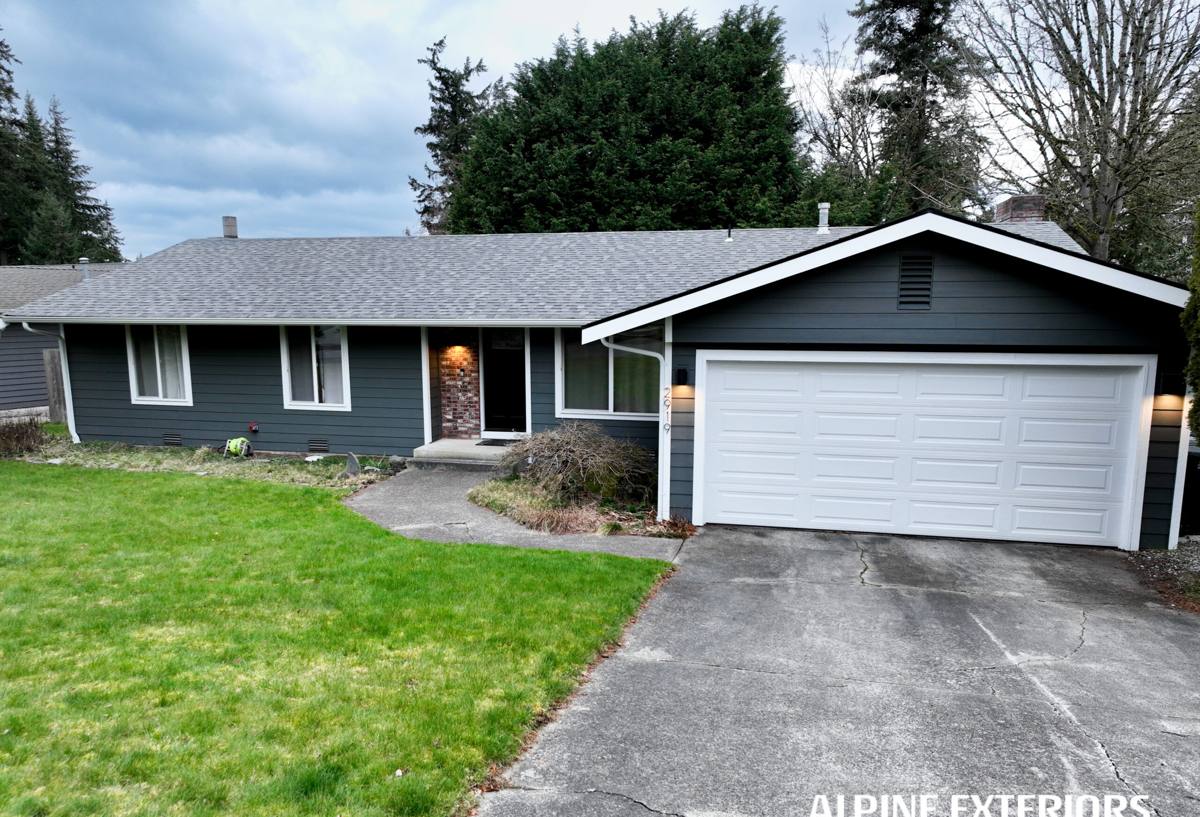
What This Climate Actually Does to Siding
Moss and Organic Growth
Whatcom County's moss season can run nearly half the year on shaded, north-facing walls near the lake. Moss holds moisture against a wall surface long after the rain has stopped, which is a problem for any siding material that can absorb water or swell — and it's a cosmetic problem for materials that stain or discolor under organic growth. Fiber cement doesn't feed mold or rot the way wood-based products can, but no siding is immune to needing a wash down now and then in a spot like this.
Driving Rain and Wind
Lake-effect wind can push rain sideways against a wall, which puts real pressure on seams, laps, and anything around windows and doors. If flashing and gapping aren't done correctly at install, this is where water finds its way behind the siding — not through the face of the material itself.
Marine and Humid Air
Whatcom County's proximity to Bellingham Bay means homes throughout the region deal with salt-tinged, moisture-heavy air at least part of the year. Combined with the lake's own humidity, metal fasteners, trim, and paint finishes all age faster here than they would in a dry climate. This is one of the reasons factory-applied finishes matter more in this area than in most.
Why We Only Install James Hardie Here
We don't install vinyl, LP SmartSide, Cemplank, Allura, primed spruce, or cedar, and Lake Whatcom's climate is a big part of why. Vinyl can warp and fade under repeated wet-dry cycling and doesn't hold up well to physical impact. Wood-based products, even engineered ones, are still organic material at their core — moisture that gets past a seam has something to feed on. Cedar looks great going up but demands a maintenance schedule most homeowners underestimate, especially in a shaded, moss-prone spot like this. James Hardie fiber cement is non-combustible, doesn't rot, and won't feed mold the way wood products can. That's not a small thing on a lake where homes sit close to trees and brush.
Choosing the Right Hardie Product Line for a Lake Whatcom Property
Not every Hardie product is the right fit for every wall. Exposure, shade, and how close a wall sits to the lake or tree line all factor into what we recommend.
| Hardie Product | Best Fit For | Why It Works Here |
|---|---|---|
| HardiePlank Lap Siding | Most walls, all exposures | Versatile, proven in wet climates, wide color range |
| HardieShingle Siding | Accent gables, dormers | Traditional look without the maintenance of real cedar shingle |
| HardiePanel Vertical Siding | Modern designs, porch ceilings, accent walls | Clean lines, fewer horizontal seams for water to track along |
| HardieTrim Boards | Corners, window and door casing | Matches siding durability so trim doesn't fail before the field siding does |
All of these are available with Hardie's HZ5 engineered formulation, which is built for the Pacific Northwest's freeze-thaw and moisture cycles rather than a generic national spec.
ColorPlus Finish Matters More in a Shaded, Humid Spot
Field-painted siding relies on paint adhesion holding up against sun, moisture, and temperature swings, applied on site, often in less-than-ideal weather. Hardie's ColorPlus Technology finish is baked on in a controlled factory environment with multiple coats and a stronger bond than a job-site paint job can match. In a spot like Lake Whatcom where a wall might stay damp for days after a rain event, that finish durability is the difference between siding that still looks sharp in year ten and siding that needs a repaint by year five.
What Correct Installation Looks Like on This Lake
The material is only half the equation. We've seen Hardie siding fail prematurely on other jobs around Whatcom County — not because the product was wrong, but because it was installed wrong. Correct installation here means:
- Proper weather-resistive barrier and rainscreen gap so walls can dry out between rain events instead of trapping moisture
- Correct nail spacing and fastener depth — Hardie is specific about this, and it affects long-term panel integrity
- Flashing installed above windows, doors, and any horizontal trim, not just caulk covering a gap
- Manufacturer-specified clearances at grade, roof lines, and decks so siding never sits in standing water or snow
- Butt joints and seams sealed or capped per Hardie spec, not just butted together and caulked
Every one of these details matters more in a climate that stays wet and shaded for long stretches. Skip one and you're not getting the 30+ year performance Hardie siding is capable of — you're getting a shorter clock with a bigger repair bill at the end of it.
Our Process for a Lake Whatcom Siding Job
We keep the process straightforward and communicate at each step, since most homeowners are living in the house through the work:
- On-site assessment — we walk the exterior, check for existing moisture or rot damage, and note shade patterns and drainage around the home
- Product and color selection — we help you pick the right Hardie line and ColorPlus color for your home's exposure and style
- Tear-off and inspection — old siding comes off and we inspect sheathing underneath before anything new goes up
- Weather barrier and rainscreen installation — this step gets skipped by crews in a hurry; we don't skip it
- Hardie siding, trim, and flashing installation — installed to manufacturer spec, not shortcuts
- Final walkthrough — we go over the finished job with you before we call it done
Why a Crew That Already Works This Lake Matters
Lake Whatcom isn't a typical suburban street grid. Lot access, tree cover, slope, and proximity to the water all vary block to block, and Sudden Valley in particular has its own mix of terrain and vegetation that affects how a job gets staged and how a wall dries out afterward. A crew that's worked this area knows which walls need extra attention to drainage and airflow before the first piece of siding goes up, instead of learning that on your dime. That local knowledge is part of what you're paying for — not just labor.
Living With Hardie Siding at Lake Whatcom: What Upkeep Looks Like
Fiber cement is low-maintenance, not no-maintenance, especially in a moss-prone environment. A realistic maintenance routine:
- Rinse siding with a garden hose or soft wash once or twice a year, more often on shaded north walls
- Keep gutters clear so overflow doesn't run down the siding face
- Trim back branches and brush that keep a wall in constant shade or contact
- Check caulking at trim and penetrations every year or two and touch up as needed
- Address any moss buildup before it spreads rather than letting it sit through another wet season
None of this requires repainting, re-staining, or the kind of periodic overhaul that wood siding demands.
Cost Factors Specific to This Area
Every Hardie job is priced on its own details, but a few things move the number on Lake Whatcom homes specifically: site access and staging on sloped or wooded lots, the amount of trim and detail work around windows and dormers, whether existing siding needs tear-off versus a fresh build, and the condition of the sheathing underneath once old siding comes off. We walk all of this with you before giving a number, so there aren't surprises mid-project.
The Warranty Behind the Work
James Hardie backs its siding with a strong, transferable limited warranty, and ColorPlus finishes carry their own separate finish warranty. That matters on a lake property where curb appeal and resale value tend to run higher than average — a warranty that transfers to the next owner is worth something real if you ever sell.
If you're weighing siding options for a home on or near Lake Whatcom, we're happy to walk your property, talk through what your specific walls need, and put together a straightforward, no-pressure estimate. Use the form below to get started.