 Sudden Valley
 Why Acme Homes Need a Roof Built for This Climate
Acme sits in a part of Whatcom County where the weather doesn't let up for long. Homes here deal with a long, wet season, driving rain that comes in sideways off the surrounding hills, and enough shade and moisture to keep moss growing on almost any roof surface that isn't actively shedding water and light. Add in the salt-tinged air that reaches inland across this part of Washington, and you have a combination that is genuinely hard on roofing materials. Asphalt shingles in this environment tend to hold moisture in their granules, grow moss and algae faster than they would in a drier climate, and lose their protective coating years ahead of schedule. Metal roofing responds to these conditions differently, and that's why it's become one of the most requested upgrades we install for homeowners in and around Acme.
A metal roof isn't just a different material on the same old roofline. It changes how water, moss, and wind interact with your home. Done right, it's one of the lowest-maintenance, longest-lasting choices a homeowner in this part of Whatcom County can make. Done wrong — with the wrong fasteners, the wrong underlayment, or a crew unfamiliar with how this climate behaves — it can trap moisture and cause problems that are more expensive to fix than the roof it replaced.
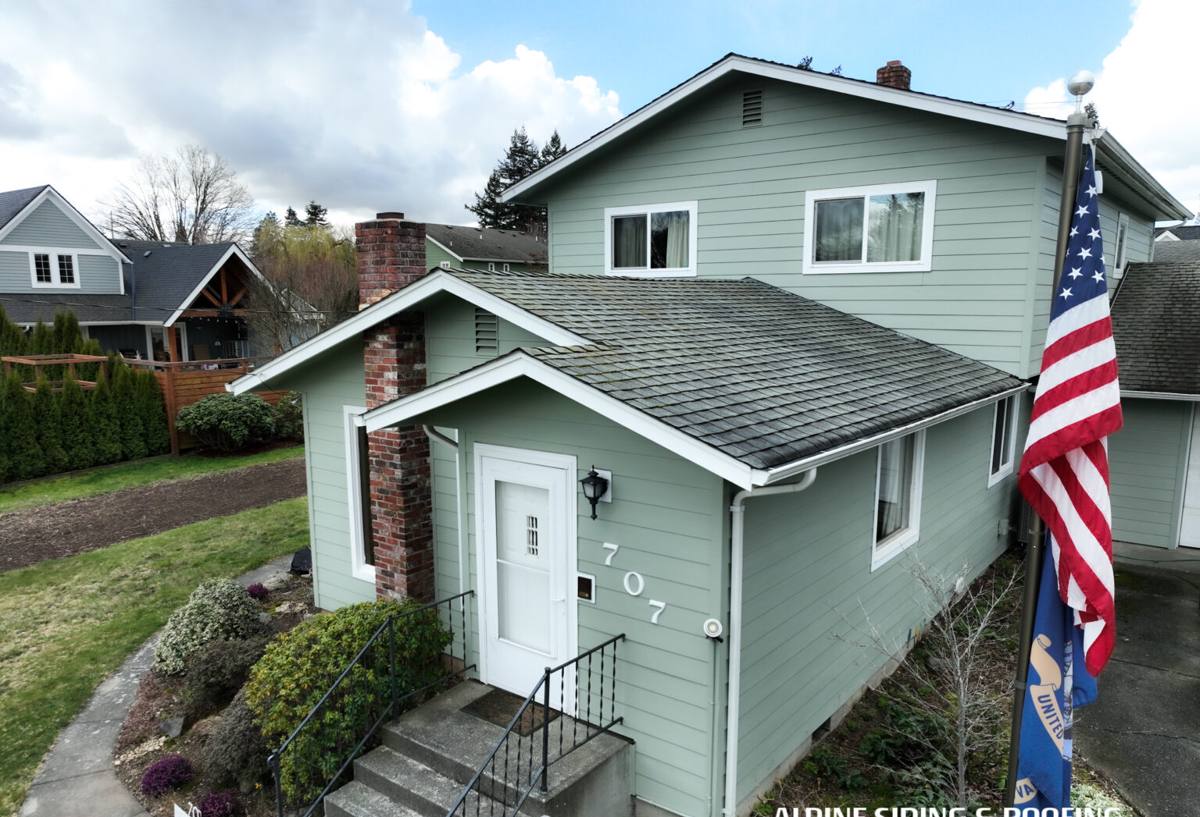
What This Climate Actually Does to a Roof
Moss and Organic Growth
Moss doesn't just sit on top of a roof — it holds moisture against the surface underneath it, and over time that moisture works its way into seams, fastener penetrations, and shingle edges. On a standard shingle roof, moss can lift tabs and create channels for water to travel where it shouldn't. Metal's smooth, hard surface gives moss far less to grip, and the panel profile sheds water and debris before organic growth has a chance to establish.
Driving Rain and Wind-Driven Water
Rain that comes in at an angle doesn't just fall straight down and run off — it gets pushed under laps, around flashing, and into any gap that isn't properly sealed. This is where installation quality matters more than the material itself. A metal roof with correctly lapped panels, sealed penetrations, and properly integrated flashing handles driving rain without issue. The same roof installed with shortcuts at the valleys or around vents will leak in exactly the conditions Acme sees most often.
Salt Air and Corrosion
Airborne salt accelerates corrosion on unprotected or poorly coated metal, particularly at cut edges, fastener heads, and dissimilar-metal contact points. This is a material selection issue as much as an installation one — the coating system and fastener hardware need to be matched to a coastal-influenced environment, not just picked off a shelf because it's the cheapest option available that week.
What a Correct Metal Roofing Job Involves
A metal roof is only as good as everything underneath and around the panels. The visible surface is the easy part — the details that don't show are what determine whether the roof performs for decades or causes problems within a few years.
- Full tear-off and inspection of the roof deck, with any soft or water-damaged sheathing replaced before anything new goes down
- A high-quality synthetic or self-adhered underlayment suited to metal, providing a second line of defense against wind-driven rain
- Proper ice-and-water barrier at eaves, valleys, and any low-slope transitions where water tends to linger
- Panel fastening and spacing that matches the manufacturer's specification for the panel profile being installed
- Flashing at every penetration, valley, and wall transition — custom-formed where needed rather than forced from stock trim
- Fastener and hardware selection appropriate for a coastal-influenced, high-moisture environment to resist corrosion
- Proper ventilation at the ridge and eaves so moisture from inside the home doesn't get trapped against the underside of the deck
Skipping any one of these steps doesn't necessarily show up right away. It shows up in year three or four, when a homeowner who thought they bought a fifty-year roof is dealing with a leak that traces back to a flashing detail that was never done correctly in the first place.
Metal Roofing Profiles: What Fits Acme Homes
Not every metal roofing profile makes sense for every home. Style, roof pitch, and budget all play a role, but so does how each profile handles this region's rain and moss pressure.
| Profile Type | How It Handles Local Conditions | Typical Fit |
|---|---|---|
| Standing Seam | Concealed fasteners, raised seams shed water and resist wind-driven rain very well | Homes wanting the longest service life and cleanest appearance |
| Exposed-Fastener Panel | Solid water shedding but relies on fastener seals staying intact over time | Budget-conscious projects, outbuildings, some roof styles |
| Stone-Coated Steel | Textured surface can hold slightly more debris and moisture than smooth panel, though it still outperforms shingles | Homeowners wanting a traditional shingle or shake look with metal's durability |
We'll walk through which profile makes sense for your specific roof, pitch, and budget during the estimate — there's rarely a single "best" answer, only the best fit for your home.
Metal Roofing vs. Asphalt Shingles in Acme's Climate
| Factor | Metal Roofing | Asphalt Shingles |
|---|---|---|
| Moss resistance | Sheds water quickly, little for moss to grip | Granule surface holds moisture, moss establishes faster |
| Wind-driven rain | Performs well with correct installation | Vulnerable at lifted tabs and worn seals |
| Expected lifespan | Multiple decades with proper maintenance | Shorter, especially with heavy moss/moisture exposure |
| Upfront cost | Higher initial investment | Lower initial investment |
| Maintenance | Occasional inspection, minimal upkeep | Periodic moss treatment and granule loss monitoring |
Neither option is "wrong" for every homeowner — it depends on how long you plan to be in the home, your tolerance for periodic maintenance, and your upfront budget. We'll give you a straight answer on which makes more sense for your situation rather than pushing one product regardless of fit.
Our Process for a Metal Roofing Installation in Acme
- On-site inspection: We look at your existing roof, deck condition, ventilation, and any problem areas before recommending anything.
- Honest estimate: You get a clear breakdown of scope, materials, and cost — no pressure, no inflated urgency.
- Tear-off and deck prep: Old roofing removed, deck inspected and repaired as needed.
- Underlayment and flashing: The moisture-management layer goes in first, done to spec, not shortcuts.
- Panel installation: Panels installed to manufacturer fastening and spacing requirements.
- Final walkthrough: We review the finished roof with you and answer any questions before we consider the job done.
Why Hiring a Crew That Already Works Acme Matters
A roofing crew that only occasionally works this far into Whatcom County doesn't always account for how much moisture and moss pressure a roof here actually sees compared to drier parts of the state. We work in this area regularly, which means we're not guessing at how this climate behaves — we've seen how roofs in Acme and the surrounding Sudden Valley area age, where they tend to develop problems, and what installation details actually hold up over time versus which ones look fine on day one and fail quietly a few years later. That local familiarity shows up in the small decisions: flashing details at tricky transitions, fastener choices that account for salt exposure, and knowing which profiles perform best on the roof pitches common to homes in this area.
Signs Your Current Roof May Be Struggling
- Moss buildup that returns quickly after cleaning
- Granule loss or bare patches on shingles
- Dark streaking or staining across roof planes
- Soft spots or sagging when viewed from the ground
- Water stains on interior ceilings after heavy rain
- Rusting or deteriorating flashing around vents and chimneys
Maintaining a Metal Roof in a Wet, Mossy Climate
Metal roofing is genuinely low-maintenance compared to asphalt, but "low-maintenance" doesn't mean "no-maintenance." A periodic visual check for debris buildup in valleys, clear gutters, and an occasional look at fastener and flashing condition goes a long way toward getting the full lifespan out of the investment. Homeowners in Acme who keep debris from accumulating in shaded valleys and low-slope areas tend to see the fewest issues over time, since trapped organic matter is what creates the moisture conditions moss and corrosion both need to take hold.
If your roof is aging, showing moss you can't keep ahead of, or you're simply planning ahead for a home in this climate, we're happy to take a look and give you a straightforward assessment. Reach out for a free, no-pressure estimate — there's a form below to get started.