 Sudden Valley
 Why Ferndale Homes Are a Different Metal Roofing Job
Ferndale sits close enough to the water and open farmland that roofs here take a beating most inland Whatcom County homes never see. You've got salt-laden air rolling in off the Strait, long stretches of driving rain through fall and winter, and a moss season that can run nine months out of the year under the right shade and dampness. A metal roof handles all three of those better than almost any other material, but only if it's specified and installed with those specific conditions in mind. A metal roof detailed for a dry inland town isn't the same job as one detailed for Ferndale.
We work Ferndale roofs regularly, and the patterns repeat: fastener corrosion on roofs that used the wrong hardware, moss buildup in valleys that weren't given enough pitch or clearance, and panel seams that were never meant to handle the volume of water Whatcom County dumps on a roof between October and April. None of that is a knock on metal roofing as a material — it's a knock on installs that didn't account for where the house actually sits.
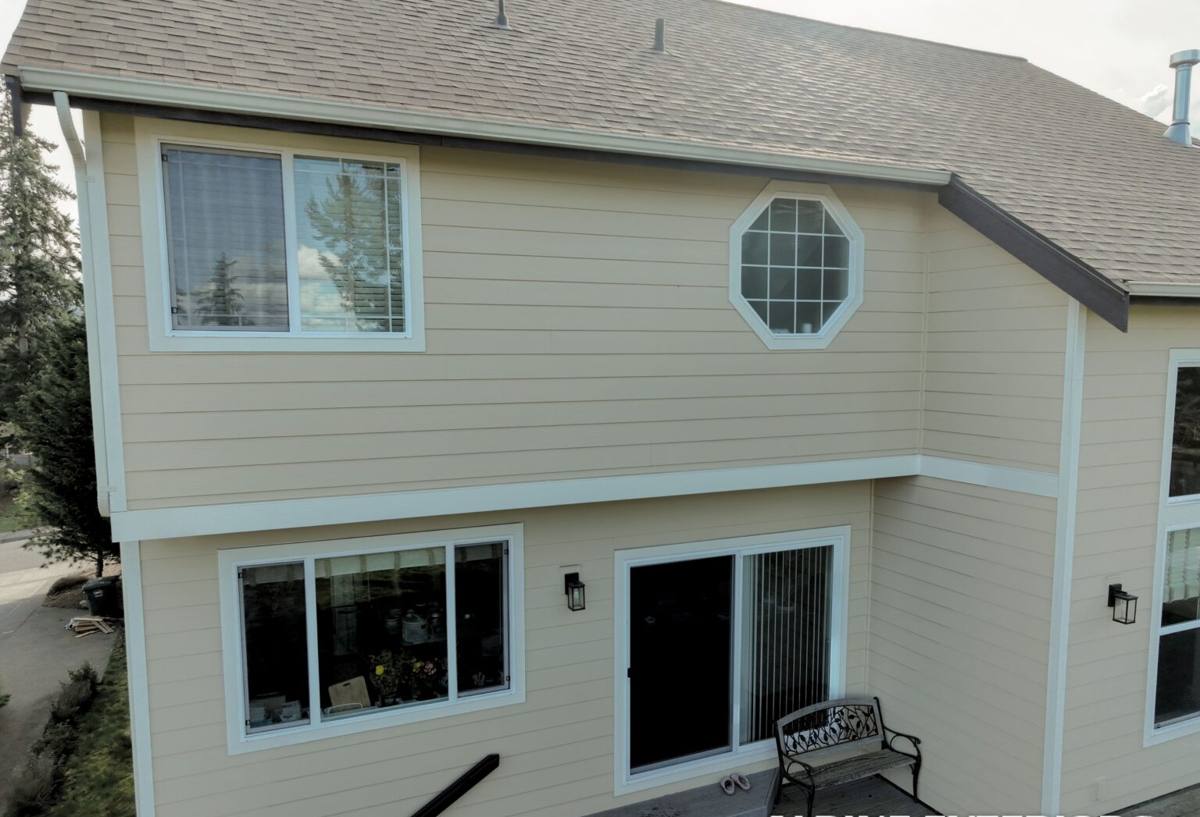
What Ferndale's Climate Actually Does to a Roof
Salt Air and Corrosion
Proximity to salt water accelerates corrosion on any exposed metal — fasteners, flashing, panel edges — especially where two dissimilar metals touch and start a galvanic reaction. This is a fastener and flashing spec issue as much as a panel issue. The panel finish can be excellent and the roof can still fail early if the screws, trim, and flashing weren't chosen to match it.
Driving Rain and Wind-Driven Water
Rain here doesn't always fall straight down. Wind off the water pushes it sideways and up under laps, ridge caps, and poorly sealed penetrations. A metal roof's watertightness depends almost entirely on how the seams, laps, and penetrations were detailed — the panel itself rarely leaks; the transitions do.
Moss, Shade, and Slow-Drying Roof Sections
Tree cover and marine humidity keep north-facing slopes and valleys damp longer than the rest of the roof, which is exactly where moss and organic growth take hold first. Moss holds moisture against the roof surface, and on the wrong material that moisture works its way into seams and fasteners over time.
Why Metal Roofing Is a Strong Fit for This Area — With Caveats
Done right, metal roofing is one of the better answers to Ferndale's climate: it sheds water fast, doesn't absorb moisture the way organic shingle mat can, resists moss better than asphalt when the surface is smooth and properly coated, and holds up to wind-driven rain far better than a roof relying on granule adhesion and shingle overlap alone. It's also a long-service-life investment, which matters on a coastline where re-roofing every 15-20 years isn't something most homeowners want to repeat.
The caveat is installation sensitivity. Metal roofing has almost no margin for shortcuts — a slightly wrong fastener, an under-detailed valley, or a rushed penetration seal shows up as a leak or premature corrosion years earlier than it would on a more forgiving material. That's why we're specific about hardware and detailing on every Ferndale job rather than treating metal as a drop-in swap for whatever was on the roof before.
What a Correct Metal Roofing Install Includes
Panel and Fastener Compatibility
We match fastener and flashing metals to the panel material to avoid galvanic corrosion — this is non-negotiable near the water. Mixing metals that react against each other is one of the most common causes of early fastener failure we see on coastal re-roofs.
Underlayment Built for Wind-Driven Rain
A high-quality synthetic or self-adhered underlayment goes down as a second line of defense under the panels, so wind-driven rain that gets past a seam or lap still has somewhere to go besides your decking.
Valley, Ridge, and Penetration Detailing
Valleys get proper metal flashing and enough pitch to move water fast rather than let it pool and hold moss. Ridge caps and vent penetrations get sealed and mechanically fastened, not just caulked — caulk alone fails under UV and thermal cycling long before the panel does.
Ventilation
Proper attic and roof ventilation keeps moisture from condensing on the underside of the panels, which matters in a humid marine climate where interior moisture has nowhere to go if the roof assembly is sealed too tight without airflow.
| Roof Zone | Ferndale-Specific Risk | What We Do Differently |
|---|---|---|
| Valleys | Moss and standing water from slow drainage | Increase pitch/clearance, use dedicated valley metal, avoid tight inside corners |
| Fasteners | Galvanic corrosion from salt air | Match fastener metal to panel, use coated/coastal-rated hardware |
| Ridge and Penetrations | Wind-driven rain forced under caps and seals | Mechanical fastening plus sealant, not sealant alone |
| North-Facing Slopes | Extended damp periods, moss colonization | Smooth panel profile, consider zinc strips where shade is heavy |
| Eaves and Gutters | Overflow from heavy rain events backing up under drip edge | Properly sized drip edge and gutter tie-in to shed water clear of fascia |
Our Process for a Ferndale Metal Roof
1. On-Site Assessment
We walk the roof and attic, note existing moss patterns, shaded slopes, ventilation, and any signs of past leaks or fastener corrosion. This tells us where to pay extra attention during install, not just what panel style you want.
2. Tear-Off and Deck Inspection
Old roofing comes off and the deck gets checked for rot or soft spots, which show up more often than people expect on homes that have had slow, unnoticed moisture intrusion in valleys or around old penetrations.
3. Underlayment and Flashing
Underlayment, valley metal, and flashing go in before a single panel is set. This is the layer that saves you if anything above it ever gets compromised.
4. Panel Installation
Panels are set with fasteners and clips matched to the panel material and the local exposure conditions, with attention to consistent spacing and proper overlap for wind resistance.
5. Trim, Ridge, and Penetration Sealing
All the transition points — ridge, hips, pipe boots, chimney flashing — get finished with both mechanical fastening and appropriate sealant.
6. Final Walkthrough
We walk the finished roof with you, cover maintenance basics, and make sure you know what normal wear looks like versus something worth a call.
Cost Factors for Ferndale Metal Roofs
Metal roofing costs more upfront than asphalt shingles, and the final number depends on more than square footage. Roof complexity, panel profile, fastener/flashing spec, and the amount of tear-off and deck repair needed all move the price. As a broad range, homeowners in this area should expect metal roofing to run higher per square foot than asphalt but with a service life that's typically two to three times longer when installed correctly — the real comparison is cost per year of service, not just install-day cost.
- Roof pitch and complexity — more valleys, hips, and penetrations mean more detail work and labor
- Panel profile and gauge — standing seam typically costs more than exposed-fastener panel systems
- Existing deck condition — rot or soft decking found during tear-off adds repair cost
- Fastener and flashing spec — coastal-rated hardware costs more than standard but avoids early corrosion
- Ventilation upgrades — adding or correcting attic ventilation as part of the job
- Access and site conditions — steep pitch, tree cover, or tight access can affect labor time
Maintenance Homeowners Can Actually Do
Metal roofing is lower-maintenance than shingles, but "low" isn't "none," especially with Ferndale's moss pressure. A short seasonal checklist goes a long way toward protecting the investment.
- Clear debris from valleys and around penetrations before the fall rains start
- Keep overhanging branches trimmed back to reduce shade and moss growth on north-facing slopes
- Check gutters and downspouts for clogs so water isn't backing up under the eave
- Look for any visible rust spots or fastener backing-out after major storms, and call it in early rather than waiting
- Avoid pressure washing the panels — it can force water under seams and damage protective coatings
Why a Crew That Already Works Ferndale Matters
Metal roofing forgives very little, and the details that matter here — fastener compatibility near salt air, valley pitch for moss-prone shade, and flashing built for wind-driven rain — aren't universal best practices you'd find in a generic install guide. They're specific to this stretch of Whatcom County. A crew that installs metal roofs across a range of climates might get the panel work right and still miss the coastal fastener spec or under-detail a valley because it wasn't a problem on their last job somewhere drier. Working Ferndale roofs regularly means we've already seen which shortcuts fail first in this exact environment, and we build around them from the start rather than learning it on your roof.
Get a Straight Answer for Your Roof
If you're weighing metal roofing for a Ferndale home, we're happy to take a look, walk you through what your specific roof needs given its pitch, shade, and exposure, and give you a straightforward estimate — no pressure, no upsell. Use the form below to request a free estimate and we'll get back to you to schedule a time that works.