 Sudden Valley
 Why Happy Valley Roofs Wear Differently
Homes in the Happy Valley area of Sudden Valley sit close to Lake Whatcom and under a heavy tree canopy, which means roofs here deal with a specific combination of stresses that a roof twenty miles inland rarely sees. The lake and the broader Puget Sound region keep humidity high for most of the year, tree cover keeps shaded roof sections damp long after a storm has passed, and Whatcom County's steady parade of Pacific storms delivers driving, wind-blown rain rather than gentle straight-down rain. Add in the salt-tinged marine air that reaches inland from the Sound, and you get a roofing environment that ages materials faster than a spec sheet from a dry-climate state would suggest.
A roof that's rated for "the Pacific Northwest" in general terms isn't automatically rated for what a shaded, lake-adjacent lot in Happy Valley throws at it. Moss doesn't just sit on a roof looking bad — it holds moisture against the shingle surface for weeks at a time, works its way under tabs and around fasteners, and slowly lifts the granules that protect asphalt shingles from UV and water. On a roof with poor airflow or aging underlayment, that moisture has nowhere to go but down.
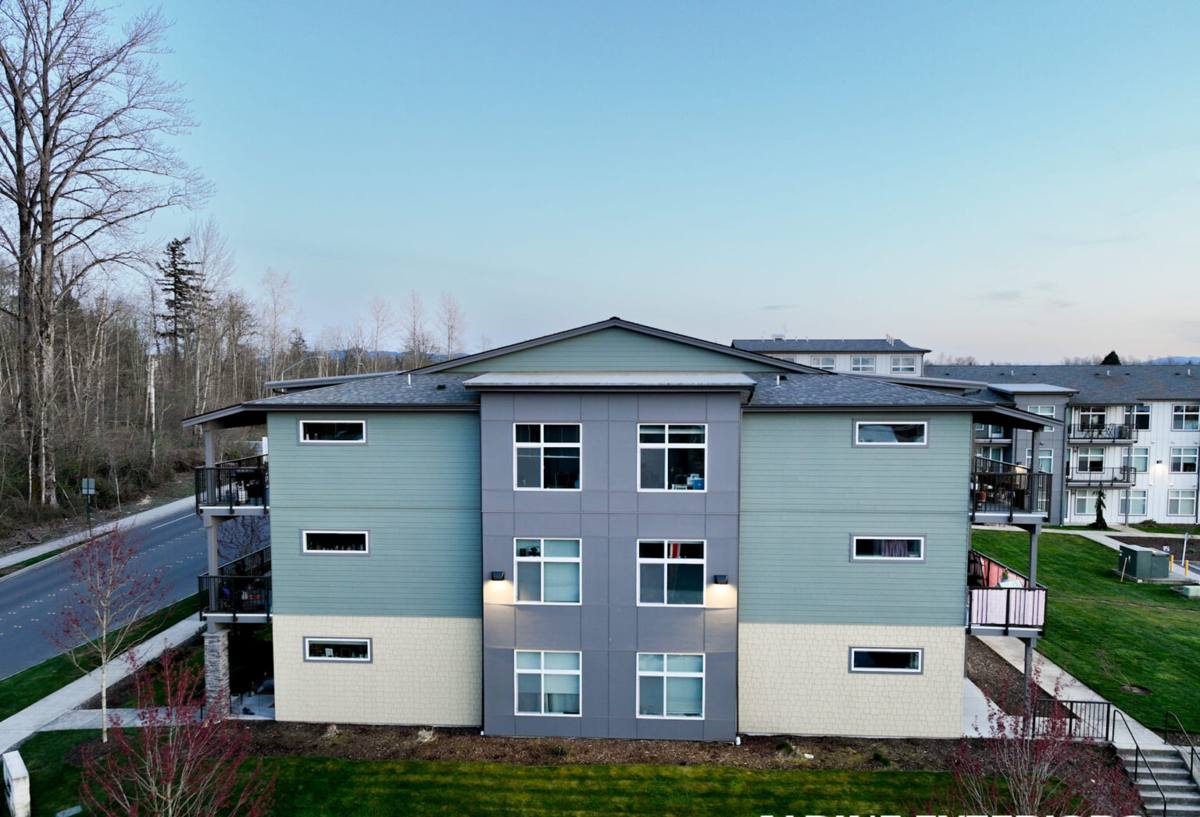
What a Correct New Roof Installation Involves Here
Tear-Off and Deck Inspection
Every legitimate new roof job starts with a full tear-off down to the deck — not an overlay on top of old shingles. That's the only way to actually see what's happening underneath. In this area, we routinely find soft or delaminating plywood in shaded valleys and around old vent boots where moss-trapped moisture has been working quietly for years. Any compromised decking gets replaced before anything new goes down. Skipping this step to save a day of labor is the single most common shortcut that leads to a roof failing early, and it's one we won't take.
Underlayment Built for Wind-Driven Rain
Because storms here often push rain sideways under wind gusts rather than straight down, standard felt underlayment isn't our default recommendation for Happy Valley homes. A synthetic underlayment with strong lap adhesion, paired with self-adhered ice-and-water membrane at eaves, valleys, and any low-slope transitions, gives the roof a real second line of defense if wind-driven water gets past the shingle surface — which, on a exposed lakeside lot, it eventually will during the worst storms of the year.
Ventilation That Fights Moss at the Source
Moss thrives where a roof deck stays cool and damp — exactly the condition created by heavy tree shade and poor attic airflow. A new roof is the right time to correct ventilation: balanced intake at the soffits and exhaust at the ridge keeps the underside of the deck drier and less hospitable to moss and mildew. We check existing ventilation on every Happy Valley job rather than assuming what's there is adequate, because in older homes it frequently isn't.
Fastening and Flashing Details
Salt-influenced air accelerates corrosion on unprotected metal, so flashing, fasteners, and drip edge matter more here than they would in a dry inland climate. We use corrosion-resistant fastener and flashing materials appropriate for a marine-influenced environment, and we hand-form flashing at chimneys, skylights, and roof-to-wall transitions rather than relying on caulk to bridge gaps that should have been properly flashed.
Choosing Materials for a Shaded, Damp Lot
Not every roofing product performs the same way under heavy shade and constant moisture. Our job is to walk you through the honest trade-offs rather than push whatever has the best margin.
| Material | How It Handles Moss & Moisture | Maintenance Reality |
|---|---|---|
| Standard 3-tab asphalt | Granules lift faster under sustained moss growth; shorter effective life in shaded areas | Lowest upfront cost, shortest interval before moss treatment needed |
| Algae-resistant architectural asphalt | Copper-infused granules slow algae and moss growth on the surface | Still benefits from periodic gentle cleaning in heavy shade |
| Metal roofing | Smooth surface sheds debris and dries faster, resists moss establishment better than asphalt | Higher upfront cost, very low ongoing maintenance |
| Cedar shake | Attractive but holds moisture readily under shade; requires diligent upkeep to avoid rot | Highest maintenance burden in a lake-adjacent, shaded setting |
For most Happy Valley homes we recommend algae-resistant architectural shingles as the practical middle ground, and we'll discuss metal roofing candidly for lots with especially heavy shade or steep, hard-to-reach sections where moss control is a bigger long-term concern.
Our Process, Start to Finish
- On-site assessment: we walk the roof (or inspect from ladder access where pitch or condition requires it), check the attic for ventilation and moisture signs, and photograph problem areas.
- Written estimate: a clear scope of work and materials list, not a vague lump-sum number.
- Scheduling around weather: we build in flexibility for Whatcom County's unpredictable storm windows so a tear-off day doesn't leave a deck exposed.
- Tear-off and deck repair: full removal, deck inspection, and replacement of any compromised sheathing.
- Underlayment, ventilation, and flashing: installed to the standards above, not just to code minimums.
- Shingle or material installation: per manufacturer specification, including proper nailing patterns and exposure.
- Cleanup and final walkthrough: magnetic sweep for stray fasteners, full debris removal, and a walkthrough so you can see the finished work and ask questions before we consider the job done.
Signs a Happy Valley Roof Needs Replacing, Not Patching
- Granules collecting in gutters or at downspout outlets in noticeable amounts
- Moss or dark streaking covering more than a small patch, especially on north-facing or shaded slopes
- Soft spots or sagging visible from the ground or attic
- Daylight visible through the roof deck from inside the attic
- Multiple past repairs in different areas rather than one isolated issue
- Shingles curling, cracking, or losing their seal along edges and ridges
- Water stains on interior ceilings, especially after wind-driven storms
One or two of these on their own might mean a targeted repair is enough. Several together, especially on a roof past 15-20 years old, usually mean the underlying materials are wearing out uniformly and a patch will just be chasing the next leak.
Why Local Experience Matters for This Job
A new roof is a system, not a stack of shingles, and the parts of that system that matter most in Happy Valley — ventilation balance, underlayment choice, flashing details, moss-resistant material selection — are exactly the parts a crew unfamiliar with lake-adjacent, tree-shaded Whatcom County properties is most likely to under-spec. We work this specific area regularly, which means we've already seen how shade patterns, storm direction, and lake proximity affect roofs on this side of Sudden Valley, and we build for that reality instead of a generic regional average.
It also means we're a known, reachable crew if a question comes up after the job is done — not a company that did one project in the neighborhood and moved on. For a roof you're expecting to last two decades or more, that kind of continuity is worth factoring into who you hire.
What Affects Your Cost
| Factor | Why It Matters Here |
|---|---|
| Roof pitch and complexity | Steeper pitches and multiple valleys (common on lake-view homes) take longer and require more careful flashing work |
| Deck condition | Hidden moisture damage under moss-covered sections often means more sheathing replacement than expected |
| Material choice | Algae-resistant asphalt, metal, and cedar carry different upfront costs and different long-term maintenance costs |
| Access and tree cover | Heavy tree canopy common in Happy Valley can add setup and debris-management time |
| Ventilation upgrades | Correcting inadequate soffit or ridge ventilation adds a modest cost but pays off in reduced moss and moisture problems |
We give a firm, itemized number after the on-site assessment rather than a rough phone quote — roofs vary too much lot to lot to price honestly any other way.
Caring for a New Roof in This Climate
Even a well-installed roof benefits from basic upkeep in a shaded, moisture-heavy setting. Keep gutters clear so water isn't backing up under the eaves, especially during fall when trees around Sudden Valley drop the most debris. Have moss growth addressed gently — soft washing rather than aggressive pressure washing or scraping — before it spreads across a slope. And have the roof glanced at after any unusually severe windstorm, since wind-driven rain events are what typically expose a weak flashing detail or a lifted shingle edge first.
If your roof is showing its age or you just want a straight answer about whether a repair or full replacement makes more sense for your home, we're happy to take a look and walk you through it. Reach out for a free, no-pressure estimate using the form below.