 Sudden Valley
 Siding Installation in Sehome: Built for This Exact Climate
Homes around Sehome and the greater Sudden Valley area take a specific kind of weather beating year-round. It isn't one dramatic storm that wears out a house here — it's the steady combination of moisture-laden air, wind-driven rain, and a moss and mildew season that stretches from fall through spring. Siding that isn't installed correctly for this environment doesn't usually fail all at once. It fails slowly, at the seams, the corners, and the fastener points, until a homeowner is looking at trapped moisture damage behind a wall that looked fine from the curb.
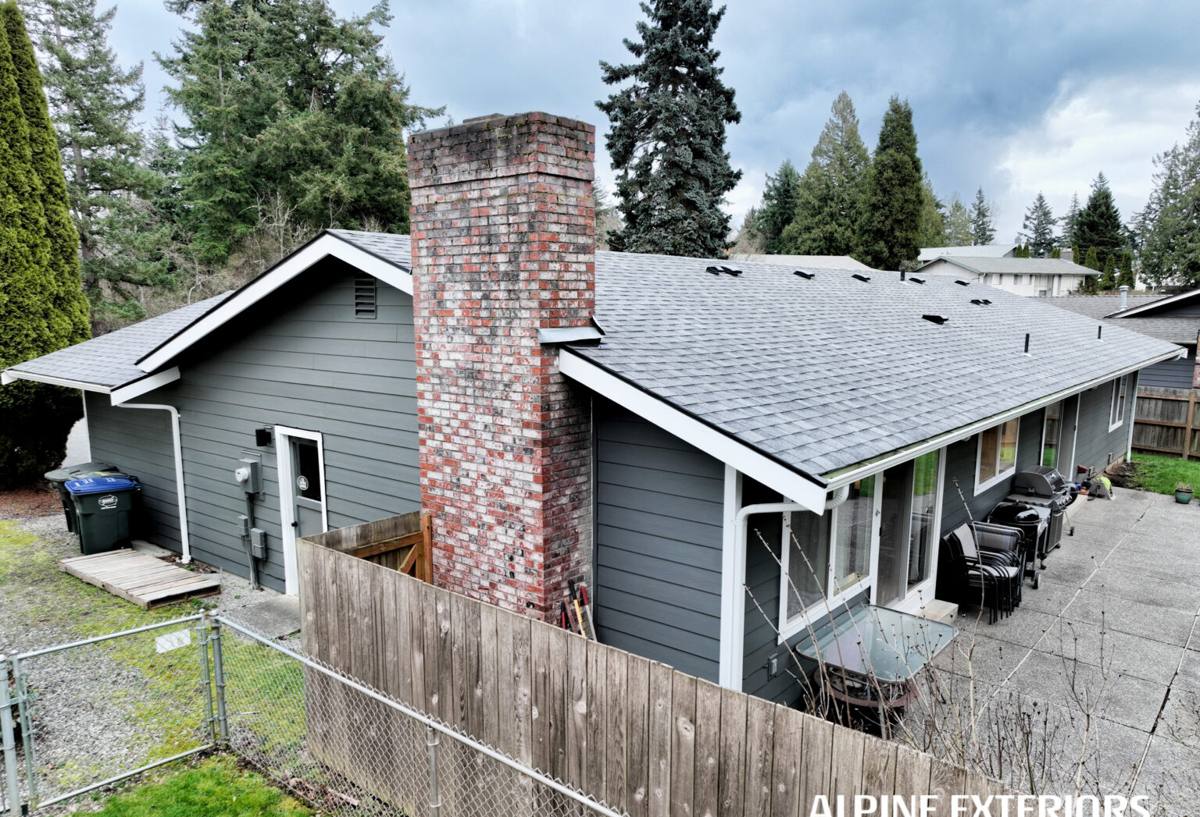
This page is about one job done right in one area we know well: full siding installation for Sehome homes, using a product system and installation method that's actually engineered for Whatcom County conditions.
Why This Location Adds Extra Stress to Exterior Siding
Being near Bellingham Bay and the broader Whatcom County coastline means homes in and around Sehome deal with airborne salt in a way that inland Washington properties don't. Salt air accelerates corrosion on exposed metal fasteners and flashing, and it speeds up the breakdown of siding materials that aren't rated for coastal exposure.
Add to that the region's driving rain — rain that comes in at an angle, pushed by wind off the water, rather than falling straight down — and you get a siding system that's constantly tested at its weakest points: laps, butt joints, window and door trim, and anywhere two pieces of material meet. Then there's moss. Whatcom County's long wet season keeps north-facing and shaded wall sections damp for months at a time, which is exactly the environment moss, algae, and mildew need to take hold. On the wrong siding product, that translates into staining, surface breakdown, and moisture that never fully dries out between rain events.
None of this means siding is doomed here. It means the material and the installation both have to be chosen for this specific set of conditions, not for a national average climate.
What a Correct Siding Installation Actually Involves
A siding job looks simple from the driveway — panels go up, seams get covered, done. The parts that actually determine whether it lasts 10 years or 40 happen underneath, and they're invisible once the job is finished. For a Sehome-area home, we treat the following as non-negotiable:
- Weather-resistive barrier: A continuous, properly lapped house wrap or building paper behind the siding, installed so every seam sheds water downward and outward.
- Flashing at every penetration: Windows, doors, hose bibs, light fixtures, and vents all need correctly integrated flashing so water is directed out, not behind the cladding.
- Proper clearance and gaps: Siding held off decks, patios, and grade by the manufacturer's minimum clearance, with expansion gaps at butt joints so the material isn't fighting itself as it moves with temperature and moisture.
- Correct fastening: Fasteners driven to the manufacturer's specified depth and pattern — not overdriven, not underdriven — using corrosion-resistant fasteners suited to a coastal-influenced climate.
- Factory-finished caulking and sealant strategy: Sealant only where the manufacturer calls for it, not as a substitute for proper flashing and lapping.
Skip any one of these and the siding may still look right for a year or two. The failures show up later, and by then they're usually hidden behind the wall.
Our Installation Process, Start to Finish
1. On-site assessment
We walk the exterior, check the condition of the existing wall assembly, note problem areas (shaded north walls, low-clearance sections, existing moisture damage), and talk through what the home actually needs versus what would just look good.
2. Tear-off and substrate check
Old siding comes off and we inspect the sheathing underneath. Soft spots, past water damage, or a missing weather barrier get addressed before anything new goes up — installing new siding over a compromised substrate just hides the problem for a while.
3. Weather barrier and flashing
New house wrap goes on with correct lapping, and flashing is integrated at every window, door, and penetration before a single piece of siding is hung.
4. Siding installation to manufacturer spec
Panels, planks, or shingle-style siding go up with the fastening pattern, clearances, and joint treatment the manufacturer requires — not a generalized approach used on every job regardless of product.
5. Trim, caulking, and final inspection
Trim details get finished, sealant is applied only where specified, and we do a final walkaround before calling the job complete.
James Hardie: Why It's the Only Product We Install
We install James Hardie fiber cement siding exclusively. We don't install vinyl, LP SmartSide, Cemplank, Allura, primed spruce, or cedar — not because those products have no merit, but because after years of working exteriors in this climate, we standardized on the one system that consistently holds up to salt air, driving rain, and a long moss season without the maintenance burden or moisture risk we've seen with the alternatives.
James Hardie fiber cement is non-combustible, dimensionally stable in wet-dry cycling, and finished with a factory-applied ColorPlus finish that resists the fading and chalking that field-painted materials are prone to in this kind of weather. Hardie's HZ product lines are engineered specifically for climate zones like ours — a meaningful difference from a general-purpose siding product asked to perform in a coastal Pacific Northwest environment it wasn't specifically built for. It also carries a strong transferable warranty when installed to spec, which matters to homeowners planning to sell down the road.
We're not the manufacturer, and we don't claim other products are junk. We're a crew that decided, based on what we see on tear-offs and callbacks across Whatcom County, that this is the material worth putting our name behind.
Comparing Siding Approaches for a Sehome Home
| Factor | What Matters Locally | Why It Counts Here |
|---|---|---|
| Moisture resistance | Dimensional stability in wet-dry cycles | Long rainy season keeps siding wet for extended stretches |
| Finish durability | Factory-cured finish vs. field-applied paint | Reduces repainting driven by UV and moisture exposure |
| Corrosion resistance | Fastener and trim material compatibility | Salt air accelerates corrosion on exposed metal |
| Mold/moss resistance | Surface composition and installed clearance | Shaded, damp wall sections are common in this area |
| Fire rating | Combustible vs. non-combustible cladding | Relevant to regional wildfire-adjacent insurance considerations |
Signs a Sehome-Area Home Needs New Siding
Homeowners often wait longer than they should because siding damage isn't always obvious. Watch for these:
- Persistent staining or moss growth that returns shortly after cleaning, especially on shaded or north-facing walls
- Soft or spongy spots when pressing on the siding near the bottom courses or below windows
- Visible warping, buckling, or gaps opening up at seams and corners
- Paint that's peeling, bubbling, or failing faster than a normal repaint cycle would suggest
- Rising energy bills with no other explanation, which can point to a compromised weather barrier
- Interior signs — musty smells, discoloration on interior walls near exterior corners
Any one of these on its own isn't necessarily an emergency, but a few together are worth a professional look before the next wet season sets in.
Cost Factors for a Sehome Siding Installation
| Cost Driver | Why It Moves the Price |
|---|---|
| Tear-off condition | Sheathing repair or extra moisture remediation adds labor |
| Home size and wall complexity | More corners, gables, and trim detail means more cutting and fitting |
| Siding profile chosen | Lap, shingle-style, and panel Hardie products differ in material and labor cost |
| Trim and accessory scope | Fascia, soffit, and trim replacement alongside siding changes total project cost |
| Access and site conditions | Slope, landscaping, and setback affect staging and labor time |
We won't quote a number without seeing the home — anyone who does is guessing. What we can say is that a proper tear-off-and-replace job with a full weather barrier and correct flashing costs more upfront than a quick re-side, and it's the difference that shows up (or doesn't) fifteen years later.
Why a Crew That Already Works Sehome Matters
Siding installation isn't a one-size-fits-all trade. A crew that regularly works Sehome and the surrounding Sudden Valley area already knows how the local moisture patterns behave, which wall orientations need extra attention for moss and mildew, and how salt-influenced air affects fastener and flashing choices over time. That familiarity shows up in fewer callbacks and fewer surprises once the old siding comes off.
It also means we're not guessing at what "normal" looks like for this area. A siding contractor used to a drier inland climate might not flash a window the same way, might not budget clearance the same way, or might not think twice about a north wall that never fully dries out. Those small differences compound over the life of a siding job.
Get a Straightforward Estimate
If your Sehome home's siding is showing its age, or you're planning ahead before the next wet season, we're glad to take a look and give you an honest read on what it needs. Reach out for a free, no-pressure estimate using the form below.