 Sudden Valley
 Siding Built for Where Silver Beach Actually Sits
Silver Beach homes take a different kind of weathering than houses a few miles inland. The combination of moisture off the water, salt-carrying marine air, and a moss season that can run eight or nine months out of the year puts constant pressure on exterior walls. Add Whatcom County's driving, wind-blown rain — the kind that hits siding sideways instead of straight down — and you get a wall assembly that has to manage bulk water, vapor, and biological growth all at once, year after year.
Most siding failures we see in this area aren't from one bad storm. They're from years of small compromises: a coating that let moisture through slowly, seams that were never properly flashed, or a product that simply wasn't engineered for this specific mix of wet and salt-tinged air. When we talk about siding replacement in Silver Beach, we're not talking about a cosmetic swap. We're talking about correcting the water management on the wall so the next 30-plus years go differently than the last one did.
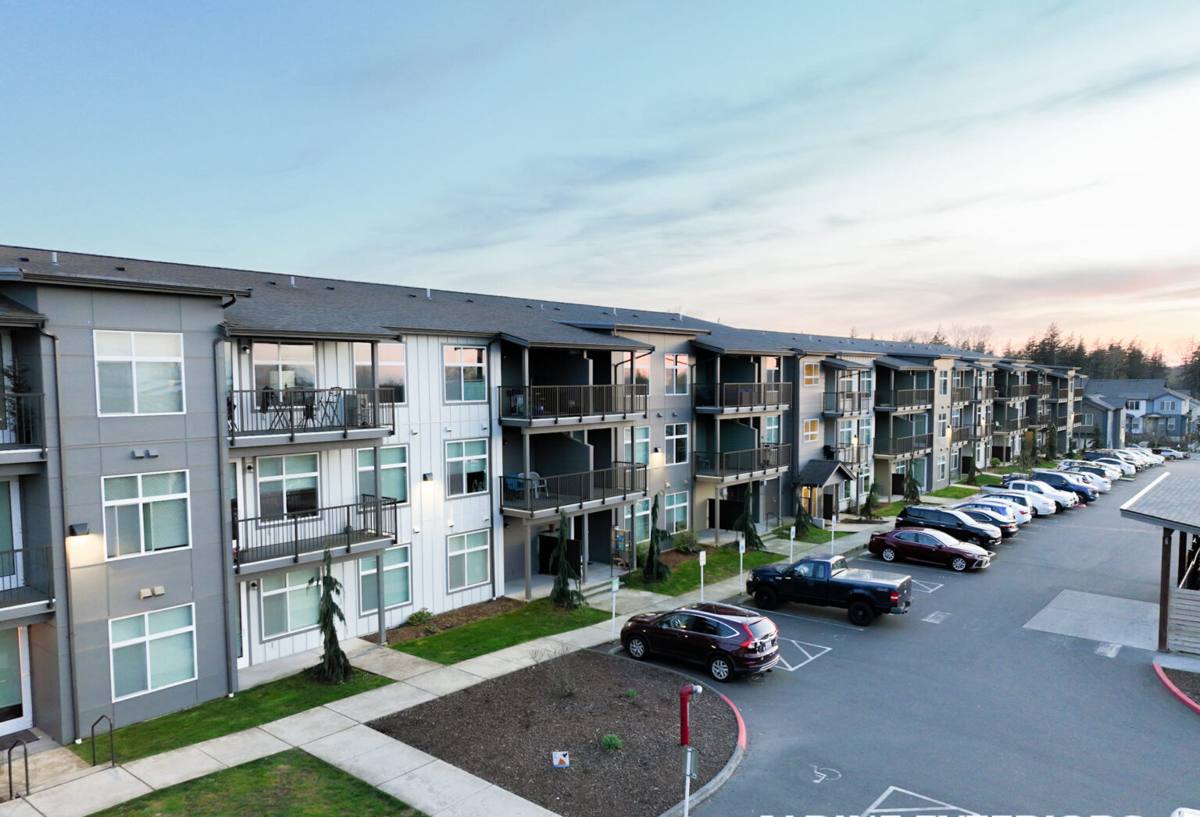
What This Climate Does to Siding Over Time
It helps to understand the actual mechanisms at work, because they determine what a correct replacement needs to do:
- Driving rain forces water into laps, seams, and butt joints that face away from prevailing wind on paper but still get soaked in a real storm.
- Salt-tinged marine air accelerates corrosion on fasteners, flashing, and trim — especially on anything installed with the wrong hardware for the exposure.
- Extended moss and algae season keeps north-facing and shaded walls damp for long stretches, which is exactly the environment organic growth needs to take hold on porous or poorly coated surfaces.
- Freeze-thaw cycling, even mild by regional standards, works on any siding that has already absorbed moisture, expanding cracks and loosening fastener holes.
None of these forces act alone. A wall with failing caulk lets in rain, the rain feeds moss, the moss holds moisture against the substrate, and the substrate softens or corrodes underneath. Siding replacement done right interrupts that chain at every point, not just the visible surface.
Signs Your Siding Has Reached the End of Its Service Life
Homeowners often wait too long because siding failure is gradual and easy to write off as cosmetic. Here's what actually signals it's time to replace rather than patch:
- Soft or spongy spots when you press on the siding, especially near the bottom courses or below windows
- Persistent moss or algae staining that returns within weeks of cleaning
- Visible cupping, buckling, or separation at panel seams
- Paint that won't hold — repeated peeling or blistering in the same spots each year
- Rust streaking below nail heads or trim fasteners
- Any sign of moisture inside the wall assembly: musty smell, stained sheathing, or soft trim around windows and doors
If you're only seeing one or two of these on one section of the house, targeted repair may still make sense. If you're seeing several across multiple elevations, that's usually a sign the whole wall assembly — not just the surface material — needs attention.
What a Correct Siding Replacement Actually Involves
A siding replacement that's built to last through Whatcom County's wet seasons is about what happens under the new panels as much as the panels themselves.
Full Tear-Off, Not Overlay
We remove the old siding down to the sheathing rather than installing over it. Covering failing siding traps whatever moisture problem is already there and hides it for a few more years instead of fixing it — a bad trade on a coastal-influenced site like this one.
Sheathing Inspection and Repair
Once the old siding is off, we inspect the sheathing and framing underneath for rot, soft spots, or prior water damage. Any compromised material gets replaced before anything new goes on. Installing new siding over damaged sheathing just resets the clock on the same failure.
Weather-Resistive Barrier
A new, continuous weather-resistive barrier (WRB) goes over the sheathing, lapped correctly at every seam so water is directed out and down rather than trapped. This is the layer that actually keeps bulk water out of the wall — the siding itself is the second line of defense, not the first.
Flashing at Every Penetration
Windows, doors, hose bibs, light fixtures, and any other wall penetration get properly flashed and integrated with the WRB. This is where driving rain finds its way into walls when it's skipped or done carelessly, and it's one of the most common shortcuts we see on prior installations in this area.
Rainscreen Gap
We install a drainage gap behind the siding so any moisture that does get past the cladding can drain and the wall can dry out between rain events. In a climate with this much sustained dampness, a wall that can't dry is a wall that stays wet — and a wet wall is where moss, rot, and coating failure all start.
Correct Fastening for the Exposure
Fastener choice and placement matter more here than in drier inland areas. We follow manufacturer fastening schedules and use hardware rated for the corrosion exposure this site sees, rather than whatever was fastest on the last job.
Why We Install James Hardie Fiber Cement — and Nothing Else
We are a James Hardie-only siding contractor. We don't install vinyl, LP SmartSide, Cemplank, Allura, primed spruce, or cedar, and that's a deliberate standard, not a limitation in what we're capable of installing.
In a marine-influenced, high-moss climate like this one, the material differences aren't theoretical:
- Fiber cement doesn't feed moss and algae growth the way wood-based or engineered-wood products can when the surface coating wears thin.
- It's dimensionally stable in wet-dry cycling — it doesn't swell, cup, or telegraph fastener movement the way wood-based products can after repeated soaking.
- It's non-combustible, which matters for insurance and for peace of mind regardless of the moisture story.
- ColorPlus factory finish is baked on and warrantied against fading and peeling, so you're not relying on job-site paint application to hold up against driving rain and UV for the next decade-plus.
- HZ5 product engineering is built specifically for wet, humid, freeze-prone climates like Whatcom County's — it's not a generic siding retrofitted for the Pacific Northwest.
Other products have real strengths — vinyl is inexpensive and low-maintenance in mild climates, engineered wood installs quickly and takes paint well when new. We're not pretending otherwise. But for a site dealing with salt-tinged air, sustained dampness, and long moss seasons, we've found the long-term maintenance burden and moisture sensitivity of those alternatives outweighs their upfront advantages. Hardie is what we're willing to put our name on in this climate.
How Common Siding Materials Hold Up Under This Climate
| Material | Moisture Behavior | Moss/Algae Resistance | Finish Longevity |
|---|---|---|---|
| James Hardie fiber cement | Dimensionally stable, doesn't swell or rot | Non-organic substrate, resists growth | ColorPlus factory finish, warrantied |
| Vinyl | Doesn't absorb water, but can warp under heat/cold cycling | Growth can take hold in grooves and laps if not cleaned | Color is through-body but fades over time; can't be repainted easily |
| Engineered wood (LP SmartSide) | Vulnerable if edges or cuts aren't sealed correctly | Organic substrate is more susceptible if coating fails | Field-applied paint needs more frequent maintenance |
| Cedar | Absorbs and releases moisture readily; needs consistent maintenance | Most susceptible without diligent upkeep | Stain/paint needs reapplication every few years |
Our Process, Start to Finish
- On-site assessment — we walk the exterior with you, check for soft spots and moisture signs, and look at how the house is oriented to prevailing wind and rain
- Written estimate — clear scope, materials, and pricing before any work begins
- Tear-off and sheathing inspection — old material removed, substrate checked and repaired as needed
- WRB and flashing installation — the water management layer goes in first, correctly lapped and sealed
- Rainscreen and Hardie installation — panels installed to manufacturer spec, including fastening schedule and clearances
- Trim, caulking, and final detailing — the small details that determine how well the whole system performs over time
- Walkthrough — we go over the finished work with you before calling the job done
What Drives the Cost of a Siding Replacement
| Factor | Why It Matters |
|---|---|
| House size and wall complexity | More corners, gables, and dormers mean more cutting, flashing, and labor |
| Sheathing condition | Rot or water damage found during tear-off adds repair scope before new siding goes on |
| Siding profile chosen | Lap width, shingle-style, or panel systems have different material and labor costs |
| Trim and detail work | Window and door surrounds, corner boards, and fascia detailing add time |
| Access and site conditions | Slopes, tight lot lines, or landscaping near the house can affect staging and labor |
We don't publish flat per-square-foot pricing because these factors genuinely change the number from house to house — that's what the on-site estimate is for.
Why Hiring a Crew That Already Works This Area Matters
A siding contractor who mostly works dry, inland climates can install a technically correct system on paper and still miss the details that matter here — the flashing detail on a north wall that stays shaded most of the day, the fastening approach that accounts for salt exposure, the rainscreen gap sized for how much moisture this area actually sees. We work Whatcom County's wet-side conditions regularly, which means we're not guessing at how driving rain, moss, and marine air behave on a wall assembly — we're building for it as a matter of course.
That local familiarity also shows up in smaller ways: knowing which orientations on a given lot need extra attention, recognizing early signs of moisture intrusion before they become structural problems, and sequencing work around the wetter months so materials and substrate aren't compromised during installation.
Get a Straightforward Estimate
If your siding is showing moss staining that won't stay clean, soft spots, or paint that keeps failing in the same spots, it's worth having someone look at it before another wet season goes by. We'll walk the exterior with you, tell you plainly what we find, and put together a clear, no-pressure estimate for a James Hardie siding replacement built for what Silver Beach actually deals with. Use the form below to get started.