 Sudden Valley
 Storm Damage Roof Repair for Acme Homes
Acme sits back from the open water along the Mount Baker Highway corridor, tucked into forested foothills in Whatcom County. That setting has real advantages — less direct wind exposure than lakefront or bayfront properties — but it comes with its own storm-related wear and tear. Heavy tree cover means falling limbs and windthrow during winter storms. Steep terrain and dense forest keep roofs shaded and damp longer after a storm passes. And the same wet Pacific weather systems that soak the rest of Whatcom County still roll through Acme, often dropping more rain here than in town due to elevation and orographic lift off the foothills.
We've repaired storm damage on roofs throughout this part of the county long enough to know that Acme roofs fail in specific, repeatable ways — and that a repair done without accounting for the local conditions tends to fail again within a season or two.
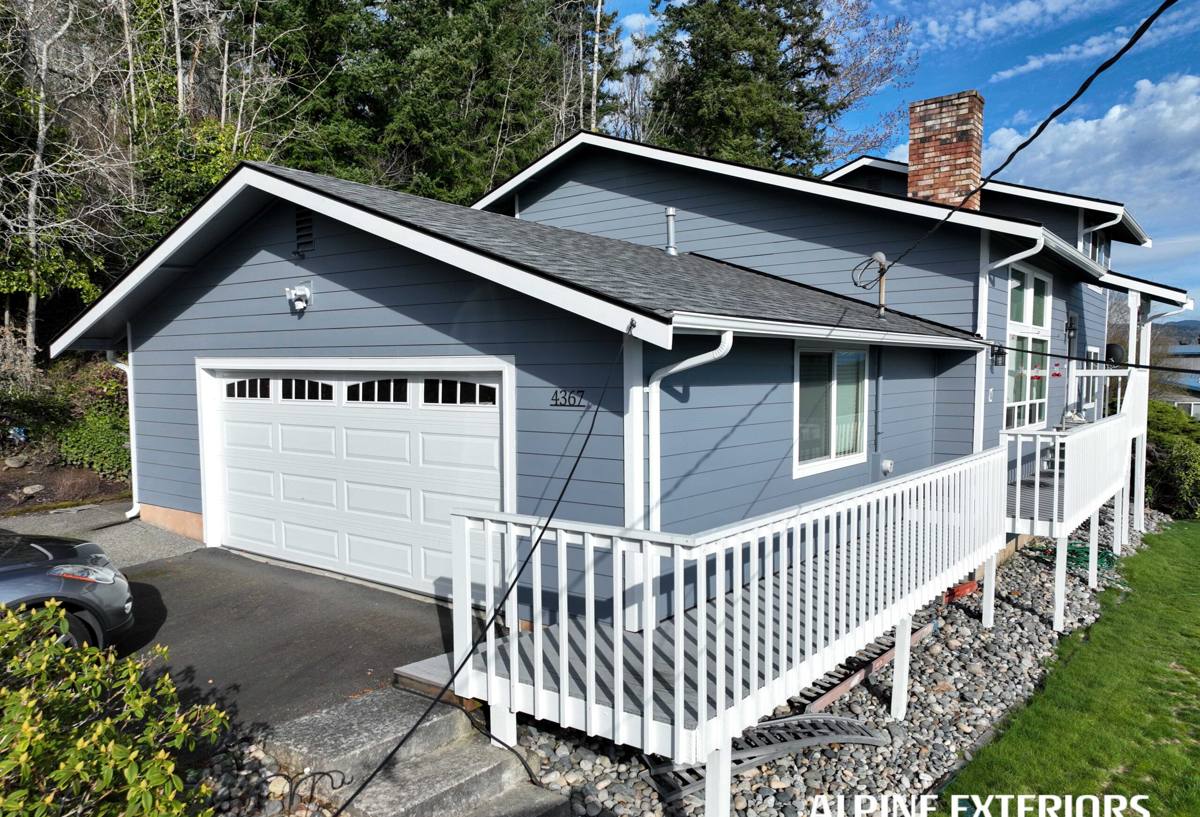
What Storm Damage Actually Looks Like Here
Storm damage isn't always a dramatic hole in the roof. In our experience, most calls from Acme homeowners fall into a handful of categories:
- Wind-lifted or torn shingles/panels — edges and ridge lines are the first to go, especially where nailing or fastening was marginal to begin with
- Impact damage from falling branches and debris — common given the tree canopy around most Acme properties, ranging from cracked shingles to punctured decking
- Wind-driven rain intrusion — water forced sideways under flashing, around chimneys, or through gaps that would never leak in a normal rain
- Compromised flashing at valleys, vent pipes, and roof-to-wall transitions, often loosened by wind flex rather than a single dramatic event
- Gutter and edge damage that lets water track back under the roofline instead of shedding away from the house
Any of these can look minor from the ground and still be actively letting water into the attic or wall assembly. That's the part that costs homeowners money later — not the storm itself, but the weeks of moisture intrusion that follow it before anyone notices a ceiling stain.
Why the Damage Often Isn't Obvious Right Away
A lifted shingle or a hairline crack in flashing doesn't leak every time it rains — it leaks when wind pushes rain at the right angle, or when standing water finds the one low spot. That's why we tell Acme homeowners not to wait for a visible leak after a windstorm. By the time water is showing up inside, it's usually already reached the decking or insulation.
Moss, Shade, and a Long Wet Season
Acme's tree cover is part of what makes the area appealing, but it also means roofs here get less sun and stay damp longer than roofs in more open parts of the county. That combination is exactly what moss and lichen need to take hold. Once moss establishes itself under shingle tabs or along a shake roof, it holds moisture against the roofing material year-round, which:
- Accelerates granule loss and shingle aging
- Lifts shingle edges just enough for wind and rain to get underneath during a storm
- Adds weight and traps debris that clogs valleys and gutters
A storm-damaged roof with an existing moss problem is a different repair than a clean, well-maintained roof that just took wind damage. We treat and address moss as part of any storm repair in this area — patching around it without dealing with the underlying moisture problem just guarantees a repeat call.
Patch Job vs. Proper Storm Repair
A lot of storm damage repair work we see from other crews is really just a tarp-and-caulk patch meant to stop the immediate leak. That has its place right after a storm, but it isn't a repair. Here's the difference in practical terms:
| Factor | Quick Patch | Proper Storm Repair |
|---|---|---|
| Underlying decking | Not inspected | Checked for soft spots, rot, and saturation |
| Flashing | Sealant applied over existing flashing | Damaged flashing replaced and properly integrated |
| Matching materials | Whatever is on hand | Matched to existing roofing where possible, documented where not |
| Moss/moisture source | Ignored | Addressed so the repair doesn't fail again in the same spot |
| Expected lifespan | Weeks to a couple seasons | Matches the remaining life of the roof |
| Insurance documentation | Usually none | Photos and a written scope for the claim |
Both have a role — a same-day patch to stop active water intrusion, followed by a proper repair once the roof is dry enough to work on correctly. We just don't let the patch become the final answer, and we tell homeowners up front which one they're getting.
How We Handle a Storm Damage Call in Acme
- Immediate assessment. We look at the roof from the ground, from the attic side if accessible, and up close where it's safe to walk. Given the tree exposure typical in Acme, we also check for hidden branch strikes that didn't puncture through but cracked the decking or damaged the roofing underneath.
- Stop active leaks first. If water is getting in, we address that before anything else — tarping, temporary flashing, or sealing as needed.
- Full damage scope. Once it's safe to work the roof properly, we identify every affected area, not just the spot the homeowner noticed. Wind damage is rarely isolated to one shingle.
- Written estimate. A clear scope of what needs repair, what materials are involved, and what it will cost — with insurance-ready documentation if the homeowner is filing a claim.
- Repair. Decking replaced where compromised, flashing rebuilt rather than just resealed, roofing material matched or reasonably substituted, and any moss or debris issue addressed at the source.
- Follow-up check. We want the repair to hold through the next storm, not just look finished on a dry day.
Materials and Products We Work With
For storm repairs in a wet, shaded, tree-heavy area like Acme, we lean toward roofing and flashing products with a track record for handling sustained moisture rather than just shedding a normal rain. That generally means:
- Metal flashing systems over rely-on-sealant fixes, since sealant degrades and metal doesn't
- Algae-resistant shingle products where a full section needs replacing, given how quickly moss and lichen return in shaded conditions here
- Proper underlayment at repaired sections, not just surface-level shingle replacement, so the repair performs even if wind gets under the tabs again
We avoid quick-fix products that rely heavily on repeated maintenance to keep performing — not because any one product is bad, but because a repair on a hard-to-access, tree-covered roof needs to hold up with minimal upkeep. That's a judgment call based on how the roof will actually be lived with, not a knock on any manufacturer.
Working With Your Insurance Claim
Most storm damage repairs in this area involve an insurance claim, and the process goes smoother when the documentation is solid from the first visit. We provide:
- Dated photos of the damage before any repair work begins
- A written scope of damage tied to the storm event, not vague generalities
- An itemized estimate an adjuster can review without back-and-forth
We don't handle the claim for you or promise a specific payout — that's between the homeowner and the insurer. What we can do is make sure the paperwork on our end doesn't slow that process down or raise questions.
Signs an Acme Homeowner Should Get a Roof Checked After a Storm
- Shingles or roofing debris in the yard or gutters after high wind
- New or larger branches down near the roofline, even if nothing looks obviously hit
- Any new ceiling stain, damp smell in the attic, or musty odor upstairs
- Daylight visible through the roof deck from inside the attic
- Gutters overflowing or pulling away from the fascia
- Visible moss buildup that seemed to worsen suddenly after a storm
None of these guarantee major damage, but any one of them is worth a look before the next storm system comes through — which, in this part of Whatcom County, usually isn't far off.
Why It Matters That We Already Work in This Area
Acme's roofs deal with a specific combination of conditions — tree exposure, extended shade, higher rainfall than the valley floor, and a longer moss season than more open parts of the county. A crew that mainly works flatter, more exposed neighborhoods won't necessarily think to check for the branch-strike patterns or moss-driven lifting that show up here. Knowing the area means fewer surprises during the repair and a scope that's right the first time, rather than a follow-up visit a month later for something that should have been caught initially.
If a recent storm has left you with damage, or you're just not sure whether that missing shingle is worth worrying about, we're happy to take a look. Reach out for a free, no-pressure estimate using the form below — we'll tell you honestly what we find, what it needs, and what it doesn't.