 Sudden Valley
 Windows Built for Sunnyland's Weather, Not Just Its Openings
Sunnyland homes sit close enough to Bellingham Bay and Lake Whatcom that the weather off the water shapes almost every exterior decision, and windows are no exception. Between salt-laden air rolling in off the bay, wind-driven rain that doesn't just fall but gets pushed sideways into wall assemblies, and a moss season that can run half the year in the shade of mature trees, a window that isn't detailed correctly for this specific environment will fail years before its rated lifespan. "Custom" here doesn't just mean the sash is cut to fit an odd-sized opening — it means the whole assembly, from frame material to flashing sequence, is chosen and installed to handle what a Whatcom County winter actually throws at it.
We work in this neighborhood regularly, which matters more than it sounds like. A crew that's replaced windows in older Sunnyland homes already knows which builds tend to have rot hiding under the trim, which orientations catch the worst of the driving rain, and where moss buildup on the roof and eaves tends to funnel water down onto window heads. That local pattern recognition shows up in the estimate and in how the job gets done, not just in the sales pitch.
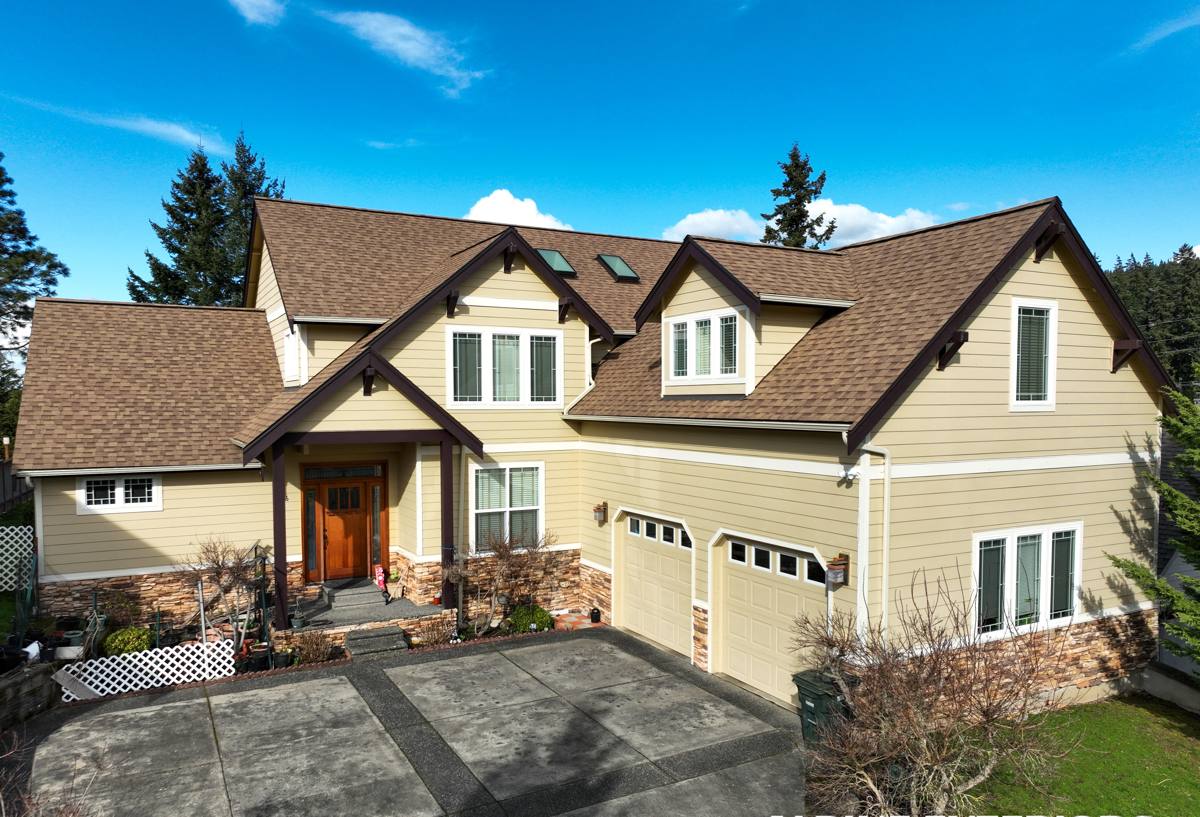
What "Custom Windows" Actually Involves
Custom windows are made to your opening's exact dimensions, not adjusted to fit a stock size, and that precision is what makes a weathertight seal possible in the first place. But the real work of a custom window project happens in decisions most homeowners never see:
- Frame material selection based on the wall's exposure to sun, salt air, and moisture
- Glazing package chosen for the window's compass orientation and shade conditions
- Flashing and drainage plane detailing so any water that gets past the seal has somewhere to go
- Sill pan design that keeps water out of the wall cavity even after years of seal wear
- Trim and caulking specified for a coastal, high-moisture climate rather than a generic product
Skip any one of these and you can end up with an expensive window that still leaks, still fogs, or still rots its own frame from the inside out within a decade.
Why "Made to Measure" Isn't Enough on Its Own
A window cut precisely to an opening still needs to be integrated correctly with the wall's water management system. We've seen well-made, expensive windows fail early simply because the flashing was an afterthought — the window itself wasn't the problem, the installation detail around it was. That's the part of "custom" that actually protects the investment.
The Three Things Working Against Your Windows Here
Salt Air
Proximity to Bellingham Bay means airborne salt settles on exterior surfaces, including window frames and hardware. Over time, salt exposure accelerates corrosion on metal components — hinges, locks, and especially aluminum cladding or frames that aren't finished for a marine environment. It also breaks down some sealants and finishes faster than a manufacturer's inland warranty testing accounts for.
Driving Rain
Whatcom County storms frequently come with real wind behind the rain, which means water gets pushed horizontally into every gap, seam, and fastener hole around a window opening rather than just running down the glass. A window designed and installed only for vertical rainfall will let moisture in during exactly the storms it needs to handle best.
Moss Season
Shaded, damp conditions for much of the year mean moss and algae growth on roofs, gutters, and siding is a near-constant maintenance item. When moss builds up above or beside a window — on a roof edge, a sill, or nearby trim — it holds moisture against the wood and finish far longer than open air would, and that sustained dampness is what actually causes rot, not a single rainstorm.
Signs Your Current Windows Are Losing the Fight
Most window failures in this climate are gradual, so homeowners often live with early warning signs for a year or more before addressing them. Watch for:
- Soft or discolored wood trim around the window frame, especially at the bottom sill
- Fogging or condensation between panes on double- or triple-glazed units
- Visible daylight or a draft you can feel with your hand along the frame edge
- Paint or finish that's bubbling, peeling, or chalking faster on window trim than on the rest of the siding
- Difficulty opening, closing, or locking a window that used to operate smoothly
- Moss or dark streaking on the sill or the wall just below the window
- A musty smell near the window that wasn't there before
Any one of these on its own might just mean routine maintenance. Two or more together, especially soft wood plus fogging, usually means water has already gotten into the assembly.
Choosing the Right Frame Material for This Climate
There's no single "best" window material — the right choice depends on exposure, budget, and how much upkeep you want to take on. Here's how the common options actually perform in a salt-air, high-rain coastal climate:
| Frame Material | Salt Air Performance | Maintenance | Typical Lifespan Here |
|---|---|---|---|
| Vinyl | Good — doesn't corrode, but check UV-stable formulations | Low — occasional cleaning | 20–30 years |
| Fiberglass | Excellent — dimensionally stable, resists corrosion | Low | 30+ years |
| Wood (clad exterior) | Fair — depends heavily on cladding quality and sealing | Moderate to high | 20–25 years with upkeep |
| Aluminum | Poor to fair unless marine-grade finished — prone to corrosion and thermal issues | Moderate | 15–20 years |
We don't default to aluminum-framed windows on Sunnyland projects unless a homeowner specifically wants that look and understands the added corrosion maintenance it requires near the bay. It's not that aluminum is a bad product everywhere — it's that unfinished or standard-grade aluminum simply doesn't hold up as well against salt air as fiberglass or quality vinyl, and we'd rather set that expectation up front than have a client dealing with pitted frames in eight years.
Glazing Considerations
Beyond frame material, glazing choice matters for both comfort and moisture control. Double-pane windows with a low-E coating are the practical baseline for this area; triple-pane adds real value on north- and west-facing walls that take the brunt of wind-driven storms, but it's a diminishing-returns upgrade on more sheltered exposures. Argon or krypton gas fills help with insulation but do lose effectiveness over the decades as seals age — another reason seal quality and installation care matter more than the glass spec sheet alone.
How We Approach a Custom Window Job
- On-site assessment — we check existing framing for hidden water damage before quoting anything, since rotted framing changes the scope
- Precise measurement — custom units are ordered to the actual opening, not a rounded stock size
- Material and glazing selection — matched to that specific wall's sun, wind, and rain exposure
- Removal and inspection — old windows come out carefully so we can inspect the sill and framing underneath before anything new goes in
- Sill pan and flashing installation — built to shed water outward and downward, never trapping it against the framing
- Window installation and shimming — set level, plumb, and square so the seal performs as designed for its full lifespan
- Sealing and trim — exterior-grade sealants and finishes suited to coastal exposure, not generic caulk
- Final operation check — every window is opened, closed, and locked before we call the job done
Step four is where a lot of window problems either get caught or get sealed up and hidden for years. If we find soft framing during removal, we tell you before proceeding, not after the invoice.
Why It Matters That We Already Work in Sunnyland
A crew that's unfamiliar with this specific pocket of Whatcom County is starting from zero on every job — guessing at how much moss buildup to expect, how exposed a given wall really is to bay wind, or whether a home's age and construction era means hidden rot is likely under the trim. We've worked enough homes in and around Sunnyland and the broader Sudden Valley area to bring that knowledge into the estimate itself, which means fewer surprises mid-project and a scope that reflects reality instead of a generic checklist.
It also means we're not a stranger showing up once and disappearing. If a question comes up six months after installation — a stuck lock, a question about moss on a nearby sill — you're calling a local crew that still knows the job, not chasing down a company that was only ever passing through.
Keeping New Windows Performing Long-Term
Even correctly installed windows need a little seasonal attention in this climate:
- Rinse salt residue off frames and glass periodically, especially after storms with onshore wind
- Keep gutters and roof edges above windows clear of moss and debris so water doesn't funnel down onto the frame
- Check exterior caulking annually and touch up any cracking before wet season sets in
- Wipe down interior sills after heavy condensation events to prevent mold or wood damage
- Test locks and operation each season — a sticking window is often the first sign of frame movement
None of this is difficult, but skipping it is how a well-installed window ends up needing early repair anyway.
What Custom Windows Typically Involve, Cost-Wise
Pricing depends heavily on frame material, glazing package, opening size, and whether framing repair is needed once old windows come out. As a general guide, straightforward vinyl replacements sit at the lower end of the range, fiberglass and larger custom shapes run higher, and any project uncovering rotted framing will add cost for that repair before installation can proceed. We don't quote firm numbers without seeing the openings in person, because guessing on a coastal home with unknown hidden damage does nobody any favors.
If your windows are showing any of the wear signs above, or you're planning ahead for a remodel, we're happy to walk the property, take a real look at what's going on, and put together a straightforward estimate — no pressure, no obligation. The form below is the easiest way to get that started.