 Sudden Valley
 Windows Built for Happy Valley's Weather, Not Just the Opening
Happy Valley sits close enough to the water that salt air is part of daily life, and close enough to the hills that driving rain and long, damp winters are too. That combination is hard on windows in ways that don't show up right away. A window that looks fine from the curb can already be letting moisture into the wall cavity behind it, or growing moss in the corners of the frame where water never fully dries out. Installing a window here isn't just a measure-and-caulk job — it's a moisture-management job first, and a window job second.
We work on homes throughout the Sudden Valley area, including Happy Valley, and we've seen what Whatcom County's climate does to windows that were installed without that in mind. This page covers what local homes actually need from a window installation, what a correct job looks like, and how our process is built around the realities of this specific area rather than a generic install checklist.
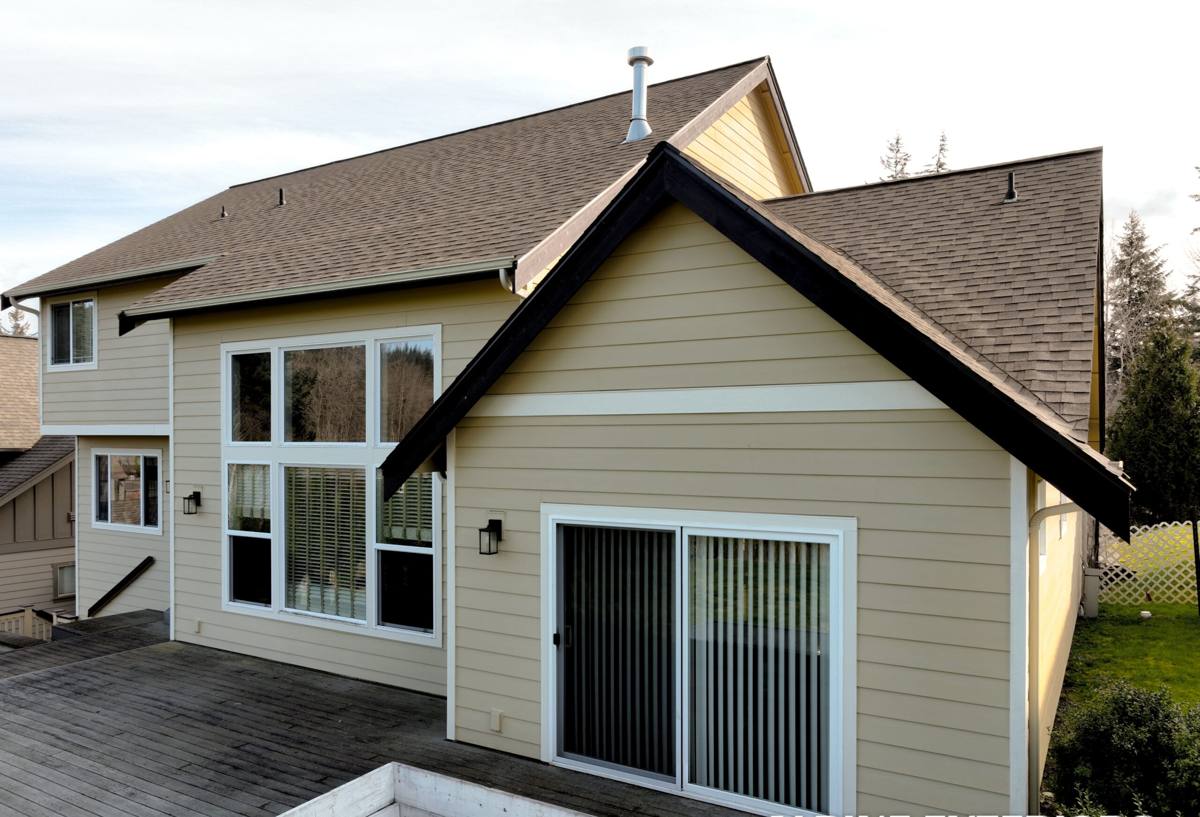
What Salt Air, Rain, and Moss Actually Do to a Window
Salt Air
Homes closer to the water pick up airborne salt that settles on metal hardware, aluminum cladding, and exposed fasteners. Over years, that accelerates corrosion on hinges, locks, and screws — the small parts that keep a window sealing tightly. Once hardware starts to corrode, windows stop closing flush, and a window that doesn't close flush can't seal against wind-driven rain no matter how good the original installation was.
Driving Rain
This part of Washington doesn't just get rain — it gets rain pushed sideways by wind off the water. That kind of weather finds every weak point in a window's flashing and sealant. A window that would perform fine in a dry climate with a sloppy installation often fails here within a few seasons, because driving rain actively tests the flashing details that a calm-weather install can get away with skipping.
Moss Season
Whatcom County's moss season runs long — shaded, damp areas around window frames, sills, and trim stay wet enough for moss and algae to take hold for much of the year. Moss holds moisture against wood and painted surfaces, which speeds up rot in sills and trim that aren't properly sealed or sloped to shed water.
Signs a Happy Valley Home's Windows Need Attention
- Soft or discolored wood at the sill or bottom corners of the frame
- Moss or dark streaking building up on the frame, sill, or trim
- Drafts or a noticeable temperature difference near the window in cold, windy weather
- Fogging or moisture between panes on double-pane windows, a sign the seal has failed
- Difficulty locking or latching the window, or hardware that feels gritty or corroded
- Peeling paint or bubbling on interior trim below or beside the window
- Visible daylight or gaps around the frame from the exterior
Any one of these on its own isn't necessarily an emergency, but a few together usually mean water has been getting past the seal for a while — and that the wall framing behind the window may already be affected.
What a Correct Window Installation Involves
A window installation is really a series of layered details, and skipping any one of them is what leads to the failures described above. Done right, it includes:
- Proper rough opening inspection — checking the framing and existing sheathing for rot or water damage before the new window ever goes in
- Correct flashing sequence — sill pan flashing first, then side flashing, then head flashing, layered so water sheds outward and down, never trapped behind the window
- Weather-resistive barrier integration — tying the window flashing into the house wrap correctly so water is directed onto the barrier, not behind it
- Shimming and leveling — the window needs to sit square and plumb, or the sash won't seal evenly and hardware will wear unevenly over time
- Insulation and air sealing — filling the gap around the frame without over-compressing it, which can bow the frame and cause it to bind
- Exterior sealant — a proper bead of sealant at the right joints, not sealant used as a substitute for flashing
That last point matters more than it sounds. Sealant is meant to be a secondary defense, not the main line of protection. Windows that rely on caulk alone to keep water out tend to fail in this climate faster than ones with a full flashing system, because caulk degrades with UV and temperature swings while flashing doesn't.
Choosing the Right Window for This Climate
There's no single "best" window material — the right choice depends on the home, the budget, and how much upkeep an owner wants to take on. Here's how the common options compare for a home exposed to salt air, driving rain, and a long moss season:
| Material | How It Handles This Climate | Maintenance |
|---|---|---|
| Vinyl | Won't rot or corrode; handles moisture well; can expand/contract with temperature swings if not installed with proper clearance | Low — occasional cleaning |
| Fiberglass | Very stable in wet, variable climates; resists warping and doesn't corrode; performs well near salt air | Low |
| Wood | Best insulating and traditional look, but needs a well-maintained exterior finish or it takes on moisture damage and moss staining quickly here | High — regular painting/sealing |
| Wood-clad (wood interior, aluminum or vinyl exterior) | Protects the wood from the weather side while keeping a wood interior; exterior cladding needs to be a corrosion-resistant type near salt air | Moderate |
| Aluminum | Durable but prone to corrosion in salt air over time unless it's a marine-grade or well-coated product; also conducts cold, which can lead to condensation | Moderate |
For homes in and around Happy Valley, we most often recommend vinyl or fiberglass for straightforward performance and low upkeep, or wood-clad when an owner wants a wood interior look without exposing bare wood to the weather. We're glad to walk through the trade-offs for a specific home rather than push one product across the board.
New Construction Windows vs. Replacement Windows
These are two different jobs, and the difference matters for how flashing and sealing get handled.
New Construction Windows
Used when the siding and house wrap around the opening are being removed anyway — during a siding replacement, for example. This lets us install a full flashing system with a nailing fin, which is the most weathertight approach available. It's the standard we recommend whenever the exterior wall is already open.
Replacement (Insert) Windows
Fits into the existing frame without disturbing the surrounding siding. Faster and less invasive, and often the right call when the existing frame is sound. The trade-off is that it relies more heavily on the condition of the existing frame and flashing, so we inspect that frame closely before recommending this route — if there's already hidden water damage, an insert window installed over it just seals the problem in rather than fixing it.
Our Installation Process
- On-site assessment — we inspect the existing windows, framing, and any visible water or moss damage, and measure openings
- Product selection — we go over material, glass, and performance options suited to the home and budget
- Removal and inspection — old windows come out and we check the rough opening and sheathing for hidden rot before anything new goes in
- Repair as needed — any damaged framing or sheathing gets repaired before the new window is set, not covered over
- Flashing and installation — sill pan, side, and head flashing installed in sequence, window shimmed level and plumb, and integrated with the house wrap
- Insulation, sealing, and trim — gap insulated, exterior sealed at the correct joints, and interior/exterior trim finished
- Final walkthrough — operation, locks, and seals checked with the homeowner before we call the job done
What Windows Typically Cost
Every home and project is different, so exact numbers depend on the details, but the main cost drivers are worth understanding upfront:
| Factor | How It Affects Cost |
|---|---|
| Window material | Vinyl is generally the most affordable; fiberglass and wood-clad cost more upfront but often less over time in upkeep |
| New construction vs. replacement | New construction (with siding open) involves more labor but delivers the most weathertight result |
| Number of windows | Doing multiple windows in one project usually costs less per window than one-off replacements |
| Hidden damage | Rot or water damage found in the framing adds repair cost, but skipping that repair costs far more later |
| Glass package | Upgraded glass (extra panes, coatings) adds cost but improves comfort and can reduce condensation |
We give straightforward, itemized estimates so an owner can see exactly what's driving the price, rather than a single lump number.
Why Local Experience in Happy Valley Matters
A crew that only occasionally works this area might not think twice about skipping sill pan flashing or using a standard sealant schedule meant for a drier climate. A crew that regularly works homes around Sudden Valley and Happy Valley knows that Whatcom County's combination of salt air, driving rain, and a long moss season punishes shortcuts faster than most places. That shows up in the details — how flashing is layered, what sealant is used and where, and how much attention goes into checking for hidden moisture before a new window goes in over it.
It also means we're a known, findable business if a question comes up after the job is done — not a crew that installed windows here once and moved on.
If you're noticing drafts, moss buildup, foggy glass, or windows that just don't feel tight anymore, we're happy to take a look. Reach out for a free, no-pressure estimate using the form below, and we'll walk your home's windows with you and lay out exactly what we'd recommend and why.