 Sudden Valley
 Why Sunnyland Windows Wear Out Differently Than Windows Inland
Homes in Sunnyland sit inside a stretch of Whatcom County that gets the full Pacific Northwest marine treatment: salt-tinged air moving in off the water, long stretches of driving rain, and a moss season that can run most of the year in shaded spots. None of that is unusual for this part of Washington, but it adds up on a window's frame, sealant, and hardware faster than most homeowners expect. A window that would last decades in a dry climate can start failing at the seals in half that time here if it wasn't installed correctly to begin with.
Salt-laden moisture in the air corrodes aluminum hardware, pits certain metal finishes, and slowly breaks down cheaper sealants. Constant rain finds every gap in flashing and caulking, and once water gets behind a window frame, it doesn't dry out quickly in our humidity — it sits, and that's when rot and mold start. Moss and algae growth on north-facing walls and shaded exteriors hold moisture against siding and window trim even longer. None of this means Sunnyland is a bad place for good windows. It means the installation and material choices matter more here than they would somewhere drier.
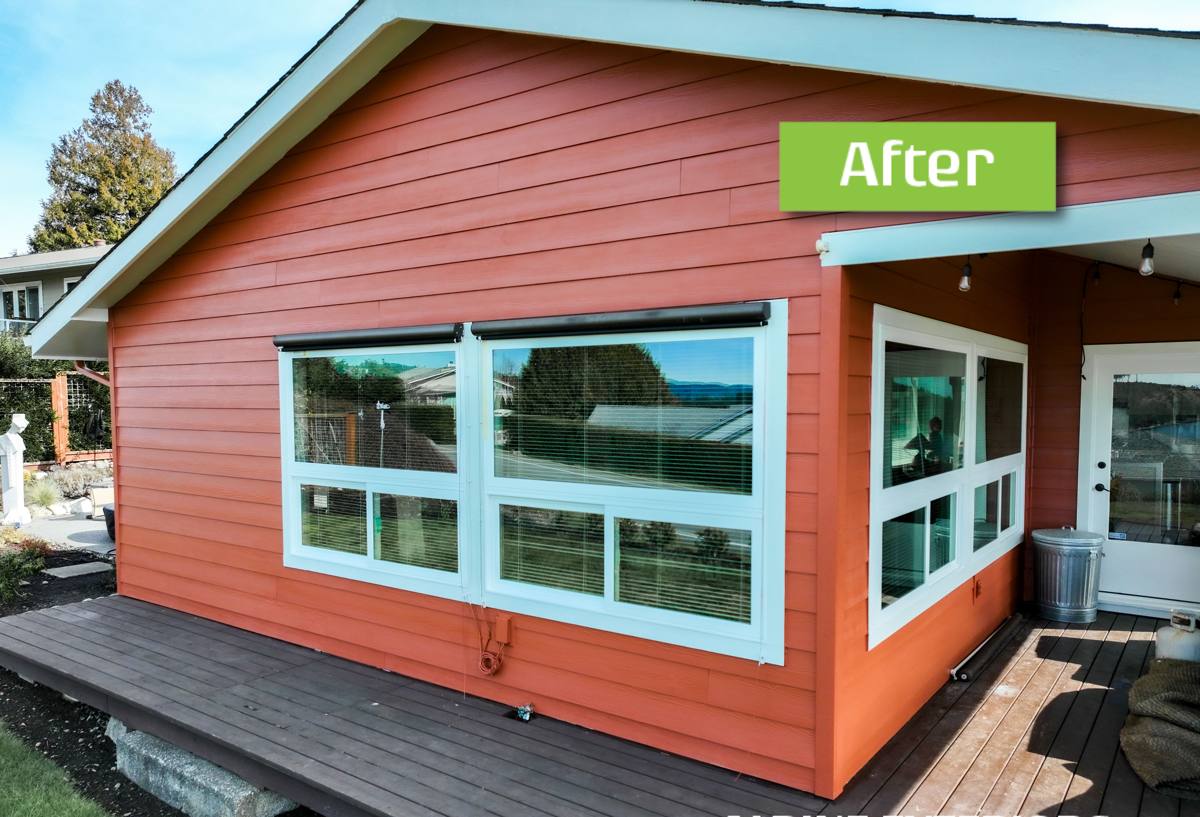
Signs a Sunnyland Home Needs Replacement, Not Repair
Not every window problem calls for full replacement. But there are signs that repair is just delaying the inevitable, and in a wet climate, delaying usually makes the eventual fix bigger.
- Fogging or a visible haze between panes — the seal on the insulated glass unit has failed and moisture is trapped inside
- Soft, spongy, or discolored wood at the sill or bottom corners of the frame
- Windows that are difficult to open, close, or lock — frames can swell and warp from repeated moisture cycles
- Visible gaps between the window frame and the siding or trim, especially after a wet winter
- A cold draft near the window even when it's fully closed and locked
- Peeling paint or bubbling on interior trim around the window, which usually points to moisture getting in from outside
- Persistent mold or a musty smell at the window frame that keeps returning after cleaning
If you're only seeing one of these and the frame itself is still solid, a repair or re-caulk might buy you a few more years. Once you're seeing two or three together, or there's any soft wood, replacement is usually the more honest recommendation — patching a failing frame in this climate tends to be money spent to solve the problem twice.
What a Correct Window Replacement Actually Involves
Window replacement gets sold as a simple swap — old window out, new window in. In a climate like ours, that shortcut is exactly how houses end up with hidden rot five years later. The window itself is only part of the job. The other part is everything around it that keeps water out.
Flashing and Water Management
Proper flashing directs any water that gets past the exterior surface back out, rather than letting it collect behind the window frame. This includes sill pan flashing at the bottom of the opening, and integration with the house wrap or weather-resistant barrier so water sheds downward and outward, never inward. This step is invisible once the job is done, which is exactly why it's the step that gets skipped by crews trying to move fast.
Sealing and Insulation
The gap between the window frame and the rough opening needs to be sealed and insulated correctly — not just stuffed with fiberglass and caulked shut. Low-expansion spray foam or backer rod with quality sealant, sized correctly for the gap, keeps air and moisture out without putting pressure on the window frame that can warp it over time.
Exterior Trim and Siding Tie-In
Whatever siding surrounds the window needs to tie back in cleanly, with caulking at the right joints and none at joints that should be left open to drain. This is where a lot of window installers who don't also handle siding get it wrong — the window goes in fine, but the trim work around it creates a new water path.
Choosing Window Materials for This Climate
There's no single "best" window material for every home — it depends on your budget, your home's style, and how much upkeep you want to take on. Here's how the common options actually perform in a wet, salt-air, moss-prone environment like ours.
| Material | Moisture Resistance | Maintenance | Typical Fit |
|---|---|---|---|
| Vinyl | Strong — won't rot, resists corrosion | Low — occasional cleaning | Most Sunnyland homes; good value |
| Fiberglass | Very strong — dimensionally stable in wet/dry cycles | Low | Homes wanting longevity and a paintable finish |
| Wood-clad | Good if maintained; vulnerable if seals or cladding fail | Higher — needs monitoring at joints | Homes prioritizing a traditional interior wood look |
| Aluminum | Weak in salt-influenced air — prone to corrosion and condensation | Moderate to high | We generally steer clients away from it here |
We don't install bare aluminum-frame windows on Sunnyland homes as a matter of standard practice — not because the material is worthless everywhere, but because it conducts cold and corrodes faster in a marine climate than the alternatives, and the maintenance burden it creates isn't worth it for most homeowners here. Vinyl and fiberglass cover the vast majority of what we install, with wood-clad reserved for homeowners who specifically want that look and understand the upkeep.
Glass and Energy Performance Worth Paying For
With our mild but persistently wet and overcast climate, the glass package matters as much as the frame. Double-pane, low-E glass with an argon gas fill is the practical standard for this region — it cuts heat loss in the cooler months and reduces condensation risk on the interior glass surface, which matters given our humidity. Triple-pane glass is available and does perform better, but for most Sunnyland homes the added cost doesn't pencil out against the marginal energy gain over a quality double-pane low-E unit — we'll walk you through that tradeoff honestly rather than upselling it by default.
Warm-edge spacers (as opposed to older aluminum spacers) also matter more here than in a dry climate — they reduce the cold spot at the edge of the glass where condensation and eventual seal failure tend to start first.
How We Approach a Sunnyland Window Replacement
- On-site assessment — we look at each window opening individually, not just the glass. Sill condition, existing flashing, and siding tie-in all get checked before we quote anything.
- Honest scoping — if we find soft sheathing or hidden rot once a window is opened up, we tell you before proceeding, not after the invoice.
- Removal and opening prep — old windows come out carefully to avoid unnecessary damage to surrounding trim and siding.
- Flashing and sealing done correctly — sill pan flashing, proper integration with the weather barrier, and correctly sized insulation and sealant at the frame gap.
- Window installation and leveling — set plumb, level, and square, with fasteners placed per manufacturer specification so the frame isn't stressed.
- Exterior trim and siding finish — tied back in cleanly, with caulking only where it belongs.
- Final check — every window is operated, checked for square, and inspected for gaps before we consider the job finished.
What Drives the Cost of a Window Replacement Project
Every home is different, so we won't quote a number here that doesn't mean anything until we've actually looked at your windows. What we can tell you is what tends to move the price up or down.
| Factor | Effect on Cost |
|---|---|
| Number of windows replaced at once | Per-window cost usually drops with larger batches |
| Frame material (vinyl vs. fiberglass vs. wood-clad) | Vinyl is typically the most budget-friendly; fiberglass and wood-clad cost more |
| Hidden rot or sheathing damage found during removal | Adds cost for repair before the new window can go in correctly |
| Window size and configuration (standard vs. custom shapes) | Custom sizes and specialty shapes cost more than standard |
| Second-story or hard-to-access windows | Adds labor and equipment cost |
| Glass package (standard low-E vs. upgraded triple-pane) | Higher-performance glass adds cost per unit |
We'd rather give you a real, itemized number after seeing the actual windows than a rough figure that changes once we're on site. That's part of why the estimate is free — there's no reason to guess when we can just come look.
Why Hiring a Crew That Already Works in Sunnyland Matters
A crew that regularly works Sunnyland and the surrounding Sudden Valley and Lake Whatcom area already knows what this climate does to a window installation over time — because we're the ones who get called back to fix the installs that were done wrong. We know which flashing details actually hold up through a wet Whatcom County winter, which materials handle the salt air and moss without high maintenance, and how to tie new windows into the kind of siding and trim common on homes in this area.
That local experience also means we're not learning on your house. We're applying the same water-management details we've used on other homes in the same weather conditions yours faces every year — not generic installation instructions written for a drier climate somewhere else.
Simple Maintenance to Protect Your Investment
A correctly installed window still benefits from basic upkeep, especially in a climate that stays wet for long stretches of the year.
- Clean weep holes (the small drainage openings at the bottom of the frame) at least once a year so water can drain properly
- Check exterior caulking annually for cracking or gaps, particularly on north- and west-facing windows that see the most weather
- Remove moss or algae buildup on nearby siding and trim promptly rather than letting it hold moisture against the wall
- Operate each window a few times a year, even ones you rarely open, to keep hardware and seals from sticking or seizing
- Watch for condensation between panes — it's an early sign of seal failure, not just a cosmetic issue
If you're noticing drafts, fogged glass, or trim damage around your windows, or you just want a straight answer on whether repair or replacement makes more sense for your home, we're happy to take a look. The estimate is free, there's no pressure attached to it, and you'll get a real answer based on what we actually find at your house — use the form below to get started.