 Sudden Valley
 Building a Deck That Actually Holds Up in Acme
A custom deck in Acme has to do more than look good on a sunny afternoon. It has to survive months of standing damp, low winter sun that never quite dries out shaded corners, and the kind of moss growth that Whatcom County is famous for. We've built and repaired decks all over the Sudden Valley area, and the pattern is always the same: the decks that fail early aren't the ones with the wrong stain color, they're the ones where the framing, fasteners, or ledger connection were never suited to this climate in the first place.
This page is about one thing — custom deck construction for homes in Acme — and what it actually takes to get it right here, not in a generic climate zone somewhere else in the country.
What Acme's Climate Does to an Unprotected Deck
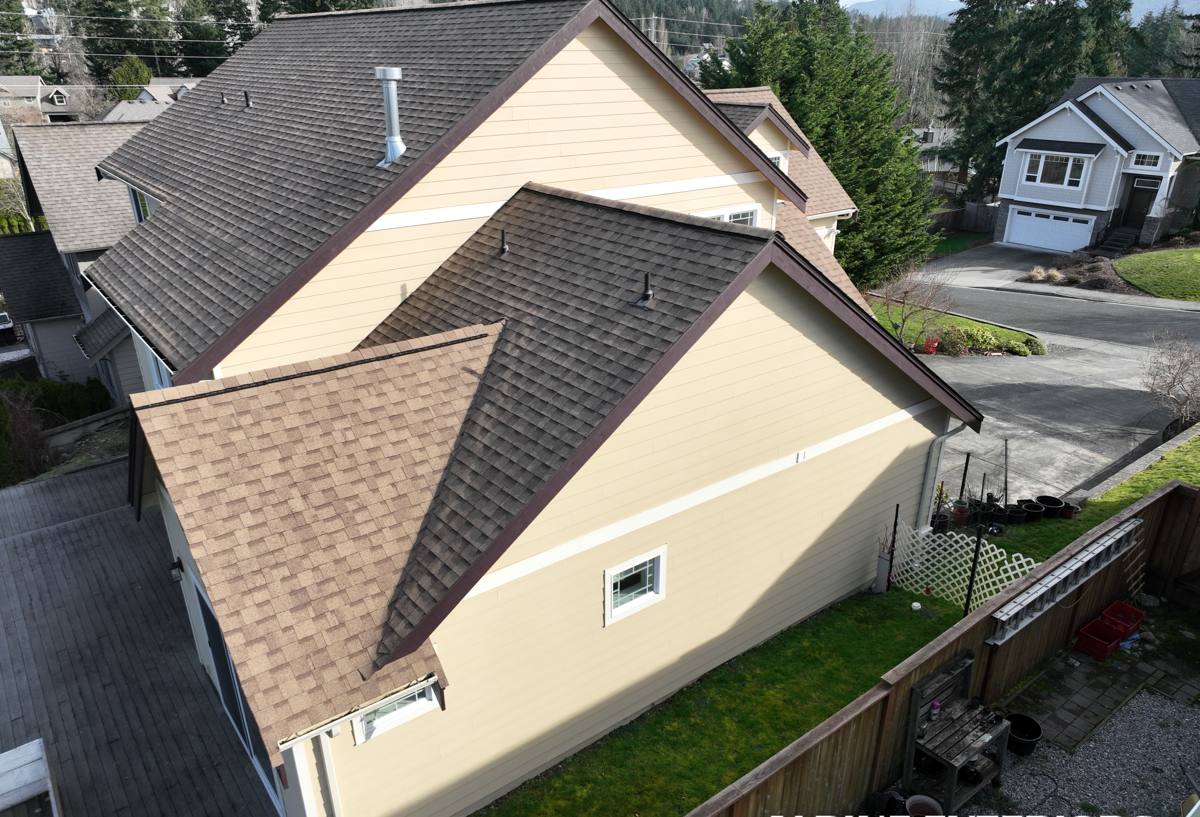
Three things wear decks down faster in this part of Washington than in most of the country: salt-laden air moving in off the water, long stretches of driving rain, and a moss season that can run from fall through spring. None of these are exotic problems — they're just constant, and a deck built without them in mind will show it within a few seasons.
Salt Air and Metal Fasteners
Salt in the air accelerates corrosion on anything less than fully rated hardware. Cheap or mismatched screws, brackets, and joist hangers can start rusting and staining the wood around them well before the decking itself is due for replacement. This is one of the most common repair calls we get — a deck that looks fine from a distance but has fasteners bleeding rust into the boards.
Driving Rain and Water Path
Rain that comes in sideways doesn't just fall on a deck, it drives underneath railings, into end grain, and behind ledger boards attached to the house. If there's no clear path for that water to shed and no flashing where the deck meets the siding or trim, moisture gets trapped and rot follows — usually in places you can't see until it's already a problem.
Moss and Shade
Decks tucked under trees or on the north side of a house stay damp longer between rains, and moss takes hold on any surface that doesn't shed water and dry quickly. Beyond being slippery, moss holds moisture against the deck boards and framing, which shortens the life of both.
Decking Material Comparison for This Climate
There's no single "best" decking material — there's a best material for your budget, your maintenance appetite, and how exposed your deck is to sun, rain, and shade. Here's how the common options actually perform in a Whatcom County setting.
| Material | Moisture Behavior | Maintenance | Typical Lifespan Here |
|---|---|---|---|
| Pressure-treated lumber | Resists rot with proper sealing; can cup or check if left unfinished | Needs re-staining or sealing every 2-3 years | 15-20 years with upkeep |
| Cedar | Naturally rot- and insect-resistant; still needs a water-repellent finish | Annual or biennial cleaning and re-oiling to keep color and protection | 15-25 years with consistent care |
| Composite / capped composite | Doesn't absorb water like wood; some early composites trapped moisture and grew mold, which is why we only install capped products with a real moisture barrier | Occasional washing, no staining or sealing | 25-30+ years |
| Tropical hardwoods (e.g. ipe) | Very dense and naturally water-resistant | Periodic oiling to maintain color; will gray if left untreated | 25-40 years |
We don't push one product on every homeowner. A shaded, moss-prone lot in Acme is a poor candidate for an uncapped composite or unsealed softwood, while a sunnier, open lot has more flexibility. We'll walk your specific site with you and explain the trade-offs honestly before you commit to a material.
Framing and Footings: The Part Nobody Sees But Everyone Depends On
The decking boards are what you notice, but the framing underneath is what determines whether the deck is still safe in fifteen years. In this climate, three framing details matter more than almost anything else:
Footings Rated for Local Frost and Drainage
Footings need to be sized and set to local code depth, on soil that's been checked for drainage, not just poured to a rule of thumb. Poor drainage under a footing is a slow, invisible problem until the deck starts to shift.
Ledger Board Flashing
Where a deck attaches to the house is the single most common source of hidden rot we find on older decks in this area. Proper flashing — installed so water is directed away from the house wall, not into it — is not optional in a climate that sees this much rain.
Joist Protection and Fastener Grade
Joist tape or a comparable moisture barrier on top of each joist, combined with corrosion-resistant fasteners and hangers rated for treated lumber contact, keeps the structural skeleton of the deck from rotting from the inside out — long before it would ever show on the surface.
Railings, Stairs, and Code Requirements
Railings and stairs aren't just finishing touches — they're the part of a deck project most tied to building code, and getting them wrong is both a safety issue and a resale issue. Height requirements, baluster spacing, and stair rise-and-run all need to meet current code, and any deck built or substantially rebuilt typically needs to meet current standards regardless of what was there before.
Material choice matters here too. Wood railings need the same finish maintenance as wood decking. Metal or cable railing systems need to be specified in a corrosion-resistant grade given the salt air in this region — standard mild steel hardware will show rust streaks on painted or powder-coated rail within a few seasons if it isn't rated for this environment.
Our Process for a Custom Deck in Acme
- Site visit and assessment — we look at drainage, sun/shade exposure, existing structure (if replacing a deck), and how the deck connects to the house.
- Design and material selection — we talk through layout, decking material, and railing options based on your budget and how exposed the site is to rain, shade, and moss.
- Permitting — most deck projects above a certain size or height require a permit; we handle that process rather than leaving it to you.
- Framing and structural work — footings, ledger flashing, joists, and hardware, built to hold up in this climate, not just to pass a quick look.
- Decking, railings, and finish work — installed with the fastening and spacing appropriate to the material, accounting for expansion and drainage.
- Final walkthrough — we go over the finished deck with you, including what maintenance it will need and when.
Seasonal Deck Maintenance for Sudden Valley Homes
A well-built deck still needs some seasonal attention in this climate. Here's a practical checklist for homeowners in Acme:
- Clear leaves and debris from between boards before fall rains settle in — trapped debris holds moisture against the wood.
- Check and clean any moss growth in shaded areas each spring, before it spreads and becomes slippery.
- Inspect fasteners and hardware yearly for rust staining, especially near railings and stair connections.
- Re-seal or re-stain wood decking on the schedule appropriate to the product — don't wait until it looks obviously weathered.
- Check the ledger board area where the deck meets the house for any signs of water staining or soft wood.
- Keep gutters and downspouts near the deck clear so runoff isn't dumping directly onto or under the structure.
Cost Factors to Expect
Every deck is priced around size, material, structural complexity, and site access, so we won't quote a number without seeing the site. What we can tell you is what tends to move the price:
| Factor | Effect on Cost |
|---|---|
| Decking material (pressure-treated vs. composite vs. hardwood) | Largest single line item; capped composite and hardwoods cost more upfront but less in upkeep over time |
| Height and stairs | Multi-level decks and stair runs add framing, railing, and code complexity |
| Site access and slope | Difficult access or a sloped lot increases labor and footing work |
| Railing style | Cable or glass rail systems generally cost more than standard wood or metal baluster rail |
| Demolition of an existing deck | Adds cost if the old structure needs to be fully removed rather than partially reused |
Why a Crew That Already Works in Acme Matters
Deck building isn't a one-size-fits-all trade, and a crew that's worked other jobs around Sudden Valley already knows how the local drainage patterns, shade cover, and salt-tinged air tend to treat a new deck in this specific area. That's not a substitute for a proper site assessment on your property, but it does mean fewer surprises — we're not guessing at how a material or fastener will hold up here, we've already seen it happen on other decks nearby. We also know which inspection and permitting steps apply locally, so that part of the project doesn't become a bottleneck.
If you're planning a new deck or need to replace one that's showing its age, we'd be glad to take a look and talk through what makes sense for your home. Reach out for a free, no-pressure estimate using the form below.