 Sudden Valley
 Why Deming Decks Wear Out Faster Than the Warranty Says
Every deck sold in Whatcom County comes with a warranty card that assumes tidy, predictable weather. Deming doesn't get that. Sitting in the Nooksack River valley with Mount Baker at its back, this area sees more rain days, more standing humidity, and a longer stretch of shaded, damp ground than most manufacturers ever test against. Add in the driving rain that blows sideways through the valley during a fall storm and the salt-tinged air that carries inland from Bellingham Bay and the rest of Whatcom County's coastline, and you've got a climate that goes after wood, fasteners, and footings from multiple directions at once.
The result is a long moss season — often eight or nine months out of the year — where anything horizontal and shaded stays wet longer than it dries. Moss and algae aren't just cosmetic. They hold moisture against boards and ledger connections, and that constant dampness is what actually breaks a deck down, long before the wood itself gives out from age.
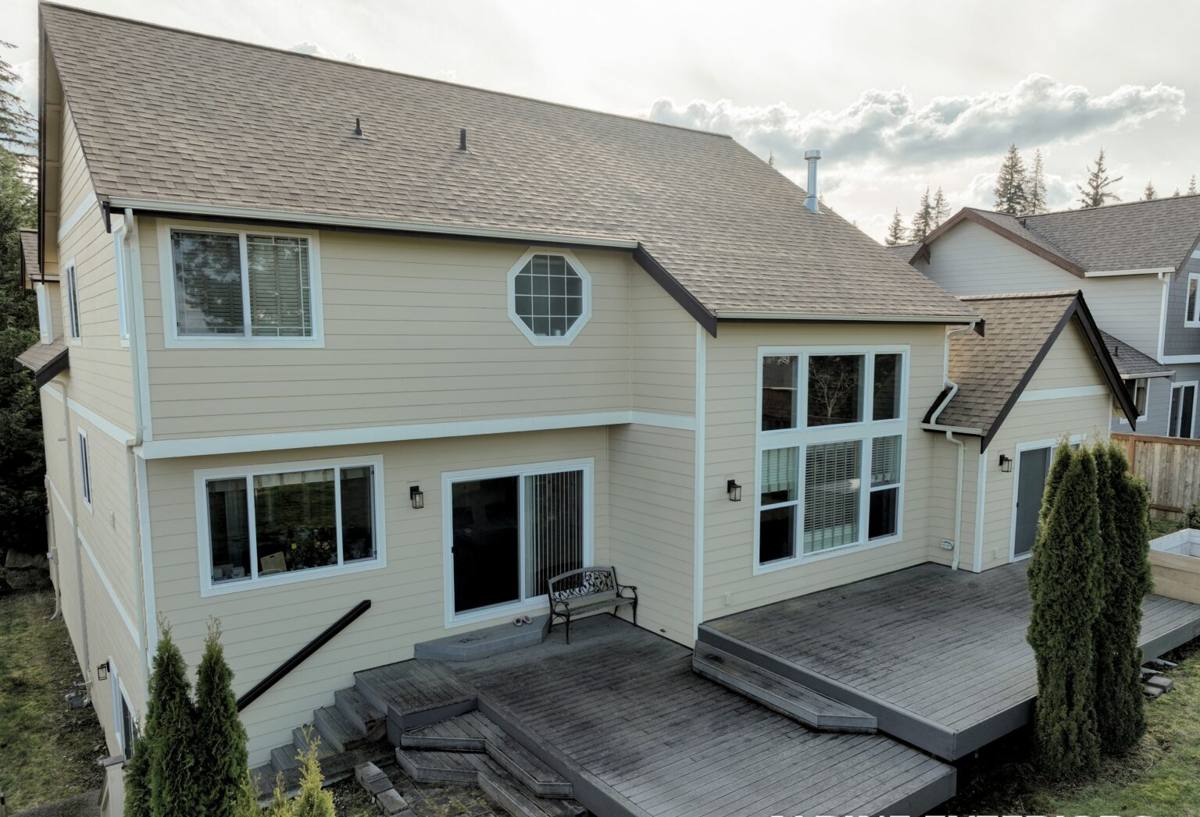
Signs a Deming Deck Needs Replacement, Not Just Repair
We get called out to a lot of decks that homeowners hope just need a board or two swapped. Sometimes that's true. Often, once we're underneath looking at the framing, it isn't. Here's what tells us a deck has crossed the line from "repairable" to "replace it":
- Soft or spongy spots anywhere on the decking surface, especially near the house or in shaded corners
- Rot or dark staining where the ledger board meets the house siding or foundation
- Posts that have shifted, twisted, or show rot at the base where they meet the ground or a footing
- Joists that flex noticeably when you walk across the deck
- Rust streaks running down from nail or screw heads, which usually means the fasteners are failing underneath
- A railing that wobbles when pushed — this is a safety issue, not a cosmetic one
- A deck older than 15–20 years, built with older fastening methods, that's never been opened up for inspection
Any one of these on its own might be a repair. Two or three together, especially involving the ledger board or framing, usually means it's cheaper and safer in the long run to start over than to keep chasing rot through a structure that was never sealed against this climate to begin with.
What a Correct Deck Replacement Actually Involves
A deck replacement isn't just tearing off old boards and screwing down new ones. The decking surface is the last part of the job. Everything underneath it is what determines whether the new deck lasts five years or twenty-five in this valley's weather.
Ledger Board and Flashing
The ledger board — the piece that attaches the deck to the house — is the single most common failure point we find on old decks in this area. If it isn't flashed correctly to shed water away from the house framing, water gets trapped between the ledger and the siding and rots both from the inside out, often without any visible sign until the damage is severe. Every replacement we do gets proper flashing, sized and installed to actually direct water outward instead of letting it pool.
Footings and Posts
Whatcom County's frost line and the wet, sometimes soft ground common around Deming both matter here. Footings need to sit at the correct depth and bear on solid ground, not just be poured wherever the old ones happened to be. We check every footing during a replacement rather than assuming the original ones were sized right — a lot of older decks in this area were built with undersized or shallow footings that have slowly shifted over the years.
Framing and Joist Spacing
Joist spacing determines how much a deck flexes and how long the decking material on top of it lasts. Manufacturers of composite and PVC decking specify tighter joist spacing than old-school pressure-treated framing typically used, because those materials behave differently under load and moisture than solid wood. Reusing old framing built for a different decking material is one of the most common shortcuts that leaves a deck feeling "off" within a couple of years.
Fasteners and Hardware
In a valley with this much sustained moisture and some salt influence carried in on coastal weather systems, fastener choice matters more than most homeowners realize. Hidden fastener systems, structural screws, and hangers all need to be rated for exterior, corrosion-resistant use — not just galvanized, but genuinely matched to whatever decking and framing material is going on top. Mixing the wrong metal types against each other is a slow, invisible way to cause corrosion.
Decking Material Options for This Climate
There's no single "best" decking material — there's a best material for your budget, your maintenance appetite, and how much shade and moisture your specific site holds onto. Here's how the common options compare once you factor in Whatcom County's wet, mossy conditions:
| Material | Moisture Behavior | Maintenance | Typical Lifespan |
|---|---|---|---|
| Pressure-treated wood | Absorbs and releases moisture; prone to cupping and splintering if not sealed regularly | Re-sealing or staining every 1–2 years in this climate | 10–15 years with upkeep |
| Cedar | Naturally rot-resistant but still needs sealing to resist the long moss season | Annual cleaning and periodic sealing | 15–20 years with upkeep |
| Composite decking | Doesn't absorb water like wood, but can still hold surface moisture and grow moss or algae if not cleaned | Periodic washing; no sealing or staining required | 25–30 years, per most manufacturer warranties |
| PVC decking | Fully synthetic; sheds water and resists moss growth best of the group | Occasional washing | 25–30+ years, per most manufacturer warranties |
We install all of these. What we won't do is put any of them down over framing or fastening that isn't built to that material's actual specifications — that's where corners get cut on decks that don't last, and it's the same standard we hold on siding work.
Cost Factors Homeowners Should Actually Weigh
Deck replacement pricing swings widely based on size, material, and how much of the structure underneath needs rebuilding. Rather than quote a number that won't fit your situation, here's what actually drives cost up or down:
| Factor | Why It Matters |
|---|---|
| Deck size and shape | Multiple levels, angles, or built-in seating add labor beyond simple square footage |
| Decking material | Composite and PVC cost more upfront than wood but reduce long-term maintenance spending |
| Footing and framing condition | If footings need re-pouring or framing is more deteriorated than expected, this adds cost that's hard to know until we're under the deck |
| Railing and stair complexity | Custom railing systems, cable rail, or multi-flight stairs add cost beyond a basic guardrail |
| Height and access | A deck that's elevated or hard to reach with equipment takes longer to demo and rebuild safely |
We give a firm, itemized estimate after seeing the deck in person — not a phone-quote guess — because framing condition alone can shift a project's scope significantly once we open things up.
Permits and Whatcom County Requirements
Most deck replacements that involve rebuilding structure — new footings, new framing, or changes to railing height — require a permit through Whatcom County. Guardrail height, stair rise and run, and footing depth all have code minimums that exist specifically because a deck is a structure people stand on, sometimes many feet above the ground. We handle the permit process as part of the job rather than leaving it for the homeowner to sort out, and we build to code minimums as a floor, not a target — especially on guardrails and stair connections, which are the two areas inspectors flag most often on older rebuilds.
Our Process, Start to Finish
- On-site walkthrough: We look at the existing deck, the ledger connection, and the ground conditions, and talk through what you actually use the space for.
- Written estimate and material selection: You get a clear breakdown of scope and cost before any demo starts, with honest trade-offs between material options for your specific site.
- Permit and scheduling: We pull the necessary Whatcom County permit and schedule the job around weather windows — timing matters more here than in drier climates.
- Demo and disposal: Full removal of the old structure, including hauling off old lumber and hardware.
- Rebuild: Footings, framing, ledger flashing, decking, and railing installed to spec, with inspection sign-off where required.
- Final walkthrough: We go over the finished deck with you, including basic care guidance for whatever material you chose.
Why a Crew That Already Works Deming and Sudden Valley Matters
Deck work in this part of Whatcom County isn't quite the same job as a deck in a dry inland climate, and it isn't quite the same as a deck right on Bellingham Bay either. A crew that regularly works Deming, Sudden Valley, and the surrounding valley knows how the ground drains on a given lot, which corners of a property hold moss longest, and how to schedule a build around the region's rain patterns instead of fighting them. That local familiarity shows up in small decisions — footing placement, flashing details, material recommendations — that a crew unfamiliar with the area's conditions might not think twice about.
It also matters after the job is done. A local crew is close by if a question comes up during the first wet season, and has a reputation in the community worth standing behind.
Caring for Your New Deck Through the Moss Season
A correctly built deck still needs some basic upkeep to get its full lifespan out of this climate. A little seasonal attention goes a long way:
- Sweep leaves and debris off the surface regularly in fall — trapped organic matter is what feeds moss and algae growth
- Keep gutters and downspouts clear so runoff isn't dumping extra water directly onto or under the deck
- Trim back overhanging branches and vegetation to let the surface get more air and light between rains
- Wash the surface at least once a year to remove moss and algae before it gets a foothold
- Re-seal or re-stain wood decking on the schedule appropriate to that product — don't wait until it's visibly gray and dry
- Check railings and stair connections annually for any looseness
Whatever material you choose, staying ahead of moss and moisture — rather than reacting to it — is the difference between a deck that looks and performs well for decades and one that's back on our repair list in five years.
If your deck in Deming or anywhere around Sudden Valley is showing soft spots, a wobbly railing, or you're just tired of chasing repairs on a structure that's earned its retirement, we're happy to come take a look. Estimates are free, there's no pressure, and you'll get a straight answer about whether you're looking at a repair or a replacement — just fill out the form below.