 Sudden Valley
 Roofing for Acme Homes in a Wet, Moss-Prone Climate
Homes in and around Acme deal with a specific combination of weather that a lot of roofing crews from outside the area don't fully account for: long stretches of driving rain, humid air carried in off the water, and a moss season that can run most of the year in shaded, tree-covered lots. None of that is unusual for Whatcom County, but it does mean a roof installed here has to be built differently than a roof going on a house in a drier part of the state. Underlayment choice, ventilation, flashing details, and even the pitch of certain roof sections all matter more when the roof spends half the year damp.
A new roof installation done right for this area isn't just about picking a shingle color. It's about making sure water sheds fast, moisture doesn't get trapped in the assembly, and moss doesn't get the foothold it needs to start lifting shingles within a few years instead of a couple decades.
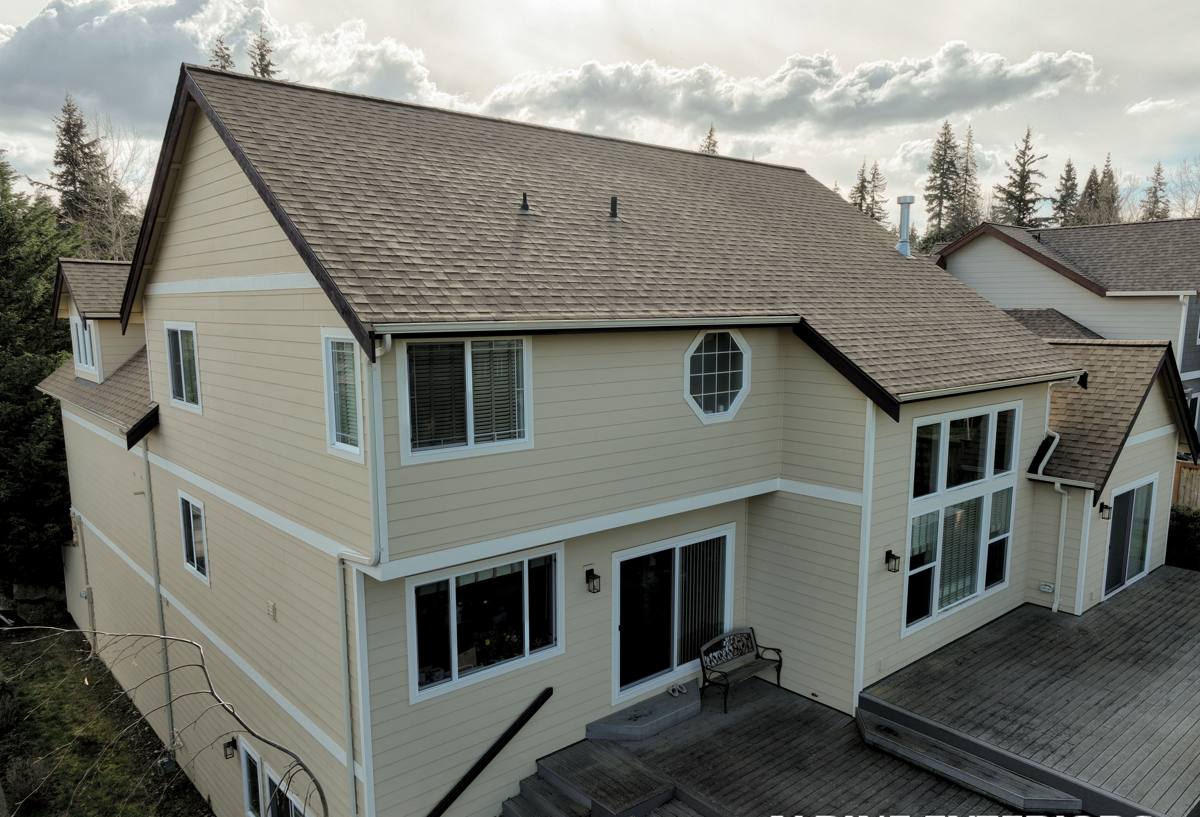
What Local Conditions Actually Do to a Roof
Driving Rain and Wind-Driven Moisture
Rain here doesn't always fall straight down. Wind pushes it sideways and up under laps, edges, and around penetrations like vent pipes and chimneys. A roof system that only relies on the shingle itself to keep water out will eventually leak in this climate — it's the underlayment, flashing, and ice-and-water shield details at vulnerable points that do the real work when rain is coming in sideways.
Salt Air and Metal Fatigue
Proximity to salt-influenced air in this part of Washington accelerates corrosion on unprotected metal — nails, flashing, vent caps, and fasteners. Standard galvanized components can start showing rust streaks and pitting years before they would in a drier, inland climate. We spec corrosion-resistant fasteners and flashing for this reason, not as an upsell but because replacing a roof twice as often costs more than doing it right the first time.
Moss, Shade, and Organic Growth
Tree cover is common around Acme, and shaded, north-facing roof sections stay damp longer after every rain. Moss and algae don't just look bad — moss roots work their way under shingle tabs and lift them, breaking the seal that keeps water out. Once moss gets established, it holds moisture against the roof deck year-round, which shortens the life of the roof significantly.
What a Correct New Roof Installation Includes
A proper installation is a system, not a single layer of material. Skipping or downgrading any of these components is where most premature roof failures in this region start.
- Tear-off and deck inspection — removing old roofing down to the sheathing and replacing any rotted, soft, or water-damaged decking before anything new goes down
- Ice-and-water shield at eaves, valleys, and around all penetrations — the areas most exposed to wind-driven rain and ice damming
- Synthetic underlayment across the full roof for a secondary water barrier beneath the primary roofing material
- Balanced ventilation — intake at the eaves and exhaust at the ridge, sized correctly for the attic volume, to keep moisture from condensing inside the roof assembly
- Corrosion-resistant flashing and fasteners around chimneys, skylights, vent pipes, and roof-to-wall transitions
- Proper starter strip and nailing pattern matched to the manufacturer's wind-rating specification, not just "close enough"
- Ridge cap and hip installation that matches the ventilation and drainage plan for the specific roof shape
Roofing Material Options for This Climate
There's no single "best" roofing material for every home — it depends on the roof's pitch, sun and shade exposure, budget, and how long the homeowner plans to stay in the house. Here's how the common options stack up for a moisture-heavy, moss-prone environment like Acme's.
| Material | Moisture & Moss Resistance | Typical Lifespan Here | Notes |
|---|---|---|---|
| Architectural asphalt shingle | Good with proper ventilation and algae-resistant granules | 20–30 years | Most common choice; good value, wide style range |
| Standing seam metal | Excellent — sheds water and moss struggles to gain a foothold | 40–50+ years | Higher upfront cost, lowest long-term maintenance |
| Synthetic (composite) shake/slate | Very good — engineered to resist moisture absorption | 30–50 years | Good option where a traditional look is wanted without wood's moisture issues |
| Cedar shake | Requires consistent maintenance to manage moisture and moss | 15–25 years with upkeep | We're upfront that this material demands the most ongoing care in our climate |
We don't push one material on every roof. We'll walk through the trade-offs — cost, appearance, maintenance commitment, and how the roof's exposure to shade and rain affects each option — before recommending anything.
Our Installation Process
- On-site assessment — we look at pitch, decking condition, existing ventilation, shade exposure, and any moss or moisture damage already present
- Written scope and material recommendation — a clear breakdown of what's being done and why, not just a total price
- Tear-off and deck repair — old material removed, decking inspected board by board, damaged sections replaced
- Underlayment and flashing installation — the moisture-management layer that does most of the real work over the roof's life
- Roofing material installation — installed to manufacturer spec for wind rating and warranty eligibility
- Ventilation check and adjustment — confirming intake and exhaust are balanced for the attic
- Final walkthrough — cleanup, site check for stray fasteners, and a review of the finished roof with the homeowner
Why a Crew That Already Works Acme Matters
Roofing crews that mainly work drier parts of the state sometimes underestimate how much ventilation and underlayment detail matters here — and it shows up a few years later as premature moss growth, soft decking, or shingles that lift in the first big windstorm. A crew that regularly works Whatcom County roofs already knows which details can't be shortcut: enough intake ventilation for a shaded roof, corrosion-resistant fasteners near salt-influenced air, and ice-and-water shield in the right spots for the amount of driving rain this area actually gets.
There's also a practical side to hiring locally: warranty follow-up, storm-damage inspections, and moss-prevention maintenance are all easier when the crew isn't driving in from several counties away. We're not the only roofing company that can put shingles on a house — we're a crew that knows what this specific climate does to a roof over 10, 20, and 30 years, and we build accordingly.
What Drives the Cost of a New Roof
| Factor | Why It Matters |
|---|---|
| Roof size and complexity | More valleys, hips, dormers, and penetrations mean more labor and flashing detail |
| Deck condition | Rotted or soft decking found during tear-off requires repair before new material goes down |
| Material choice | Asphalt, metal, and synthetic products vary significantly in material cost |
| Ventilation upgrades | Adding intake vents or a ridge vent system where none existed adds labor |
| Access and pitch | Steep or hard-to-access roofs take longer and require more safety setup |
| Layers to remove | Multiple existing layers of roofing add tear-off time and disposal cost |
We'll never give a number without seeing the roof — anyone quoting sight-unseen is guessing. What we can promise is a written estimate that breaks the job down so you know exactly what you're paying for.
Questions Worth Asking Before You Hire
- Does the estimate list the specific underlayment, flashing, and ventilation plan — or just "new roof, one price"?
- Is the crew insured and, if required for the scope of work, properly licensed to work in Washington?
- Does the material warranty require manufacturer-certified installation, and is the crew certified for it?
- Who handles a warranty issue or storm-damage inspection a few years down the road?
- Does the quote account for moss and moisture exposure specific to this property's shade and pitch?
After Installation: Keeping a New Roof Performing
A correctly installed roof still benefits from basic upkeep in this climate. Keeping gutters clear so water doesn't back up under the eaves, trimming back branches that keep a section of roof shaded and damp, and having moss treated before it spreads rather than after it's established will all extend the life of the investment. We're happy to talk through a simple maintenance schedule as part of the installation — it's a short conversation that saves a lot of headache later.
If you're weighing a new roof for a home in the Acme area, we're glad to take a look and talk through what your specific roof needs — no pressure, no obligation. Fill out the form below and we'll set up a time to come out and give you a straight answer.