 Sudden Valley
 Storm Damage Roof Repair for Alger Homes
Alger sits in that stretch of Whatcom County where weather off the water and weather off the Cascades foothills both have a say in what your roof puts up with over the year. Homes here deal with driving rain that comes in sideways during winter fronts, salt-laden air drifting up from the coast, and a moss season that stretches longer than most homeowners expect. None of those things individually wrecks a roof overnight. What they do is wear down a roof's defenses year after year, so that when an actual storm hits — heavy wind gusts, a hard rain event, or a branch coming down — the damage is often worse than it should have been, because the roof was already compromised in ways nobody could see from the ground.
We do storm damage roof repair for homes in and around Alger and the greater Sudden Valley area, and we've built our process around this specific climate. That means we're not just patching what a storm broke — we're checking what let it break in the first place.
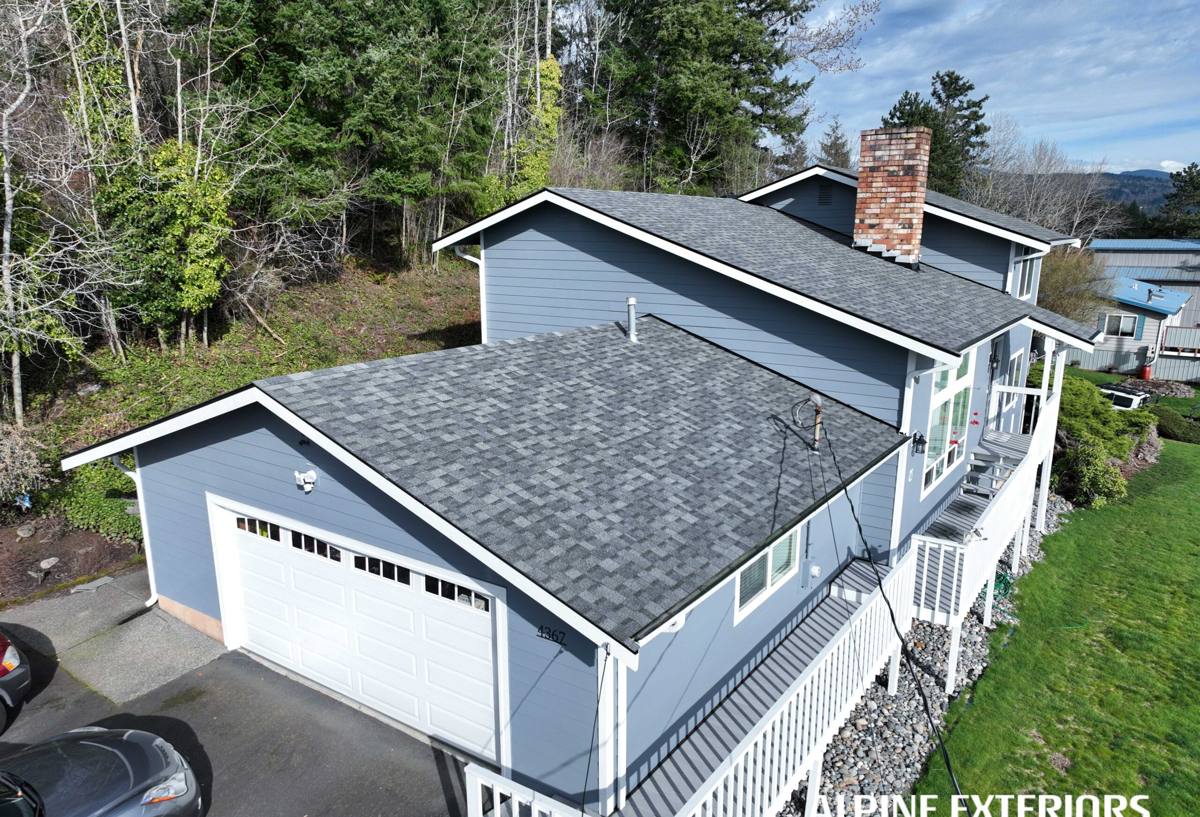
What Alger's Climate Actually Does to a Roof
Salt Air and Metal Fatigue
Homes closer to the water pick up salt-laden moisture in the air. Over time, that accelerates corrosion on exposed metal — flashing, fasteners, gutter hardware, and any metal roofing components. A fastener that's lost integrity to corrosion won't necessarily fail on a calm day. It fails when a gust of wind puts lateral stress on a shingle or panel that the fastener can no longer hold.
Driving Rain and Wind-Driven Water
Whatcom County storms don't always arrive as gentle vertical rain. When wind pushes rain sideways or upward under roof edges, it finds every weak point — a slightly lifted shingle tab, an aging seal around a vent pipe, flashing that's pulled away even a fraction of an inch. Standard roofing details that work fine in mild weather can leak under wind-driven rain if they weren't installed with that specific stress in mind.
Moss and Trapped Moisture
The long, wet moss season here isn't just cosmetic. Moss holds water against the roof surface far longer than the surface would otherwise stay wet, and it works its way under shingle edges and into seams. That trapped moisture softens roofing material, degrades adhesive strips, and gives wind something to grab onto during a storm — a shingle already lifted slightly by moss growth is much easier for a gust to tear loose than one lying flat and sealed.
Put those three factors together and you get a pattern we see a lot in this area: storm damage that looks like it happened in one event, but was actually the final failure point of gradual deterioration that had been building for one or more seasons.
What a Correct Storm Damage Repair Actually Involves
A rushed storm repair fixes what's visible and leaves the rest. A correct one treats the storm as a diagnostic event — it tells you where your roof's weak points are, and a good repair addresses those, not just the hole or the missing shingles.
- Full roof inspection, not just the damaged section — wind and water rarely limit their effects to one spot
- Check of all flashing points: chimneys, vent pipes, skylights, wall-to-roof transitions
- Assessment of the decking underneath damaged areas for moisture intrusion or soft spots
- Evaluation of moss coverage and buildup contributing to the failure
- Inspection of gutters and downspouts for storm debris blocking proper drainage
- Check of fastener and hardware condition in areas exposed to salt air
- Matching repair materials to the existing roof so the fix blends and performs consistently
Skipping any of these steps is how a homeowner ends up calling a roofer back six months later for a "new" leak that's actually the same underlying problem showing up in a different spot.
Our Process for Storm Damage Repair in Alger
1. Assessment
We come out, inspect the full roof (not just the obvious damage), and document what we find — both storm-caused damage and any pre-existing wear that contributed to it. You get a clear, honest picture before any work starts.
2. Explanation and Options
We walk you through what actually needs to happen: what's a straightforward repair, what's a sign of a bigger issue, and what your realistic options are. If a section is beyond reasonable repair, we'll tell you that plainly rather than patching over a problem that will come back.
3. Insurance Documentation
Storm damage is often covered under homeowner's insurance. We can provide the documentation and photos you need to support a claim, though the claim itself is between you and your insurer — we're not adjusters and won't promise a specific outcome, but we make sure the paperwork on the roofing side is solid.
4. The Repair
We repair using materials matched to your existing roof system, address the flashing and fastener issues we found in the inspection, and clear moss or debris that contributed to the failure. We don't consider a storm repair finished until the underlying vulnerability is addressed, not just the visible hole.
5. Follow-Up Check
Especially after a major wind or rain event, we recommend a follow-up look once the next round of weather has tested the repair. That's a quick check, not a full re-inspection, but it catches anything that needs adjustment early.
Repair vs. Replacement: How We Help You Decide
| Factor | Points Toward Repair | Points Toward Replacement |
|---|---|---|
| Age of roof | Under half of expected lifespan | Near or past expected lifespan |
| Extent of damage | Isolated to one area | Spread across multiple sections |
| Decking condition | Solid, dry underneath | Soft spots or moisture staining found |
| Moss/algae history | Minor, recently maintained | Heavy, long-term buildup |
| Flashing condition | Sound elsewhere on the roof | Corroded or failing in multiple spots |
Most storm calls we get in Alger are legitimate repairs — a section of shingles torn loose, flashing pulled away, a branch strike. But part of our job is telling you honestly when a repair is just delaying an inevitable replacement, versus when it's genuinely the right call. We'd rather give you that straight answer than sell you a repair we know won't hold.
Why Hiring a Crew That Already Works Alger Matters
Storm damage repair isn't just a generic roofing skill — the right approach depends heavily on what's actually causing the failure, and that's regional. A crew that mostly works drier climates might not think to check for moss-related moisture damage under a torn shingle. A crew unfamiliar with salt air exposure might not flag corroding fasteners as a contributing factor. We work roofs in this specific part of Whatcom County regularly, so when we're assessing storm damage, we already know what to look for and where problems tend to hide.
There's also a practical side: after a significant storm event, roofing crews get busy fast, and traveling contractors from outside the area often can't offer timely follow-up if an issue develops. Working with a crew based near Sudden Valley means faster response and someone who'll still be around locally if you need a follow-up visit.
Preventing the Next Storm From Doing the Same Damage
Once storm repairs are done, a few ongoing habits make a real difference in how your roof holds up against the next round of Whatcom County weather:
- Keep moss growth managed — don't let it build up season after season
- Clear gutters and downspouts before the wet season ramps up, so water has somewhere to go
- Trim back tree limbs that overhang the roof and could come down in wind
- Have flashing and seals checked periodically, especially around chimneys and vents
- Address minor issues — a lifted shingle, a small leak — before the next storm turns them into major ones
A roof that's well-maintained between storms simply has fewer weak points for the next storm to exploit. That's the difference between a quick, minor repair after a storm and a much bigger job.
Get an Honest Look at Your Roof
If a recent storm left you with missing shingles, a new leak, or just a nagging feeling that something's not right up there, we're happy to come take a look. We'll give you a straightforward assessment of what happened, what it'll take to fix it correctly, and a free, no-pressure estimate — no obligation, no upsell. Reach out using the form below and we'll get you scheduled.