 Sudden Valley
 Why Silver Beach Roofs Wear Differently
Silver Beach sits close enough to the water that homes here deal with a combination most inland Whatcom County neighborhoods don't have to think about as much: salt-tinged marine air, driving rain that comes in sideways during winter storms, and a moss season that can run nine months out of the year. None of these things are dramatic on their own. Together, over ten or fifteen years, they're what turns a shingle roof that should have another decade of life left into one that's curling, staining, and leaking at the valleys. An asphalt shingle roof installed correctly for this specific environment holds up. One installed with generic assumptions — the kind that work fine in a drier part of the state — tends to show its age early.
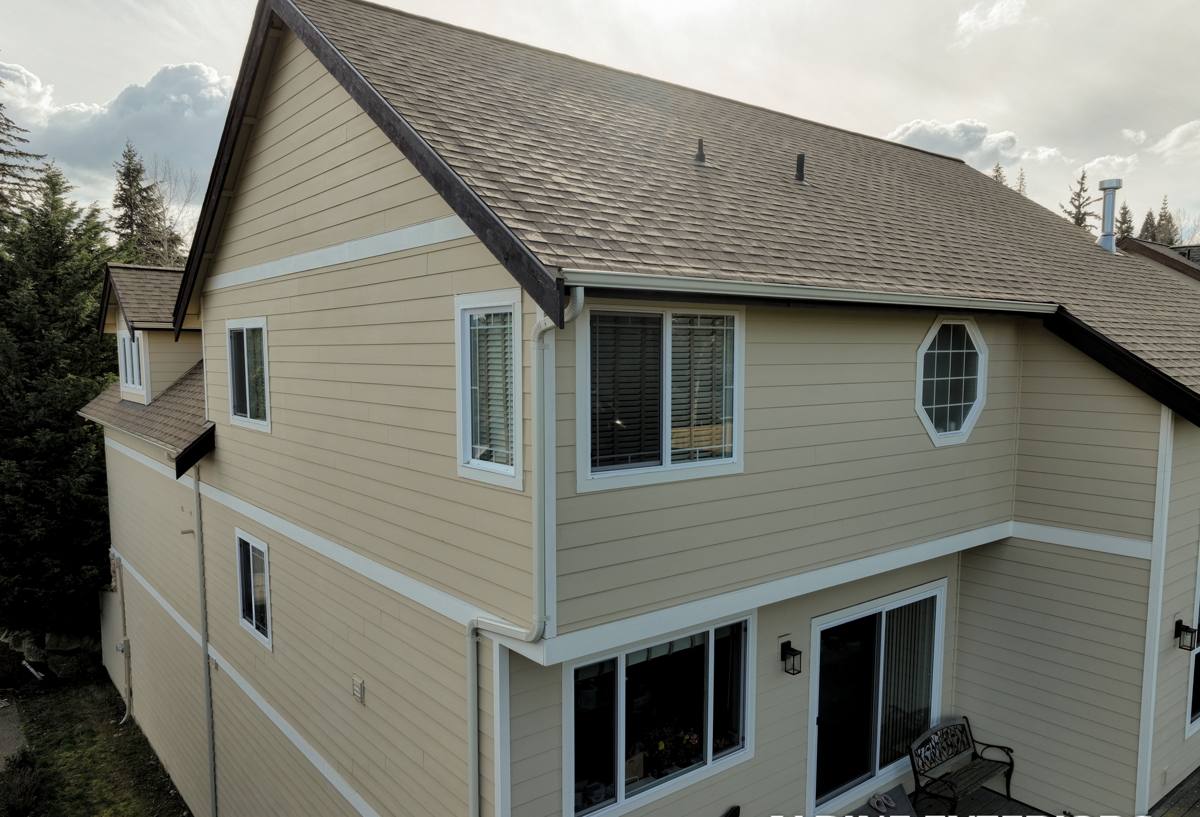
What This Climate Actually Does to a Shingle Roof
Salt-tinged marine air
Airborne salt and moisture accelerate corrosion on exposed metal — flashing, nail heads, vent stacks, and gutter hardware. Cheaper fasteners and unprotected flashing corrode faster here than they would twenty miles inland, and once flashing starts to rust and pit, it stops shedding water the way it's supposed to. This is why the metal components of a roof system matter as much as the shingle itself.
Driving, wind-driven rain
Rain that falls straight down is easy for any roof to handle. Rain that's pushed sideways by wind off the water finds every weak point — under-lapped shingle courses, short nails, gaps at hips and ridges, and flashing that was caulked instead of properly integrated. A roof built for driving rain uses more overlap, better underlayment, and metal flashing detailed to shed water even when it's not falling straight.
The long moss season
Shade, moisture, and mild temperatures are exactly what moss wants, and Silver Beach's tree cover combined with our wet stretch of the year gives it plenty of both. Moss doesn't just look bad — it holds moisture against the shingle surface, lifts tabs as it grows under them, and works its way into nail holes and valleys where it can hold water long after the rest of the roof has dried out.
What a Correctly Installed Shingle Roof Includes
A shingle roof is a system, not just a layer of shingles nailed to plywood. For a Silver Beach home, that system needs to include:
- Ice-and-water shield at eaves, valleys, and around penetrations — the areas where wind-driven rain and moss buildup cause the most trouble.
- Synthetic underlayment across the full roof deck, not just felt paper, for a more reliable second layer of protection if wind ever drives water under a shingle tab.
- Corrosion-resistant flashing at valleys, chimneys, skylights, and wall intersections — this is where the salt-air factor matters most, and it's the detail that separates a roof that lasts from one that leaks in year six.
- Proper nailing pattern — six nails per shingle in high-exposure areas rather than the four-nail minimum, since wind uplift near the water is a real factor.
- Balanced attic ventilation so moisture from inside the house doesn't condense against the underside of the roof deck and accelerate rot from below while the shingles above look fine.
- Starter strips and drip edge installed at every eave and rake, not just the front-facing edges, so water is directed into the gutter instead of behind the fascia.
Skip any one of these and the roof might look identical from the ground for the first few years. The difference shows up later, usually as a leak that traces back to a detail nobody can see without pulling shingles.
Signs a Silver Beach Roof Needs Attention
- Dark streaking or a green-black tint, especially on the north-facing or shaded slopes
- Moss visible at the ridge, in valleys, or along the lower courses where water sits longest
- Granules collecting in gutters or at downspout outlets
- Shingle tabs that are curling, cupping, or lifting at the edges
- Soft spots or sagging when walked on (do not walk your own roof to check this — call for an inspection instead)
- Daylight visible through the roof deck from inside the attic
- Rust staining below flashing points or vent stacks
- Water stains on interior ceilings, especially near chimneys or skylights
Any one of these on its own might not mean much. Two or three together, especially combined with a roof that's already 15-20 years old, is worth a proper inspection before the next big storm season.
Shingle Options: A Straight Comparison
We install different grades of asphalt shingle depending on budget, roof exposure, and how long a homeowner plans to stay in the house. Here's how they actually compare for a Silver Beach roof, not just on paper:
| Shingle Type | Typical Lifespan Here | Moss/Algae Resistance | Best Fit |
|---|---|---|---|
| 3-tab (economy) | 12-18 years | Low unless treated | Rentals, short-hold properties, tight budgets |
| Architectural / laminate | 20-30 years | Moderate | Most Silver Beach homes — best balance of cost and durability |
| Algae-resistant (copper- or zinc-infused granules) | 20-30 years | High | Shaded lots, north-facing slopes, homes with heavy tree cover |
| Impact-rated / heavier laminate | 25-30+ years | Moderate to high | Homeowners planning to stay long-term who want fewer service calls |
For most homes in this neighborhood, we lean toward architectural shingles with algae-resistant granules as the honest default — the moss season here makes that upgrade pay for itself in reduced cleaning and fewer premature tab failures. It's not the cheapest option on day one, but it's the one we'd put on our own roofs.
Our Process, Start to Finish
- On-site inspection. We get on the roof (or use a pole camera where access is limited) and check the deck, flashing, ventilation, and shingle condition — not just what's visible from the ground.
- Written estimate. A clear breakdown of materials, labor, and scope — no vague "roofing package" language, no pressure to decide on the spot.
- Material order and scheduling. We work around Whatcom County's wet stretches when possible and keep you posted if weather pushes the timeline.
- Tear-off and deck inspection. Old shingles come off, and the deck gets checked for soft spots or rot before anything new goes down — this is where problems from years of moisture exposure actually get found.
- Underlayment, flashing, and shingle installation. Done to the manufacturer's specification, not a shortcut version of it, so the warranty stays valid.
- Cleanup and magnetic nail sweep. The property gets cleared of debris and stray fasteners before we call the job done.
- Final walkthrough. We go over the finished roof with you and hand over warranty paperwork.
Cost Factors for a Silver Beach Re-Roof
Every roof is priced on its own specifics, but these are the factors that move the number most on jobs in this area:
| Factor | Why It Matters Here |
|---|---|
| Roof pitch and access | Steeper slopes and limited driveway/staging access near the water take more labor time and safety setup |
| Number of existing layers | Tear-off of two layers costs more than one, and multiple layers hide deck problems longer |
| Deck repair needs | Moisture exposure over time sometimes means sections of plywood need replacing once old shingles come off |
| Shingle grade chosen | Algae-resistant and heavier laminate shingles cost more up front but resist this area's moss and staining longer |
| Ventilation upgrades | Adding or correcting ridge/soffit ventilation reduces trapped moisture but adds scope |
| Chimneys, skylights, valleys | Each one is another flashing detail that takes time to do correctly |
We'd rather walk you through these line by line during the estimate than quote a flat number that hides what you're actually paying for.
Maintenance That Actually Makes a Difference
Most of what protects a shingle roof in Silver Beach happens after installation, not during it:
- Clear gutters and downspouts at least twice a year so water isn't backing up under the lower shingle courses
- Have moss treated (not power-washed — that strips granules) as soon as it appears, rather than waiting until it's established
- Trim back tree limbs that keep a section of roof shaded and damp longer than the rest
- Schedule a roof check after any major windstorm, since lifted or cracked shingles are easy to miss from the ground
- Get a professional inspection every few years even if nothing looks obviously wrong — small flashing issues are far cheaper to fix before they become interior leaks
Why Local Experience on Silver Beach Roofs Matters
A roofing crew that works this specific area regularly knows things a company driving in from farther away doesn't: which slopes in the neighborhood hold moss longest, how wind off the water tends to hit certain roof orientations, and what Whatcom County's permitting and inspection process actually requires for a re-roof. That familiarity shows up in fewer surprises during the job and a roof detailed for the conditions it will actually face, not a generic specification pulled from a manual written for a drier climate.
Warranties: What They Cover and What They Don't
Asphalt shingle warranties come in two parts, and it's worth understanding the difference before you sign anything. The manufacturer's warranty covers defects in the shingle material itself — it does not cover a leak caused by poor flashing work or a nailing pattern that didn't hold up in wind. The workmanship warranty, which comes from the installing contractor, is what actually protects you against installation mistakes. Manufacturers can also void their own warranty if installation instructions weren't followed, which is one more reason correct installation matters more than which shingle brand ends up on the roof.
If your Silver Beach roof is showing its age, or you just want a straight answer on whether it has a few more years left in it, we're happy to take a look. Reach out for a free, no-pressure estimate using the form below.