 Sudden Valley
 Windows Built for Barkley's Climate, Not a Catalog
Barkley sits in a part of Whatcom County where the weather doesn't do anything gently. Wind-driven rain comes in sideways off the water for months at a stretch, salt-laden air works on hardware and finishes year-round, and the long stretch of grey, damp weather each fall and winter keeps everything outside a home consistently wet. Windows here aren't just a design feature — they're one of the most exposed, most failure-prone parts of the building envelope. A window that's slightly out of level, under-flashed, or sealed with the wrong product will show it within a few wet seasons, usually as a soft spot in the wall, a musty smell, or paint that keeps bubbling no matter how many times it's touched up.
We install and replace windows for homes in and around Barkley as part of our regular service area, and the approach we use here is shaped by what actually happens to windows in this specific climate — not a generic installation checklist written for a drier region.
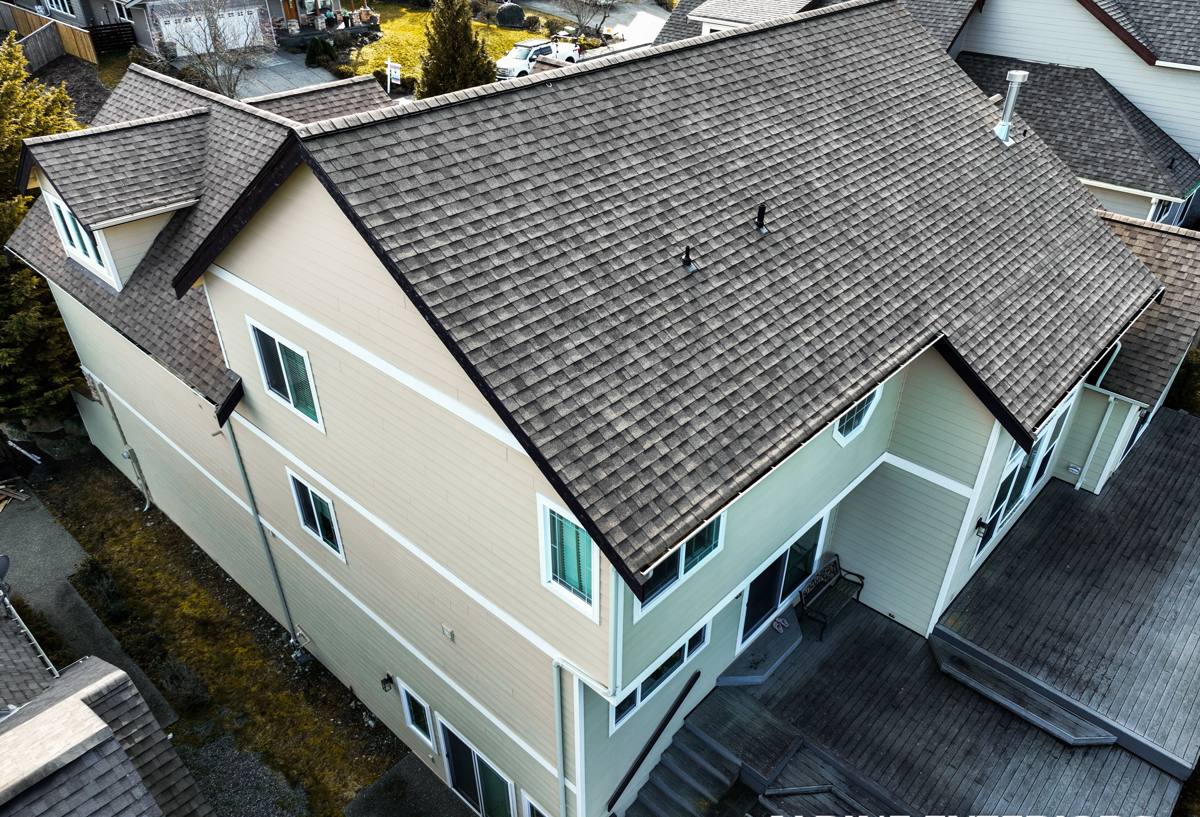
What Driving Rain, Salt Air, and Moss Season Do to Windows
Driving Rain
Most window failures aren't the glass or the frame — they're the transition between the window and the wall. When rain hits a wall at an angle instead of falling straight down, it finds every gap in flashing, every dab of missed caulk, and every low spot in a sill. Over years, that water works its way behind the trim and into the wall framing, often without any visible sign on the interior until the damage is significant.
Salt Air
Homes closer to open water deal with airborne salt that accelerates corrosion on window hardware — hinges, locks, screen frames, and fasteners. It also breaks down cheaper finishes and sealants faster than they'd wear in an inland climate, which is why material choice and hardware quality matter more here than in a lot of other parts of the state.
Moss Season
The long stretch of cool, wet weather each year is exactly what moss and algae need to take hold on north-facing trim, sills, and anywhere water sits instead of draining. Moss holds moisture against wood and painted surfaces far longer than plain rain does, which speeds up rot around window trim that isn't detailed to shed water quickly.
Signs Your Current Windows Are Losing the Fight
- Soft, spongy, or discolored trim or siding directly around a window
- Paint that blisters or peels repeatedly at the same window, even after repainting
- Visible moss or dark staining building up on the sill or trim below a window
- Fogging or moisture between panes of double- or triple-glazed units
- Drafts, whistling, or a noticeable temperature difference near the window in winter
- Windows that stick, won't latch fully, or have hardware that's corroded or seized
- A musty smell in the room, especially after several days of rain
Any one of these on its own might be minor. Several showing up around the same window usually means water has already gotten past the seal, and it's worth having someone look at the wall assembly, not just the window itself.
What a Correct Window Job Actually Involves
Replacing a window looks simple from the outside — old one out, new one in — but the parts that determine whether it lasts are mostly invisible once the trim goes back on.
Sill Pans and Flashing
Every opening should have a sloped sill pan that directs any water that gets past the window to the outside, not into the wall cavity. Flashing tape needs to be integrated with the house's water-resistive barrier in the correct shingle-lap order — top piece over the one below it — so water is always directed outward and down, never trapped behind a layer above it.
Air Sealing vs. Water Sealing
These are two different jobs and both matter. The interior side of the window gets sealed for air and to control condensation; the exterior gets sealed and flashed to manage bulk water. Using the same approach or the same product for both is a common shortcut that causes problems within a few years.
Level, Plumb, and Properly Shimmed
A window that's slightly out of square puts uneven stress on the frame, which can crack seals, bind hardware, and create gaps that widen over time. Shimming needs to support the frame at the right points without bowing it.
Trim and Caulk as the Last Line, Not the Only Line
Caulk and trim should be the finishing touch on a system that's already water-managed underneath — not the thing doing all the work. A window sealed only with a bead of caulk around the outside will eventually leak; caulk alone was never meant to be a primary water barrier.
Choosing the Right Window for a Barkley Home
There's no single "best" window material — the right choice depends on the home's exposure, budget, and how much upkeep the owner wants to take on. Here's how the common options hold up in this climate:
| Material | Performance in Salt Air / Rain | Maintenance | Typical Fit |
|---|---|---|---|
| Vinyl | Good — won't rust or rot; hardware quality varies by brand | Low — occasional cleaning | Most homes; best value |
| Fiberglass | Very good — dimensionally stable, resists expansion/contraction from temperature swings | Low | Homes wanting a longer-term, low-maintenance upgrade |
| Wood-clad (aluminum or vinyl exterior) | Good on the exterior face; interior wood needs to stay dry and finished | Moderate — interior wood upkeep | Homes prioritizing interior wood aesthetics |
| Solid wood (unclad) | Weakest in this climate without diligent upkeep | High — regular refinishing needed | Historic or period-specific homes only |
| Aluminum (uninsulated frame) | Prone to condensation in our damp, cool winters | Low | Rarely recommended for this region |
For most Barkley homes, we steer people toward vinyl or fiberglass with quality hardware, because the maintenance burden of unclad wood in this much rain and moss doesn't make sense unless there's a specific reason — like matching a historic exterior — to take it on.
Energy Performance in a Mild, Wet Climate
Western Washington's climate is milder than a lot of the country, so window shopping guidance written for hot, dry regions doesn't always apply here. Solar heat gain coefficient (SHGC) matters less in Whatcom County than it does somewhere with intense summer sun — what matters more is a low U-factor for keeping heat inside during our long cool season, and a warm-edge spacer system between panes to reduce condensation risk on cold, humid days. We size and spec windows around what actually helps in this climate rather than defaulting to whatever a manufacturer pushes hardest.
Our Process for Custom Window Installs in Barkley
- On-site assessment — we look at existing window condition, wall assembly, exposure direction, and any signs of past water intrusion before recommending anything.
- Measuring and custom fitting — openings in older homes are rarely perfectly square, so windows are measured and, where needed, built or ordered to the actual opening rather than forcing a stock size to fit.
- Removal and opening prep — old windows come out carefully, and we check the framing underneath for rot or moisture damage before anything new goes in. Any damaged framing gets addressed at this stage, not covered over.
- Sill pan and flashing installation — integrated with the existing or repaired water-resistive barrier in proper lapped order.
- Window installation — set level, plumb, and square, shimmed correctly, and fastened per manufacturer specification.
- Air sealing and insulation — the gap between frame and rough opening is sealed and insulated on the interior side.
- Exterior trim and finish sealing — trim is reinstalled or replaced, and exterior sealants are applied as the final water-shedding layer, not the only one.
- Walkthrough — we go over operation, hardware, and any care notes specific to the materials chosen.
Moss-Season Maintenance for Windows and Trim
- Clear debris and moss buildup from sills and horizontal trim surfaces before it holds moisture against the wood or finish
- Check caulk lines annually for cracking or separation, especially after the first hard freeze of the season
- Test that weep holes on vinyl and fiberglass frames are clear and draining, not blocked by dirt or moss
- Look for peeling paint or soft trim early — it's far cheaper to address a small area than a rotted opening
- Keep gutters and downspouts clear so roof water isn't sheeting down across upper windows
Why a Crew That Already Works in Barkley Matters
Window installation is one of those jobs where the difference between "looks fine" and "actually water-managed" is entirely in details you can't see once the trim is back on. A crew that regularly works in Sudden Valley and the surrounding Barkley area has already seen how driving rain, salt air, and moss season play out on homes like yours over multiple seasons — not just at the moment of installation, but years later when a poorly detailed job starts to show. That experience shapes decisions on the job site that a one-time or out-of-area installer has no reason to think about: which direction a wall faces relative to prevailing wind and rain, how much moss buildup to expect on a given trim detail, and where past callbacks in this climate have come from.
If your windows are original to the home, showing wear around the trim, or you're planning a renovation that includes new openings, we're happy to take a look and give you a straightforward assessment — no pressure, no upsell. Reach out for a free estimate using the form below, and we'll walk you through what your home actually needs.