 Sudden Valley
 New-Construction Windows Built for Columbia's Climate
Building new in the Columbia area near Sudden Valley means making a lot of window decisions before the walls are even closed in — and those decisions matter more here than in drier parts of the country. Western Whatcom County sees long stretches of driving rain, salt-tinged air pushing in off the Sound, and a moss season that can run eight months out of the year on shaded, north-facing walls. New-construction windows go in with a full nailing flange and get integrated directly into the wall's weather-resistive barrier, which is exactly why they need to be installed correctly the first time. There's no siding to pull back and redo later if the flashing details are wrong.
We install new-construction windows on homes throughout Sudden Valley and the surrounding Columbia area regularly, which means we already know how the local weather patterns hit different elevations and exposures around the lake and the hillsides above it. That local pattern recognition — which walls take the worst of the wind-driven rain, which sides grow moss fastest, where salt-laden air does the most damage to hardware — is something a crew from outside the area simply doesn't have on day one.
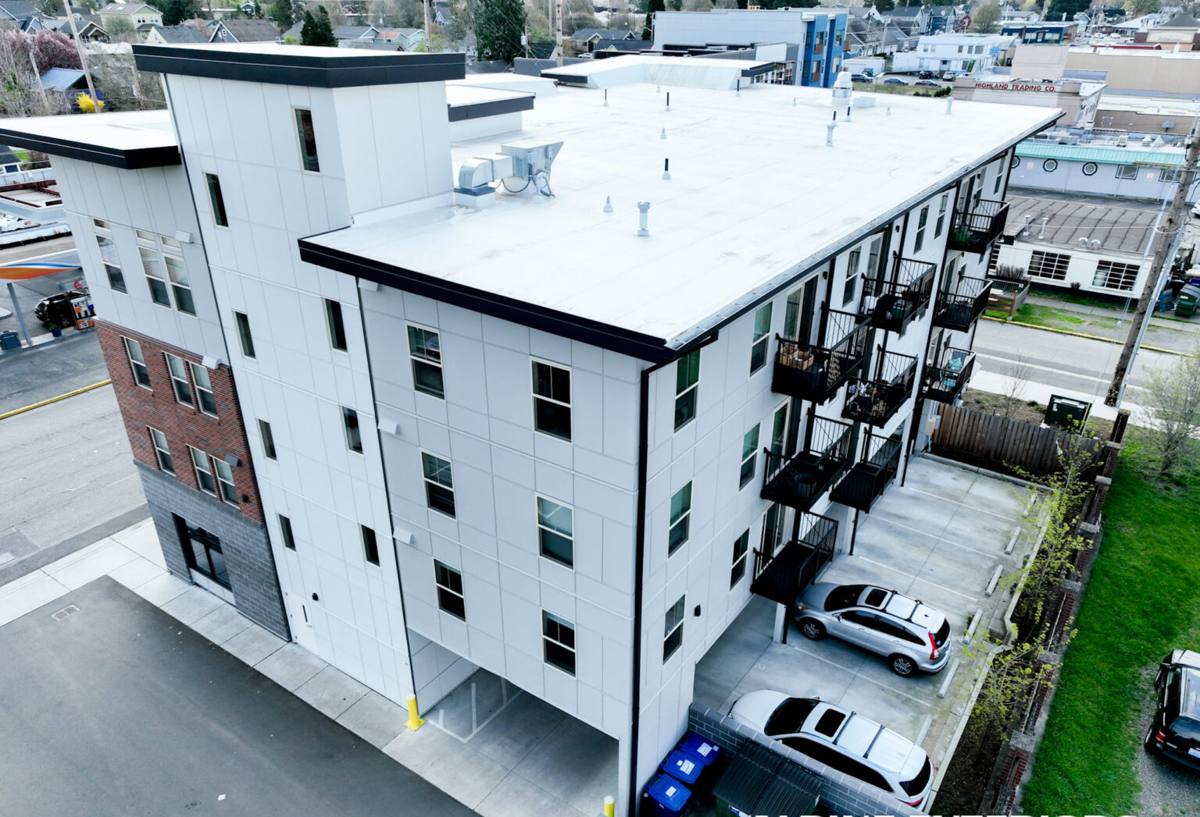
New-Construction vs. Replacement Windows: Why It Matters
New-construction and replacement windows solve different problems, and using the wrong one on a new build creates issues that show up years later.
- New-construction windows have an exterior nailing flange that gets fastened directly to the framing and integrated with house wrap and flashing tape before siding goes on. This is the standard approach for new builds and additions because it creates a continuous, layered water management system from the start.
- Replacement (pocket) windows are designed to fit into an existing frame with the old window removed, without disturbing the siding around the opening. They're the right tool for remodels, not new construction.
Using a pocket-style window on a new build — or skipping proper flange integration to save a step — leaves a weak point in the water management chain that isn't visible until it fails behind the wall.
What Columbia-Area Homes Need From Their Windows
Wind-Driven Rain Resistance
Storms coming off the water don't always fall straight down — driving rain pushes horizontally into wall assemblies, especially on exposed or elevated lots. Windows and their flashing need to be rated and installed for that kind of lateral water pressure, not just a light vertical drizzle.
Moss and Mildew Exposure
Shaded lots near the tree line around Sudden Valley hold moisture longer than open, sun-exposed sites. Moss and algae growth on window sills, frames, and the siding around them isn't just cosmetic — trapped organic growth holds water against wood trim and can accelerate rot if the window wasn't flashed and sealed with enough of a drainage path built in.
Salt Air and Hardware Corrosion
Air carrying salt content, common in this part of the Puget Sound region, is harder on exposed metal hardware — hinges, locks, and cranks — than dry inland air. Window and hardware finishes need to be rated for a coastal-influenced environment, not just a generic residential grade.
Condensation Control
Winter temperature swings between a cold, damp exterior and a warm interior create real condensation risk on lower-grade glass. Homes in this climate benefit from windows with a solid low-E coating and warm-edge spacer system to keep interior glass surfaces above the dew point.
Choosing the Right Window Frame Material
There's no single "best" frame material — the right choice depends on the home's design, budget, and how much upkeep the owner wants to take on. Here's how the common options stack up for this climate specifically.
| Frame Material | Moisture Performance | Maintenance | Typical Fit |
|---|---|---|---|
| Vinyl | Excellent — won't rot or corrode | Low; occasional cleaning | Most new-construction budgets |
| Fiberglass | Excellent — very stable, low expansion | Low | Higher-end builds, larger openings |
| Aluminum-clad wood | Good on exterior; interior wood needs protection | Moderate | Homes wanting a wood interior look |
| Solid wood | Requires diligent sealing and paint upkeep | High | Historic or architecturally specific projects |
For most new builds in this area, we steer owners toward vinyl or fiberglass frames precisely because they don't give moss, mildew, or salt air anything to work with over time. Solid wood can still look great, but we're honest with clients up front that it comes with a real, ongoing maintenance commitment in this climate — that's a trade-off, not a knock on wood as a material.
Glass Packages Worth Considering
The frame gets most of the attention, but the glass package does most of the performance work.
- Double-pane, low-E, argon-filled — the standard baseline for new construction in this climate; solid thermal performance at a reasonable cost.
- Triple-pane — worth considering on north-facing walls or homes with large glass areas where condensation and heat loss are a bigger concern.
- Tempered glass — required by code near doors, low sills, and other hazard locations; your local building department will flag where it's needed.
- Obscure or textured glass — useful for bathrooms or windows close to a neighboring property line, without sacrificing daylight.
Our New-Construction Window Installation Process
Getting a new-construction window right is less about the window itself and more about everything happening around the rough opening. Here's how we approach it:
- Rough opening check. We verify the opening is square, level, and sized correctly before the window ever shows up on site — catching framing issues now is far cheaper than after the window's ordered.
- Weather-resistive barrier prep. House wrap gets cut and folded into the opening with a proper sill pan installed first, so any water that does get past the window has a built-in path back out.
- Flashing integration. Flashing tape goes on in the correct shingle-lap sequence — sill first, then jambs, then head — so every layer sheds water onto the layer below it, never the other way around.
- Window setting and fastening. The window is set into the opening, shimmed plumb and square, and fastened through the nailing flange per the manufacturer's schedule — critical for both structural performance and warranty coverage.
- Sealant and backer rod. Interior and exterior sealant joints are installed correctly sized, not just caulked over gaps, so the seal actually flexes with the building instead of cracking within a season or two.
- Insulation and interior finish prep. The gap between the frame and rough opening gets filled with an appropriate low-expansion foam or fiberglass — overfilling with high-expansion foam can bow vinyl frames, which we specifically avoid.
- Final inspection and operation check. Every window gets opened, closed, and locked to confirm smooth operation before we call the job done.
The Details That Prevent Callbacks
Most window failures we get called out to inspect on other builders' work trace back to two or three recurring mistakes, not a bad window itself:
- Flashing tape applied out of sequence, sending water behind the barrier instead of over it
- Missing or improperly sloped sill pans that let water pool instead of draining out
- Sealant used to compensate for a poorly framed or out-of-square opening instead of fixing the opening
- Fasteners skipped or spaced too wide, letting the frame flex under wind load over time
Every one of these is invisible once the siding goes on — which is exactly why getting it right during the new-construction phase, before that siding closes the wall up, is so important.
Cost Factors on a New-Construction Window Project
| Factor | Why It Moves the Price |
|---|---|
| Window count and size | Larger openings and higher counts mean more material and labor time |
| Frame material | Vinyl is typically the most economical; fiberglass and clad-wood cost more |
| Glass package | Triple-pane and specialty glass (tempered, obscure) add cost per unit |
| Wall height and access | Second-story and vaulted openings take longer to safely stage and install |
| Flashing complexity | Homes with more wall penetrations, corners, or unusual rooflines require more detail work |
We give straightforward, itemized estimates rather than a single lump number, so you can see where the cost is actually coming from and where there's room to adjust the scope if needed.
Why Hire a Crew That Already Works in Columbia and Sudden Valley
Building codes, wind exposure, and moisture behavior aren't identical from one town to the next, even within the same county. A crew that regularly works the Columbia area around Sudden Valley already knows which local wall orientations take the worst rain, how shaded lots near the lake and tree cover affect moss growth, and what inspectors in this jurisdiction expect to see at rough-in. That familiarity shows up in fewer surprises during the build and fewer service calls after move-in. It also means we're a known, findable crew if a warranty question ever comes up down the road — not a name you only recognize from an invoice.
Homeowner Checklist Before Window Delivery
- Confirm final window sizes match the approved framing plan, not just the original design drawings
- Verify egress requirements are met for any bedroom windows per current code
- Decide on grille patterns, hardware finish, and interior color before ordering — changes after ordering delay the whole schedule
- Confirm which windows require tempered glass based on their location relative to doors, floors, and tubs
- Ask your builder how sill pan flashing will be handled at each opening — a specific answer here is a good sign
If you're planning new-construction windows for a home in the Columbia area near Sudden Valley, we're glad to walk the plans with you and put together a free, no-pressure estimate. There's a request form below whenever you're ready to get started.