 Sudden Valley
 Why Custom Windows in Cordata Take a Different Approach
Homes in and around Cordata sit inside the same weather system that shapes the rest of Whatcom County: long stretches of driving rain off the Sound, salt-laden air moving inland, and a moss season that can run eight or nine months out of the year. None of that is exotic — it's just persistent. And persistent moisture is exactly what window systems are bad at handling when they're installed with shortcuts.
"Custom" doesn't mean fancy shapes or oversized picture windows, though we do plenty of those. Most of the time it means a window built to the actual opening in your wall, not a stock size that gets shimmed and packed with extra flashing tape to make it fit. Older Whatcom County homes, especially anything built before standardized window sizing became common, almost always need custom units if you want a clean, weathertight result instead of a patched-together one.
What the Climate Actually Does to a Window Over Time
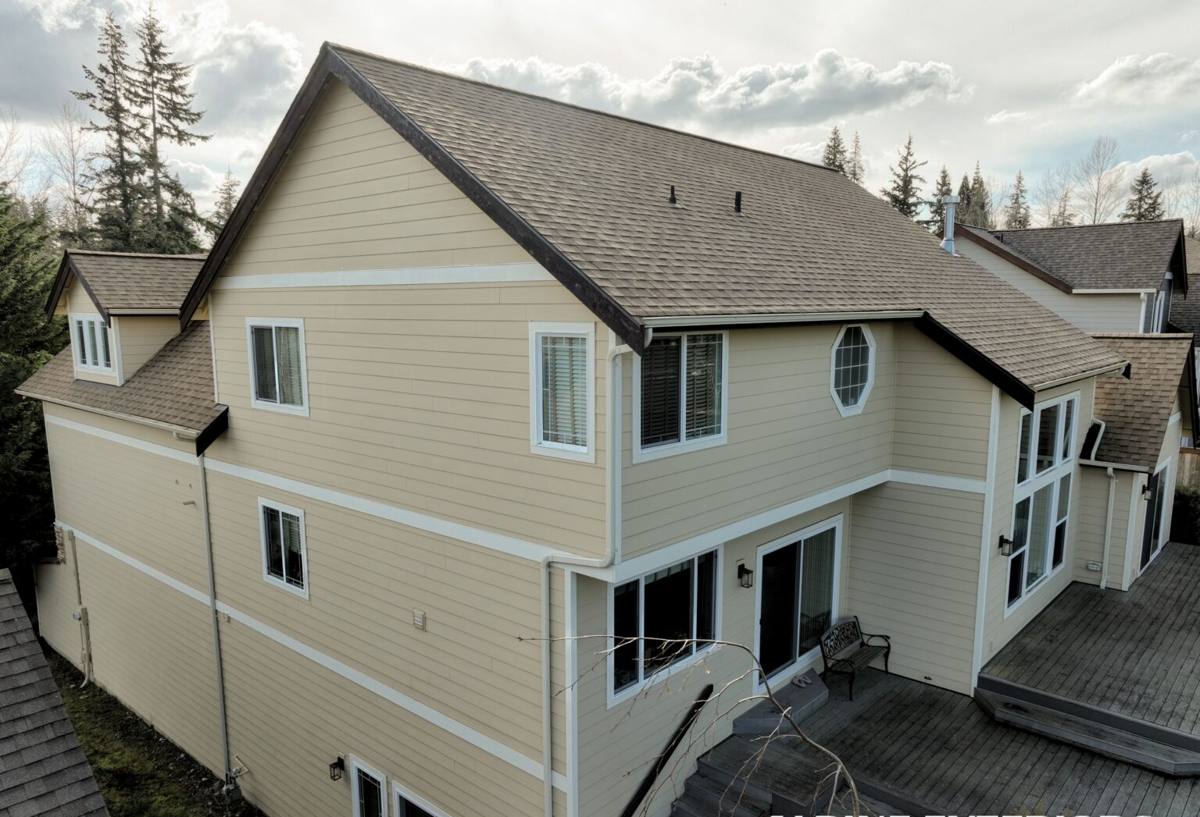
It's rarely the glass that fails first. It's the frame material breaking down, the sealant losing adhesion, or water finding a path behind the trim where it sits against wood sheathing that never fully dries out between rain events. Moss and algae growth on north- and west-facing walls holds moisture against the siding and trim longer than most homeowners realize, which accelerates rot right at the point where the window frame meets the wall — the single most common failure point we see on service calls in this area.
What a Correct Custom Window Job Involves
A window replacement done right is mostly about what happens before the new window ever goes in. The window itself is a manufactured product — reliable if it's made well. The variable is the opening it goes into and how that opening is prepared.
- Removing the old unit without tearing out more siding or trim than necessary
- Inspecting the sill, jack studs, and header for rot or soft wood before anything new goes in
- Correcting any framing that's out of square, which is common in older Cordata-area homes
- Installing a proper flashing sequence — sill pan first, then side flashing, then head flashing, shingle-lapped so water always sheds outward and down
- Sealing and insulating the gap between the window frame and the rough opening without over-packing it, which can bow the frame and cause operational problems
- Reinstalling or replacing trim so the water management plane stays continuous
Skip the sill pan or get the flashing lap sequence backward, and you won't see the problem for a year or two — right up until the drywall or sheathing around the window starts showing damage that costs far more to fix than the window did.
Retrofit vs. Full-Frame Replacement
Not every job needs the same level of work, and a straight answer up front saves homeowners money.
Retrofit (Pocket) Replacement
The new window is installed into the existing frame, which stays in place. This works when the existing frame is solid, square, and free of rot — common in homes with vinyl windows from the last 15-20 years that are failing due to seal or hardware issues rather than water damage.
Full-Frame Replacement
The old window and its frame come out entirely, exposing the rough opening. This is the right call whenever there's any sign of water intrusion, rot, or when we're changing window size or type. In our experience on Cordata-area homes, once a window is over 20-25 years old, there's a meaningful chance the frame needs to come out anyway to properly assess what's behind it.
Frame Material Comparison for This Climate
| Material | Moisture Behavior | Maintenance | Typical Fit for Cordata Homes |
|---|---|---|---|
| Vinyl | Won't rot; performs well if welded corners and drainage are done properly | Low — occasional cleaning | Strong value option for most retrofits and full replacements |
| Fiberglass | Very stable in wet/dry cycling, minimal expansion and contraction | Low | Good fit for larger custom openings or higher-exposure walls |
| Wood-clad | Interior wood needs the exterior cladding to stay intact; any breach invites rot | Higher — cladding seams and interior finish need monitoring | Best where interior wood look is a priority and upkeep is expected |
| Aluminum | Conducts cold and can condense heavily in our winters without a thermal break | Moderate | We steer most homeowners away from it here unless thermally broken |
We're not anti-wood or anti-aluminum — both have a place. But we're honest about the trade-offs: a wood-clad window in a high-exposure Cordata location needs an owner who's willing to keep an eye on the cladding seams, and standard aluminum frames struggle with condensation in a climate this consistently damp. That's a maintenance and comfort conversation, not a knock on any manufacturer.
Glass Packages and Energy Performance
In Whatcom County's climate, the two things that matter most in a glass package are the U-factor (how much heat escapes) and how well the unit resists condensation on cold, damp mornings — which are common here for a good chunk of the year.
- Double-pane, low-E, argon-filled — the standard baseline for most replacement projects; solid performance for the cost
- Triple-pane — worth considering on north-facing walls or rooms with chronic condensation complaints, at a higher material cost
- Warm-edge spacers — reduce the cold band around the glass edge where condensation tends to start first
We size the glass package to the wall it's going in, not a single spec for the whole house. A west-facing wall catching driving rain and wind has different needs than a sheltered interior courtyard window, even on the same home.
What We Commonly Find on Cordata-Area Job Sites
Every neighborhood has its own patterns, and after years of window and siding work through this part of Whatcom County, a few show up repeatedly:
- Sill damage under older aluminum or early-generation vinyl windows where a sill pan was never installed
- Moss and organic buildup on north-facing trim holding moisture against the wall assembly
- Caulk-only "flashing" — sealant applied around the window instead of a proper water-shedding assembly, which fails quietly over years
- Condensation staining on interior sills from older, poorly sealed single-pane or early dual-pane units
- Trim boards painted over rot rather than replaced, hiding the extent of damage until the window comes out
None of this is a knock on the original installers — window and flashing standards have improved a lot over the decades. It's just what a wet coastal climate does to older assemblies over time, and it's exactly what we check for on every job before we quote anything.
Our Process, Start to Finish
- On-site assessment — we look at each opening individually, not just the house as a whole, since exposure varies wall to wall
- Honest scope — retrofit vs. full-frame, and what we expect to find once trim comes off
- Custom measurement and ordering — sized to the actual opening, not a stock dimension
- Removal and inspection — this is where hidden rot or framing issues get caught, before they become a surprise change order
- Flashing and installation — sill pan, side and head flashing, proper shim and seal, no over-packing
- Trim and finish work — matched to the home, sealed at every joint
- Final walkthrough — operation, seal, and cleanup checked before we call it done
What to Ask Before You Sign a Window Contract
- Will you inspect the sill and framing before quoting a final price, or is the quote based on the window alone?
- What's your flashing sequence, and will you use a sill pan on every full-frame replacement?
- Do you replace or repair rotted framing as part of the job, or is that a separate change order?
- What's the warranty on the glass, the frame, and your labor — and are those the same document or different ones?
- Have you worked in this specific area before, and do you know what this climate does to window assemblies over time?
Any local contractor should be able to answer these without hesitation. If a quote seems unusually low, it's worth asking specifically whether flashing and sill work are included — that's the part that gets skipped when a bid is cut too thin.
Why It Matters That We Already Work This Area
A window installed correctly in a dry inland climate can get away with more shortcuts than one installed here. We've spent enough time on roofs and walls throughout Whatcom County to know which details actually matter in a place where rain is frequent, wind-driven exposure is real, and moss has all season to work on anything that traps moisture. That's not a marketing line — it's the reason our flashing sequence, sill pan use, and trim detailing aren't optional add-ons on our quotes. They're standard, because the climate doesn't leave much room to skip them.
If you're weighing a window project for a Cordata-area home — whether it's one problem window or a full-house replacement — we're happy to take a look and give you a straight assessment of what your openings actually need. Reach out for a free, no-pressure estimate using the form below.