 Sudden Valley
 Deck Building in Cordata, Built for the Weather That's Actually Here
A deck in Cordata doesn't fail the same way a deck fails in Arizona or even Seattle. Whatcom County sits close enough to the water that salt air is part of daily life, and the region gets long stretches of driving rain followed by a moss season that can run from fall clear into spring. A deck that isn't built with that in mind will show it within a few years — soft spots underfoot, black streaks on the boards, fasteners bleeding rust, moss creeping up from the ground contact points. We build and repair decks in Cordata knowing exactly what this climate does to lumber, fasteners, and finishes over time, and we design around it from the footings up.
This page is about deck building specifically for Cordata homes — what the local climate demands, what a correctly built deck actually involves, how we approach the job, and why it matters to hire a crew that already knows this neighborhood's conditions rather than one working from a generic playbook.
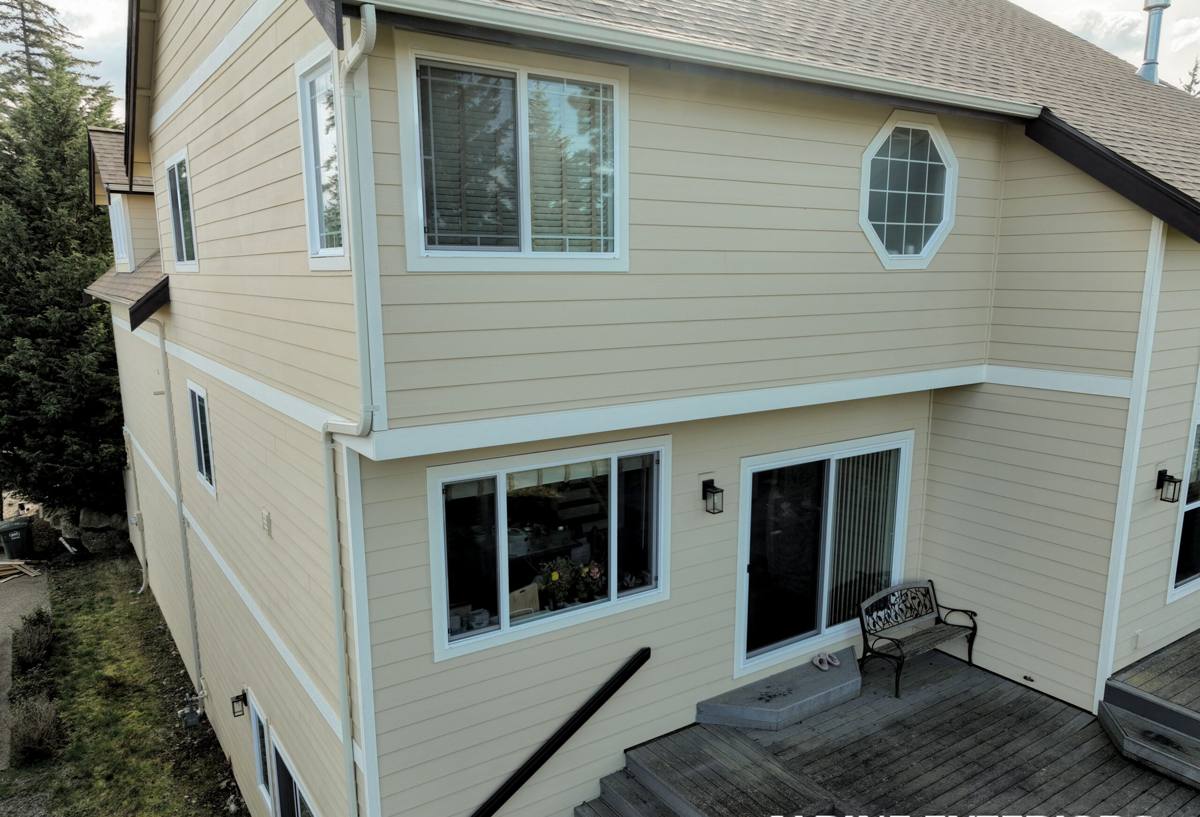
What Salt Air, Driving Rain, and Moss Actually Do to a Deck
Salt Air
Even a few miles inland, airborne salt accelerates corrosion on any metal it touches — deck screws, joist hangers, structural bolts, railing hardware. Standard zinc-coated fasteners can start rusting from the inside of the wood out, which is invisible until a board or a hanger fails. This is why fastener spec matters more here than it does in a dry inland climate.
Driving Rain
Wind-driven rain doesn't just fall straight down — it gets pushed sideways into ledger boards, under flashing, and into any gap where end grain is exposed. Water that gets behind a ledger board or pools on a poorly sloped deck surface doesn't evaporate quickly in our climate; it sits, and that's where rot starts. Drainage and flashing details that would be optional in a drier region are not optional here.
Moss and Sustained Damp
Whatcom County's moss season is long because the combination of shade, moisture, and mild temperatures rarely lets surfaces fully dry out. Moss holds moisture directly against the decking surface, and on wood decking that constant dampness is what drives fungal decay. On composite and PVC decking, moss is mostly a cosmetic and slip-hazard problem rather than a structural one, which is one of the real trade-offs homeowners weigh when choosing materials for a shaded Cordata lot.
Choosing the Right Decking Material for Cordata Conditions
There's no single "best" decking material — the right choice depends on how much shade the site gets, how much maintenance the homeowner wants to do, and budget. Here's how the common options actually perform under our conditions:
| Material | How It Handles Our Climate | Maintenance | Typical Lifespan |
|---|---|---|---|
| Pressure-treated wood | Good if properly sealed and re-sealed; moss and algae readily take hold on shaded boards | Annual cleaning, re-sealing every 1-3 years | 15-20 years with upkeep |
| Cedar | Naturally rot-resistant but still needs finish maintenance in wet, shaded spots | Cleaning and re-staining every 2-3 years | 15-25 years with upkeep |
| Composite decking | Doesn't absorb water or rot; moss grows on the surface film and needs periodic washing | Occasional wash, no sealing or staining | 25-30+ years |
| PVC/capped decking | Fully moisture-resistant surface; best option for heavily shaded, damp Cordata lots | Occasional wash | 25-30+ years |
We install all of these. Our job is to walk the actual site with you — how much sun it gets, which direction the prevailing rain comes from, what's overhead — and give you an honest read on which material makes sense for that specific spot, not a blanket recommendation.
What a Correctly Built Deck Involves
Most deck problems we get called out to fix aren't decking-board problems — they're structural or detailing problems that took years to show up. A deck built correctly for this climate includes:
Footings and Framing
Footings need to be sized and set below frost depth with proper drainage around them so standing water doesn't undermine the post base over time. Framing lumber should be rated for ground contact where it's close to grade, and joists need consistent spacing so the decking surface doesn't flex or bounce.
Ledger Board Attachment
The ledger board — where the deck attaches to the house — is the single most common failure point on decks in wet climates. It needs proper flashing that directs water away from the house band board, correct fastener spacing and type, and a gap or flashing detail that keeps water from wicking into the connection. Get this wrong and you get hidden rot behind the siding, not just a deck problem.
Fasteners and Hardware
In a salt-air environment, we use corrosion-resistant fasteners and joist hangers rated for the exposure — this is a small cost difference upfront that prevents hardware failure years down the line.
Drainage and Slope
The decking surface should have a slight slope away from the house so water sheds instead of pooling. On lower decks or decks over living space, proper under-deck drainage keeps water from collecting where it can't dry out.
Railings and Stairs
Beyond code compliance for height and baluster spacing, railing post connections need the same attention to fastener corrosion resistance and water intrusion as the rest of the structure.
Our Deck Building Process in Cordata
- On-site assessment. We walk the property, check sun/shade exposure, drainage patterns, and how the deck will tie into the house.
- Material and design conversation. We go over decking material trade-offs, layout, and railing options based on your budget and how you'll use the space.
- Permitting. Deck permits are typically required for structures above a certain height or attached to the home; we handle the paperwork and inspections.
- Footings and framing. Built to proper depth and spec for this soil and climate, with corrosion-resistant hardware throughout.
- Flashing and ledger detail. This is where we spend extra care — it's the step that determines whether the deck stays dry at the house connection for the next 20 years.
- Decking, railing, and finish work. Installed to manufacturer spec for whichever material you've chosen.
- Final walkthrough. We go over maintenance expectations specific to the material you chose before we consider the job done.
Problems We Commonly See on Existing Cordata Decks
- Ledger boards with hidden rot from missing or failed flashing
- Rusted joist hangers and fasteners on decks built with standard-grade hardware
- Moss buildup on shaded wood decking that was never sealed or resealed on schedule
- Decking surfaces with no slope, leaving standing water after every rain
- Railing posts loosening from water intrusion at the post-to-frame connection
- Soft or spongy boards near the house where water runs off the roofline onto the deck
If any of that sounds familiar, it's usually cheaper to address it now than after it turns into a full rebuild — a deck inspection can tell you which category you're in.
Deck Maintenance for Whatcom County's Climate
Whatever material you choose, a little seasonal attention goes a long way in this climate. A basic maintenance routine:
- Sweep debris off the deck regularly, especially in fall — trapped leaves hold moisture and feed moss
- Wash the surface at least once a year to remove moss and algae before it gets a foothold
- Check and clear any drainage points or gaps between boards so water isn't pooling
- For wood decking, inspect the finish annually and reseal on the schedule the product calls for
- Look at the ledger board and post bases once a year for early signs of staining or softness
- Tighten or replace any hardware showing rust before it compromises the connection
Why Hire a Crew That Already Works in Cordata
Deck building isn't one-size-fits-all, and a crew that mostly builds in drier parts of the country will default to specs that undersell what this climate needs — standard fasteners instead of corrosion-resistant ones, minimal flashing instead of a full ledger detail, decking choices that don't account for shade and moss. We work throughout Sudden Valley and the surrounding Whatcom County area, including Cordata, and we build every deck to hold up against the salt air, driving rain, and moss season that are simply part of living here. That's not an upsell — it's what correct actually looks like in this region.
If you're planning a new deck or want an honest read on the condition of an existing one, we're happy to come take a look. Fill out the form below for a free, no-pressure estimate.