 Sudden Valley
 Asphalt Shingle Roofing Built for Deming's Climate
Deming sits in that stretch of Whatcom County where the Nooksack River valley meets the foothills climbing toward Mt. Baker. Homes here get a particular mix of weather: long stretches of soaking rain in the fall and winter, damp air that lingers under tree cover most of the year, and enough moisture-laden wind moving up from the Sound and the bay that salt exposure is a real factor on roofing materials, not just a coastal talking point. Add in a moss season that can run eight months or longer in shaded, tree-covered lots, and you have a set of conditions that will find every weakness in a poorly installed roof within a few years.
Asphalt shingle roofing remains the right choice for the large majority of Deming homes — it's proven, it's serviceable, and when installed correctly it handles this climate well. The problems we get called out to fix almost never come from the shingle material itself. They come from shortcuts in the install: wrong or missing underlayment, poor ventilation, flashing details skipped to save time, or a moss and debris problem nobody planned for at the design stage. This page walks through what a correct asphalt shingle roof looks like for a Deming property, and why the details matter more here than in a drier part of the state.
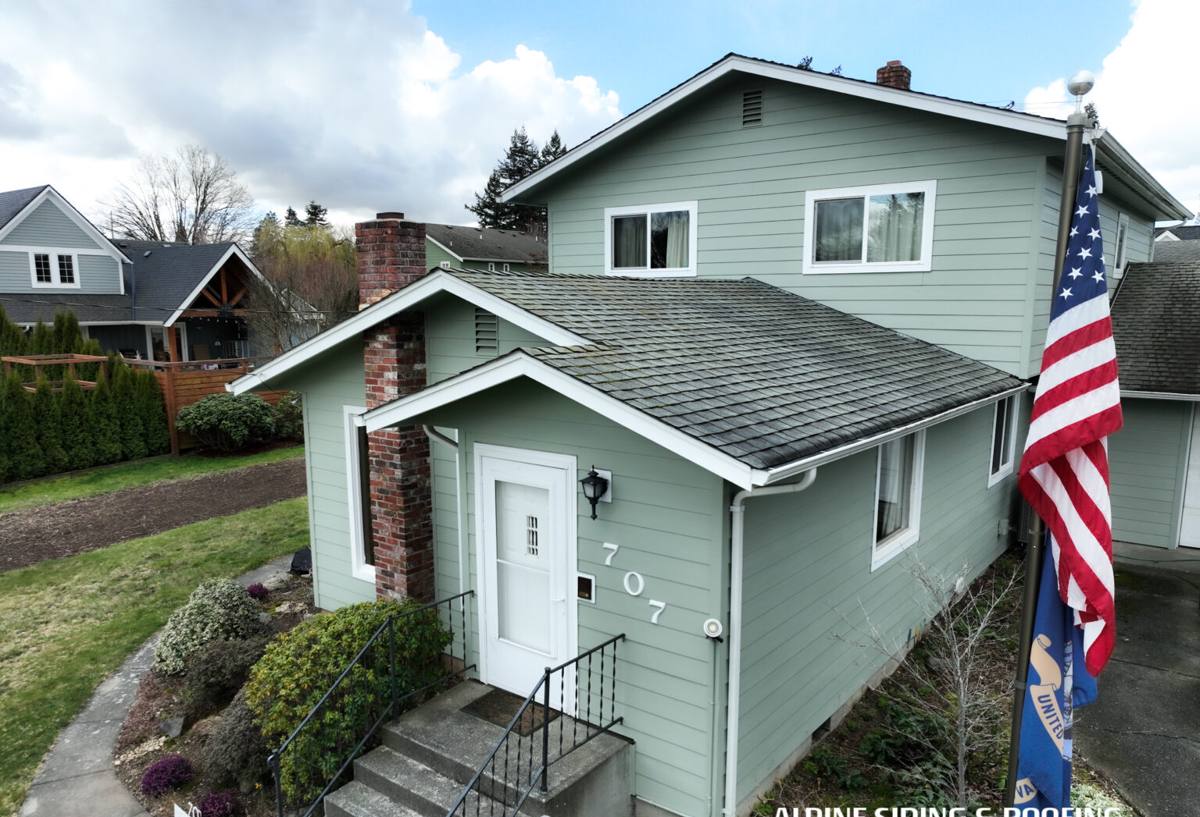
What Deming's Weather Actually Does to a Roof
Driving Rain and Wind-Driven Moisture
Rain in this part of Whatcom County rarely falls straight down. Wind pushes it sideways, up under shingle tabs, and into any gap in the flashing around chimneys, skylights, and wall intersections. A roof that would hold up fine in a calmer climate can leak within a few seasons here if the underlayment and flashing weren't installed with wind-driven rain specifically in mind.
Salt-Tinged Air and Metal Fasteners
Homes closer to the water and lower valley areas pick up salt-laden air on windy days, and that air travels further inland than most homeowners expect. Salt exposure accelerates corrosion on exposed metal — nail heads, flashing, drip edge, and vent stacks. Over years, corroded fasteners loosen, and loosened fasteners are how wind gets a grip on a shingle edge and starts peeling it back.
Moss, Shade, and Organic Debris
Deming's tree cover is part of what makes it a great place to live, but it also means roofs stay shaded and damp longer after every rain. Moss doesn't just look bad — it lifts shingle edges as it grows, holds moisture against the shingle surface, and works its way under tabs where it can compromise the seal. Combine moss with pine needles, fir cones, and leaf litter, and a roof with poor drainage detailing will trap organic material in valleys and around penetrations, which is where hidden rot usually starts.
What a Correct Asphalt Shingle Install Includes
A shingle roof is a system, not a single product. Every layer has a job, and skipping or shortcutting any one of them is what causes the early failures we get called to repair. For Deming's climate, we treat the following as non-negotiable:
- Ice-and-water or self-adhering membrane at eaves, valleys, and around all penetrations — the areas most exposed to wind-driven rain and standing moisture
- Synthetic underlayment across the full deck, not felt paper, for a more reliable secondary water barrier during the months the shingles are exposed before final weatherproofing
- Balanced attic ventilation — intake at the eaves and exhaust at the ridge, sized to the actual attic volume, so moisture doesn't condense on the roof deck from underneath
- Corrosion-resistant flashing and fasteners at every chimney, wall step, skylight, and vent, sized and lapped correctly for this region's wind and rain direction
- Proper nailing pattern — correct nail count, placement in the manufacturer's nailing zone, and fastener length for the deck thickness
- Starter strip and drip edge installed at every eave and rake, not just the front-facing roof planes
None of this is exotic. It's standard, well-documented roofing practice. The issue in older or lower-bid installs isn't usually ignorance — it's time pressure. Every one of these steps takes longer to do right, and on a roof that gets covered up within days, cutting corners here is invisible until the first hard windstorm or the third moss season.
Choosing the Right Shingle for a Deming Roof
Not every asphalt shingle product performs the same way under heavy moss pressure and wind-driven rain. We generally steer Deming homeowners toward a few key features rather than a specific brand name:
| Feature | Why It Matters Here |
|---|---|
| Algae-resistant granules (often listed as "AR") | Slows moss and algae growth on shaded, damp roof planes — standard on most quality shingles now, but worth confirming |
| High wind rating | Deming gets exposed to seasonal windstorms; a higher wind-rated shingle with proper nailing resists tab lift and blow-off |
| Laminated (architectural) construction | Thicker, multi-layer shingles shed wind-driven rain better than a single-layer 3-tab and hold up longer under repeated wet-dry cycling |
| Manufacturer warranty structure | Look for coverage that includes wind and algae provisions, not just manufacturing defects — and confirm what voids it (usually improper ventilation or installation) |
We're honest with clients about trade-offs. A heavier architectural shingle costs more up front, but on a shaded Deming lot with real moss pressure, the difference in service life and appearance retention over 15-20 years is usually worth it. On a more open, sun-exposed lot with less moss risk, a solid mid-grade shingle installed correctly can be the more practical choice. This is a conversation, not a sales pitch — we'll tell you what your specific roof and tree cover actually call for.
Our Process for a Deming Roofing Project
1. On-Site Inspection and Assessment
We walk the roof and the attic, not just one or the other. That means checking current ventilation, deck condition, existing flashing, and moss/debris patterns specific to your lot's sun exposure and tree cover. Roof problems in this climate are often as much about drainage and airflow as they are about the shingles themselves.
2. Written Scope and Straight Answers
You get a clear, itemized description of what's being replaced, what underlayment and flashing package is included, and why — no vague line items. If your roof has a ventilation problem contributing to premature wear, we'll say so before the tear-off starts, not after.
3. Tear-Off and Deck Inspection
Full tear-off lets us actually see the deck. Soft spots, rot around old flashing, or damage from a long-standing moss problem all get addressed at this stage — patching plywood over rot and shingling on top of it is how a roof fails again in five years instead of twenty.
4. Correct Layering, Flashing, and Ventilation
This is where the details from the section above get executed — membrane at vulnerable areas, synthetic underlayment across the deck, new flashing where needed, and ventilation corrected if it was inadequate.
5. Final Walkthrough
We walk the finished roof with you, confirm the scope was completed as written, and go over basic maintenance specific to your lot — mainly moss and debris management, covered below.
Living With an Asphalt Shingle Roof in a Moss-Heavy Climate
Even a correctly installed roof needs some seasonal attention in a place like Deming. This isn't about creating maintenance work — it's about protecting the investment you already made.
- Clear needles, leaves, and cones from valleys and gutters at least twice a year, more often under heavy conifer cover
- Address moss growth early with gentle, roof-safe methods — never pressure washing, which strips granules and shortens shingle life
- Keep overhanging branches trimmed back to reduce shade, debris load, and physical abrasion on the shingle surface
- Check attic ventilation isn't blocked by insulation or debris, especially after any attic work
- Have flashing and penetration seals inspected every few years, since these are the first points of failure even on a well-built roof
A roof that gets this level of basic attention will consistently outlast one that doesn't, regardless of how good the original installation was.
What Affects the Cost of a Deming Roofing Project
We don't quote roofing jobs over the phone, because the honest price depends on specifics we can only confirm on site. But the main factors that move the number are consistent from job to job:
| Factor | Effect on Project |
|---|---|
| Roof pitch and access | Steeper roofs and difficult access (trees, tight lot lines) increase labor time and safety setup |
| Existing deck condition | Rot or soft decking found during tear-off adds material and labor to replace it properly |
| Number of penetrations | Chimneys, skylights, and multiple vent stacks each need individual flashing work |
| Ventilation corrections | Adding intake or exhaust venting where the original system was inadequate |
| Shingle grade selected | Standard architectural vs. premium algae-resistant, higher wind-rated products |
| Layers to remove | Tear-off of multiple existing layers takes longer than a single-layer removal |
Broadly, most straightforward single-layer tear-off and reroof projects in this region fall in a wide middle range, with steep, complex, or deck-repair-heavy jobs running higher. We'll give you real numbers after a walk-through, not a guess.
Why a Crew That Already Works Deming Matters
A roofing crew based somewhere else can absolutely install a shingle roof. What they usually can't do as well is anticipate the specific pattern of problems that shows up on this side of Whatcom County — which lots hold moss the longest, where wind-driven rain tends to find weak flashing first, and how much ventilation a given attic layout actually needs given the moisture load this climate produces. That knowledge comes from doing the work here repeatedly, not from a manufacturer's install manual alone. It's also why we build every quote around what your specific roof and lot need, rather than a one-size answer.
Get a Straight Answer About Your Roof
If your Deming roof is showing granule loss, moss buildup, curling shingles, or you're just planning ahead before a problem starts, we're happy to take a look. There's a free, no-pressure estimate form below — tell us a bit about your roof and we'll set up a time to walk it with you.