 Sudden Valley
 Building Decks That Hold Up in Edgemoor's Climate
Edgemoor homes sit in one of the wetter, greener corners of Whatcom County, and a deck built here has to earn its keep against conditions that a dry-climate deck never faces. Driving rain off the water, a long stretch of the year where surfaces barely dry out, and a moss season that seems to start earlier and end later every year all work against wood, fasteners, and framing that weren't built with this specific climate in mind. We've built and repaired decks throughout the Sudden Valley area long enough to know which details matter here and which corners get cut on decks that fail early.
This page covers what a deck in Edgemoor actually needs, what correct construction looks like, and how our process works from first look to final walkthrough. It's meant to help you ask better questions of any contractor you're considering, including us.
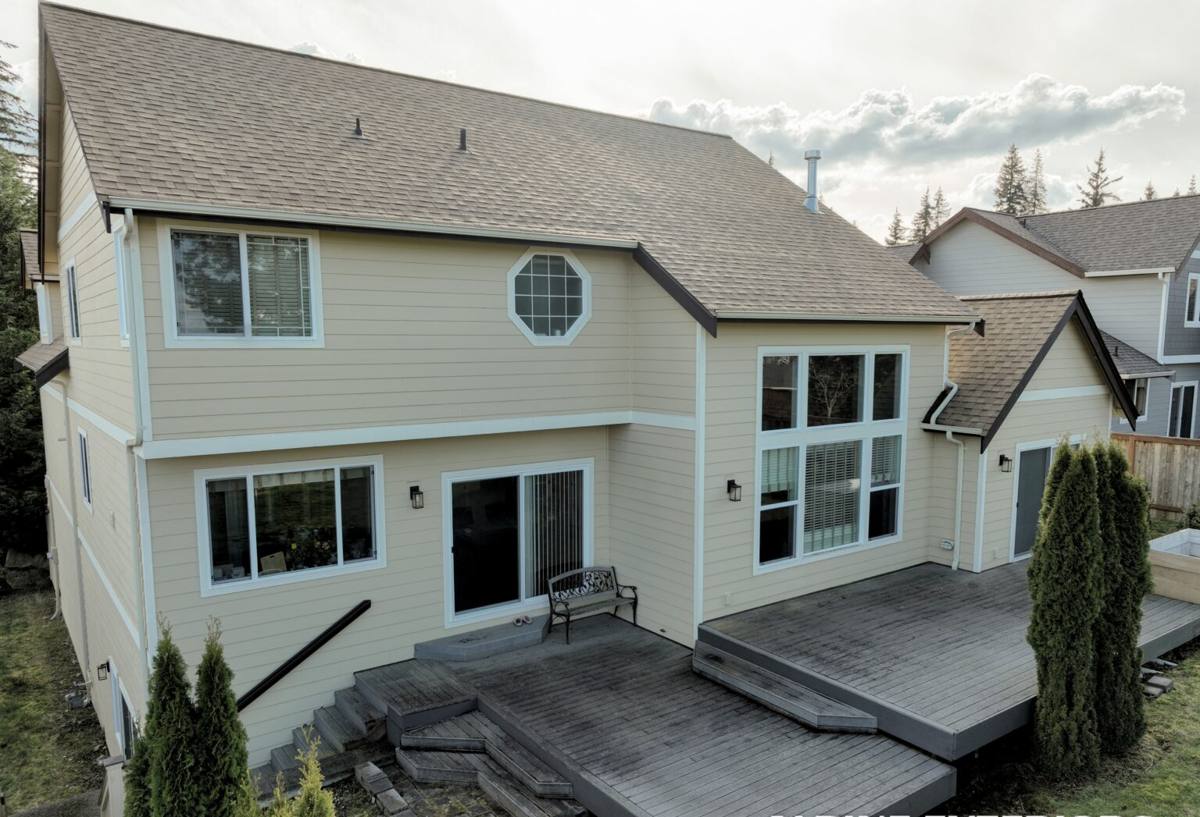
What the Local Climate Does to a Deck
Whatcom County's marine climate brings a steady, low-intensity moisture load rather than dramatic storms — that's actually harder on a deck than occasional heavy weather, because surfaces and framing stay damp for extended periods instead of getting a chance to dry between rain events. Salt-tinged marine air off the Sound corrodes unprotected fasteners over time, driving rain finds its way into any gap in flashing or end-grain that isn't sealed, and shaded, tree-covered lots — common throughout Edgemoor — grow moss and algae on decking, framing, and even structural connectors faster than most homeowners expect.
None of this means a deck can't hold up here. It means the build has to account for moisture from day one, not treat it as an afterthought solved with a coat of sealant.
The Three Things That Fail First
- Ledger board connections — where the deck attaches to the house is the single most common failure point when flashing is skipped or done poorly
- Fasteners and hardware — standard or mismatched hardware corrodes and weakens under sustained damp conditions and salt-influenced air
- Joist tops and end grain — horizontal surfaces that hold water and end cuts that were never sealed are where rot typically starts
Choosing the Right Decking Material
There's no single "best" decking material for every Edgemoor property — the right choice depends on how much sun the site gets, how much upkeep you want to do, and your budget. We'll walk through the honest trade-offs rather than push whatever has the best margin.
| Material | How It Handles Our Climate | Maintenance | General Cost Range |
|---|---|---|---|
| Pressure-treated wood | Affordable and strong, but needs consistent sealing to resist moisture and moss in shaded spots | Annual cleaning and re-sealing recommended | Lowest upfront cost |
| Cedar | Naturally moisture- and insect-resistant, ages gracefully, but still needs periodic care in wet, shaded areas | Cleaning and oil/stain every 1-2 years | Mid-range |
| Composite decking | Resists rot and doesn't need sealing, but can still grow surface moss/algae in shaded, damp spots without cleaning | Periodic washing, no sealing needed | Higher upfront, lower long-term labor |
| PVC/capped decking | Fully resists moisture absorption, best option for heavily shaded or low-sun lots | Occasional washing | Highest upfront cost |
We're upfront that we steer homeowners away from certain lower-grade composite and uncapped wood-plastic products in consistently shaded, damp locations — not because the product is inherently bad, but because some formulations are more prone to surface moisture absorption and staining in exactly the conditions common around Edgemoor's tree-covered lots. That's a maintenance and appearance trade-off worth knowing about before you buy, not a reason to avoid composite decking altogether.
What Correct Deck Construction Actually Involves
A deck that looks finished on day one and a deck that's still solid in fifteen years are built differently underneath, even if the surface boards look identical. The parts you can't see are what determine how long it lasts in this climate.
Footings and Foundation
Footings need to be sized and set to local frost depth and soil conditions, and on sloped or uneven Edgemoor lots — which are common given the terrain around the lake and surrounding hillsides — that often means individual footing depths vary across a single deck. Skipping proper footing depth or using undersized concrete piers is one of the most common shortcuts we see on older decks brought in for repair.
Ledger Flashing
The ledger board connection to the house needs proper flashing — typically a metal Z-flashing integrated with the house's existing water barrier — so that rain running down the siding is directed away from the connection point rather than trapped behind it. This single detail is responsible for more structural deck failures than almost anything else, because a hidden leak here can rot both the ledger and the house framing behind it before it's ever visible.
Fasteners and Hardware
We use corrosion-resistant, code-rated hardware and fasteners rated for exterior and treated-lumber contact — mixing incompatible metals (like standard steel screws in ACQ-treated lumber) accelerates corrosion and is a common cause of early hardware failure in wet marine climates.
Ventilation and Drainage
Decks built low to the ground or over patios need airflow underneath to let framing dry out between rain events. Poor under-deck ventilation combined with our long damp season is a direct contributor to moss growth and slower wood decay underneath a deck that looks fine on top.
How Our Process Works
1. On-Site Assessment
We walk the property, look at sun exposure, slope, drainage patterns, and how the deck will tie into the house, and talk through what you actually want to use the space for. For repairs or rebuilds, we also check the condition of existing framing and the ledger connection before quoting anything.
2. Design and Material Selection
We lay out size, layout, railing style, and material options based on your budget and how much maintenance you want to take on long-term, with honest trade-offs explained up front — not upsold after the fact.
3. Permitting
Most new decks and significant rebuilds in Whatcom County require a building permit, and we handle that process as part of the job so you're not left navigating it alone.
4. Construction
Footings, framing, flashing, and decking are installed in that order, with inspections at the structural stages where required. We don't cover framing with decking until the parts that won't be visible later are done right.
5. Final Walkthrough
We walk the finished deck with you, check railing and stair code compliance, and go over maintenance expectations specific to the material you chose.
Managing Moss and Moisture Long-Term
Even a correctly built deck needs some seasonal attention in a climate like ours. Moss and algae aren't a sign of bad construction — they're a normal result of a long wet season on any exterior wood or composite surface — but left unaddressed they hold moisture against the deck surface and accelerate wear.
- Sweep debris and leaf litter off the deck regularly, especially in fall — trapped organic material holds moisture and feeds moss growth
- Clean the deck surface at least once a year with a cleaner appropriate to the material (wood vs. composite cleaners are different)
- Keep gutters and downspouts near the deck clear so runoff isn't draining directly onto it
- Check under-deck areas periodically for standing water or blocked airflow
- Re-seal wood decking on the schedule appropriate to the product — don't wait until it's visibly gray and dry
- Have railing posts and stair connections checked periodically, since these take the most structural stress over time
Repairs vs. Rebuilds
Not every aging deck needs to be torn out. If the footings and main framing are sound and the problems are limited to surface boards, railings, or isolated rot, targeted repair is usually the more cost-effective route. If the ledger connection has been compromised, footings are undersized, or rot has spread through multiple framing members, a rebuild is typically the safer and more economical long-term choice rather than repeatedly patching a structure with a compromised foundation. We'll tell you honestly which category your deck falls into rather than defaulting to whichever option is more work for us.
Why Local Experience in Edgemoor Matters
A contractor who's worked decks throughout the Sudden Valley and Edgemoor area already knows how the terrain, tree cover, and lake-influenced weather here behave differently from a dry inland site or even other parts of Whatcom County. That means fewer surprises during the build — footing depths that account for the actual soil and slope conditions on your lot, flashing details sized for how hard and how often it rains here, and material recommendations based on how a given product has actually performed on similar Edgemoor properties over time, not just a manufacturer's spec sheet. It also means a crew that's still reachable years later if something needs a look, rather than a contractor who worked the area once and moved on.
Get a Free Estimate
If you're planning a new deck or need an honest look at one that's showing its age, we're happy to walk the property and give you a straightforward assessment — no pressure, no inflated scope. Use the form below to request a free estimate for deck work in Edgemoor or anywhere in the Sudden Valley area.