 Sudden Valley
 Siding Built for the Realities of Happy Valley's Climate
Homes in Happy Valley face a specific combination of weather stress that doesn't show up the same way in the drier parts of Washington. Like much of western Whatcom County, this area sits inside a marine climate zone: salt-tinged air drifts in off the Sound, rain frequently arrives sideways during fall and winter storms instead of falling straight down, and shaded, moisture-holding surfaces support moss and algae growth for much of the year. Siding here isn't decoration — it's the first and most exposed layer of a building envelope that has to keep doing its job for decades, not just look good for a photo the day it's installed.
James Hardie fiber cement siding is the only product we install, on every job we take on in Happy Valley and the surrounding Sudden Valley area. That's not a marketing position — it's a decision built around what actually holds up in this climate without turning into a recurring maintenance project for the homeowner.
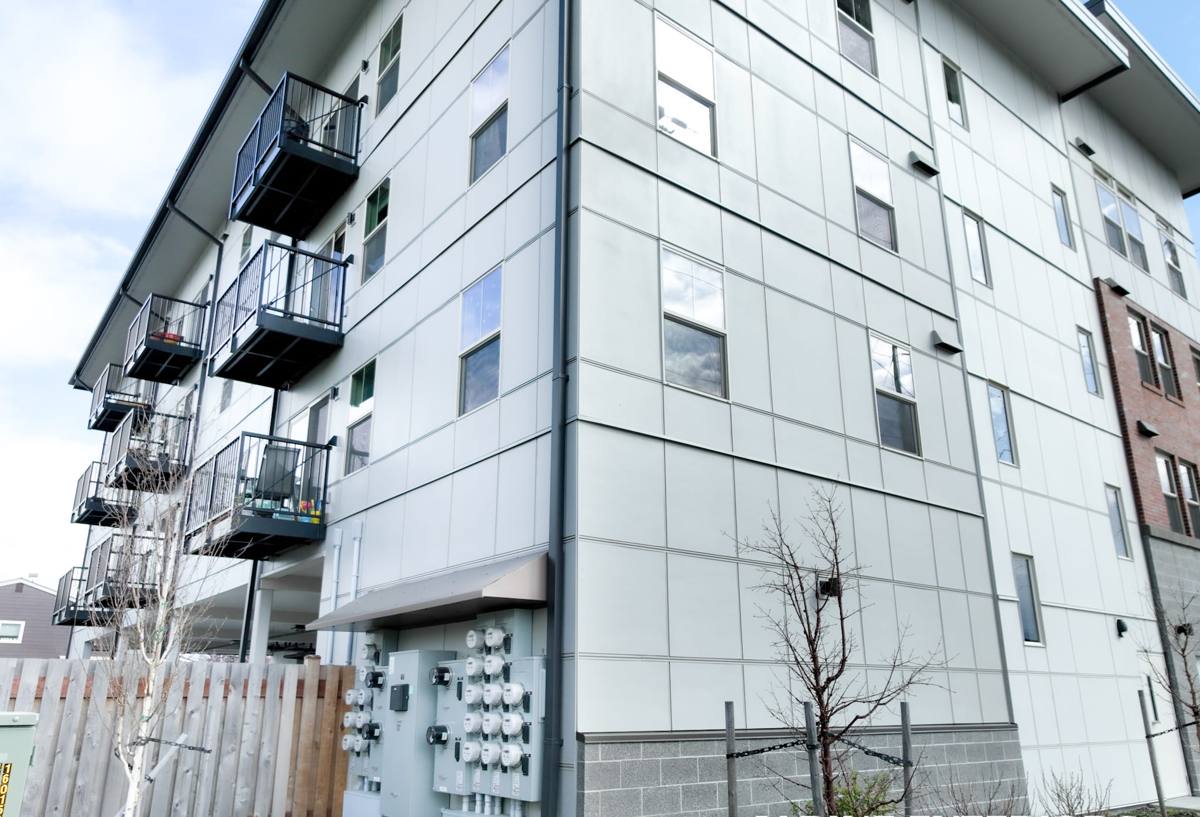
What Salt Air, Driving Rain, and a Long Moss Season Do to a Home
Each of the three stressors in this climate attacks siding a different way, and a siding system only earns its keep if it can handle all three at once, year after year.
Salt Air and Moisture Cycling
Salt-influenced air doesn't just corrode metal fasteners and flashing over time — it also changes how siding absorbs and releases moisture. Materials that swell when wet and shrink when they dry go through that cycle more often here, and every cycle stresses paint film, joints, and fastener holes a little more. Siding that can't manage that swelling and shrinking predictably starts to show cracking, popped fasteners, and finish failure well before its expected lifespan.
Driving Rain and Wall Assemblies
Wind-driven rain doesn't behave like a gentle shower running down a wall. It gets pushed sideways and upward into laps, seams, and penetrations — around windows, at corner boards, behind trim. A siding system is only as good as its weakest water-management detail, which is why the flashing, gaps, and drainage behind the siding matter as much as the siding material itself.
The Long Moss Season
North- and shade-facing walls, areas under tree canopy, and anywhere airflow is limited stay damp for extended stretches in this climate. That's exactly the environment moss, algae, and mildew need to establish. Once organic growth takes hold on a porous or absorbent surface, it holds even more moisture against the wall, which accelerates whatever damage is already happening underneath.
| Climate Stressor | What It Does to Siding | How a Correctly Installed Hardie System Responds |
|---|---|---|
| Salt-influenced marine air | Accelerates corrosion of fasteners/flashing; stresses paint and joints through repeated moisture cycling | Fiber cement doesn't rot or corrode; ColorPlus finish is factory-baked for UV and moisture resistance, reducing the cycling that breaks down field-applied paint |
| Wind-driven, sideways rain | Forces water into laps, seams, and trim penetrations that vertical-only water management misses | Correctly detailed flashing, laps, and gaps built for this climate's HZ5 exposure rating |
| Long moss/algae season | Sustained dampness on shaded walls feeds organic growth, which then holds moisture against the substrate | Dense, engineered fiber cement resists moisture absorption far better than wood-based products, slowing the conditions moss needs to take hold |
Why We Install Only James Hardie Fiber Cement Siding
We don't offer a menu of siding brands. We install James Hardie, and only James Hardie, because it's the product we trust to perform under exactly the conditions described above without asking the homeowner to babysit it.
The HZ5 Engineering Advantage
James Hardie engineers its siding by climate zone, and the Pacific Northwest falls under the HZ5 line, built specifically for regions with sustained moisture exposure. That's a meaningful difference from a generic siding product engineered for an average national climate — HZ5 panels and planks are formulated and tested against the wet, cool, moss-prone conditions Whatcom County actually delivers.
ColorPlus Factory Finish
Most siding failures we see aren't the base material giving out — they're the finish failing first, which then exposes the substrate underneath. James Hardie's ColorPlus finish is baked on in a controlled factory environment, not applied on a jobsite where weather, temperature, and application quality all vary. That finish is backed by its own warranty against fading and peeling, which matters in a climate that puts real UV and moisture stress on exterior paint film.
Non-Combustible, Dimensionally Stable
Fiber cement doesn't burn, doesn't attract wood-boring insects, and doesn't warp or swell the way wood-based sidings can when they take on moisture repeatedly. Combined with a transferable warranty, that adds up to a product built to be a one-time investment rather than a recurring maintenance line item.
What a Correct Installation Involves
James Hardie siding performs the way it's supposed to only when it's installed to the manufacturer's specifications for this climate zone. A rushed or generic install can undercut even the best material.
Flashing and Water Management First
Before a single piece of siding goes up, every window, door, and penetration needs correctly lapped flashing so water sheds outward instead of tracking behind the cladding. This is the step that gets skipped most often on lower-quality jobs, and it's the one that matters most in a driving-rain climate.
Proper Fastening and Gaps
James Hardie specifies exact fastener types, spacing, and placement, along with required gaps at butt joints and trim to allow for the material's normal expansion and contraction. Fastening too tight, too loose, or in the wrong location voids manufacturer warranty coverage and creates the exact stress points that lead to early failure.
Drainage Behind the Cladding
In a climate where walls stay damp for extended periods, giving incidental moisture a path to drain and dry out behind the siding — rather than trapping it against the sheathing — is what separates a durable installation from one that looks fine for a few years and then doesn't.
- Weather-resistant barrier installed and lapped correctly before siding goes up
- Flashing at every window, door, and roof-to-wall transition, lapped to shed water down and out
- Manufacturer-specified fastener type, length, and spacing followed exactly
- Correct gaps maintained at all butt joints, corners, and trim for expansion
- Bottom edge of siding held at the proper clearance from grade, decks, and roof lines
- Caulking limited to where James Hardie actually calls for it, not used to mask bad joints
Our Process for Happy Valley Projects
Every project follows the same sequence, whether it's a full re-side or a targeted section replacement.
- On-site assessment. We walk the exterior, check the condition of the existing siding, sheathing, and trim, and look specifically for the moisture and moss patterns common on this type of lot and orientation.
- Written estimate. You get a clear scope of work and pricing before anything is scheduled — no vague allowances that turn into surprise costs later.
- Prep and water management. Old siding comes off, the wall assembly is inspected, and any needed sheathing repair or weather-resistant barrier work happens before new material goes up.
- James Hardie installation to spec. Flashing, fastening, and gaps are done to manufacturer standard for the HZ5 climate zone, not shortcut for speed.
- Final walkthrough. We review the finished work with you and make sure trim, caulking, and touch-ups meet the standard we hold ourselves to.
Cost Factors for a Happy Valley James Hardie Project
Every home is different, but the same handful of factors drive most of the price variation we see on projects in this area.
| Factor | Why It Affects Cost |
|---|---|
| Tear-off vs. install over existing siding | Full removal adds labor and disposal but is often necessary if the wall assembly needs inspection or repair |
| Siding profile (lap, shingle, panel) | Some profiles take more time per square foot to install correctly than others |
| Home size and wall complexity | More corners, dormers, and trim transitions mean more cutting, flashing detail, and labor hours |
| Sheathing or moisture damage found underneath | Damaged sheathing has to be repaired before new siding goes on — this is common on older exteriors in this climate |
| Site access | Steep lots, limited staging area, or difficult equipment access can add time |
| Trim and color selection | ColorPlus finish options and custom trim details vary in material cost |
We don't publish a flat per-square-foot number because these factors genuinely change the scope from house to house — the honest answer comes from an actual walkthrough, not a phone estimate.
Maintenance Homeowners Should Expect
James Hardie siding, installed correctly, is a low-maintenance product — but "low" doesn't mean "none." A little seasonal attention goes a long way in this climate.
- Rinse siding periodically to keep salt residue and organic buildup from accumulating, especially on shaded walls
- Keep gutters clear so overflow isn't running down the face of the siding
- Trim back vegetation and tree cover that keeps a wall section shaded and damp longer than the rest of the house
- Check caulking at trim and penetrations once a year and have any gaps addressed before winter rains
- Watch for early moss or algae film on north-facing or shaded sections and address it before it spreads
- Have any impact damage or cracked panels repaired promptly so the underlying wall assembly stays protected
Why Hiring a Crew That Already Works Happy Valley Matters
A siding crew that's done work throughout Sudden Valley and Happy Valley already knows how homes in this specific pocket of Whatcom County tend to be built, where moisture problems typically show up first, and how the local weather pattern actually behaves through a full year — not just the assumptions that come from a generic training manual. That local repetition matters more than it sounds like it should: it's the difference between a crew guessing at flashing details and a crew that's already solved the same water-management problem on the house down the road.
It also means straightforward accountability. We're not a crew that shows up from out of the area for one job and disappears — we're installing a product with a real manufacturer warranty, backed by workmanship we expect to stand behind if a question ever comes up after the job is done.
If your Happy Valley home needs new siding, or you're not sure whether your current siding is holding up the way it should, we're happy to take a look. Reach out for a free, no-pressure estimate using the form below.