 Sudden Valley
 Roof Repair Built for Edgemoor's Conditions
Edgemoor homes deal with a specific combination of weather that most roofing crews only read about: salt-laden air off the water, wind-driven rain that hits roofs at an angle instead of straight down, and a moss season that can run most of the year in a shaded, humid climate like ours. A roof repair that would hold up fine in a drier inland town can fail here in a fraction of the time if it isn't done with these conditions in mind. When we go out to look at a roof in Edgemoor, we're not just checking for the obvious leak — we're checking for the conditions that caused it and whether the surrounding roof is likely to develop the same problem next.
This page is about roof repair specifically — patching, replacing damaged sections, resealing flashing and penetrations, and stopping active leaks — not full roof replacement. Repair is almost always the right first move when a roof is otherwise sound; replacement only makes sense when the damage or age of the roof has gone past the point where patching makes financial sense. We'll walk through both later in this page.
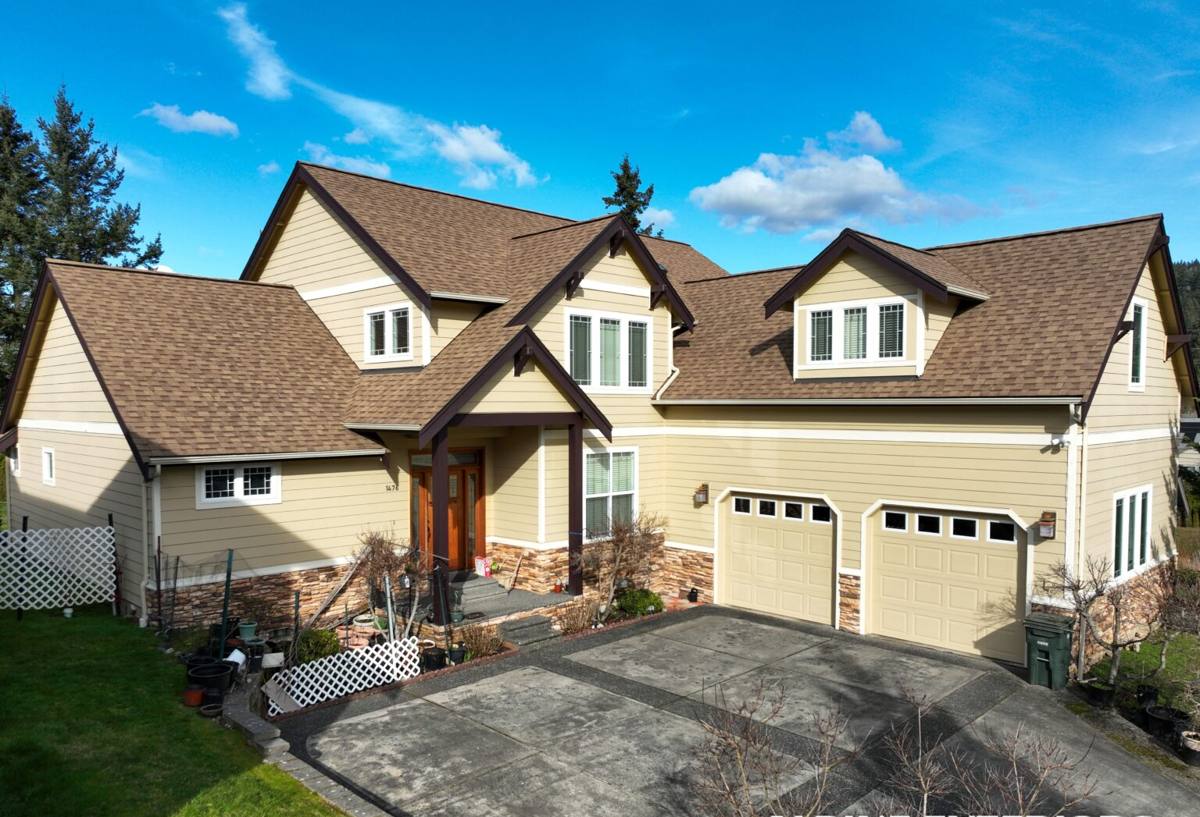
What Whatcom County's Climate Actually Does to a Roof
Salt Air and Metal Corrosion
Homes closer to the water pick up airborne salt that settles on roofing metal — flashing, drip edge, exposed fasteners, and any metal roofing components. Over years, that salt accelerates corrosion, especially where two dissimilar metals meet or where a fastener's protective coating has worn thin. Corroded flashing doesn't always look dramatic from the ground; it often shows up first as a small rust stain on the roof surface or a faint stain on an interior ceiling near a chimney or vent pipe.
Driving, Wind-Driven Rain
Storms coming off the water in this part of Washington rarely fall straight down. Wind pushes rain sideways and even slightly upward under eaves and behind flashing, which means water finds gaps that a calm, vertical rain would never reach. This is why a roof can pass visual inspection in dry weather and still leak hard during a windstorm — the water is entering through a seam or lap that only opens up to horizontal-driven rain.
Moss, Shade, and Moisture
Edgemoor's tree cover and the region's long damp stretches give moss everything it needs: shade, moisture, and time. Moss doesn't just look bad — it holds water against the roofing material, lifts shingle edges as it grows under the tabs, and works its way into fastener holes and seams. On composition shingle roofs especially, a moss mat that's been left in place for a season or two is one of the most common causes of the leaks we get called out for.
The Repairs We See Most Often in Edgemoor
- Flashing failures around chimneys, skylights, and roof-to-wall transitions, often where corrosion or a poor original seal has let water track in over time
- Moss-related shingle damage — lifted tabs, granule loss, and soft spots where trapped moisture has broken down the shingle underneath
- Damaged or missing shingles from wind events, which expose the underlayment and create a fast path for leaks if not addressed
- Deteriorated pipe boots and vent seals, which are rubber or plastic components that dry out and crack years before the surrounding roofing does
- Valley leaks, where two roof planes meet and heavy rain volume concentrates — a common weak point when valley flashing or shingles have started to wear
- Gutter and edge-related water intrusion, where clogged or undersized gutters back water up under the roof edge instead of carrying it away
What a Correct Roof Repair Actually Involves
A repair that actually holds up isn't just replacing the shingle you can see damaged. It involves finding out how far the underlying damage goes, because water travels — a stain on the ceiling ten feet from the actual entry point is normal, not unusual. Here's what a repair done right typically includes:
- Locating the true source of the leak, not just the visible symptom, which often means checking flashing, underlayment, and adjacent roofing sections in addition to the shingles directly above the stain
- Removing and inspecting the roofing material and underlayment around the damaged area to check for rot or compromised decking underneath
- Replacing damaged decking if it's soft, delaminated, or water-stained through — patching over bad decking is a shortcut that fails
- Installing new underlayment and flashing where the old material has failed, matched to the existing roof system rather than mismatched materials that can create new points of corrosion or incompatibility
- Matching shingles or roofing material as closely as possible in profile and, where feasible, color, so the repair blends rather than becoming an obvious patch
- Clearing moss and debris from the surrounding roof area so the repair isn't immediately undermined by the same conditions that caused the original damage
- Checking and sealing adjacent penetrations — vents, boots, and fasteners — while access is already open, since it's far cheaper to address a marginal seal now than to schedule a second visit later
Repair or Replace? How to Think About It
Not every leak means a new roof, and not every repair is worth doing on a roof that's genuinely near the end of its life. The honest answer depends on the roof's age, how widespread the damage is, and what's underneath the surface layer. This is a general guide, not a substitute for having someone look at your specific roof.
| Factor | Points Toward Repair | Points Toward Replacement |
|---|---|---|
| Roof age | Under 15-20 years, depending on material | At or past the material's typical service life |
| Extent of damage | Localized to one section, flashing, or a few shingles | Spread across multiple roof planes or recurring in different spots |
| Decking condition | Solid, dry decking under the damaged area | Soft, rotted, or repeatedly wet decking |
| Moss/algae staining | Surface growth, shingles still structurally sound | Granule loss and shingle breakdown from long-term moss damage |
| Shingle condition elsewhere | Rest of roof still flat, granulated, and flexible | Widespread curling, cracking, or brittleness |
When a roof lands somewhere in the middle, we'll tell you that plainly and lay out the trade-offs rather than pushing one direction. A repair that buys a roof another five to ten years of honest service is often the right call financially, even if replacement is eventually coming.
Our Process for Edgemoor Roof Repair Calls
We keep this straightforward because a leak is already stressful enough without a confusing process on top of it.
- Assessment. We inspect the roof, not just the spot you're worried about, since related wear is often nearby.
- Straight answer. We tell you what we found, what's causing it, and whether repair or something more is the right call — in plain terms, not sales language.
- Written scope. You get a clear description of the work and what it costs before anything is touched.
- The repair itself. Done to the standard described above — source-of-leak first, matched materials, and the surrounding area addressed, not just the one spot.
- Cleanup and check. We clear debris and moss from the work area and confirm the repair is sound before we consider the job done.
Why It Matters to Hire a Crew That Already Works Edgemoor
Roof repair is one of those trades where local familiarity actually changes the outcome, not just the sales pitch. A crew that regularly works Edgemoor and the surrounding Whatcom County area already knows which failure patterns show up on which roof ages and orientations, how aggressively moss establishes itself under the tree cover common to the area, and which flashing details tend to corrode first in homes exposed to salt air off the water. That means less time spent diagnosing and more time spent fixing the actual problem — and fewer surprises once the roof is opened up.
It also matters for something less obvious: availability when weather actually causes damage. During and after a wind or heavy rain event, a crew already working in the area can typically respond faster than one dispatching from farther out, which matters when an active leak is doing damage to insulation, framing, or ceilings by the hour.
Simple Maintenance That Extends the Life of a Repair
A repair only holds up as long as the roof around it is kept in reasonable shape. A few habits make a real difference in this climate:
- Have moss treated or removed before it establishes a thick mat, not after — early moss is a maintenance job, established moss is a repair job
- Keep gutters clear so water sheds off the roof edge instead of backing up under it during heavy rain
- Trim back tree limbs that keep sections of the roof shaded and damp longer than the rest
- Have flashing and pipe boots checked every few years, since these components typically fail before the shingles do
- Address small leaks immediately rather than waiting — a small, contained repair now is almost always cheaper than the damage a delayed leak causes to decking and interior framing
Getting an Honest Look at Your Roof
If you're dealing with a leak, a stain that keeps coming back, or a roof that's developed a heavy moss mat, it's worth having someone look at it before the next storm rather than after. We'll give you a straight assessment of what's going on and what it would take to fix it properly — no pressure, and no upsell to a full replacement if a repair is the honest answer. Reach out using the form below for a free estimate.