 Sudden Valley
 Why Sehome's Climate Is Hard on Siding
Sehome sits close enough to the water and to Whatcom County's wet weather patterns that siding here works harder than it does in drier parts of the state. Salt-tinged air off the Salish Sea corrodes fasteners and eats away at cheap coatings. Driving rain, pushed sideways by wind off the water, finds every gap in a poorly flashed wall. And the long, damp shoulder seasons that define this part of the Pacific Northwest give moss, algae, and mildew months at a time to take hold on anything that stays wet. None of this is unusual for western Washington — but it does mean siding decisions that work fine in a dry inland climate can fail early here.
Homeowners in Sehome tend to notice the same failure patterns: paint that chalks and peels years ahead of schedule, caulk joints that crack and let water behind the wall, and green-black staining on north-facing and shaded walls that never quite dries out between storms. None of that is cosmetic only — it's usually a sign that moisture is getting past the exterior cladding and into material that isn't built to handle it.
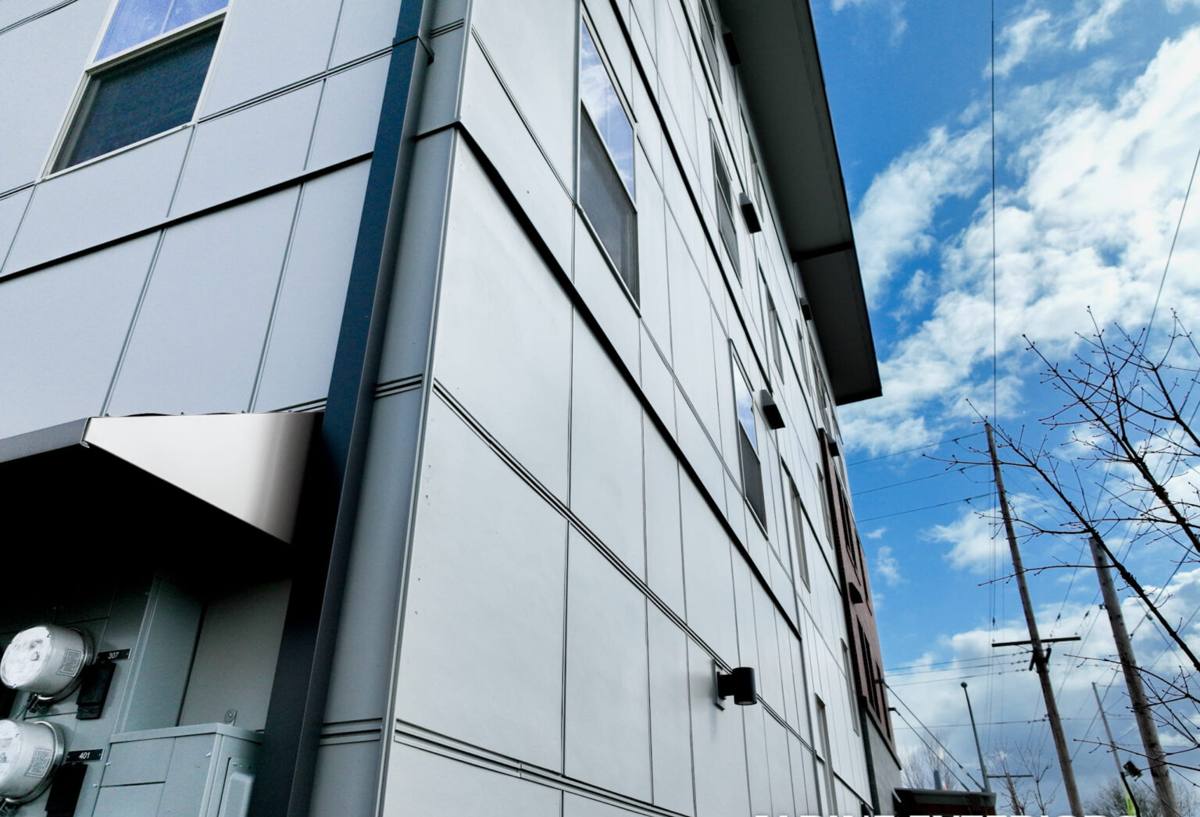
What Fiber Cement Siding Needs to Do Here
Not all siding materials are engineered for this kind of exposure, and "fiber cement" isn't a single product — quality and performance vary a lot by manufacturer. For a Sehome home, the siding on your walls needs to manage three things at once:
- Moisture without swelling or rotting. Cement-based siding doesn't absorb water the way wood or wood-fiber products do, which matters through a wet Whatcom County winter.
- A factory finish that resists salt air and UV. Field-applied paint fails faster in coastal-influenced air than a baked-on factory finish does.
- Resistance to moss and mildew growth. Surface texture and coating chemistry both affect how easily organic growth gets a foothold during our long damp season.
This is the standard we hold every job to, and it's why we don't treat "fiber cement" as a commodity — the brand and the installation both matter.
Why We Install Only James Hardie
Our crew installs one fiber cement system: James Hardie. We don't install LP SmartSide, vinyl, Cemplank, Allura, primed spruce, or cedar, and we're upfront about why. Each of those products has legitimate strengths, but each also comes with a real-world trade-off — moisture sensitivity, coating durability, installation tolerance, or warranty structure — that we've decided isn't worth the risk on homes we're putting our name behind in a climate this demanding.
A Quick, Honest Comparison
| Material | Moisture Behavior | Coastal/Coastal-Adjacent Durability | Maintenance Burden |
|---|---|---|---|
| James Hardie fiber cement | Cement-based, doesn't swell or rot; engineered HZ5 formulation for wetter climates | Factory ColorPlus finish holds up well against salt air and UV | Low — occasional wash, no repainting for years |
| Vinyl siding | Doesn't rot, but can warp or crack in temperature swings; seams are moisture entry points | Color fades faster in UV and salt exposure over time | Low labor, but limited lifespan and repair options |
| LP SmartSide / engineered wood | Wood-strand core is more moisture-sensitive; edge sealing is critical | Performs well when installed and maintained correctly, but leaves less margin for error | Moderate — edge caulking and touch-up matter more here |
| Cedar / primed spruce | Natural wood; absorbs moisture, prone to cupping and rot without upkeep | Needs regular refinishing to hold up against damp, salt-influenced air | High — recurring staining, sealing, and repair |
None of this means the other products are junk — it means they ask more of the installation, the maintenance schedule, or both, in exactly the conditions Sehome sees the most of. James Hardie's HZ5 product line was engineered for the Pacific Northwest's moisture exposure specifically, its ColorPlus finish is backed by its own coating warranty, and the underlying board is non-combustible — a genuine plus given how many homes here sit close to trees and dry-season wildfire smoke drifts through even in a wet climate. That combination is why we standardized on it rather than offering a menu of options.
Warranty That Actually Transfers
James Hardie backs its siding with a long-term, transferable limited warranty, and ColorPlus finishes carry a separate finish warranty covering fading and chipping. Because the warranty follows the house, not just the original owner, it's a real selling point if you list the home down the line — buyers and inspectors both recognize the brand.
What a Correct Installation Actually Involves
Fiber cement siding is only as good as the wall assembly behind it. Most of the siding failures we get called out to inspect in this area trace back to installation shortcuts, not the material itself. A correct job includes:
- A continuous, properly lapped weather-resistant barrier (WRB) behind the siding — the actual first line of defense against wind-driven rain.
- Rainscreen or furring where conditions call for it, so any moisture that does get past the cladding can drain and dry instead of sitting against the wall.
- Correct flashing at every window, door, deck ledger, and roof-to-wall intersection — the details that most often get skipped on a rushed job.
- Fastener placement and spacing per James Hardie's published installation instructions, using fasteners rated for the exposure.
- Proper gapping and sealant at butt joints and trim, sized for the region's temperature swings and moisture load.
- Correct minimum clearance from grade, decks, patios, and roof lines, so splash-back and standing moisture don't sit against the bottom course.
Skip any one of these and you can end up with siding that looks right for a year or two, then starts failing at the seams — while the manufacturer's warranty, which requires installation to spec, may no longer apply. This is the part of the job that separates a crew that's licensed to install Hardie from one that's simply done it before.
Our Process, Step by Step
- On-site assessment. We look at your current siding, wall assembly, moisture damage (if any), trim, and how the home sits relative to sun, shade, and prevailing wind and rain.
- Written scope and estimate. You get a clear breakdown of what's being removed, what's being repaired underneath, and what's going up — no vague allowances.
- Substrate repair. Any rotted sheathing, damaged framing, or compromised WRB gets fixed before a single piece of new siding goes up. Covering a problem is not the same as solving it.
- WRB and flashing detail work. This is the step that determines how the wall performs in year ten, not just year one.
- Hardie installation to manufacturer spec. Correct fastening, gapping, and clearances, profile by profile.
- Caulking, trim, and paint touch-up at cut edges and joints, using products compatible with the ColorPlus finish.
- Final walkthrough. We go over the finished work with you before calling the job done.
Cost Factors for a Sehome Project
Every home is different, but the variables that move the price on a Sehome fiber cement job are consistent. As a broad range, many homeowners in this area budget roughly $12–$20 per square foot installed for a full Hardie system — with the final number shaped by the factors below.
| Factor | Why It Matters |
|---|---|
| Removal of existing siding | Tear-off, disposal, and any hidden sheathing repair add labor before new siding can start |
| Siding profile | Lap siding, shingle-style panels, and vertical panel systems each have different material and labor costs |
| Trim and detail complexity | Corner boards, window and door trim, and multiple roof lines all add cutting and flashing time |
| Story height and access | Second-story and steep-lot walls take longer and require more scaffolding or lift work |
| Color and finish | Factory ColorPlus finishes cost more upfront than field-painted primed board, but skip a repaint cycle |
Living With Hardie Siding in Sehome
Ongoing Maintenance
- Rinse the exterior once or twice a year to keep salt residue and organic buildup from settling into the texture, especially on shaded or north-facing walls.
- Check caulking at trim and joints every couple of years — sealant is the one component that ages faster than the board itself.
- Trim back vegetation and tree cover that keeps a wall section shaded and damp; airflow is one of the simplest defenses against moss.
- Watch gutters and downspouts — misdirected roof water onto a siding run is one of the most common causes of localized staining and premature wear.
Signs Existing Siding Is Already Losing the Fight
- Paint that's chalking, bubbling, or peeling well ahead of its expected repaint cycle.
- Soft or spongy spots when you press on a wall section, especially near the bottom courses or under windows.
- Persistent moss or dark staining that comes back within weeks of cleaning.
- Visible gaps, warping, or cupping at panel edges and seams.
- Rising utility bills that suggest the wall assembly isn't holding heat the way it used to.
Why Local Experience in Sehome Matters
A crew that already works this part of Whatcom County knows the difference between a wall that needs a rainscreen gap and one that doesn't, how far to hold siding off grade given the rainfall this area gets, and which orientations on a given lot are going to fight moss no matter what product goes up. That's knowledge you build from doing the work here repeatedly, not from a general installation manual. It's also why we install one product system instead of several — depth of experience on one platform, installed correctly every time, beats broad but shallow experience across five different manufacturers' specs.
If your current siding is showing its age, or you're planning ahead for a project, we're glad to take a look and give you a straight answer about what your home actually needs — no pressure, no upsell to a product we don't stand behind. Reach out for a free estimate and we'll walk the property with you.