 Sudden Valley
 New-Construction Windows in Acme: What This Service Covers
When we talk about new-construction windows, we mean windows going into a wall that doesn't exist yet — new framing, no old siding to work around, no compromises left over from a prior install. That's a different job than replacing a window in a house that's been standing for twenty years. In new construction, the window opening, the weather-resistive barrier (WRB), the flashing, and the siding all get built around each other in a specific order. Get that order wrong and you've built a leak into the wall before the drywall even goes up.
For homeowners and builders working on a new build or an addition out in the Acme area, this matters more than it might in a drier climate. Whatcom County gets a lot of moisture moving through the building envelope over the life of a home, and a new-construction window is either set up to shed that moisture from day one or it's a slow problem waiting to show up in five or ten years, usually after the warranty's expired and usually inside a wall cavity where nobody's looking.
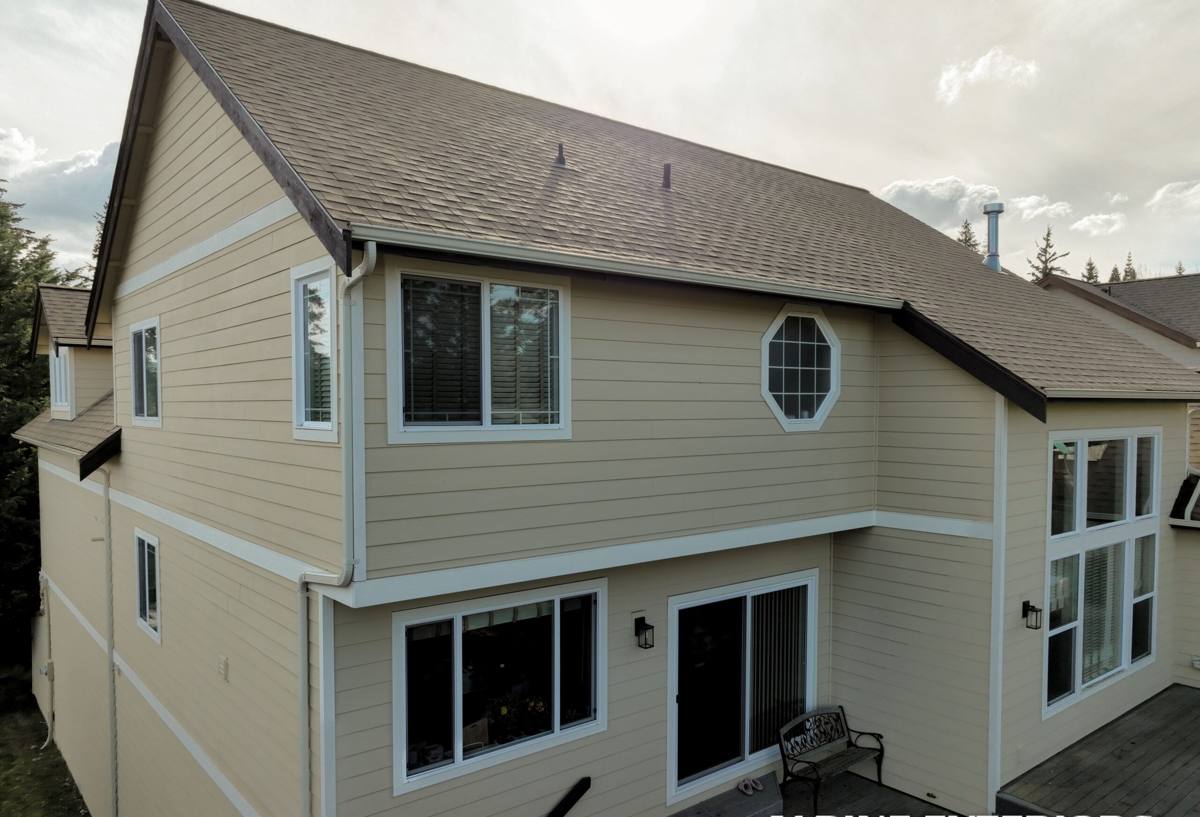
Why the Local Climate Changes How This Job Gets Done
This part of Whatcom County deals with driving rain — wind-driven storms that push water sideways into a wall rather than letting it just run down the face of the siding. A window installed to a lower standard, one that relies mostly on caulk and good intentions, will eventually let that wind-driven water find a way in around the frame. We flash every new-construction window assuming rain is going to hit it at an angle, not just fall straight down.
There's also the moss and moisture side of things. A long moss season means anything that stays damp on this side of the state stays damp for months, not days. Window sills, trim boards, and the transition where the window meets the siding are exactly the spots that hold moisture if they're not detailed correctly, and that's where you'll see staining, soft wood, and eventually rot show up first. And in the parts of Whatcom County closer to the water, salt-tinged air adds another layer of wear on fasteners, flashing metal, and finishes — one more reason we don't cut corners on materials for a coastal-influenced climate like this one.
Where New-Construction Windows Get Won or Lost: The Rough Opening
The Sill Pan
Every new-construction window opening should get a sloped sill pan before the window ever goes in — a barrier that catches any water that gets past the window and directs it back outside instead of into the framing. This is one of the most skipped steps on lower-quality builds because it takes extra time, and it's also the single most important step for keeping a wall dry over the long run in a climate that sees this much rain.
Flashing Sequence
Flashing has to be layered so that each piece sheds water onto the one below it — sill, then jambs, then head flashing last, integrated into the WRB in the correct shingle-lap order. If the head flashing goes in before the jamb flashing, or the WRB laps the wrong direction over the flashing, water gets funneled into the wall instead of away from it. It's a small detail that's invisible once the siding goes on, which is exactly why it has to be done right the first time.
Fastening and Shimming
New-construction windows are typically nail-fin units, fastened through the fin into the rough opening and shimmed square and plumb before the fin is sealed and taped. A window that's slightly out of square will bind, won't seal evenly, and puts stress on the frame that shows up later as air leaks or difficulty operating the sash.
Choosing Window Materials for an Acme Build
We install a range of window lines depending on the builder's spec and the homeowner's budget, but the trade-offs are worth understanding up front, especially given the moisture and driving rain this area sees.
| Frame Material | How It Handles This Climate | Maintenance |
|---|---|---|
| Vinyl | Good moisture resistance, won't rot; performs well if drainage details are correct | Low — occasional cleaning |
| Fiberglass | Very stable in temperature swings, holds paint and finish well over time | Low to moderate |
| Wood-clad | Attractive interior finish, but exterior cladding still depends entirely on correct flashing to avoid moisture getting behind it | Higher — watch seams and finish |
| Aluminum | Durable frame but conducts cold and can show condensation without a thermal break | Low |
Whatever the frame material, the installation detailing matters more than the brand. A premium window installed without a sill pan will underperform a mid-range window installed correctly. We'll talk through the honest trade-offs for your specific build rather than pushing one product line for every job.
Our New-Construction Window Installation Process
- Verify rough openings are square, level, and sized correctly against the window schedule before any window arrives on site.
- Install sloped sill pans and back-dam flashing at every opening.
- Set windows plumb, level, and square, shimmed at the manufacturer's specified points.
- Sequence flashing tape and WRB integration in proper shingle-lap order — sill, jambs, head.
- Seal and fasten per manufacturer specifications to keep warranty coverage intact.
- Inspect every opening before siding crews close the wall, since this is the last point anything can be corrected without tear-out.
Because we're a siding contractor first, we install new-construction windows with the next step already in mind — how the siding, trim, and flashing will tie into that window opening. That coordination is exactly where a lot of new builds run into trouble.
Coordinating Windows With Siding on a New Build
On a lot of new-construction jobs, the window installer and the siding contractor are two separate crews who never talk to each other. The window crew sets windows to their own standard, and the siding crew shows up weeks later and has to work with whatever flashing and WRB detailing they were left. If that detailing is off, the siding crew either has to fix it — costing everyone time — or, worse, sides right over it.
Handling both scopes means the flashing plan, the WRB laps, and the window setback are all built with the finished siding assembly in mind from the start. That's a meaningful advantage on any build in a climate that punishes shortcuts at the window-to-siding transition, especially given how much rain this region pushes through a wall assembly over a typical wet season.
What This Runs: Cost Factors on a New-Construction Job
| Factor | Why It Moves the Price |
|---|---|
| Number and size of openings | More windows and larger units mean more flashing, labor, and material |
| Frame material | Vinyl, fiberglass, wood-clad, and aluminum carry different unit costs |
| Wall height and access | Second-story and vaulted openings take longer and often need staging or lifts |
| Siding coordination | Bundling window and siding scope with one crew can reduce rework and scheduling gaps |
| Site conditions | Slope, tree cover, and access on a given lot affect setup and staging time |
We won't quote a job sight-unseen — every build has its own window schedule and site conditions — but we're upfront about what's driving the number once we've looked at the plans and the lot.
Common Mistakes We Catch on New Builds in This Area
- Missing or flat (non-sloped) sill pans that let water pool instead of drain
- Reverse-lapped WRB or house wrap that funnels water into the opening instead of away from it
- Windows fastened before they're properly shimmed square, causing operational binding later
- Flashing tape applied to dirty, wet, or cold framing that won't adhere long-term
- Head flashing skipped or undersized, leaving the top of the window exposed to driving rain
- Trim and siding installed tight against the window frame with no room for expansion or drainage
Every one of these is invisible the day the house is finished and every one of them shows up eventually — usually as staining, soft trim, or a window that's suddenly hard to operate a few winters in.
Why a Crew That Already Works in Acme Matters
A crew that's already worked new builds around Sudden Valley and the surrounding Whatcom County communities knows what this climate does to a wall over time — not in theory, but from having opened up walls on remodels and seen where the moisture actually went. That experience shapes how we flash an opening, how much drainage gap we leave, and which materials we're comfortable standing behind for a job that has to perform through a long, wet moss season year after year. It also means we're familiar with local building department expectations for flashing and moisture management, so inspections go smoother and there are fewer surprises mid-build.
If you're planning a new build or addition in the Acme area and want windows installed by a crew that treats the flashing and drainage details as seriously as the window itself, we'd be glad to take a look at your plans. Reach out for a free, no-pressure estimate — there's a form below to get started.