 Sudden Valley
 Why Siding Repair in Columbia Is Different From a Generic Fix
The Columbia area of Sudden Valley sits inside a climate that's harder on exterior building materials than most homeowners realize. Between the moisture rolling in off the water, driving rain that comes in sideways during winter storms, and a moss and algae season that can stretch for months, siding here takes a beating that siding in a drier inland town simply doesn't. A repair that would hold up fine in eastern Washington can fail within a year or two out here if it isn't done with this specific climate in mind.
That's the core problem with treating siding repair as a one-size-fits-all job. A patch that ignores how water actually moves through a wall assembly in Whatcom County, or a caulk job that assumes a dry summer will "cure" everything, is a callback waiting to happen. Good repair work in Columbia starts with understanding what the climate is doing to the siding, not just what the siding looks like from the driveway.
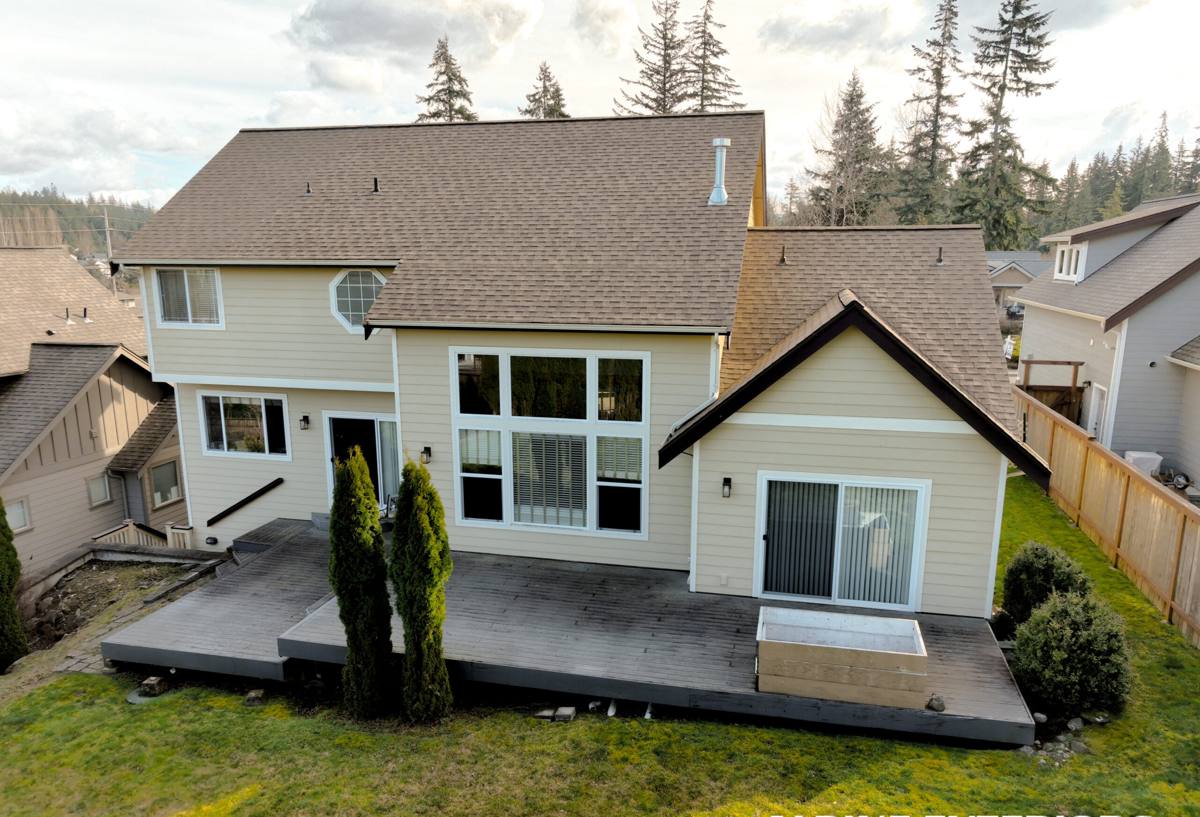
The Climate Factors That Drive Siding Damage Here
Salt Air and Moisture
Whatcom County's proximity to the water means the air carries more moisture and salt content than an inland home ever deals with. Over years, that moisture works into any gap, crack, or failed seal in a siding system. It accelerates corrosion on fasteners, softens caulk faster than the manufacturer's stated lifespan, and keeps wall cavities damper for longer stretches between dry spells. Siding that isn't rated for this kind of exposure — or that was installed without attention to sealing details — shows it first at seams, corners, and butt joints.
Driving Rain
This isn't gentle, straight-down rain. Storms here regularly push rain sideways under wind load, which means water gets forced into places a standard installation assumes it will never reach — under laps, behind trim, around window and door flashing. A repair that only addresses the visible crack or gap, without checking whether wind-driven rain is getting behind the siding plane, is a temporary fix at best.
The Long Moss Season
Shade from tree cover combined with sustained damp conditions gives moss and algae a long runway to establish itself on north-facing and shaded wall sections. Moss doesn't just look bad — it holds moisture directly against the siding surface for extended periods, which is exactly the condition that causes rot in wood-based products and accelerates coating breakdown on any painted surface. A repair plan for a Columbia home has to account for where moss will regrow, not just where it currently is.
Common Siding Problems We See in the Columbia Area
- Moisture intrusion at seams and corners — caulk has failed or was never detailed correctly, letting water track behind the siding plane.
- Soft or delaminating boards — most common on wood-based or engineered wood products where the outer coating has been breached and moisture has been sitting against the substrate.
- Moss and algae staining — heaviest on shaded, north-facing walls and anywhere gutters or downspouts aren't managing water away from the wall.
- Nail pops and fastener failure — accelerated by repeated wet-dry cycling and, in some cases, corrosion from the salt content in the air.
- Cracked or warped panels — from age, impact, or expansion/contraction stress that wasn't accounted for at installation.
- Failed caulk joints around trim, windows, and penetrations — often the very first sign of trouble, and the easiest to miss during a casual look from the ground.
What a Correct Siding Repair Actually Involves
A repair that's done right isn't just "replace the damaged piece and re-caulk." It starts with diagnosing why the damage happened, because if the cause isn't addressed, the same failure shows up again in the same spot within a couple of seasons. That means:
- Finding the water path. Damage on the siding surface is often a symptom of a problem somewhere else — a flashing detail, a gutter that's overflowing onto the wall, a gap where two trades' work meets and neither sealed it.
- Checking what's behind the siding. If there's any sign of sustained moisture, the sheathing and water-resistive barrier behind the siding need to be checked before anything gets closed back up. Patching over a wet wall assembly just traps the problem.
- Matching material correctly. Repairs need to match the existing siding's profile, reveal, and where possible finish — mismatched repairs are one of the most common ways a home ends up looking patched rather than repaired.
- Re-detailing the vulnerable points. Corners, butt joints, and penetrations get the sealing and flashing attention that driving rain in this area actually demands, not just a bead of caulk over the old joint.
- Addressing the moss conditions, not just the moss. If shade and moisture are going to keep favoring growth in a given spot, that's worth a conversation about drainage, trimming back vegetation, or coating choice — not just a one-time clean.
Repair or Replace? How to Think It Through
Not every damaged section needs a full re-side, and not every home is a good candidate for a patch. The table below covers the factors that actually matter when making that call.
| Factor | Repair Is Usually Right | Replacement Is Usually Right |
|---|---|---|
| Extent of damage | Isolated to a few sections or one elevation | Spread across multiple walls or the whole exterior |
| Cause of damage | A single identifiable failure point (flashing, caulk, impact) | Systemic issue — wrong product for the climate, widespread moisture intrusion |
| Age of existing siding | Siding is well within its expected service life | Siding is near or past the end of its realistic lifespan |
| Material behind the surface | Sheathing and framing test dry and sound | Rot or sustained moisture found in the wall assembly |
| Appearance goals | Homeowner is fine with a well-matched patch | Homeowner wants a uniform, refreshed look |
When damage keeps recurring in the same areas even after a repair, that's usually a sign the underlying material or the original installation wasn't suited to this climate to begin with — not that the repair crew did anything wrong. That's a conversation worth having honestly rather than repeating a patch that won't hold.
How We Approach a Columbia Siding Repair
We start with an actual inspection, not a drive-by estimate — walking the exterior, checking suspect areas by hand, and looking at drainage, grading, and vegetation around the home, since those all affect how much moisture the siding is dealing with. From there we give a straight answer on whether the situation calls for a repair, a partial re-side of the affected elevation, or a full replacement, along with why. We don't pad a repair scope into a bigger job than it needs to be, and we don't pretend a patch will hold if the underlying cause hasn't been dealt with.
Where full replacement is the right call, we only install James Hardie fiber cement siding. We don't install vinyl, LP SmartSide, or primed wood products, and we're upfront about why: this climate — the salt air, the sustained wet season, and the moss pressure on shaded walls — is exactly the kind of environment where fiber cement's stability and moisture resistance earns its keep over time. Hardie's HZ5 product line is engineered specifically for climates with this kind of moisture exposure, and the factory-applied ColorPlus finish holds up to UV and moisture far longer than a field-applied coating, which matters a lot when a wall spends half the year damp.
Why Hiring a Crew That Already Works This Area Matters
Siding repair details that work in a dry climate can fail quietly in Sudden Valley. A crew that hasn't worked here regularly may not think to check for wind-driven rain intrusion at a corner detail, or may underestimate how fast moss re-establishes on a shaded wall. A crew that already works the Columbia area knows which elevations take the worst of the weather, how the local moss and algae cycle behaves through the seasons, and what a repair actually needs to hold up here — not just pass inspection on a dry day.
That local familiarity also shows up in smaller ways: knowing which material matches are realistic, understanding how drainage and vegetation around Sudden Valley homes typically affect wall moisture, and being straight with homeowners about when a repair will genuinely hold versus when it's a short-term fix on a longer-term problem.
Maintenance Checklist for Columbia Homeowners
Between repairs, a little seasonal attention goes a long way toward keeping siding — repaired or original — in good shape in this climate:
- Walk the exterior each fall and spring, looking closely at corners, seams, and anywhere trim meets siding.
- Check caulk joints for cracking or separation before the winter storm season sets in.
- Keep gutters clear so water isn't overflowing onto wall sections below.
- Trim back vegetation and tree cover where it's keeping a wall section shaded and damp longer than necessary.
- Address moss and algae growth early rather than letting it sit against the siding for a full season.
- Note any soft spots, discoloration, or bubbling paint — these are early signs worth a closer look, not cosmetic issues to ignore.
Get a Straight Answer on Your Siding
If you're seeing damage, staining, or soft spots on your Columbia home's siding, it's worth getting an honest read on what's actually going on before it gets worse through another wet season. We offer free, no-pressure estimates — walk the exterior with us, get a clear answer on repair versus replacement, and decide from there with real information. Use the form below to get started.