 Sudden Valley
 Why Siding Wears Differently Around Silver Beach and Sudden Valley
Homes along the Silver Beach shoreline near Sudden Valley deal with a climate that's harder on exterior siding than most people realize until they're the ones paying for the repair. Whatcom County sits in a maritime weather pattern — long stretches of damp, overcast weather, driving rain that comes in sideways off the water during fall and winter storms, and a moisture-laden air mass that carries a faint salt tang inland from Bellingham Bay. None of that is dramatic on any single day. It's the accumulation, year after year, that breaks siding down.
Add to that the tree cover common on lots around the lake. Shaded, damp siding doesn't dry out between rain events the way siding on a sun-exposed wall does. That's exactly the condition moss, algae, and mildew need to take hold, and once they do, they hold moisture directly against the siding surface instead of letting it shed. Over a few seasons, that constant damp cycle is what turns a small caulk failure or a hairline crack into swollen panels, soft trim, or hidden rot behind the wall.
None of this means Silver Beach homes are doomed to constant siding problems. It means the repair work has to account for the actual conditions the wall is living in — not just patch what's visible and move on.
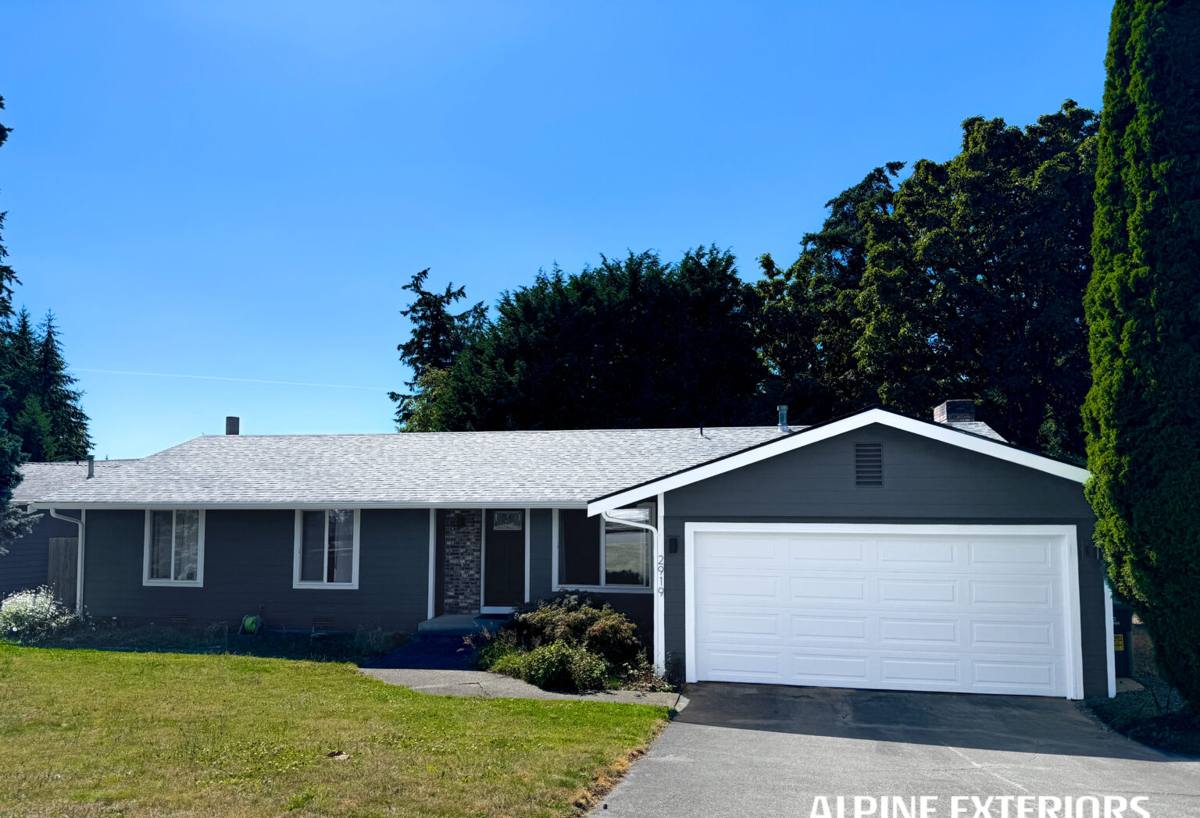
What a Correct Siding Repair Actually Involves
A repair that's only cosmetic — caulk over a crack, a dab of paint over a stain — tends to fail again within a season or two around here, because it never addresses why the damage happened in the first place. A repair done right starts with figuring out whether water is just sitting on the surface or has already worked its way behind the siding.
That means checking the condition of the house wrap or building paper behind the affected panels, confirming flashing above windows, doors, and butt joints is actually doing its job, and looking at whether trim and caulk lines nearby are also starting to fail. Siding rarely fails in one isolated spot for no reason — if one section shows moisture damage, the areas immediately around it usually need at least an inspection, even if they look fine from the ground.
Only after that assessment does the actual repair — replacing a section, resealing a joint, correcting a flashing detail — happen. Skipping the diagnostic step is how the same repair ends up getting redone in two years.
The Repair Issues We See Most Often in This Area
- Moss and algae staining along shaded walls and under eaves, especially on north-facing sides that rarely get direct sun
- Swollen or delaminating panel edges where water has been sitting against a cut edge or seam for an extended period
- Failed caulk joints around trim, windows, and butt seams — caulk has a service life, and once it cracks or pulls away, water gets behind the siding at exactly the weak points
- Soft or discolored trim boards near ground level, porch posts, or downspout areas where runoff concentrates
- Impact and pest damage from woodpeckers or falling branches, common on wooded lots near the lake
- Hidden moisture intrusion behind siding that looks fine on the surface but has a soft or spongy feel when pressed
Repair or Replace? Reading the Signs
Not every damaged section needs a full re-side, and not every problem is fixable with a patch. The honest answer depends on how far the damage has spread and how much of the underlying structure is affected. A short checklist we use when we're standing in front of a wall:
- Is the damage confined to a small area, or does pressing on nearby panels reveal the same soft, spongy feel?
- Has water reached the sheathing or framing behind the siding, or is it contained to the siding material itself?
- Is the existing siding still available to match, or would a repair leave an obvious patch of mismatched color or texture?
- Is this the first repair on this wall, or the second or third patch to the same area over the years?
- Is the siding itself nearing the end of its practical service life regardless of this specific repair?
If damage is isolated and the material can be matched reasonably well, a targeted repair is the right call — no reason to spend more than necessary. If we're finding repeat failures in the same area, or moisture has clearly gotten into the wall assembly, that's a different conversation, and we'll tell you honestly which situation you're in.
Our Silver Beach Repair Process
Inspection and Moisture Check
We start by physically checking the damaged area and the sections around it, not just the spot you called about. Where moisture intrusion is suspected, we check for softness, staining patterns, and evidence of water tracking — sometimes damage shows up several feet from where the actual leak point is.
Sourcing and Matching Material
Matching existing siding — especially older material or discontinued colors — takes more than grabbing the nearest board. We look at profile, exposure width, and finish to get as close a match as the situation allows, and we're upfront if a perfect match isn't realistic given the age of the siding.
The Repair Itself
Damaged sections are removed cleanly, any underlying moisture barrier or flashing issue is corrected first, and new material is installed to the same fastening and clearance standards the original installation should have followed.
Sealing and Finish Work
Joints get proper sealant, not just a bead of caulk smeared over a gap. Where paint or finish touch-up is needed to blend the repair, that's part of finishing the job — not an upsell tacked on afterward.
Cleanup and Walkthrough
We walk the repaired area with you before we consider the job done, and we'll point out anything nearby that's worth keeping an eye on, even if it doesn't need attention yet.
Repair Considerations by Siding Type
How a repair holds up long-term depends heavily on what material is already on the house. Here's how the common siding types behave when it comes time to repair them:
| Siding Type | How It Handles Local Moisture | Repair Difficulty |
|---|---|---|
| Vinyl | Doesn't rot, but panels can warp or crack in temperature swings and rarely seal perfectly at seams | Easy to replace a panel, but exact color match fades over time and is hard to find |
| Cedar or primed wood | Absorbs moisture readily; prone to swelling, cupping, and rot in shaded, damp areas | Repairs are involved — often requires addressing rot in adjacent framing |
| Engineered wood (LP-type) | Vulnerable at cut edges and fastener points if the factory seal is compromised | Edge and joint failures can spread quickly once moisture gets in |
| James Hardie fiber cement | Non-combustible and dimensionally stable; holds up well to sustained damp conditions when properly installed | Repairs are typically isolated to installation or impact damage rather than material breakdown |
When Repair Isn't Enough
Sometimes a homeowner calls about one bad section and we find a wall that's been patched multiple times, or siding that's simply reached the end of what repair can reasonably fix. We'll always tell you plainly which situation you're in rather than stack another patch onto a wall that needs more than that. When a full re-side does make sense, James Hardie fiber cement is the only product we install — it's the standard we've built our business on because of how it holds up under exactly the kind of sustained maritime moisture and shade this area sees, and because it carries a strong, transferable factory warranty behind it. That's a separate conversation from a repair, and we won't push it on a wall that doesn't need it.
Cost Factors for Siding Repair in This Area
Every repair is different, but the same handful of factors tend to drive the scope and cost of the work:
| Factor | Why It Matters |
|---|---|
| Extent of moisture intrusion | A surface-level fix costs far less than a repair that requires opening the wall to address hidden rot |
| Material availability | Older or discontinued siding profiles and colors can be harder to match, sometimes requiring a larger repair area for a consistent look |
| Access and lot conditions | Sloped lots and multi-story walls common around the lake can require additional staging or equipment |
| Number of separate repair areas | Several small repairs across a home cost differently than one concentrated area of damage |
| Finish and paint matching | Blending a repair into existing paint or factory finish adds labor beyond the structural fix |
We give a straight, itemized estimate before any work starts — no vague allowances, and no surprise costs added mid-job.
Why a Local Crew That Already Works Silver Beach Matters
Siding repair isn't a one-size-fits-all trade. A crew that's already worked on homes around Silver Beach and Sudden Valley has seen how the shade patterns off the lake affect certain walls, which sides of a house tend to hold moisture longest, and how the terrain around here — sloped lots leading down toward the water, mature tree cover, homes tucked into wooded settings — changes what a repair actually requires on site. That's knowledge that shows up in faster, more accurate diagnosis, not guesswork.
It also matters for response time. Moisture damage doesn't wait politely for a contractor to drive in from out of the area. A local crew can look at a problem sooner, which often means the difference between a contained repair and one that's spread further into the wall by the time someone gets to it.
Maintaining Your Siding After the Repair
A good repair buys you years, but a little seasonal attention protects that investment — especially in a climate that stays damp as long as this one does.
- Keep gutters clear so water isn't overflowing directly onto siding below
- Trim back vegetation and tree limbs that keep walls in constant shade and slow drying
- Rinse off moss and algae buildup before it has a chance to establish and hold moisture against the surface
- Recaulk trim and joint lines as soon as you notice cracking or gaps, rather than waiting for a full season of exposure
- Walk the exterior once or twice a year and press on any area that looks discolored or different from the surrounding wall
If you're noticing a soft spot, a stubborn stain, or siding that's simply past patching, we're happy to take a look and give you an honest read on what it actually needs. Reach out for a free, no-pressure estimate — the form below gets you started.