 Sudden Valley
 Decks in Sunnyland Take a Different Kind of Beating
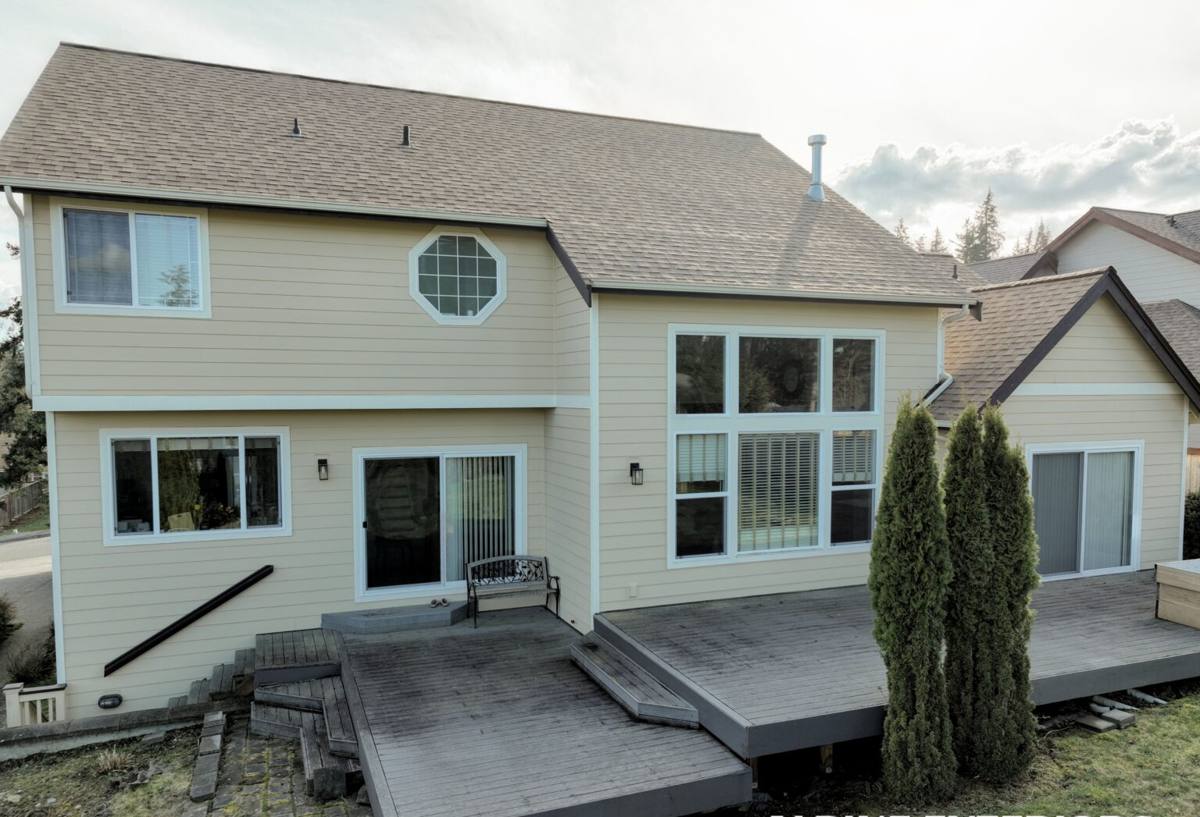
Sunnyland sits close enough to Bellingham Bay that salt-laden air is a constant, low-grade stress on any exterior structure — decks included. Add Whatcom County's driving rain and the long stretch of gray, damp months when moss gets a foothold on every north-facing or shaded surface, and you have a climate that is genuinely tough on wood and hardware. A deck that would last twenty-five years in a dry inland climate can start failing structurally in half that time here if it wasn't built — or replaced — with these conditions in mind.
This isn't a scare tactic. It's just what salt air and standing moisture do to fasteners, ledger connections, and framing lumber over time. A deck replacement done right in Sunnyland accounts for all of it, from the metal you choose down to how the boards are spaced.
Why Salt Air, Rain, and Moss Matter More Than People Think
Salt Air and Corrosion
Airborne salt accelerates corrosion on any exposed metal — nails, screws, joist hangers, post bases. Once a fastener starts rusting, it loses holding strength long before it looks obviously bad. On an older deck, this is often the real story behind a "wobbly" railing or a step that's started to sag: it's not the wood failing first, it's the hardware.
Driving Rain and Hidden Rot
Rain that comes in at an angle, which is common here, gets pushed into joints, under flashing, and behind ledger boards in ways that straight-down rain wouldn't reach. That moisture doesn't dry out quickly in our climate, and it's usually working on the structure from the inside — the ledger-to-house connection, the tops of posts, the underside of the decking — long before any rot is visible from above.
Moss and Surface Moisture
A long moss season means shaded and low-airflow sections of a deck stay damp for weeks at a time. Moss itself isn't the structural problem — the moisture it holds against the wood is. It also makes deck surfaces slick, which is a real safety issue on stairs and ramps.
Signs a Sunnyland Deck Needs Replacement, Not Just Repair
Not every tired-looking deck needs a full teardown. But there's a point where patching individual boards is throwing money at a structure that's already compromised underneath. Here's what tells us it's time to replace rather than repair:
- Soft or spongy spots in the decking, especially near the house or in shaded corners
- Rust streaking below joist hangers or visible corrosion on structural hardware
- A ledger board that shows gaps, staining, or movement where it meets the house
- Posts that feel loose at the base, or footings that have shifted or heaved
- Persistent moss or algae that returns within weeks of cleaning
- A deck more than 20-25 years old that has never had the framing inspected
- Railings that flex noticeably under normal pressure
If you're only seeing one or two of these, a repair may still make sense. If you're seeing several at once, especially anything involving the ledger or footings, that's usually a structural conversation, not a cosmetic one.
What a Correct Deck Replacement Actually Involves
Structure First
The framing — ledger, joists, beams, posts, and footings — is what determines whether a deck is safe and long-lasting. In this climate, that means proper ledger flashing that actually sheds water away from the house rather than trapping it, corrosion-resistant hardware rated for coastal or high-moisture exposure, and joist spacing and footing depth that match the decking material and local frost line.
Flashing and Water Management
Most deck failures we see trace back to water getting somewhere it shouldn't — usually the ledger connection or a post base sitting in standing water. A correct replacement includes proper flashing tape and metal flashing at the ledger, gapped decking for drainage and airflow, and post bases that keep wood off standing water.
Fasteners and Hardware
Given the salt air here, we don't cut corners on hardware. Structural connectors, screws, and bolts should be rated for coastal or ACQ-treated lumber exposure — mismatched or under-rated hardware is one of the most common hidden failure points on older decks, because it corrodes quietly while the wood above still looks fine.
Surface Material
The decking itself is the part homeowners see and touch every day, but it's also the last thing that should be decided — it needs to work with the structure underneath, not the other way around.
Choosing a Decking Material for This Climate
There's no single "best" decking material — it's a trade-off between upfront cost, maintenance, and how each product actually behaves in damp, shaded, salt-air conditions. Here's how the common options compare for a Sunnyland deck:
| Material | Moisture/Moss Behavior | Maintenance | Typical Lifespan |
|---|---|---|---|
| Pressure-treated wood | Absorbs moisture; needs gaps and airflow to resist rot and moss | Annual cleaning, periodic staining or sealing | 15-20 years with upkeep |
| Cedar | Naturally rot-resistant but still needs sealing in wet, shaded areas | Regular sealing to keep natural resistance intact | 15-25 years with upkeep |
| Composite decking | Doesn't absorb water like wood, but can still grow surface moss/algae if not cleaned | Occasional washing, no staining or sealing | 25-30+ years |
| PVC decking | Fully moisture-resistant surface; best resistance to staining and moss growth | Low — mostly rinsing | 25-30+ years |
Composite and PVC cost more upfront but remove most of the ongoing maintenance burden that our climate demands from wood. Wood costs less initially but only performs as well as the upkeep it actually gets — and in a neighborhood with a long moss season, that upkeep needs to be consistent, not occasional.
Our Deck Replacement Process
- On-site assessment — We inspect the existing deck's framing, ledger connection, and footings, not just the surface boards, so we know what's actually driving the replacement decision.
- Honest scope and estimate — You get a clear breakdown of what's structural, what's cosmetic, and what your material options cost, with no pressure to upsize the project.
- Permitting — Deck replacements of most sizes require a permit in Whatcom County; we handle that process so it's not on you to figure out.
- Demolition and disposal — Full removal of the old deck, including hauling away old lumber and hardware.
- Framing and flashing — New structure built to current code, with corrosion-resistant hardware and proper ledger flashing.
- Decking installation — Your chosen material installed with correct spacing and fastening for drainage and long-term stability.
- Final walkthrough — We go over the finished deck with you and explain any maintenance specific to the material you chose.
What Deck Replacement Costs Depend On
We won't quote a number without seeing the site, but here's what actually moves the price on a deck replacement, so you can think through the trade-offs before we talk:
| Factor | Why It Matters |
|---|---|
| Size and shape | More square footage and complex layouts (multiple levels, angles) mean more framing and labor |
| Decking material | Composite and PVC cost more upfront than wood but reduce long-term maintenance |
| Structural condition | Footings or a ledger connection that need to be rebuilt add cost beyond surface replacement |
| Railing and stairs | Custom railings, multiple stair runs, or code-required guard heights add labor and material |
| Height off grade | Taller decks need more substantial framing and can complicate permitting |
| Access for equipment/materials | Tight lots or limited access can add labor time |
Why It Matters That We Already Work Sunnyland
A crew that regularly works in Whatcom County knows what the local building department expects for deck permits, what footing depths hold up through our wet winters, and which hardware actually stands up to salt air over years, not just on paper. That's not something you get from a contractor who mostly builds decks in a drier, inland climate and treats coastal conditions as an afterthought.
It also means we're not guessing about how a deck in Sunnyland specifically will age — we've seen what moss season and driving rain do to decks in this area, and we build to prevent those specific failure points rather than generic ones.
Keeping a New Deck Performing Long-Term
A correctly built deck still needs some seasonal attention in this climate. A short list that goes a long way:
- Sweep debris and standing leaves off the deck regularly, especially in fall
- Clean moss and algae off the surface at the first sign of it, before it spreads
- Check that gaps between boards stay clear so water can drain through
- Inspect railings and stair connections once a year for looseness
- Reapply sealant or stain on wood decking on the manufacturer's recommended schedule
- Keep gutters and downspouts near the deck clear so runoff isn't draining onto it
None of this is complicated, but skipping it is how a well-built deck ends up with the same problems as an old one, just faster.
If your Sunnyland deck is showing any of the signs above, or you'd just like an honest read on whether it's a repair or a replacement, we're happy to take a look. Fill out the form below for a free, no-pressure estimate.