 Sudden Valley
 Deck Repair Built for Alger's Weather, Not Against It
A deck in Alger takes a different kind of beating than one twenty miles inland. Moisture-laden air moves in off the water for much of the year, driving rain comes at the boards sideways more often than straight down, and the moss season here runs long — sometimes eight or nine months if a deck sits shaded or under trees. None of that is unusual for this part of Whatcom County. What it means practically is that deck problems that would take a decade to show up in a drier climate can show up in three or four years here if the original build or a past repair didn't account for it.
We repair decks in Alger and the surrounding Sudden Valley service area regularly enough to know the failure patterns before we pull the first board. That's not a claim about being special — it's just what happens when a crew works the same conditions over and over. A deck repair done right here has to deal with water that won't just run off and dry the way it would somewhere with less rain and less shade.
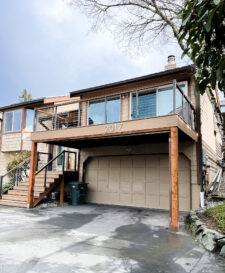
How This Climate Attacks a Deck
Moisture and salt air
Salt-laden air accelerates corrosion on fasteners, joist hangers, and any exposed metal hardware. A galvanized nail or an undersized screw that would last for years elsewhere can start rusting and losing grip strength faster out here. Once a fastener weakens, the board it's holding starts to move, and movement is what turns a tight, quiet deck into a squeaky, spongy one.
Driving rain and standing water
Rain that comes in at an angle finds its way into gaps, under flashing, and into end-grain cuts that weren't sealed. Water that lands flat on a deck surface is manageable if the boards can shed it and dry out between storms. Water that gets trapped — under a poorly flashed ledger board, between boards spaced too tight, or in a low spot where drainage was never graded correctly — is what causes rot.
Moss and organic growth
Moss holds moisture directly against the wood or composite surface for extended periods, and a long moss season means extended periods happen a lot. Beyond making a deck slick and unsafe underfoot, moss and algae buildup in board gaps and around fastener heads keeps those spots wet long after the rest of the deck has dried, which is exactly where rot and fastener corrosion tend to start.
Signs a Deck in Alger Needs Repair
Some of these are obvious from a walk-through. Others take a closer look, which is part of why we inspect underneath the deck, not just the surface.
- Boards that feel soft, spongy, or flex more than they used to
- Visible gaps opening up between deck boards or at the rim joist
- Rust streaks running down from screw heads or joist hangers
- A ledger board pulling away from the house, even slightly
- Railings or posts that wobble when pushed
- Persistent moss or dark staining that comes back within weeks of cleaning
- Stairs that feel less solid than the rest of the deck
- Discoloration or a hollow sound when you tap a board
Structural issues vs. cosmetic issues
Not everything on that list means the same thing. Surface graying, light moss film, and minor cosmetic wear are maintenance items — real, but not urgent. A soft ledger board, a wobbling post, or rusted-through hardware is structural, and those get flagged for repair before anything else, because they affect whether the deck is safe to use, not just how it looks.
What a Correct Repair Actually Involves
Deck repair gets treated as a quick board swap more often than it should. A board that's failing is usually a symptom, not the whole problem — the actual cause is often underneath or at a connection point that isn't visible until you look.
The ledger connection
The ledger board, where the deck attaches to the house, is the single most important structural connection on most decks and one of the most common places we find hidden rot. It has to be properly flashed to keep water from running down the house siding and into the framing behind it. If the flashing was missing or installed wrong originally, this is often where repair work starts.
Framing and joists
Joists and beams get checked for soft spots, checking (splitting from repeated wet-dry cycles), and hanger condition. Rusted or undersized hangers get replaced with hardware rated for the load and, where warranted, corrosion-resistant hardware suited to this climate.
Fasteners
We don't reuse compromised fasteners just because the hole is already there. Fasteners that have started to corrode or back out get replaced, and we match fastener type to the decking material — composite and wood don't always call for the same screw.
Decking boards and spacing
Replacement boards get gapped correctly for drainage and for the material's expansion and contraction. Too tight, and the deck traps moisture and debris; too wide, and it's uncomfortable underfoot and sheds more than it should.
Footings and posts
On older decks, footings sometimes weren't set deep enough or have shifted over time. If a post is unstable at the base, that gets addressed as part of the repair, not left for later.
Repair or Replace: The Real Cost Factors
Most decks don't need a full rebuild, but some do, and it's worth knowing what actually tips the decision one way or the other before getting a quote.
| Factor | Leans toward repair | Leans toward replacement |
|---|---|---|
| Ledger and framing condition | Solid, dry, hardware intact | Soft wood, rot at multiple points |
| Extent of damage | Isolated boards or a single area | Widespread across the whole deck |
| Age of the deck | Under 15 years, built to code | Original build has multiple outdated details |
| Footings | Stable, correctly set | Shifted, undersized, or shallow |
| Your plans | Keeping the current layout | Wanting a different size or footprint |
Broad honest range: small, targeted repairs (a section of boards, hardware, or railing) are usually a modest project measured in a few hundred to low thousands of dollars. Larger structural repairs — ledger, framing, or footing work — run higher because of the labor involved in accessing and rebuilding those connections correctly. We give exact numbers after we've actually looked at the deck, not before.
Material Decisions During a Repair
When boards need replacing, homeowners often ask whether to match the existing wood or switch to composite. Both are legitimate choices, and we'll be straight about the trade-offs rather than pushing one over the other.
Wood is lower cost upfront and easy to spot-repair later, but it needs regular sealing or staining to hold up against this area's rain and moss, and it's less forgiving if maintenance gets skipped for a season or two.
Composite resists moss and moisture damage better and needs less upkeep, but it costs more upfront, and not every composite product handles this region's moisture cycling equally well — installation details like ventilation and gapping matter more with composite, not less, so a rushed install can still lead to problems regardless of the material's reputation.
Our standard is to match the repair material to what the rest of the deck can support structurally and what the homeowner is actually willing to maintain. A composite deck installed without attention to airflow underneath, or a wood deck nobody plans to reseal, will both cause problems eventually — the material isn't the whole story.
How We Handle a Deck Repair
- Inspection: We look above and below the deck — surface, framing, ledger, hardware, and footings — before recommending anything.
- Honest assessment: We tell you what's structural, what's cosmetic, and what can reasonably wait.
- Written scope and price: You know what's being repaired and why before work starts.
- Repair: Framing, flashing, hardware, and decking addressed in that order, so new boards aren't installed over an unresolved problem underneath.
- Cleanup and walkthrough: We show you what was done and what to watch going forward.
Keeping a Repaired Deck in Good Shape
A repair holds up longer with a little seasonal attention, especially given how long the moss season runs here.
- Sweep debris out of board gaps regularly so water and organic matter don't sit and hold moisture
- Clean moss and algae off the surface before it builds up, rather than after it's established
- Check that gutters and downspouts near the deck aren't dumping extra water onto it
- Reseal or restain wood decking on the schedule the product calls for, not just when it starts looking gray
- Do a quick check of railings and stair connections once or twice a year
Why It Matters to Hire a Crew That Already Works Alger
Deck framing that works fine in a dry inland climate can be undersized or under-flashed for what Whatcom County's rain and salt air actually put it through. A crew that repairs decks in Alger and around Sudden Valley regularly isn't guessing at what fails first here — they've already seen where the moss collects, which fastener types hold up and which don't, and how a ledger board typically fails when the flashing behind it wasn't installed right the first time. That local pattern recognition is what separates a repair that lasts from one that's back on the schedule in two years.
If you've got soft boards, a wobbly rail, or a deck that just doesn't feel as solid as it used to, we're glad to take a look. Reach out for a free, no-pressure estimate — use the form below and we'll get back to you with an honest read on what your deck actually needs.